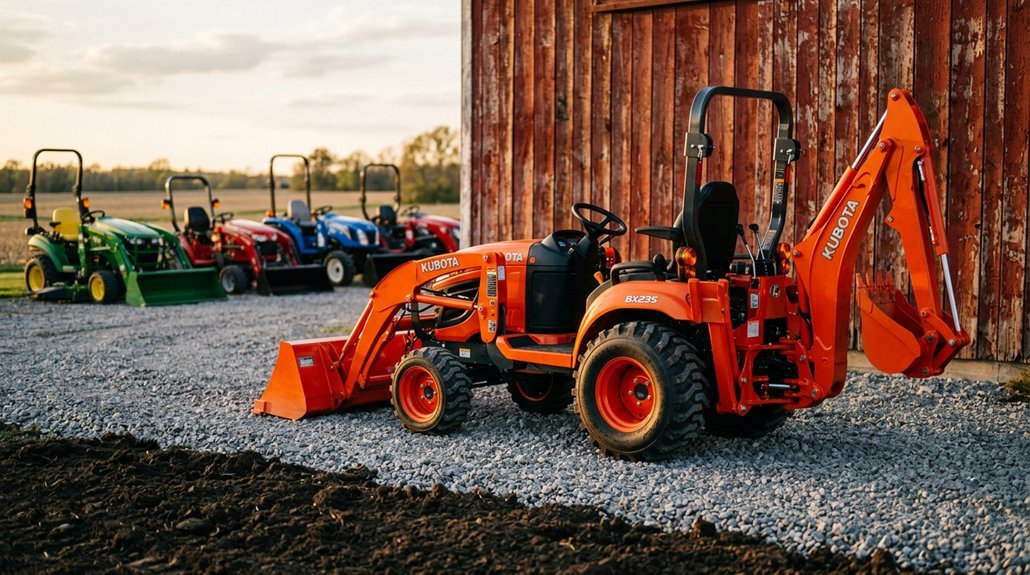


You operate a tractor’s PTO without fully grasping what’s happening beneath the sheet metal. That stub shaft spinning behind your seat isn’t just a connector—it’s a mechanical gateway transferring raw engine torque through splined couplings and universal joints. You’ll need to know which type you have, because engagement methods vary considerably. The real question isn’t what PTO means, but whether you’re matching it correctly to your implement’s demands.
What Is PTO on a Tractor?
PTO stands for power take-off—a mechanical interface that transfers raw engine power from your tractor to any attached implement. You’ll find this system on virtually every modern tractor, and it’s what lets you run mowers, balers, augers, and other equipment directly from your engine.
Your power take-off connects via a drive shaft with splined shafts and universal joints, transmitting rotation at standard speeds—typically 540 rpm or 1000 rpm depending on your implement and tractor model. You’ll encounter three main configurations: transmission PTO, which stops when you clutch; live PTO, which operates independently while you’re moving; and fully independent PTO driven by a separate hydraulic clutch.
You must maintain your safety shields. Unguarded or damaged PTOs create severe entanglement hazards—clothing, hair, and limbs catch instantly on rotating drive shafts. Inspect your shields before every operation.
Recommended Products

Specs: PTO Conversion Shaft, Notes: Shaft is 30 7/8" length by 1 3/8" diameter w/6 splines, can be used to convert from 1 1/8" to 1 3/8", includes PTO housing, collar with set pin, snap ring, front PTO bearing, front PTO sleeve, PTO seal - all preassembled. Does not come with Gasket or PTO Cap.
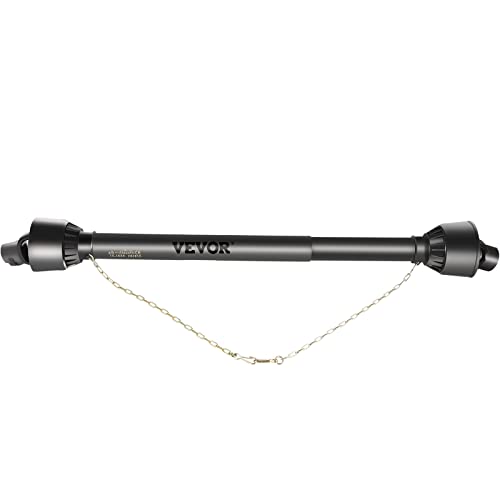
Sturdy and Durable: This PTO shaft is a well-forged series4 driveline shaft with CE certification. It consists of a solid 20CrMnTi carburized steel universal joint and a Q345 steel tube inside the shield. The PTO shaft is durable and robust when working with various agricultural machinery.

Fitment: PTO extender Female 1-3/8" & 6 Spline, 1-3/8" & 6 Spline Male; for tractors up to 70 Hp; The pto extender is designed for tractor PTO shaft, please check the model to make sure the tractor PTO extension attaches securely firmly to your tractors, agricultural or industrial equipment such as lawnmowers, snow blowers etc
Engaging Your PTO: Step-by-Step Operation
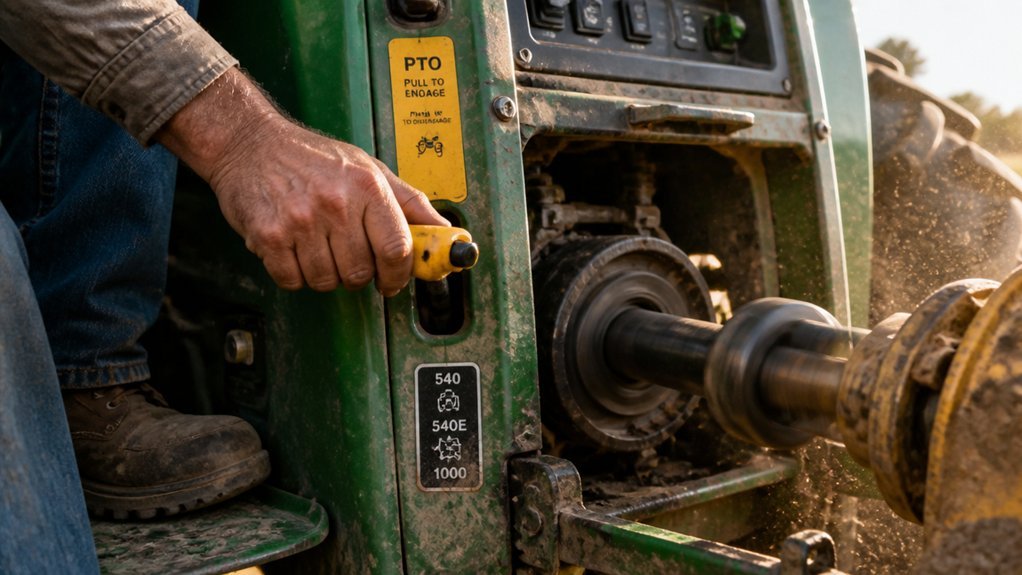
How do you actually get power flowing to your implement? You engage the PTO using either a manual lever or an electro-hydraulic switch, which connects the implement shaft to the engine-driven PTO. First, bring your tractor to a standstill or place the transmission in neutral, depending on your system. Align the implement driveline carefully, verify every shield and guard is intact, then select your speed—540, 540E, 1000, or 1000E—to match your implement’s requirements. Activate the PTO control and monitor for proper shaft engagement. Never bypass safety: disengage the PTO and shut off the tractor before maintenance, keep clothing and hair secured, and check that guards remain in place to prevent entanglement. Proper engagement ensures efficient power transfer and protects you from rotating machinery hazards.
Recommended Products

Precision Fit - Universal 5 series metric 1-3/8" x 6 spline quick disconnect yoke, cross and bearing with 1.19" (30.2mm) bore diameter and 3.14" (80mm) cross width, ensuring seamless integration.

National Drivetrain

Part Number: T1-YIIIP-680-05B-05B, T1-680-05B-05B-YIIIP
Live, Independent, or Transmission-Driven PTO Types

Why does your PTO keep running when you stop the tractor, or quit when you shift gears? You’re witnessing the difference between PTO types.
With transmission-driven PTO, you’re tied directly to your tractor’s gears. When you stop or shift, your shaft stops—frustrating when you’re running an implement that needs continuous power.
Live PTO solves this. You can stop your tractor while your implement keeps running, letting you operate stationary equipment or maneuver without interrupting power flow.
Independent PTO takes this further. You’re completely decoupled from the transmission through mechanical or hydraulic systems. You engage or disengage your shaft on demand without touching your gears or affecting ground speed.
You’ll find transmission-driven PTOs on older utility tractors, while modern machines favor live or independent PTO configurations. These give you flexibility for stationary work and asynchronous operation, matching your implement’s needs regardless of wheel movement.
Recommended Products

Connect implements to a tractor's PTO shaft

Specs: Description: Over Running Coupler, 1 3/8" 6 Spline Female and Male connections. For use with 540 RPM PTO shafts on tractors with hole predrilled for attachment.
Sturdy and Durable: This PTO shaft is a well-forged series4 driveline shaft with CE certification. It consists of a solid 20CrMnTi carburized steel universal joint and a Q345 steel tube inside the shield. The PTO shaft is durable and robust when working with various agricultural machinery.
540 RPM or 1000 RPM: Matching Speed to Your Implement
Which speed does your implement demand? You’ll select between 540 RPM and 1000 RPM based on your equipment’s power requirements and design specifications. These standard shaft speeds define PTO types and guarantee implement compatibility across manufacturers.
Type 1 PTO delivers 540 RPM through a 1⅜-inch diameter shaft with six straight splines. You’ll use this for lighter implements like mowers and balers. Type 2 and Type 3 PTOs both provide 1000 RPM but differ in shaft dimensions—Type 2 uses 1⅜-inch with 21 splines, while Type 3 employs 1¾-inch with 20 splines. You’ll match these PTO speeds to heavier equipment requiring greater power transfer.
Modern tractors offer 540/540E and 1000/1000E options, letting you maintain ideal RPM at reduced engine speeds. Always verify your implement’s required RPM before engaging the PTO.
Recommended Products
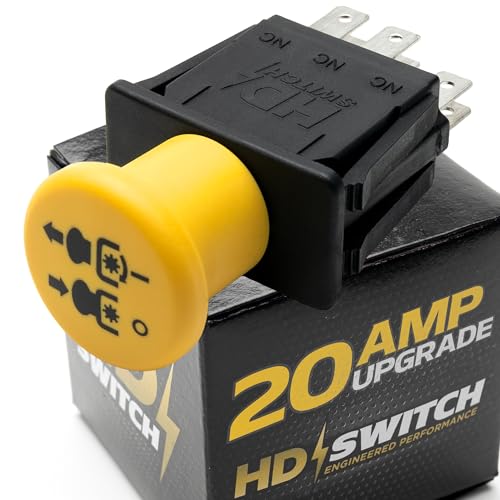
Why 20 Amp? Most PTO Switches are rated at 5A/10A for circuits with a 20A or 30A Fuse. This means the 5A PTO switch is damaged or fails before the fuse blows.

PTO Switch for Scag Hydraulic Walk-Behind Mower 36", 48", 52"

8 Prong Power Take-Off Switches Replacement OEM Part Number:539131627, 539101768, 589887201, 597520401, 504-01421, 430-433, 2721505, 6204-322, 4174684, 500016, (Please check the OEM replacement list)
What Happens When PTO Speed and Implement Don’t Match?
What happens when you connect a 540 RPM PTO to an implement rated for 1000 RPM? You create a significant PTO speed mismatch that causes the implement to run below its designed implement RPM, leading to irregular operation, vibration, or stalling.
Conversely, driving a 540 RPM-rated implement with 1000 RPM PTO speed forces overrun, risking gear and hydraulic pump damage.
Without proper speed conversion, you’ll experience severe driveline wear in yoke joints and U-joints as angular changes force continual acceleration and deceleration. You must install an overrunning device to prevent backlash and protect against torque surge events that stress your PTO shield and drive shaft. These torque spikes increase entanglement hazards and accelerate fatigue failure. Matching PTO speed to implement RPM isn’t optional—it’s essential for safe, reliable operation and component longevity.
Recommended Products

One New Aftermarket Universal Tractor Implement PTO Safety Shield

Walterscheid 2200/2300 Complete PTO Shield

New Aftermarket Metal PTO Guard Safety Shield
Implement Power Requirements and PTO Load Ratings
How do you know your tractor’s PTO can handle the implement you’re pulling? You check the PTO load ratings against your implement power requirements. These ratings specify maximum continuous-duty torque your shaft can deliver, typically expressed in horsepower or kilowatts.
You’ll match your rated PTO speed—commonly 540 or 1000 rpm—to the implement’s specified operating speed. The PTO shaft diameter and spline configuration must align precisely; larger diameters handle higher torque loads. ISO PTO standards, such as ISO 500, standardize these geometries and ratings across manufacturers, ensuring compatibility.
When evaluating implements, you’ll examine the manufacturer’s stated horsepower draw at given engine rpm. This figure mustn’t exceed your tractor’s continuous-duty torque capacity. Exceeding these limits risks overheating your drivetrain or damaging the PTO assembly. Always verify that your tractor’s live or independent PTO can sustain the implement’s full-power demands throughout operation.
Recommended Products
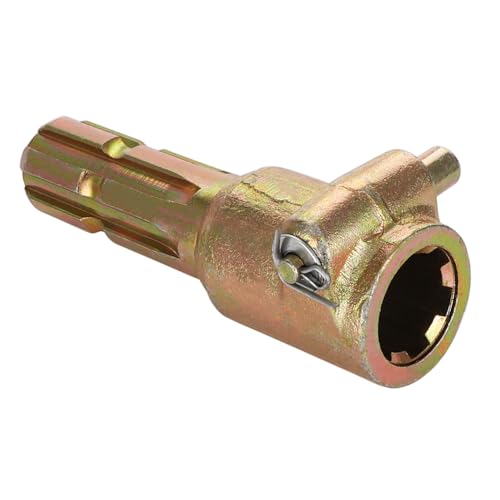
COMPATIBILITY: Designed to fit tractors with 1-3/8 inch 6-spline PTO shafts, providing a secure male to female connection

Sturdy and Durable: This PTO shaft is a well-forged series4 driveline shaft with CE certification. It consists of a slip clutch, a solid 20CrMnTi carburized steel universal joint and a Q345 steel tube inside the shield. The PTO shaft is durable and robust when working with various agricultural machinery.

【Design Specifications】Compressed Length: 39 in/1000 mm; Extended Length: 63 in/1620 mm. It has 35 Hp, 26 Kw, 460 Nm torque at 540 rpm, 55 Hp, 40 Kw, 380 Nm torque at 1000 rpm
Entanglement Hazards and Protective Shielding
Although PTO shafts transfer power efficiently, they pose severe entanglement risks that can wrap loose clothing, hair, jewelry, or sweatshirts around their spinning surface in under a second. You’re operating equipment rotating at 540 or 1,000 rpm, where contact causes catastrophic injury before you react.
Your protective shielding system includes a master shield covering the tractor stub, an IID front shield, and an IIC shield on the implement. These guards eliminate wrap points at universal joints, front connectors, rear shields, and protruding hardware. You mustn’t overlook unshielded portions where bolts or locking pins catch fabric.
Perform regular shielding testing on your driveline guard—check for cracks, missing bolts, or loose mounting. You disengage and shut off the tractor before maintenance or dismounting. Secure all guards firmly; exposure occurs when shielding’s compromised or removed.
Recommended Products

Adjustable Length: Compressed Length: 43 in/1100 mm; Extended Length: 71 in/1820 mm. It has 35 Hp, 26 Kw, 460 Nm torque at 540 rpm, 55 Hp, 40 Kw, 380 Nm torque at 1000 rpm. It allows two sides of the PTO drive line shaft to spin at different speeds
Sturdy and Durable: This PTO shaft is a well-forged series4 driveline shaft with CE certification. It consists of a solid 20CrMnTi carburized steel universal joint and a Q345 steel tube inside the shield. The PTO shaft is durable and robust when working with various agricultural machinery.

Size: Inner Diameter: 3mm to 3mm; Length: 13mm/0.51 inch; Outer Diameter: 7mm/0.28 inch; Color: Silver Tone.
Selecting PTO Shaft Size, Length, and RPM Rating
Why does matching your PTO shaft specifications matter? You’ll destroy equipment, injure operators, or waste power when specifications don’t align between tractor and implement.
Start with RPM rating: 540 vs 1000 PTO determines your PTO shaft size and spline count. The 540 rpm system uses 1.375-inch diameter with 6 splines, while 1000 rpm employs 20 or 21 involute splines on larger 1.75-inch shafts for higher power transmission up to 600 hp. Verify your tractor implement interface—check whether you need Type 2 or Type 3 configurations.
Measure shaft length precisely; your implement input driveline must match the tractor stub shaft while maintaining centerline alignment to prevent angular wear. Compatibility demands exact diameter, spline count, and position: rear, mid, or sandwich split. Never assume—measure everything.
Recommended Products
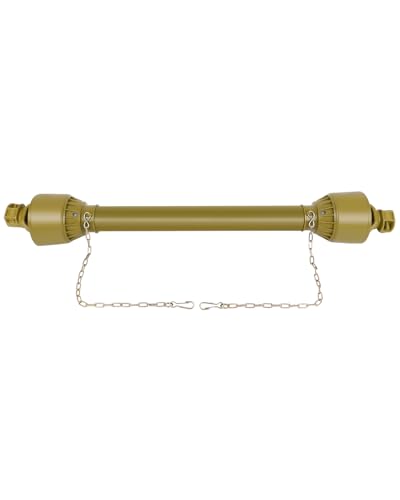
Adjustable Length: Compressed Length: 39 in/1000 mm; Extended Length: 62.5 in/1600 mm. It has 35 Hp, 26 Kw, 460 Nm torque at 540 rpm, 55 Hp, 40 Kw, 380 Nm torque at 1000 rpm. It allows two sides of the PTO drive line shaft to spin at different speeds

【Reliable and Durable】: This PTO shaft is a robust series 4 driveline shaft, professionally certified by CE. It features a solid 20CrMnTi carburized steel universal joint and a Q345 steel tube within the shield, ensuring durability and dependability when used with various agricultural machinery.

Adjustable Length: Compressed Length: 27.5 in/700 mm; Recommended length (for use): 31.5 in/810 mm; Extended Length: 40.55 in/1030 mm. It has 16 Hp, 12 Kw, 210 Nm torque at 540 rpm, 25 Hp, 18 Kw, 172 Nm torque at 1000 rpm. It allows two sides of the PTO drive line shaft to spin at different speeds
Greasing Schedules and U-Joint Wear Inspection
Once you’ve matched your shaft specifications and installed the driveline correctly, your work isn’t finished—it’s just begun. You must establish a rigorous greasing schedule for your PTO shaft to prevent premature U-joint wear. Inspect U-joints regularly for play and worn cross pieces, which cause chattering—especially at hard angles during headland turns. Chattering signals impending failure; address misalignment immediately.
Use manufacturer-specified lubricant type at all lubrication points, avoiding over-greasing that attracts dirt and compromises seals. Maintain shield/guard integrity throughout, as damaged guards allow debris intrusion during lubrication. Your preventive maintenance routine should include yolk joint inspection, phase alignment verification, and guard position checks. These steps eliminate lubrication gaps, preserve driveline efficiency, and extend service life.
Recommended Products

Why 20 Amp? Most PTO Switches are rated at 5A/10A for circuits with a 20A or 30A Fuse. This means the 5A PTO switch is damaged or fails before the fuse blows.


PTO Switch Replacement Part Numbers: Dixie Chopper4174684, 500016, Bobcat2721505, Delta6204-322, Jacobsen2721505, MTD725-07534.
Conclusion
You now understand that your tractor’s PTO transfers engine power directly to implements through a rotating driveshaft. You’ll select the correct type—transmission-driven, live, or independent—based on your operating needs. Always match 540 or 1000 RPM to your equipment’s specifications, inspect safety shields before engagement, and follow greasing schedules to prevent U-joint failure. Proper PTO maintenance and operation keep you safe and your implements running efficiently season after season.
Recommended Products

Replacement OEM quality gearbox / PTO shaft connection guard.

Large PTO Shield, Can be cut to fit

Small Diameter Shield, Can be cut to fit