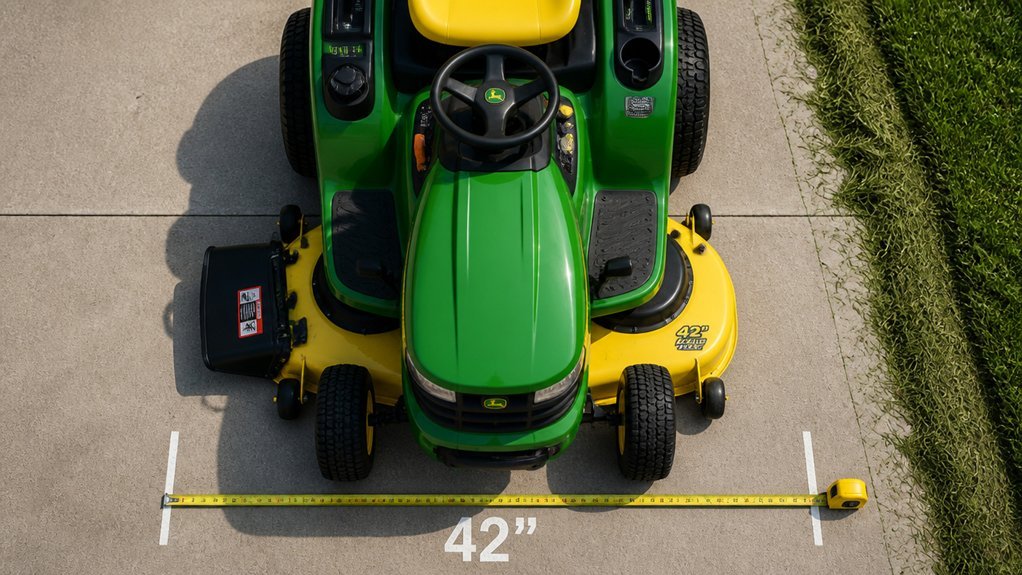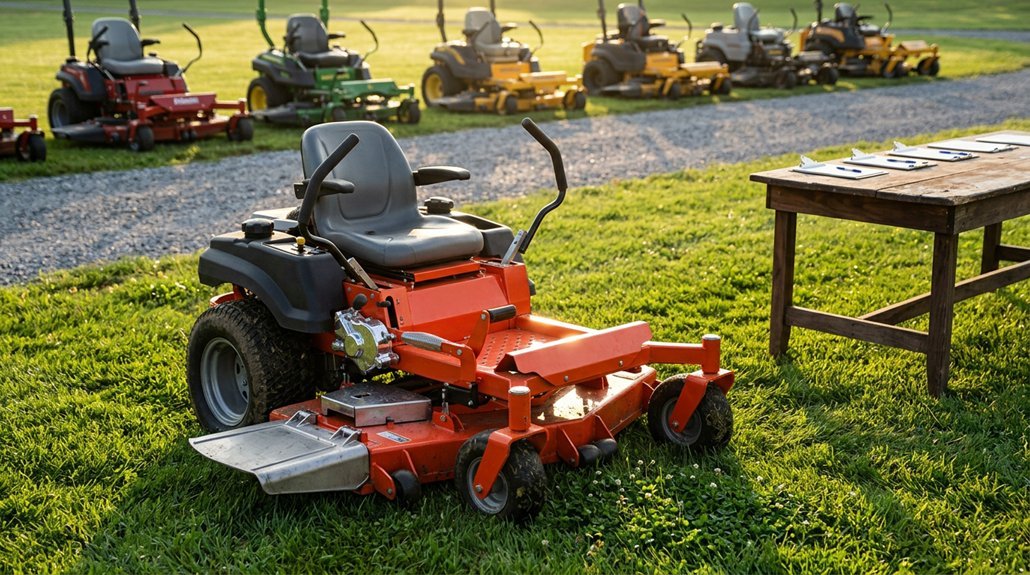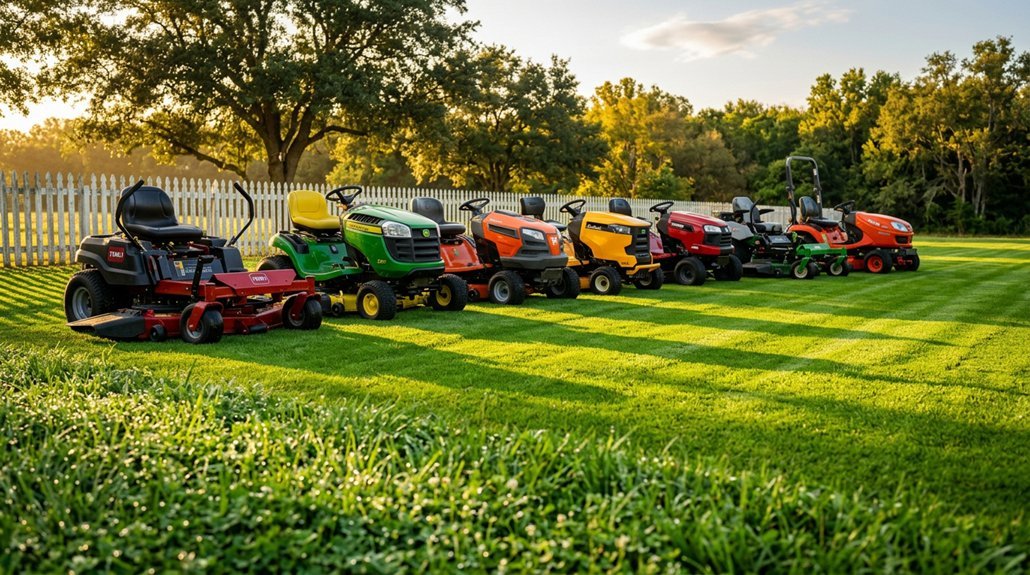

You’re considering a zero-turn mower for your sloped property, but you’ve likely noticed the conflicting advice. The reality isn’t straightforward: these machines excel on flat turf, yet their design introduces specific hazards on inclines that manufacturers don’t always emphasize. Your terrain’s steepness, the mower’s configuration, and your operating technique each determine whether you’ll finish efficiently or risk a rollover. Before you commit, you’ll need to weigh several critical factors.
Do Zero Turn Mowers Work on Hills? The Honest Answer
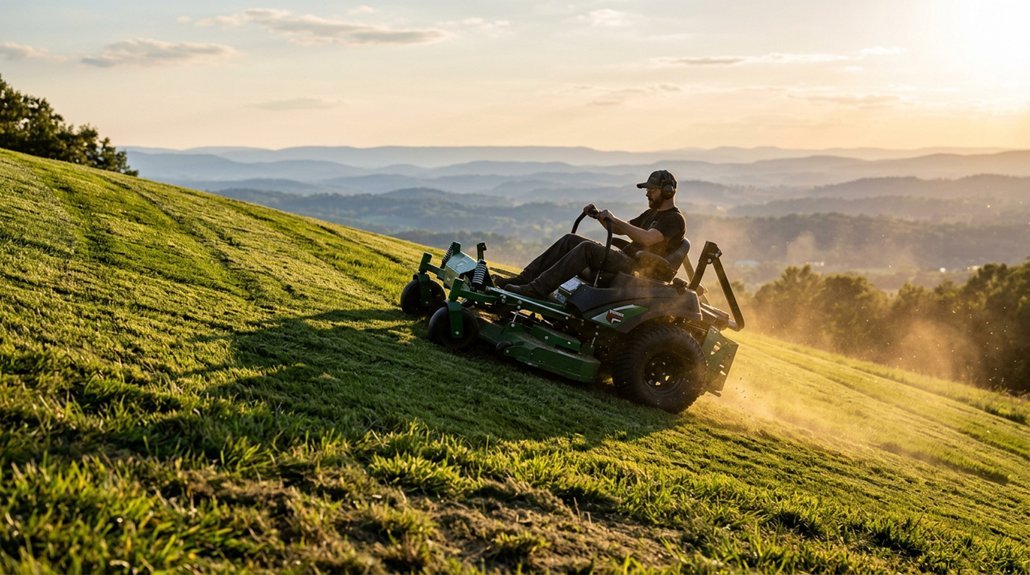
How exactly do zero turn mowers perform on sloped terrain? You’ll find the answer depends entirely on gradient severity and operating technique. On gentle slopes up to 15 degrees, you’ll operate these machines effectively. The lap-bar steering system lets you navigate contours with precision, and you’ll maintain traction through independently driven rear wheels.
You’ll encounter limitations as angles increase. The rear-engine configuration shifts your center of gravity backward, reducing front-wheel contact. You’ll notice the nose lifting during uphill climbs, compromising steering control. Most manufacturers specify maximum slope ratings between 10 and 15 degrees for safe operation.
You’ll achieve optimal performance by reducing speed, mowing across slopes rather than vertically, and avoiding sudden directional changes. Wet conditions demand extra caution—you’ll experience degraded traction that amplifies existing stability constraints.
Recommended Products

THE ORIGINAL, PATENTED DESIGN – BUILT IN THE USA. The Zero-Turn Bar is the American-built original — designed, manufactured, and supported in the USA, not an overseas imitation. Ball-joint connections and expanding end points allow a full range of motion; universal mounting brackets fit most mowers.

21.5HP Kawasaki V-Twin Engine 42-Inch Fabricated (Welded) 2-Blade Mower Deck Hydro-Gear EZT transmission 3.5 gallon fuel capacity 3-year consumer warranty
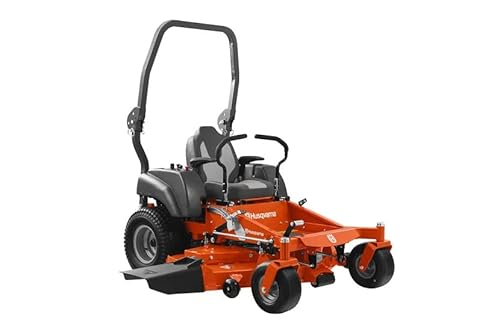
24HP/726cc Kawasaki FR730V Series V-Twin Engine
Why Zero Turn Mowers Struggle on Steep Slopes
Why do zero turn mowers falter when gradients exceed their modest safety thresholds? You encounter fundamental design limitations rooted in their drivetrain architecture.
Your zero turn mower employs independent hydrostatic transmissions powering rear wheels exclusively. This configuration concentrates mass toward the rear, reducing front tire traction precisely when you need it most. You steer through differential wheel speeds rather than front-wheel articulation, eliminating mechanical stabilization during lateral traverses. Your caster-mounted front wheels lack positive traction; they merely follow, offering zero resistance to downhill drift or sideways slippage. You experience heightened rollover susceptibility because the mower’s center of gravity sits high relative to its narrow wheelbase. When you navigate slopes, centrifugal forces compound gravitational vectors unpredictably. You can’t brake effectively with rear wheels alone on descents. These engineering trade-offs prioritize flat-ground maneuverability over incline stability.
Recommended Products

Effortless Yard Maintenance: Simplify your tasks with Mission Automotive’s Zero Turn Hitch. This robust, one-piece design fits a wide range of riding lawn mowers or attaches to carts and trailers, making it easier to transport items around your yard

1-4-Ply Heavy-Duty Construction – Built with premium rubber and 4-ply rating, these 15x6.00-6 tires deliver exceptional puncture resistance, abrasion resistance, and a max load capacity of 575 lbs. Designed to withstand rugged terrain while providing reliable performance season after season
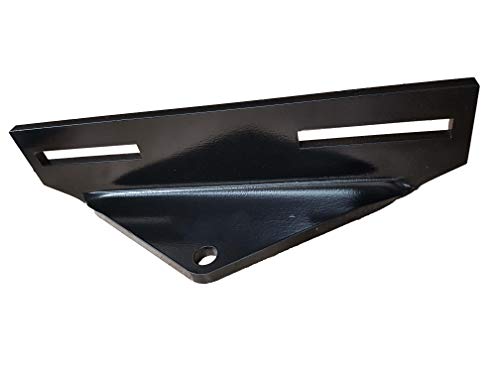
Universal style for most zero turn mowers, FITS for: Exmark Lazer Z Phazer, Pioneer and Quest SCAG Turf Tiger
How Steep Is Too Steep? The 15-Degree Safety Limit
Understanding these mechanical vulnerabilities raises an obvious question: at what slope angle do they become unmanageable? You’ll find the industry consensus settles at 15 degrees—approximately a 26.8 percent grade. Beyond this threshold, your center of gravity shifts critically, and the rear-heavy weight distribution that enables zero-turn agility becomes a liability. You’ll encounter reduced traction as the rear tires lose grip, while the front caster wheels bear insufficient load to maintain directional control. Manufacturers embed this limit in operator manuals, and you’ll void warranties by exceeding it. OSHA guidelines reinforce this boundary, citing rollover statistics that escalate sharply past 15 degrees. You must measure slopes with an inclinometer; visual estimation proves dangerously unreliable. Terrain irregularities—depressions, rocks, wet patches—compound risk even on nominally compliant grades.
Recommended Products

Complete 18x8.5-8 Tire and Wheel Assembly Set:Includes one 18x8.5-8 tubeless turf tires pre-mounted on 8x7 inch steel rims, making installation quick and hassle-free. The tire diameter is 18 inches, with an 8.5-inch section width and 8-inch rim diameter, providing stable support across various terrains. Shipped in a heavy-duty, reinforced box, ready for installation and use.

Advanced Anti-Dry Rot Technology: Engineered with upgraded carbon black and microcrystalline wax formula that creates a protective barrier against UV rays and ozone exposure. Prevents cracking during outdoor storage and extends service life 2-3 years longer compared to standard rubber tires.

TIRE SPECIFICATION - [15x6.00-6] designed to mount on 6" RIM, Ply Rated 4 PR, Speed Rating A3, Tread Depth 12mm, Rim Width 4.5", Section-Width 155mm, Max Load 565 (lbs), PSI 30, Weight 5.84 lbs. Tubeless - WHEEL NOT INCLUDED
4 Features That Keep Zero Turn Mowers Stable on Slopes
What engineering solutions can offset the inherent instability of zero-turn designs on inclined terrain? You encounter four critical features that manufacturers deploy.
First, you benefit from widened wheelbases and lowered centers of gravity. These dimensional adjustments resist rollover moments when you’re traversing angled ground.
Second, you’ll find dual hydrostatic transmissions with integrated braking. These systems let you modulate each drive wheel independently, preventing downhill drift through precise speed differential control.
Third, you’re protected by rollover protection structures (ROPS). These engineered steel frames create survival zones during tip-over events.
Fourth, you gain traction from specialized tire tread patterns and optional wheel weights. Bar-tread configurations bite into turf while ballast redistributes mass favorably.
You must verify these features exist on your specific model. They’re not universal, and their absence compromises your stability margins significantly.
Recommended Products
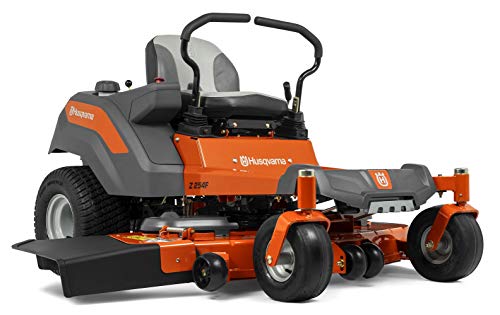
23 HP Kawasaki engine provides reliable startups and a max speed of 6.5 MPH Hydrostatic, no-maintenance transmission is worry free, empowering the mower to take on a variety...
Zero Turn Mower Safety: Hill Mowing Techniques That Work
How do you keep control when gravity fights your every move? You mow across slopes, never up and down. You maintain reduced speed—typically 3-4 mph—to preserve traction and reaction time. You engage all-wheel drive if your unit offers it, distributing torque evenly across both rear wheels. You avoid sudden steering inputs; gradual lever movements prevent caster wheels from breaking loose. You keep the deck raised on uneven terrain, minimizing scalping and ground contact. You monitor tire pressure religiously—underinflation compounds rollover risk. You disengage blades before traversing questionable grades. You scan for depressions, stumps, and erosion channels that destabilize weight distribution. You cease operations when moisture compromises soil shear strength. You wear your seatbelt. You respect the machine’s center of gravity limits without exception.
Recommended Products

Durable & Heavy-Duty Design: Built to last, this upgraded lawn mower hitch is crafted from high-quality, thicker heavy-duty steel for unmatched strength and durability. Its robust construction ensures exceptional load-carrying capacity and superior impact resistance for tough towing jobs
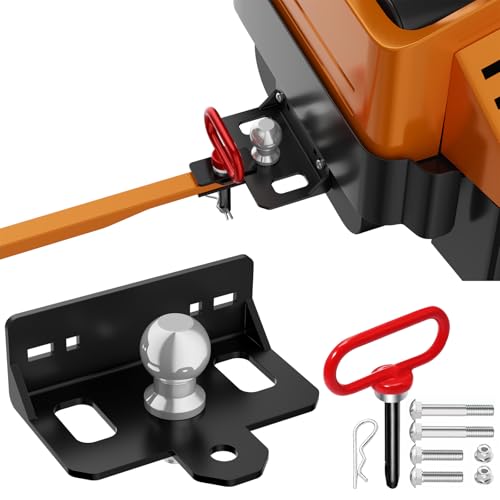
UNIVERSAL ZERO TURN MOWER TOWING HITCH: Zero turn lawn mower is compatible with a wide range of mowers, tractors, trailers, golf carts, ATVs, etc., including the Husqvarna Z-Turn series, Craftsman, John Deere, Cub Cadet, Exmark and Toro brands.(To meet universality, if the bolt hole position is not suitable, please drill the hole yourself)

FITMENT - Zero turn tractor trailer hitch is compatible with John Deere models 400 series Ztrac and 200, 400 & 600 series. Also compatible with John Deere models Z224, Z225, Z425, Z445, Z465
When a Zero Turn Is the Wrong Choice for Your Property
Why commit to machinery that threatens your safety and degrades your lawn? You must recognize when terrain renders zero-turn technology inappropriate. Slopes exceeding 15 degrees eliminate these mowers from consideration entirely; their rear-weighted bias and caster-wheel instability create rollover vectors you can’t mitigate through technique alone. You encounter this threshold on embankments, drainage swales, and properties with significant grade variation.
Wet clay soils compound your risk, reducing traction coefficients below operational minimums regardless of tire configuration. You also face unsuitable conditions with irregular terrain—gopher holes, exposed roots, and undulations disrupt the constant ground contact your lap-bar steering requires. Narrow hillside access paths prevent the wide turning arcs these machines demand. When your property presents these characteristics, you’re selecting the wrong tool. Your safety margins collapse, and turf damage becomes inevitable.
Recommended Products

UNIVERSAL: Designed for Lawn Tractors, Zero Turn Lawn Mowers, Dump Trucks, Lawn Mower Drums, Lawn Trailer and so on, make your Yard Work Easier and Faster

*** PLEASE CHECK YOUR MOUNTING DECK'S BOLT-HOLE PATTERN'S DIMENSIONS. IF THE BOLT-HOLE PATTERNS DON'T MATCH, DRILLING IN THE MOUNTING DECK IS REQUIRED.***

20HP Briggs & Stratton EXi2000
Better Mowers for Hills: What to Buy Instead
Where should you redirect your investment when zero-turn mowers fail your topography? You need machines engineered for gravitational challenges.
You select all-wheel-drive lawn tractors with articulated steering and differential locking mechanisms. These distribute torque across four tires, eliminating the pivot-induced slippage that defeats zero-turn units on ascent.
You evaluate stand-on mowers with wide-track wheelbases and low centers of gravity. Their operator positioning enhances stability vectors during diagonal traversing.
You consider remote-controlled slope mowers for grades exceeding 15 degrees. These eliminate human ballast entirely, operating via treaded or winch-based systems.
You inspect walk-behind brush cutters with engine braking and crawler-drive configurations for irregular terrain. Their manual control permits immediate weight redistribution.
You prioritize machines with rollover protection structures and four-wheel independent suspension. These specifications outperform zero-turn designs on longitudinal and transverse slopes.
Zero Turn vs. Tractor Mower: Which Handles Slopes Better?
Zero-turn mowers and tractor mowers diverge fundamentally in their approach to gravitational loading. You’ll observe that tractor mowers distribute mass across a wider wheelbase with lower centers of gravity, enhancing your stability coefficients on inclines exceeding fifteen degrees. You’ll notice their rear-wheel or all-wheel drive configurations generate superior traction vectors against terrain shear forces.
You’ll find zero-turn mowers concentrate operational mass toward the rear axle, creating moment-arm vulnerabilities that elevate rollover probability when you traverse slopes laterally. You’ll risk chassis pitch instability when you decelerate abruptly on declivities.
You’ll achieve optimal slope performance with tractor mowers’ locked differentials and weighted front axles. You’ll compromise control if you select zero-turn configurations for terrain exceeding manufacturer-specified grade limits. You’ll prioritize gradient specifications over cutting efficiency when you evaluate equipment for topographically variable landscapes.
Recommended Products

TIRE SPECIFICATION - [16x6.50-8] designed to mount on 8" RIM, Ply Rated 4 PR, Speed Rating A3, Tread Depth 12mm, Rim Width 5.375", Section-Width 162mm, Max Load 615 (lbs), PSI 28, Weight 7.76 lbs. Tubeless - WHEEL NOT INCLUDED

Easy Installation and Maximum Performance:This set includes two 18x9.5-8 tubeless turf tires pre-mounted on 8x7 inch steel rims, making installation a breeze. The 18-inch diameter and 9.5-inch section width offer a ideal fit for a smooth and stable ride. Arriving in a reinforced box, they’re ready to use—get back to your lawn work without delay!
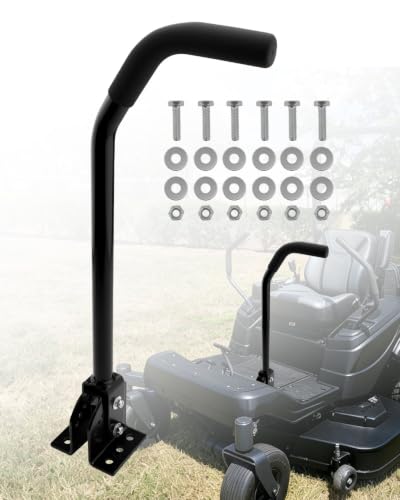
【Fit for】Universal for almost mowers, including John Deere, Kubota, Toro, etc. Please confirm the dimensions of our adjustable lawnmowers assist handle kit before ordering.
Conclusion
You can operate zero-turn mowers safely on gentle slopes up to 15 degrees when your machine features a widened wheelbase, low center of gravity, and dual hydrostatic transmissions. You’ll reduce rollover risk by mowing across slopes, maintaining slow speeds, and adding front ballast if specified. On steeper or uneven terrain, you’ll need a tractor mower or walk-behind unit instead. Always follow manufacturer grade limits—your safety depends on selecting appropriate equipment for your property’s topography.