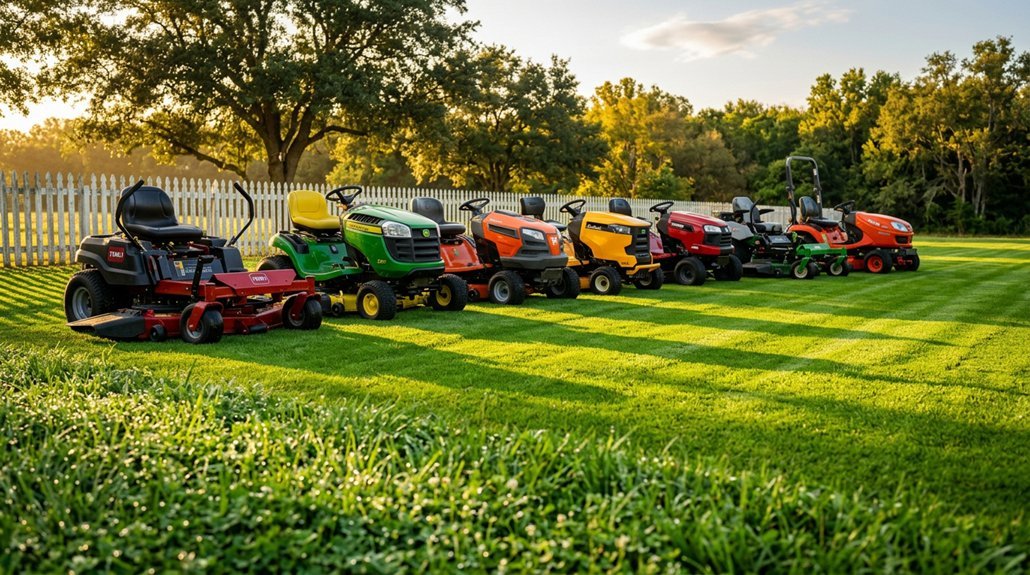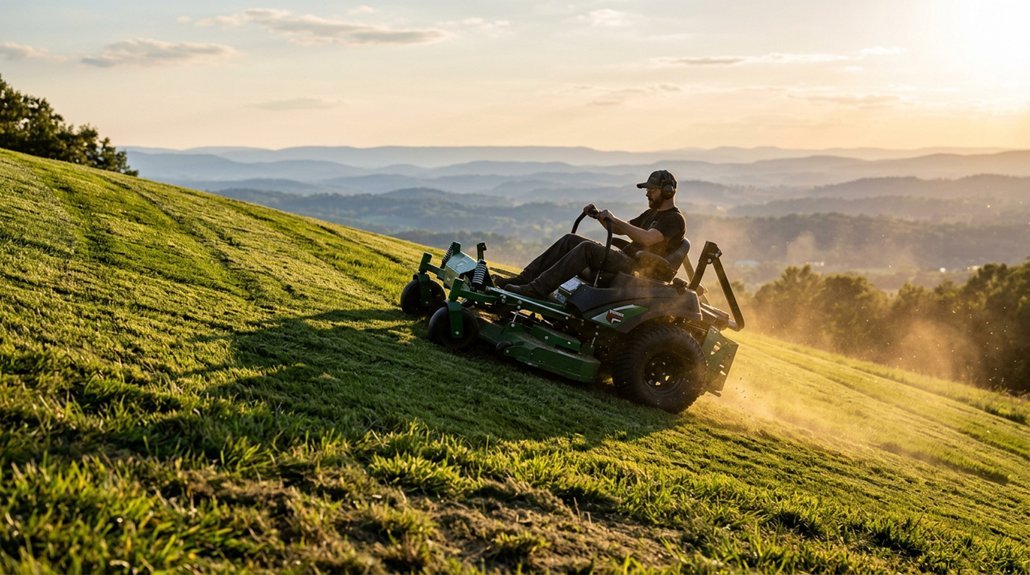


You’re looking at anywhere from $1,200 to well over $8,000 depending on the deck size, transmission type, and whether you’re considering a traditional rider or a zero-turn. Your property size and terrain directly determine which specs actually justify the spend. Entry-level models move you beyond walk-behind fatigue, but the real cost picture includes maintenance, depreciation, and financing. The question isn’t just sticker price—it’s matching capability to your specific cutting demands.
Budget Riding Mowers: What $1,500–$2,500 Actually Buys

Where do you start when $1,500 is your ceiling? You’ll find entry-level rear-engine riders and compact lawn tractors with 30–42 inch decks. At this tier, you’re looking at single-cylinder engines pushing 10–15 HP, manual transmissions, and stamped steel cutting decks.
You’ll sacrifice power take-off capability, so you’re not running attachments. You get what you pay for in frame thickness, bearing quality, and seat ergonomics. Brands like Troy-Bilt, Craftsman, and Cub Cadet dominate this bracket with stripped-down models built for flat, sub-acre lots.
Between $2,000–$2,500, you’re stepping up. You get V-twin engines, hydrostatic transmissions, and fabricated decks. You gain foot-pedal speed control and better turning radiuses. You’re still not buying commercial-grade components, but you’re getting more machine for your money. Match output to your terrain, not your aspirations.
Recommended Products

Replaces OEM Part: Craftsman 144959, 532144959, 24690, Husqvarna 144959, 532144959, 144959D, 532 14 49-59, 531300766, Ariens 21547027, 21547082, 21547188

Replaces OEM Part: MTD, Troy Bilt 954-04060C, 954-04060B, 754-04060B, 954-04060, 754-04060, 954-04060A, 754-04060A, 954-05056, 754-05056, CMXGZAM501044, OCC-754-04060, OEM-754-04060, 754-04060C, 490-501-M044, 490-501-Y044, 490-501-F044
The Real Cost of Owning a Riding Mower
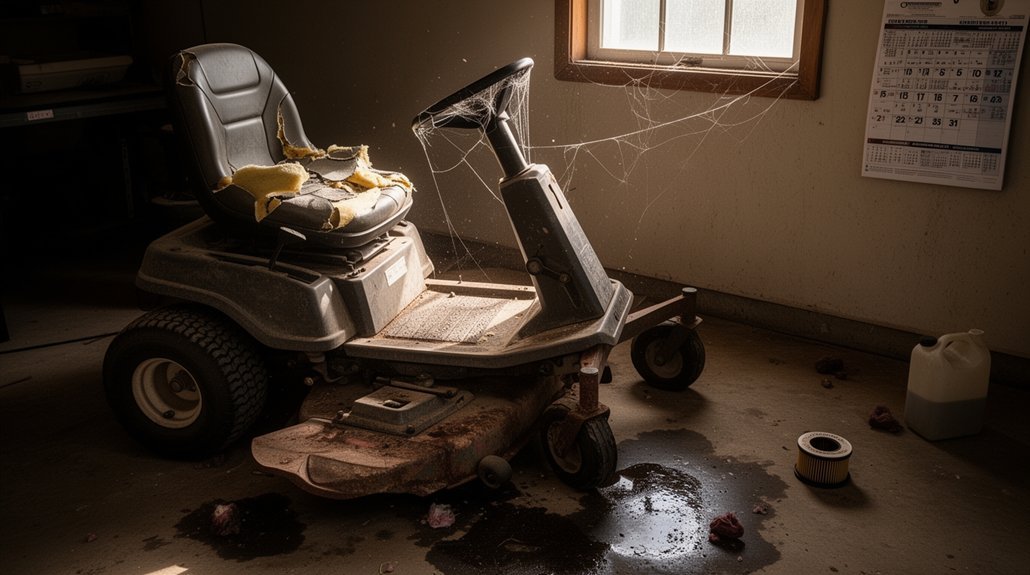
How much does that shiny new riding mower really cost you over ten years? You’re looking beyond that sticker price. You’ll pony up for annual blade sharpening, belt replacements, and oil changes—typically $150–$300 yearly if you’re running a gas engine. Tires wear; batteries die; spindles seize. You’re also depreciating that machine roughly 10–15% annually, even with meticulous maintenance. Storage matters too—without covered space, you’re accelerating corrosion and UV damage to hoses and seats. Financing? You’re tacking interest onto that total ownership equation. Skip service intervals and you’ll face catastrophic engine or hydrostatic transmission failures that dwarf your original investment. Smart owners budget $500+ annually in consumables and reserves. You’re not just buying metal; you’re committing to a decade-long operational lifecycle.
Recommended Products

Broad OEM Compatibility: Compatible with leading zero-turn and stand-on mower brands, including Ariens, Bad Boy, Cub Cadet, Dixie Chopper, EverRide, Exmark, Ferris, Gravely, Husqvarna, Hustler, John Deere, SCAG, Snapper Pro, Toro, Walker, and Wright.

Broad OEM Compatibility: Compatible with leading zero-turn and stand-on mower brands, including Ariens, Bad Boy, Cub Cadet, Dixie Chopper, EverRide, Exmark, Ferris, Gravely, Husqvarna, Hustler, John Deere, SCAG, Snapper Pro, Toro, Walker, and Wright.
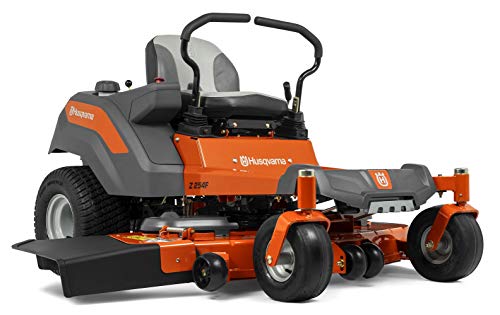
23 HP Kawasaki engine provides reliable startups and a max speed of 6.5 MPH
Gas vs. Electric Riding Mowers: Long-Term Cost Comparison
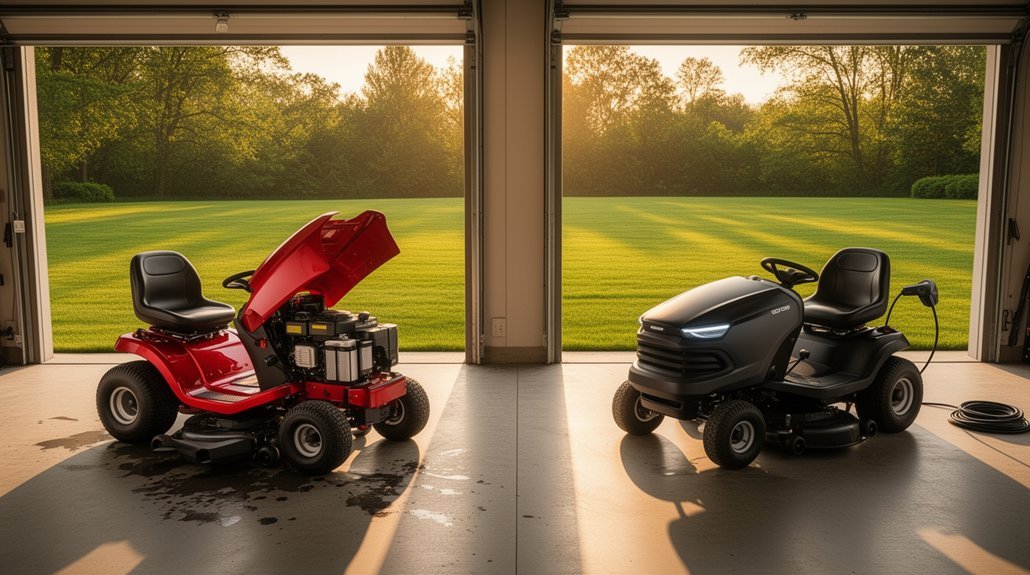
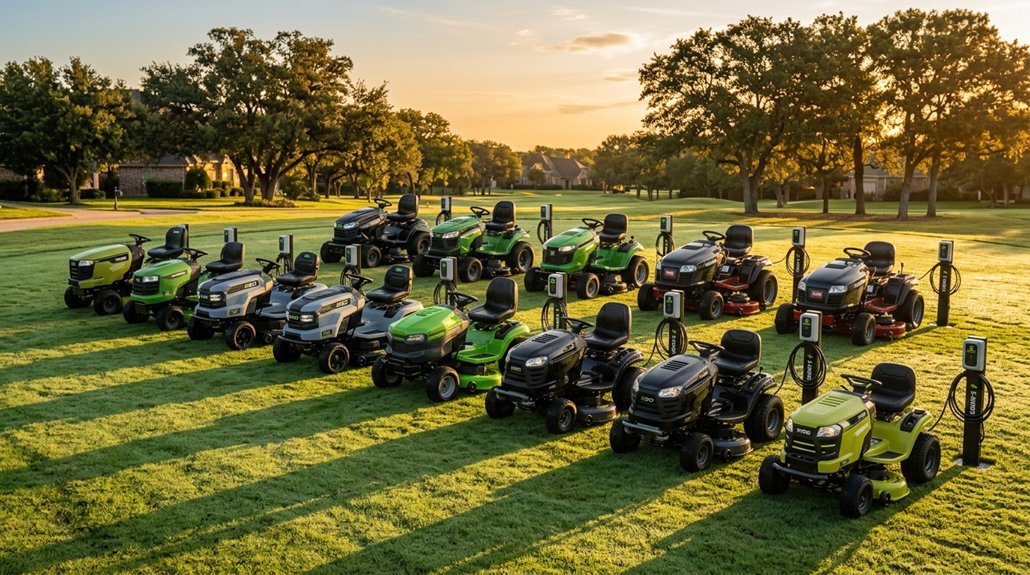
Why commit to a powertrain without running the numbers first? You’ll analyze acquisition cost, fuel, maintenance, and battery replacement cycles to determine your true total cost of ownership.
Gas mowers typically run 15%–30% cheaper upfront. You’ll budget $2.50–$4.00 per hour for fuel, plus seasonal oil changes, air filters, and spark plugs. Over 10 years, you’re looking at $800–$1,200 in consumables alone.
Electric models command premium pricing, but you’ll eliminate fuel costs entirely. Your electricity runs $0.50–$1.50 per hour. However, you’ll factor in lithium-ion battery degradation. Most packs require replacement at 8–10 years, costing $1,500–$3,000.
You’ll break even on electric around year 6–7 with moderate use. High-hour operators see faster returns. Your usage patterns determine the optimal investment.
Recommended Products


Belt Application : Drive ; Belt Dimension : 1/2" width x 73 3/4" length

Zero-Turn vs. Traditional Riding Mowers: Price and Performance
You’ve settled on a powertrain, but your mower’s steering geometry still shapes what you’ll pay and how efficiently you’ll cut.
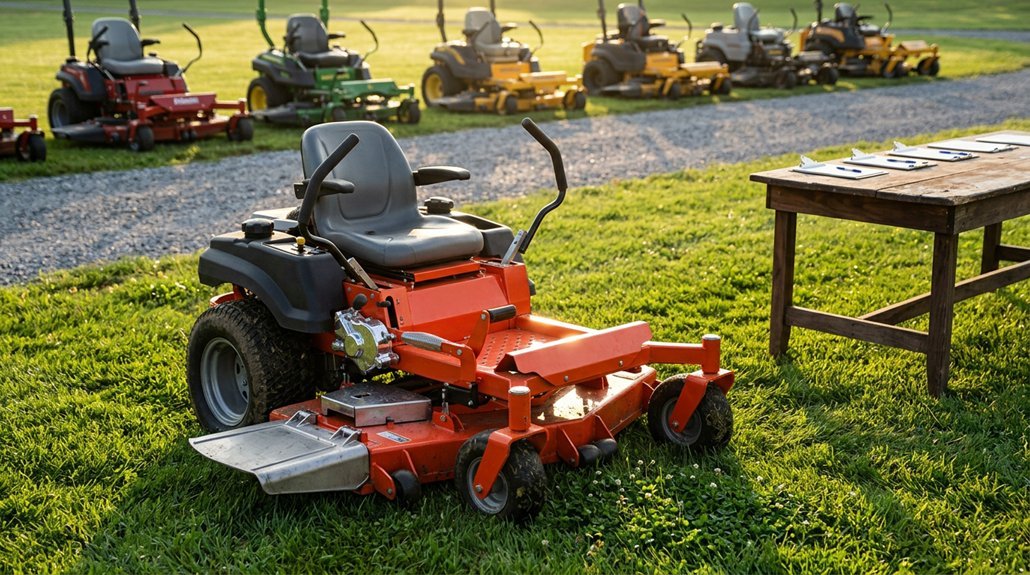
Zero-turn mowers command $2,800–$8,000+ entry points versus traditional riding mowers’ $1,200–$3,500 range. You’re paying for independent hydrostatic wheel motors and caster front wheels that eliminate three-point turn inefficiencies. The lap-bar or stick controls demand training, but you’ll reclaim 40% mowing time on large, unobstructed properties.
Traditional steering wheel configurations suit tighter budgets and confined landscapes with obstacles. You’ll sacrifice maneuverability—18–24 inch turning radii versus zero-turn’s 360° pivot—but gain intuitive operation and gentler terrain handling. Rear-engine riders and lawn tractors distribute weight across four wheels, reducing turf damage on slopes where zero-turns risk sliding.
Match your property’s complexity to your budget. You’ll optimize ROI when you align steering architecture with actual cutting demands, not aspirational acreage.
Recommended Products

Compatibility: OEM 491922 691034 692313 808492 808656. Compatible with select Kohler, Briggs & Stratton, Kawasaki, Honda, and Yamaha engines used in riding lawn mowers, lawn tractors, golf carts, and outdoor power equipment from brands like Cub Cadet, John Deere, EZGO, Mikuni, Club Car, Husqvarna, Craftsman and more.

Replacement Part Number: Specifically designed as a replacement part under the number AUC13705, ensuring an exact fit and function

Replacement Aftermarket Air Filter Kit
Which Riding Mower Specs Are Worth Paying For?
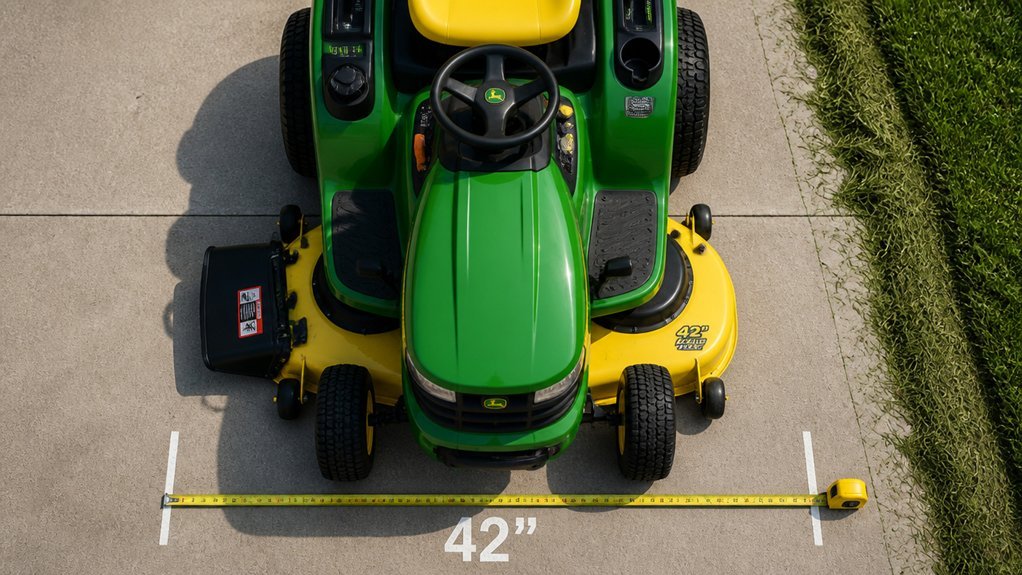
Where exactly does your money work hardest when spec’ing a riding mower? Prioritize engine displacement over horsepower; you’ll get torque that won’t bog in thick grass. Don’t pay for oversized decks if you’re trimming under ¾ acre—42 inches optimizes maneuverability without scalping.
Invest in hydrostatic transmission. You’ll maintain consistent ground speed across elevations without clutch-shifting fatigue. Skip cruise control on properties under two acres; it’s dead weight you’ll never engage.
Pay for welded steel decks, not stamped. They’ll outlast your first engine replacement. Save on LED headlights—mow in daylight.
Fabricated seat suspension and ball-bearing casters separate pro-sumers from replaceable units. You’ll feel the difference after ninety minutes.
These specs define true ROI. Everything else pads invoice margins.
Recommended Products
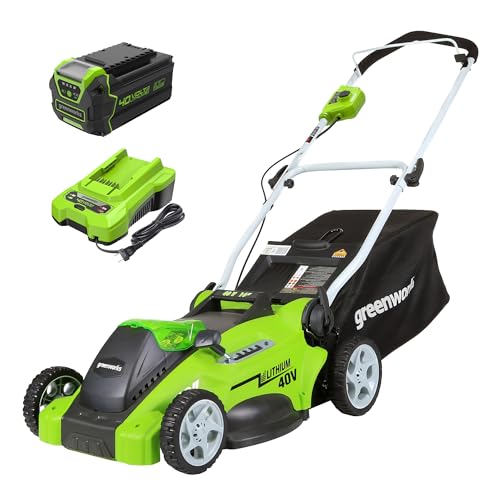
[16" LAWN MOWER] - This 40V lawn mower cuts up to 1/3 acre with fully charged 4.0Ah battery (varies based on grass condition and operator technique)
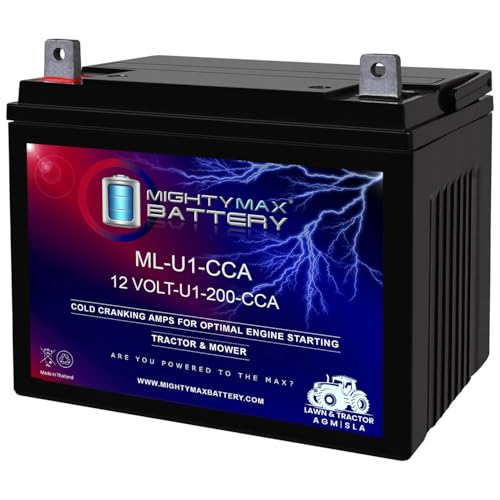
ML-U1 is a 12V 200 Cold Cranking Amps (CCA) Sealed Lead Acid (SLA) Battery

ML12-12F2 SLA is a 12V 12AH Sealed Lead Acid (SLA) rechargeable maintenance free battery - UL Certified
Mid-Range Riding Mowers: $2,500–$4,000 for 1–2 Acre Properties
How does a mid-range riding mower justify its $2,500–$4,000 price tag for your 1–2 acre property? You’re getting hydrostatic transmission, twin-cylinder engines, and reinforced cutting decks—specs that cut mowing time by 40% compared to entry-level models.
You’ll find 42–48 inch decks with fabricated steel construction, not stamped. That means cleaner cuts and years of durability. Look for models with 22–25 HP Briggs & Stratton or Kohler engines; they handle slight grades and thicker grass without bogging down.
You’re also gaining comfort features: high-back seats, cruise control, and tight 16-inch turning radius. Stay away from basic gear-driven transmissions here—they’ll wear you out on properties this size. This bracket delivers commercial-grade components without the premium markup, and you’ll feel the difference in every pass.
Recommended Products

Replaces OEM Part: Husqvarna, Craftsman 429636, 197253, 532197253, 532429636, 592855001, 598559101; AYP 197253, 532197253, 429636, 532429636

42" DECK BELT for 754-04060B 954-04060B 754-04060 954-04060,Fit for Craftsman SPM201671081 LT1500 LT2000 LT2100 PYT9000 T1000 T1100 T1200 T1300 T1400 T1800 T3000 T105 T110 T130 riding mower; Fit for John Deer GX10851, SABRE 1438GS 1438HS 1538HS 1542GS 1542HS 1642HS 1646HS 1742GS 1742HS lawn mower tractor, Scotts S1642 S2546

Replaces OEM Part: John Deere GX20072, John Deere UC32283, John Deere GY20570
Premium Riding Mowers: When $5,000+ Is Worth It
Why upgrade past the mid-range when you’re already hitting $4,000? Because your property demands it, and you’re paying for engineering that delivers.
At $5,000+, you’re stepping into commercial-grade chassis, fabricated (not stamped) steel decks, and hydrostatic transmissions with serviceable internals—not sealed disposable units. You’re getting EFI or liquid-cooled engines—Kawasaki FX, Kohler Command Pro, or Briggs Commercial Series—that maintain torque under load and run 2,000+ hours with scheduled maintenance. You’re getting four-link suspension seats, isolated operator platforms, and cross-porting hydraulics that minimize turf damage on side-hills.
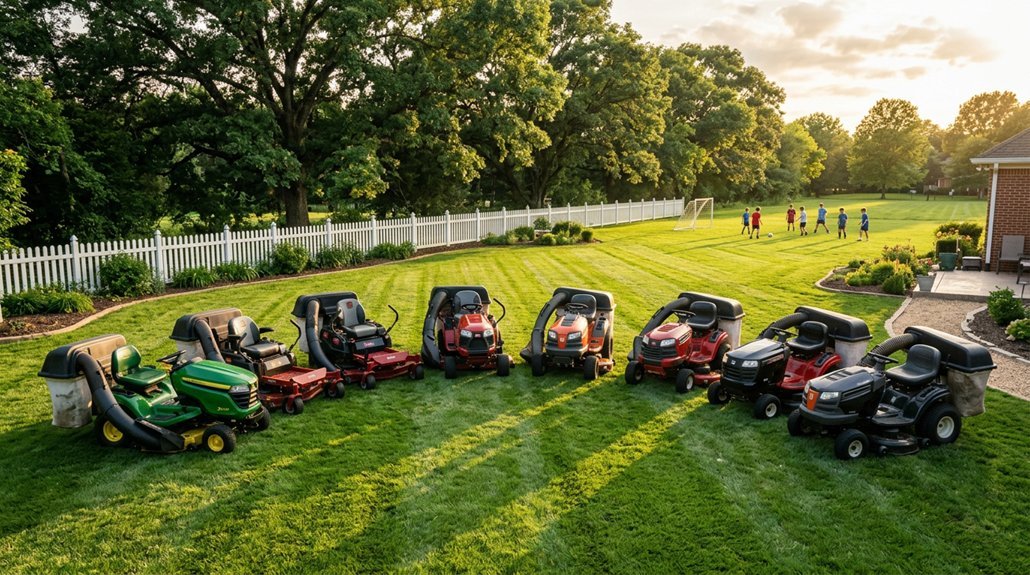
You need this if you’re cutting 3+ acres weekly, managing slopes exceeding 15 degrees, or running attachments like baggers, dethatchers, or front scoops. The buy-in stings, but you’re amortizing cost per cut over a decade, not replacing a box-store frame in year five.
Recommended Products
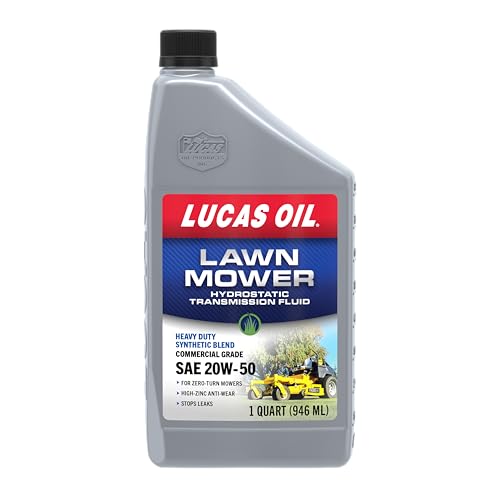
Premium Anti-Wear Protection

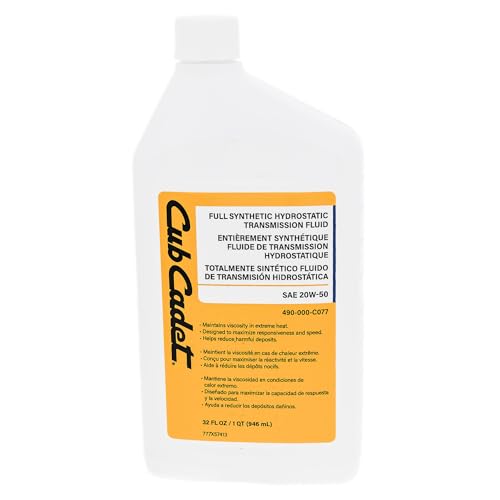
SAE 20W-50 Full Synthetic Hydrostatic Transmission Fluid is engineered to withstand mechanical stress and shearing for wear protection, performance and consistently smooth control that won?t fade over
Best Times to Buy a Riding Mower (Seasonal Savings)
When exactly should you pull the trigger on a riding mower purchase? You’ll find peak savings during September through October, when retailers liquidate inventory to clear floor space for snow blowers. During this window, you’re looking at 15-30% markdowns on current-year models with full manufacturer warranties intact.
You can also capitalize on early spring promotions in March and April, though discounts typically peak at 10-15%. Avoid May through July entirely—that’s when demand spikes and you’ll pay sticker price.
Monitor Memorial Day and Labor Day sales events closely; manufacturers like John Deere and Husqvarna often stack rebates with dealer incentives. If you’re targeting zero-turn models specifically, you’ll see deeper cuts on residential-grade units than commercial lines. Sign up for dealer mailing lists now—you’ll get first access to unadvertised clearance events.
Recommended Products

Replaces OEM Part: MTD, Cub Cadet, Troy Bilt, Craftsman 954-05001, 754-05001, CMXGZAM501065, 490-501-C065, 490-501-M065, 490-501-F065, 490-501-U065, 490-501-Y065


New vs. Used Riding Mowers: Real Savings Breakdown
Where exactly does your money work hardest when you’re weighing a shiny new machine against a pre-owned workhorse?
You’ll absorb 40-60% depreciation immediately on a new zero-turn or garden tractor. That $3,500 Cub Cadet becomes a $1,400-$2,100 used commodity within 200 hours. You’re paying premium for untouched hydrostatic transmissions, factory warranties, and zero wear patterns—but you’re also financing OEM markup.
A 3-5 year old used rider with documented service history delivers functional equivalence at 30-50% below MSRP. You sacrifice warranty coverage and assume blade spindle, belt, and battery replacement risks. Inspect deck integrity, compression, and hour meters. Private sellers price 15-20% below dealer trade-ins. Your break-even analysis hinges on annual acreage: sub-1 acre properties favor used; commercial operators demand new equipment reliability and parts availability.
Recommended Products

Fits the following models: D130 - Serial number above -040001 and D140 - Serial number above -040001

Comapatible with BS Craftsman MTD Lawn Boy Murray Tory Bilt Cub Cadet Snapper Simplicity push and riding lawn mowers, small engines, generators, pressure washers, Lawn Tractor, snow blowers, tractors, snow throwers.

John Deere Original Equipment Filter Kit LG265.
Conclusion
You’ll invest $1,500–$8,000+ depending on deck size, transmission type, and cutting technology. Prioritize V-twin engines and hydrostatic drives for properties over one acre—specs that’ll pay dividends in durability and cut quality. Time your purchase off-season for 15–20% savings, and don’t overlook used units with remaining warranty coverage. Match your mower’s capabilities to your terrain’s demands, and you’ll maximize ROI through years of reliable performance.
Recommended Products

🔋—Battery is a 12V 280 Cold Cranking Amps (CCA) Sealed Lead Acid (SLA) Battery. Dimensions: 7.68 inches x 4.92 inches x 6.14 inches. Polarity: Positive on Left, Negative on Right. Listing is for the Battery and Screws only.
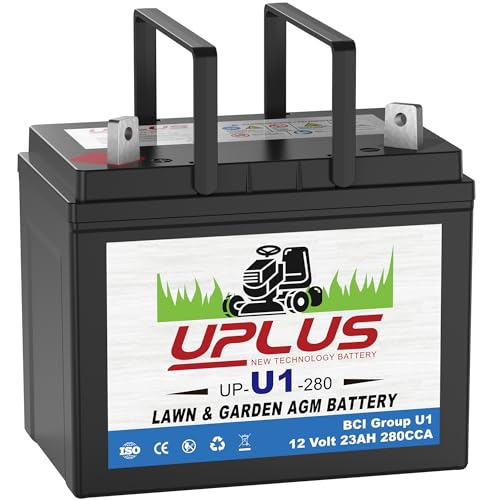
LONGEVITY OVER 5 YEARS --- BCI Group U1 Battery Replacement, 12V 23Ah, 280A CCA Sealed Lead Acid AGM Battery. Dimensions: 7.68L x 4.92W x 6.93H inches, Maintenance Free. No spills, no leaks, and no water to check. Terminal: Left : Positive (+)-Red, Right: Negative (-)-Black.
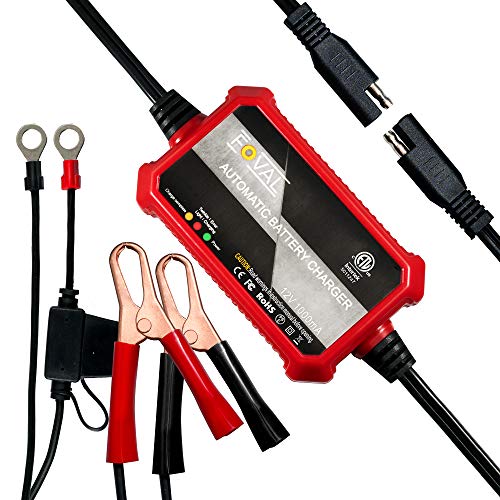
Automatic Battery Charger & Maintainer: 1A 12V smart battery charger perfect for SLA / VRLA / GEL CELL / AGM / WET lead acid batteries. It is a battery maintainer, trickle charger, float charger, and battery desulfator, also complete 4-step charging program (Initialization, Bulk Charge, Absorption Mode, Float Mode).