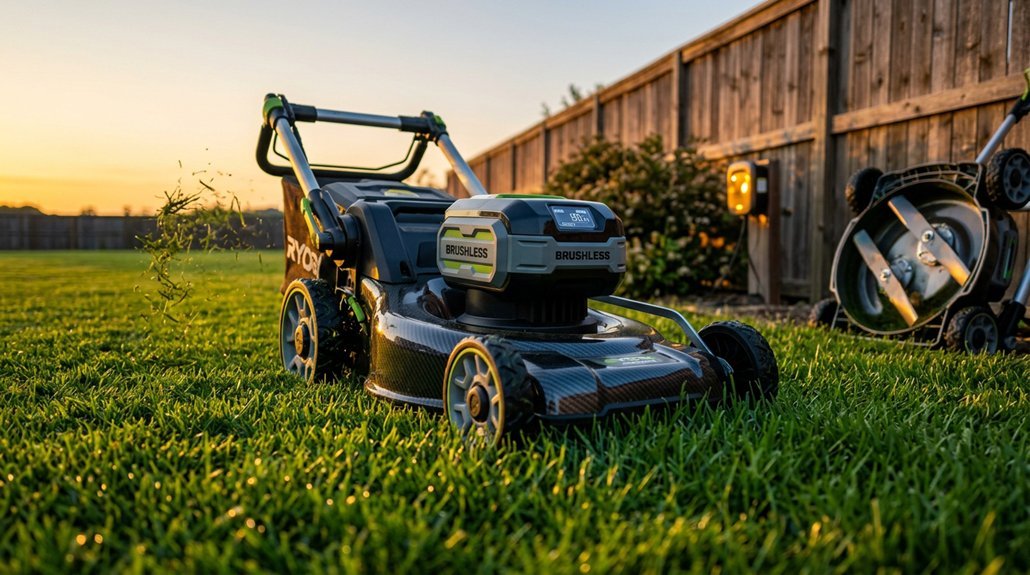

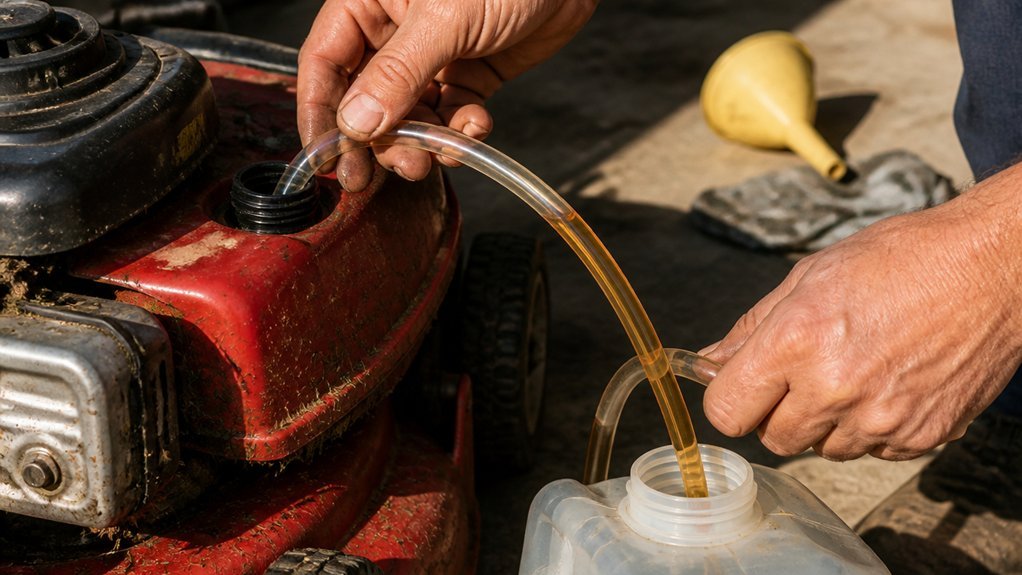
You’ll drain your lawn mower’s fuel system to prevent carburetor damage and guarantee reliable spring startup. Start by identifying whether your model uses a removable fuel line or requires siphoning—each demands specific tools and technique. The method you choose affects completion time and spill risk.
Identify Your Mower’s Fuel System First
Before you drain a single drop, you’ll need to pinpoint exactly how your mower’s fuel system is configured, since the correct method—whether siphoning, disconnecting a line, or using a baster—hinges entirely on that design. Inspect your fuel system components closely. If you own a Honda mower, you’ll find disconnectable fuel lines that release directly into a gas can. Look beneath the tank for a clear drain tube with pinch-type collars—detach these to release fuel.
Briggs and Stratton carburetors mount directly on the tank with no fuel line present, eliminating disconnection as an option. A direct-on-tank configuration demands siphoning or baster extraction. Correctly identifying these elements determines your drainage method. Match your setup precisely—guessing wastes time and risks spillage.
Recommended Products

SAVE TIME AND FLUID: Instead of the hassle and waste of draining a whole system when replacing or servicing a part, these hose clamp pliers can keep the car fluid intact while you get the job done; As a brake tool, it can secure the brake line

COMPLETE 3-PIECE SET WITH ADJUSTABLE JAW OPENINGS – Includes small (1/8" to 5/16"), medium (1/2" to 3/4"), and large (3/4" to 2-1/4") pliers. Covers everything from small vacuum lines and fuel hoses to large radiator hoses

Complete 6-Piece Hose Pinch Off Pliers Kit: Evertools hose clamp pliers set includes 6 fuel line clamp pliers in three popular sizes with both straight and 90° angled jaws, giving you the right tool to temporarily block brake, fuel, coolant and radiator hoses during automotive maintenance and repair
Get Your Mower Ready to Drain
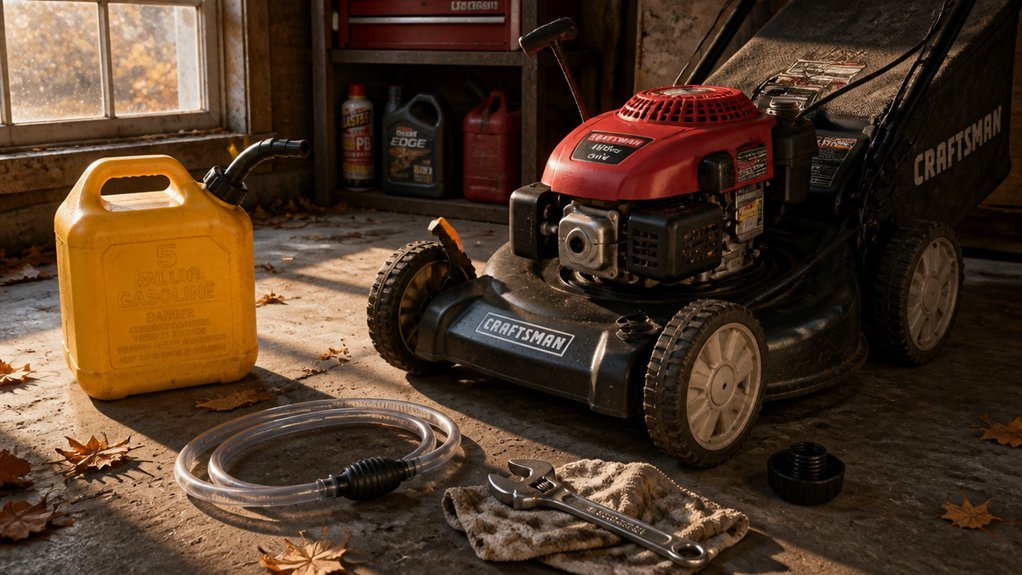
Once you’ve mapped your fuel system configuration, you’ll shift focus to securing your work environment and mower state. Position your mower on a flat, level surface with the engine off and completely cool. Remove the ignition key and disconnect the spark plug wire to eliminate any risk of accidental ignition during the procedure. You’ll then unscrew and remove the gas cap atop the fuel tank, creating access for the drainage process. Position a proper fuel-rated container beneath the fuel tank to capture the gas you’ll extract. Ensure you’re working in a well-ventilated area away from ignition sources. Set aside this collection container for later disposal according to local hazardous waste regulations. Verify your workspace remains clear of open flames, sparks, or heated surfaces before proceeding.
Recommended Products

Faster and Efficient Pumping: Unlike most gas pumps in the market, the hoses have been upgraded to Dia 15mm, large for faster and easier pumping. The black siphon buld with Build-in one way stop Valve, prevents the backflow of the fluid.

【Smart Auto-Stop Sensor – Zero Spills】Features an advanced leak-proof design with a built-in high-sensitivity auto-stop sensor. When the tank is full, the electric gas pump instantly cuts off the flow, effectively preventing dangerous fuel overflows and messy cleanups. Enjoy a hands-free, worry-free refueling experience that keeps your garage and equipment spotless.
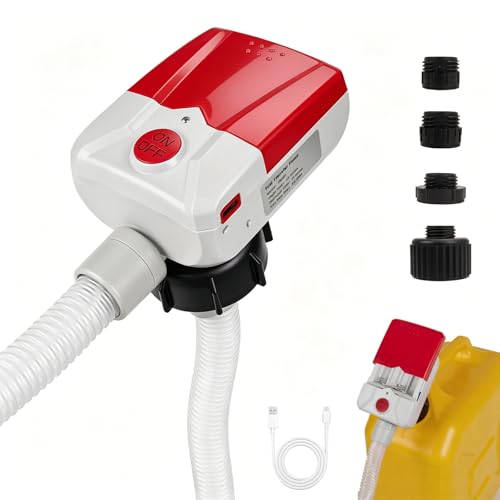
AUTO-STOP FUNCTION: Leak Protection,the sensitive auto-stop sensor will stop the flowing timely when the fuel full or the sensor part touch the oil, no worry about leak and overflow, clear transfer.And the beeper warning when auto stopped make it more safe.
Drain Gas Through the Fuel Line (If Present)

If your mower includes a fuel line, you’ll find it running between the tank and the carburetor—often with a transparent tube section and pinch-type collars securing each end. Grab pliers, squeeze each collar, and slide them back to release the fuel line from its fittings. Position an approved gasoline container below the disconnected line, then let gravity drain the old fuel. You may need to initiate a slight siphoning action to maintain flow until the tank empties. Work in a ventilated area and keep ignition sources away to minimize fume exposure and spill hazards. Once you’ve managed to drain all gasoline, inspect the line for cracks or degradation. Reattach the fuel line securely, ensuring full collar engagement and proper seating. Refill with fresh fuel, add stabilizer if needed for storage, and run the engine briefly to circulate the new gasoline through the system.
Recommended Products

JDMSPEED Universal for gasoline or diesel engine, Include Socket Wire

Efficient Manual Siphon Pump: Hand siphon hose pump for gasoline, oil, water, diesel and other common liquids, ideal for emergency transfer. Also suits for fish tank, aquarium tank, small fountain and small air cushion swim pool water transfer. NOT for edible oil, drink water, salt water and any chemical liquids

Electric Fuel Pump Output Pressure: 2.5-4PSI; Input Voltage: 12 Volt
Siphon Gas When There’s No Fuel Line
Some mowers lack an accessible fuel line entirely, so you’ll need to extract gasoline directly from the tank. Place the mower on a flat surface, ensure the engine’s cool, remove the ignition key, and disconnect the spark plug wire before proceeding.
Insert the orange intake tube of your siphon pump into the gas tank until it reaches the bottom. Place the black outlet tube into an approved fuel container. Prime the pump several times to initiate suction and allow gravity to transfer the gasoline. If your tank features a clear siphon tube with pinch collars, squeeze the collar tabs and pull the hose free from the male fitting to drain into a bottle instead.
After draining, replace the gas cap securely. Refuel with fresh gasoline if needed, add fuel stabilizer for storage, and transport old fuel to proper disposal facilities.
Recommended Products

Fits Your Needs - Type I safety cans have a single opening for filling and pouring fluids. They are used to safely store, transport, and dispense flammable liquids.

Efficient Barrel Fuel Transfer: Features upgraded 15mm internal diameter PVC hoses (approximately Φ15x10mm as seen in similar fuel hoses ) for faster, smoother pumping of gasoline, diesel, and oils. The built-in one-way stop valve (check valve ) prevents backflow and ensures seamless, continuous operation from barrels and containers.
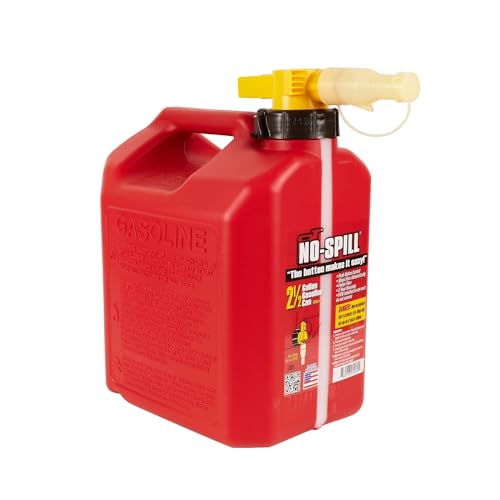
Thumb button control for precise pouring
Run the Engine to Burn Off Remaining Fuel
You can drain the tank by running the mower’s engine until it consumes the remaining fuel, burning off most of the gasoline before storage. Start the engine and let it idle, monitoring operation until fuel starvation causes it to stall. This method empties the gas tank completely, preventing varnish formation and fuel deposits during extended storage. You’ll notice fumes as the engine burns off remaining fuel; ensure adequate ventilation and avoid enclosed spaces. The process requires time but eliminates manual siphoning. After stall, attempt restart to confirm depletion. Check that your mower’s fuel system permits safe dry operation—some designs risk damage without fuel flow. Once finished, address any residual fuel or spills appropriately. This approach works best when you can’t access fuel lines directly.
Recommended Products

STRONG CARBON STEEL BODY: Made of solid carbon steel ensuring stable strength for daily maintenance tasks.

Good Quality - Made of carbon steel, this Spark Boot Removal Pliers is safe, durable, cost-effective

CTA Tools 3238 Spark Plug Gap Gauge - 9-Wire is designed to accurately measure spark plug gaps. The sizes range from 0.025, 0.030, 0.035, 0.040, 0.044, 0.045, .0.050, 0.055 and 0.060-inches. Heavy-duty construction allows for strength and durability. California Prop 65 - Warning, This product contains chemicals known to the State of California to cause cancer, birth defects or other reproductive harm.
Get Rid of Old Gas the Right Way
Once the tank sits empty or the engine stalls from fuel starvation, you’re left with old gasoline that can’t go back into the machine or down a drain. You’ll need to drain the fuel completely before proceeding.
To extract old gas, identify your mower’s configuration. If equipped with a fuel line, disconnect it at the carburetor and drain into an approved gas can. For mowers without accessible fuel lines, siphon directly from the tank using a hose or extract with a large baster or pipette.
Old gasoline forms varnish and deposits that clog carburetors and valves, causing spring starting failures and engine damage. Never store drained fuel for reuse.
Transport collected old gas to a hazardous waste facility or municipal collection site. Document the quantity and date for facility records.
Recommended Products

3 Different Sizes: Small 1/8-5/16 inch, Medium 1/2-3/4 inch, Large 3/4-2 1/2 inch

3 Different Sizes: This set comes with 6 red color fuel line clamps in 3 different sizes. Small 1/8 " to 5/16 ", Medium 1/2 " to 3/4 ", Large 3/4 " to 2-1/4 "

Stop Fluid Flow Without Removing Hoses: EVERTOOLS hose clamp pliers help temporarily stop fluid flow in flexible hoses during automotive repair and maintenance. Ideal for fuel lines, brake hoses, coolant hoses, radiator hoses, heater hoses and flexible gas lines when you need to work without draining or disconnecting the hose
Add Fresh Gas or Stabilize for Storage
What now? You’ve drained the old fuel, so you’ll add fresh gasoline to ensure proper starting and system function. Pour in the new gasoline, but don’t stop there—you’ll mix in a gasoline stabilizer to lubricate components and minimize varnish formation during storage. Follow your product’s specified stabilizer-to-gas ratio precisely; incorrect proportions reduce effectiveness. Replace old fuel entirely with stabilized fresh gas if you’re storing long-term—don’t leave aged fuel in the tank. Start the engine after refilling and let it run for two minutes. This circulates the stabilizer through the carburetor and fuel lines. Shut off the engine, then store your mower in a well-ventilated, dry location away from ignition sources.
Recommended Products

5 GPM High Flow: This cordless fuel transfer pump delivers 5 GPM for fast and efficient liquid transfer significantly faster than 3.2 GPM fuel pumps. Powered by a high-efficiency motor, it's suitable for gasoline, diesel, and kerosene. Get quicker refueling without the wait

14-GALLON (53L) FUEL CADDY: The Scepter Flo 'N Go Fueling Station is a fuel tank on wheels for farm, marine, lawn mowers, home, and recreational use; A large capacity and convenient features make it great for filling vehicles and gas cans

【Specification】Inline Fuel Pump, Output Pressure : 2.5-4 psi, Voltage : 12 Volt, Flow Rate : 30 GPH, Hose Size : 8 mm ( 5/16 inch )
Why Old Gas Destroys Engines (And How to Prevent It)
Why does gasoline transform from a clean-burning fuel into an engine-destroying hazard? Gasoline degradation begins within thirty days of storage, triggering chemical reactions that produce varnish-like deposits and sticky organic compounds. You’ll find these residues clogging carburetor jets, obstructing fuel filters, and restricting proper fuel flow. The degraded fuel also attracts moisture, promoting rust formation throughout your fuel system and accelerating corrosion of metal components. When you attempt spring startup, these blockages cause hard starting, rough operation, and potential permanent engine damage. You’ve now understood why draining old fuel before storage protects against costly failures.
Alternatively, you can employ a fuel stabilizer—adding it to fresh gasoline and running the engine to circulate treated fuel through the system. This procedure inhibits degradation reactions, extending safe storage duration.
Recommended Products

QUALITY MADE: Durable rubber pump bulb for fast and efficient transfer, With 2 enlarged caliber and flexible PVC hoses for siphoning fluid more quicker and visual working progress. Two metal clips for fixing the hose in place, prevent slippage and leakage. An adjustable hose retainer(color SENT randomly) for keeping the hose standing into the container or receiver and one multi-purpose brass tip as a weight to sink the hose, or a way to extend the hose length

【Specification】Inline Fuel Pump, Output Pressure: 3-6 PSI, Voltage : 12 Volt, Flow Rate : 30 GPH, Hose Size : 8 mm ( 5/16 inch ), Material: Copper Clad Aluminum

Compatibility: OEM 491922 691034 692313 808492 808656. Compatible with select Kohler, Briggs & Stratton, Kawasaki, Honda, and Yamaha engines used in riding lawn mowers, lawn tractors, golf carts, and outdoor power equipment from brands like Cub Cadet, John Deere, EZGO, Mikuni, Club Car, Husqvarna, Craftsman and more.
Conclusion
You’ve now drained your mower’s fuel system completely. Reattach all fittings securely, tighten connections to specification, and inspect for leaks before starting. Your engine’s protected from varnish buildup and corrosion damage that old gas causes. Store the mower with stabilized fresh fuel or empty, depending on your timeline. Dispose of waste gasoline at certified hazardous waste facilities—never pour it on ground or down drains. Proper fuel maintenance extends engine life considerably.
Recommended Products

Thumb button control for precise pouring

Suitable for storing liquid alcohol, petrol, kerosene and other liquid fuels.

SAFETY FEATURES: Child-resistant locking system and anti-spill design prevent leaks and accidental access, making it ideal for secure fuel storage.