
You’ll need to follow a precise sequence before pulling that starter cord or pressing the electric button. Start by opening the fuel valve and inserting the ignition key—without these engaged, your priming efforts won’t draw fuel properly. The cold temperature dictates how many times you’ll press that primer bulb. Two presses might suffice in mild conditions, but drop below freezing and you’re looking at four. Set your choke to full and throttle to fast, yet even with perfect preparation, there’s a critical mistake waiting that could leave you stranded in the snow.
Prepare Your Snow Blower: Fuel Valve and Ignition Key
Why begin anywhere else than the fuel system?
You’ll start by locating the fuel valve on your two-stage snow blower and rotating it to the open position, permitting unrestricted fuel flow to the carburetor.
Next, you’ll insert the ignition key into its receptacle, completing the starting circuit and enabling electrical continuity for subsequent operations.
Without this key properly seated, your priming efforts and ignition sequence can’t proceed.
You’re establishing the foundational conditions for combustion: fuel delivery path integrity and energized control systems.
These preparatory steps precede priming, which you’ll execute momentarily.
Remove one mitten now to ensure precise manual dexterity for the bulb presses ahead.
Once you’ve opened the fuel valve and secured the ignition key, you’ve created the necessary preconditions for fuel vaporization and ignition—proceed to choke engagement and throttle positioning.
Recommended Products

Compatible 698181 494539 697944 Replace for Tecumseh 35857 90-degree fuel shut off velve for 1/4" fuel line

1/4 Inch Fuel Line Fit: Designed for 1/4 inch (6.35 mm) inside-diameter fuel lines. Check the hose size and reference number before ordering.

Carb Saver! With this shut off valve, you can cut off fuel supply and let the carburetor run dry to prevent fuel gunk up
Prime Your Snow Blower: 2 or 4 Presses Based on Temperature
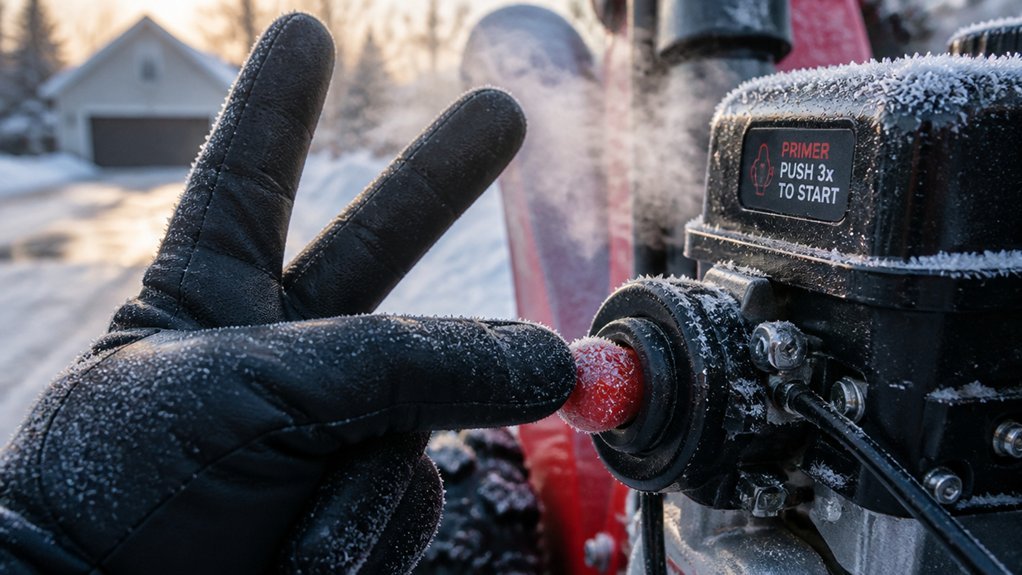
How precisely should you calibrate your priming routine? You’ll execute two presses of the primer bulb when the temperature registers 15°C (59°F) or warmer; drop below this threshold, and you’ll double your input to four presses. Remove one winter mitt to ensure consistent finger pressure and mechanical reliability during this operation. You’re metering fuel directly into the carburetor, so precision prevents flooding—excess priming generates gas fumes and hydrolocks the engine. If you’re restarting within five minutes, you won’t repeat this sequence; exceed that interval, and you’ll re-engage the full procedure including choke closure. Cold-temperature starting demands this calibrated priming approach, yet you’ll resist the impulse for additional presses beyond specification. You’ve completed fuel system preparation and will now position controls for ignition.
Recommended Products
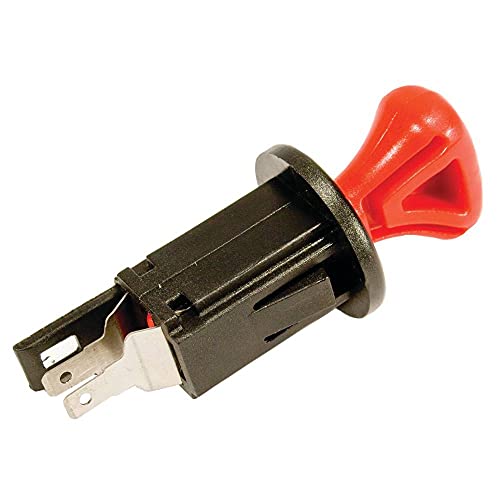
Package length: 7.366 cm

Part Number: 430-386 Compatible with MTD Cub Cadet 951-10630 731-05632 751-10630 731-05632A; Compatible with Ariens 07500111; Compatible with Toro 117-7728

Set Your Snow Blower’s Choke and Throttle

Where precisely should you position the choke before ignition?
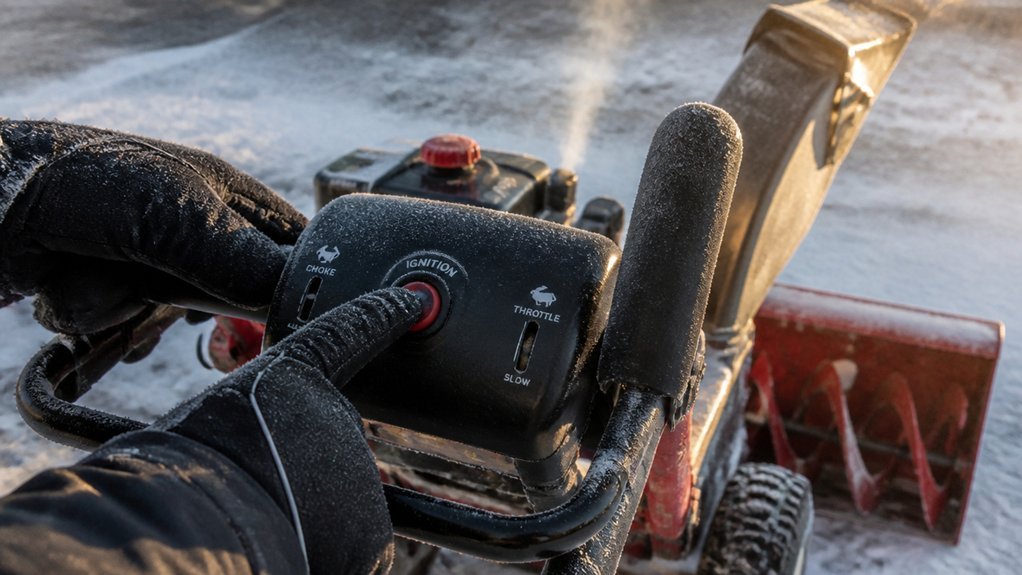
For cold starts, you’ll close the choke fully. When temperatures reach 30° F (−1° C) or warmer, you’ll set the choke half to three-quarters open. You’ll move the throttle to fast before starting to generate a stronger spark and accelerate engine warm-up. This choke and throttle configuration forms a critical phase of your starting procedure.
If you’ve shut off the engine within five minutes, you’ll restart with the choke in the run position without re-priming. After five minutes or more, you’ll close the choke and prime normally.
Once you’ve engaged the starter and the engine runs, you’ll gradually return the choke to run as the engine warms. If overpriming causes flooding, you’ll close the fuel shut-off, shut off the choke, pull the starter several times, wait 15 minutes, then reopen the fuel shut-off and restart.
Recommended Products
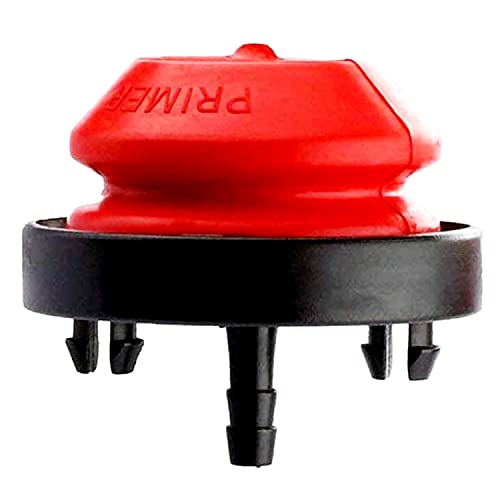
570682A Snow Blower Primer Bulb Assembly

Compatible with zama 0057003, 0057004, 0058001.Compatible with Echo # 12538108660, 1253814673, 12538146730.Compatible with hometile A01195A, A01195, UP04803, PN 00570025; for Oregon 49-028.

Package include:1 primer bulb pump. 2 fuel lines. 2 clamps.
Start Your Snow Blower: Recoil or Electric
When you’re ready to fire up the engine, you’ll engage the starter using whichever method your model employs—either grip the recoil starter handle and pull sharply, or depress the electric starter button while ensuring the machine’s plugged into a grounded outlet. Keep the choke fully closed for cold starts; set it partially open when temperatures exceed 30°F. You’ll start the engine without cranking continuously—use five-second bursts with ten-second intervals between attempts. Limit yourself to ten total tries. If you used the electric starter, you’ll unplug the extension cord immediately once the engine catches to prevent damage. Should the engine fail to start after repeated attempts, you’ll reopen the choke slightly before retrying. Persisting failure requires consulting your manual or seeking professional repair.
Recommended Products

Warm Up Your Snow Blower and Adjust the Choke
Original text (word-for-word):
Once the engine catches, you’ll manage the choke position to regulate the fuel mixture during warm-up. For temperatures below 30°F (−1°C), you’ll keep the choke fully closed; at 30°F or warmer, you’ll open it to half or three-quarters position. You’ll monitor engine behavior during this critical warm-up phase, ensuring it reaches stable idle before advancing the throttle. You’ll then transition the choke to the run position once the engine has properly warmed.
For restart procedures, you’ll apply different strategies based on downtime. If the engine stopped exceeding five minutes ago, you’ll close the choke and prime per standard starting protocol. If shutdown occurred within five minutes, you’ll restart without choke adjustment. These protocols optimize fuel delivery, prevent flooding, and ensure reliable engine response across varying thermal conditions and operational interruptions.
Recommended Products


【Compatible Models】 The snowblower electric starter cord has a wide range of adaptability. Compatible with A riens 28″ sno-thro attachment, ST520, ST520E, ST624, ST724, ST824E, SS522, SS722, SS722C, ST1128DLE, ST1128LE, ST1130DLE, ST1132LE, ST11526DLE. Please check out the descriptions below if you want to check out more models.
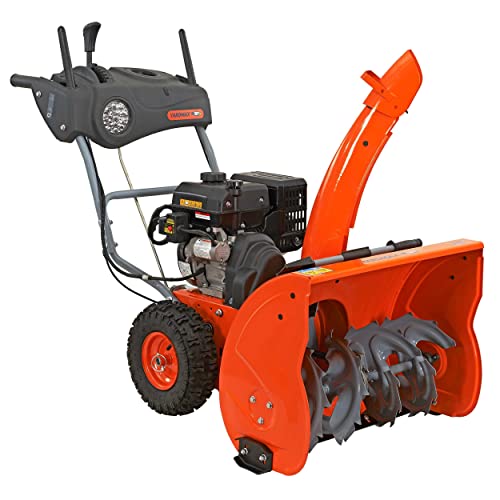
Electric start, high performance snow engine
Your Snow Blower Won’t Start? Check for Flooding First
Because fuel fumes during startup signal overpriming, you’ll need to identify flooding before troubleshooting other components. Flooding occurs when excess fuel saturates the engine, preventing ignition. You’ll detect this through a strong fuel odor or white smoke from the muffler.
To clear a flooded engine, close the fuel shut-off valve if equipped, shut off the choke, and pull the recoil starter three times. Wait fifteen minutes to let excess fuel evaporate. Overpriming and flooding typically follow multiple failed starts, so limit cranking to five minutes total and allow cooldown periods between attempts.
After clearing, reopen the fuel shut-off valve, adjust the choke appropriately for engine temperature, and retry starting with minimal priming. If the engine still won’t start, consult your manual or a Toro dealer.
Recommended Products
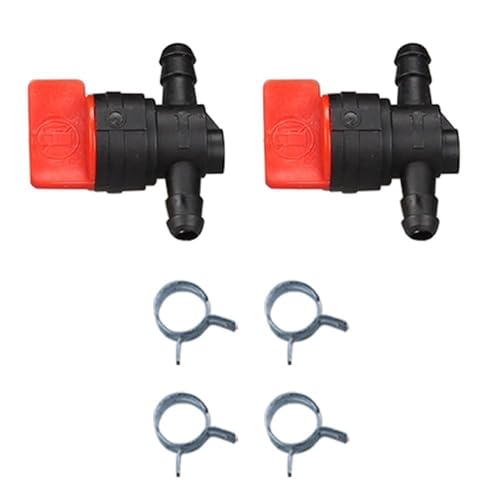
1/4 inch Fuel Shutoff Valve for Small Engine Replace for John Deer AM36141 AM107340 698183MA MU698183
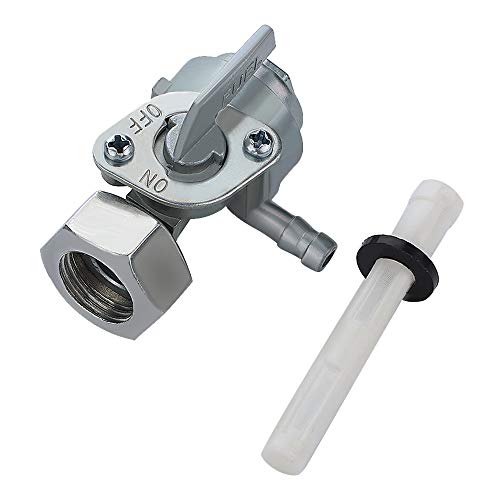
Petcock Fuel Shutoff Valve Nut threading 16mm x 1.5mm; 22mm hex nut ( Please compare with your original carefully brfore ordering.) Predator Generator Parts

PACKAGE INCLUDED: 2 x Fuel Shut-Off Valve, 2 x Fuel Tank Bushing Grommet, 2 x Clamp. Fuel shut off valve needs 1/4-inch ID fuel line. Fuel tank bushing: ID 3/8-inch, OD 1-1/16-inch, HT 5/8-inch. For 33-64" fuel tank hole
Protect Your Snow Blower’s Electric Starter: Cranking Rules
Flooding isn’t the only risk during startup sequences—you’ll also need to guard your electric starter against thermal damage. Limit each cranking interval to five seconds, then pause for ten seconds minimum. This cooldown period prevents motor overheating and preserves starter integrity. Never hold the starter engaged continuously; intermittent operation is essential for safety and component longevity.
After the engine fires, immediately disconnect your extension cord. Sustained electrical connection risks circuit overload and permanent starter damage. Monitor your attempt count—discontinue after ten cycles. Persistent failure indicates mechanical issues requiring professional diagnosis, not repeated cranking.
If the starter emits whining or grinding noises during operation, halt immediately. Inspect extension cord integrity and plug connections; resistance from faulty wiring strains motor windings. These protocols ensure reliable electric starting without compromising critical safety systems.
Recommended Products

Snow Blower Key Set replaces 490-241-0008 and 4902410008. This multi-fit set includes 4 keys for various snow blower makes and models. The 430 Key fits many Indak-style key-turn ignition systems; the ST1 Key is compatible with MTD and Craftsman snow blower engines; the T Key fits for Tecumseh Snow King engines; and the B Key fits many snow blower engines in the 15Z100, 12A100, 12A300, 12A400, and 12C100 series. This is a replacement part, not an OEM part, but works as a reliable substitute.

Engine ignition switch compatible with MTD Powermore 951-10637, 751-10637 and Ariens 20001031

Specs: Description: Ignition Key, Package of 2
Restart Your Snow Blower If You Shut Down Recently
Why risk engine damage when a brief pause prevents costly repairs? If you shut down recently, you must wait fifteen minutes before you attempt a restart. This interval prevents flooding caused by residual overpriming. Once elapsed, you’ll close the fuel valve, switch the choke to the off position, and pull the recoil grip three times to evacuate excess fuel. Next, you’ll reopen the fuel valve, set the choke to run, and engage the electric starter or recoil. If ignition occurs but operation proves erratic, you’ll modulate the choke gradually toward open as thermal equilibrium establishes. Should the restart fail, you’ll permit another fifteen-minute cooldown period. Persistent malfunction requires consultation of your Toro manual or an authorized dealer for advanced troubleshooting protocols.
Recommended Products

Replacement manufacturer part number: MTD # 751-10639 751-10639A 951-10639 951-10639A 951-10888A 951-10888B 751-10888 751-10888; Tecumseh # 321802A 570682A 570682

1. Direct Replacement - This primer bulb is precisely engineered to replace Lawn-Boy and Toro part number 66-7460, ensuring a perfect fit for your Toro snowblower and seamless functionality.

Package Includes: 1 x 66-7460 Primer Bulb, 1 x 44-2750 Primer Body, 1 x Fuel Line Hose, 2 x Clamps, 1 x 298090 150 um Fuel Filter
5 Snow Blower Maintenance Tips for Easy Starting
What separates a snow blower that roars to life on the first pull from one that sputters and stalls in subzero conditions? Rigorous preventative maintenance. You eliminate starting failures by using fresh fuel—less than 30 days old—or adding stabilizer to preserve fuel integrity for 4–6 months, preventing gum deposits in the carburetor. You replace a questionable spark plug annually and verify the spark plug wire seats firmly onto the terminal. You check and change engine oil per manufacturer intervals, ensuring proper lubrication for 4-cycle engines. You inspect rotor blades, scraper bars, and drive belts yearly, tightening or replacing worn components per specifications. You maintain the starting system through consistent oil changes, fuel management, and adherence to factory maintenance schedules.
Recommended Products

NOTICE: Custom Rocker Switch Available & Sold Separately for John Deere X, 1, 2, & 3 Series Tractors with Factory-Ready Switch Blanks. Custom-labeled for a factory look, the switch is designed to seamlessly drop right into the preinstalled switch blank. To find this product, search for part number 118.532 or ASIN: B0CJMY9VR1

Knob Compatibility:791948 Choke shaft knob is designed as a direct replacement for Briggs & Stratton 10D132-0002-F8, 10D132-0004-F8, 10D132-0005-F8(Other models please refer to product description), for Toro and for Ariens engines, ensuring seamless integration with your engine. Choke shaft knob is widely used in carburetor, snowblower, lawn mower, and other small engines, providing versatile utility for your machinery

【Perfect Compatibility for Snow Blowers】This snow chute deflector control kit is specifically designed for John Deere X, 1, 2, & 3 Series Tractors and 47", 54", & 60" snow blowers. Direct replacement for OEM AM126215 and AM132714. Custom rocker switch available separately for a factory-style fit
Conclusion
You’ve prepared the fuel system, primed appropriately for temperature conditions, configured choke and throttle settings, and executed the starting sequence within operational limits. Your snow blower’s ignition system requires proper fuel-air mixture and electrical connectivity. Monitor engine response during warm-up, adjust choke progressively, and adhere to cranking intervals to preserve starter motor integrity. Regular maintenance ensures reliable cold-weather starting performance.
Recommended Products

MODEL NUMBER: Snowblowers electric starter cord 02483100


【Compatibility】The snow blower starter cord compatible with Ariens vehicle model Classic 8524, Power-Brush 28, Power-Brush 36, Pro 26, Pro 32, Pro 36, Sno-Brush 28, SS322, SS522, SS522C, SS522EC, SS722C, SS722EC, ST1024, ST1024DLE, ST1024DLE Pro, ST1027LE, ST1028, ST1028LE, ST1028SLE, ST1124DLE Pro, ST1128DLE, ST1128LE, ST1130DLE, ST1132LE, ST11526DLE, ST11528DLE, ST11528DLET, ST11528LE, Gravely Power-Brush 28, Mack SS522, etc.