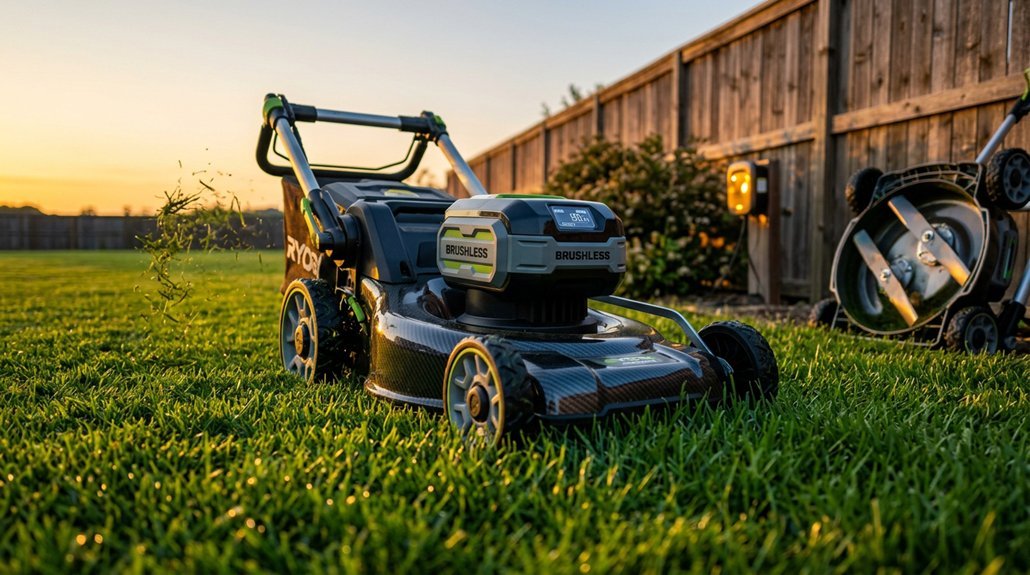

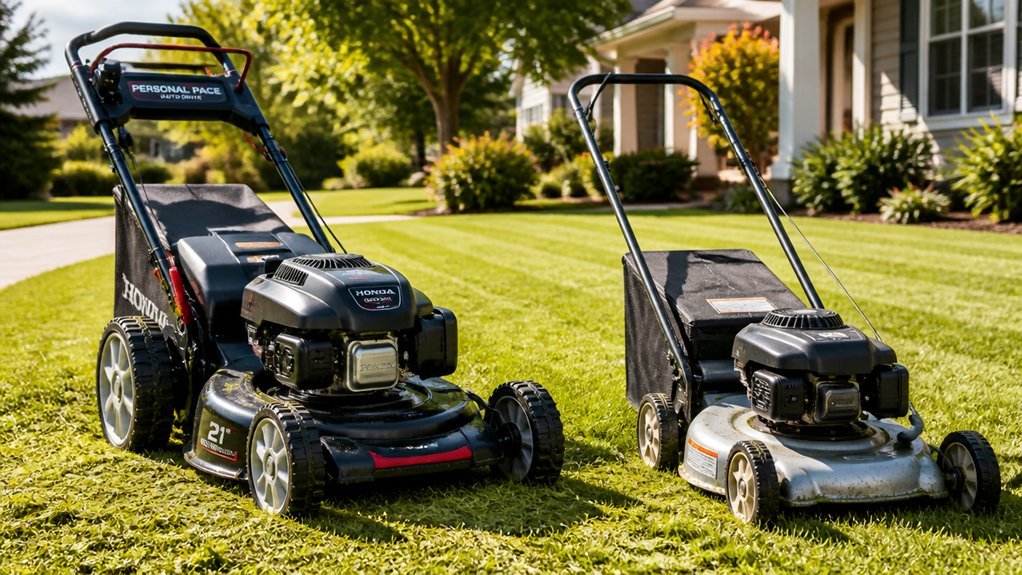
You stand at the hardware store weighing two machines that cost roughly the same but demand entirely different commitments from your body and your wallet. The push mower asks for muscle; the self-propelled asks for maintenance. Your yard’s slope, square footage, and your tolerance for ongoing expense will determine which equation balances in your favor. The wrong choice doesn’t just waste money—it wastes seasons.
Self-Propelled vs. Push Mowers: 5 Decisions That Matter Most
How do you choose between a self-propelled and push mower when your lawn, budget, and physical stamina all pull in different directions? You must evaluate the drive system, terrain demands, and required effort.
A self-propelled mower transfers power to the wheels via FWD, RWD, or AWD configurations, substantially reducing your exertion. You push less; the machine advances independently. Conversely, a push mower demands entirely manual propulsion—lighter, cheaper upfront, but physically taxing across extended sessions.
Consider your terrain: flat ground suits either option, but slopes or irregular ground favor the self-propelled variant. RWD provides traction on inclines; AWD handles varied terrain at higher cost and weight. Push mowers excel on small, level lots where effort remains manageable.
Cutting quality remains comparable. Your decision hinges on balancing effort reduction against acquisition cost and maintenance obligations.
Recommended Products

170CC OHV ENGINE – Powerful 170cc 4-stroke OHV engine delivers reliable performance for thick grass and larger yards. Auto choke and recoil start make starting easy.

DIMENSIONS: Tire Diameter: 8 inch; Tire Width: 2 inch; Bore: 1/2 inch

【SUITABLE FOR】 Front drive wheels of lawn mowers such as husqvarna, poulan, poulan pro, roper, sears/craftsman, weedeater, etc,Work with most Sears Craftsman Husqvarna FWD front wheel drive self-propelled walk behind models, like 917370431 917370441 917370601 917370692 917370430 917370432 917370640 etc.Compatible with many Craftsman lawnmower models.
What Yard Size Needs a Self-Propelled Mower?
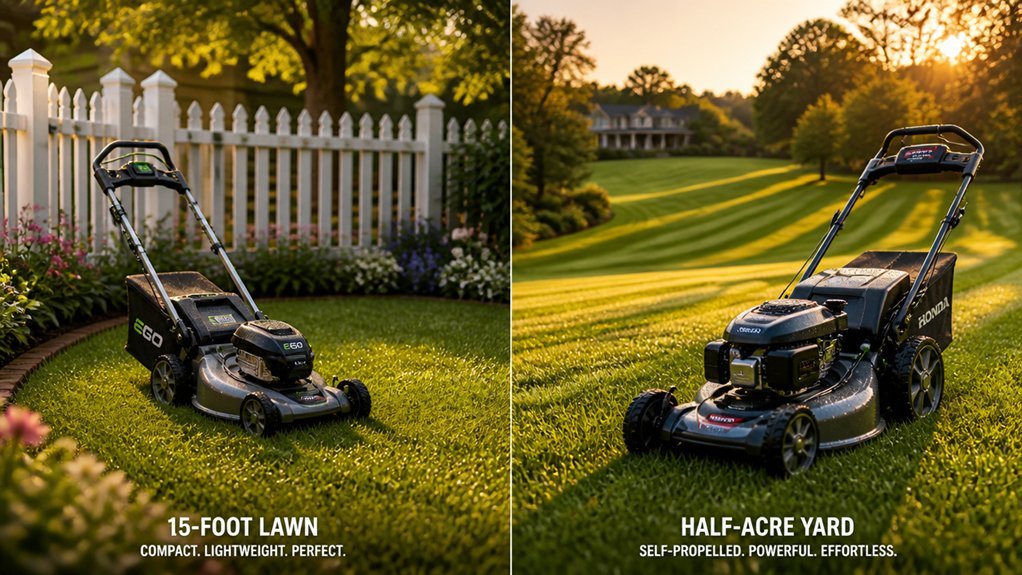
Where exactly does a push mower stop making sense and a self-propelled drive become essential? You draw the line at yard size. For properties under one-half acre with minimal elevation change, you operate a push mower efficiently—your muscle power suffices. You cross into mandatory self-propelled mower territory at one-half acre and beyond. Medium to large lawns demand sustained propulsion; you conserve energy while covering expansive ground. You’ll exhaust yourself pushing across acreage where a drive system maintains consistent forward momentum. Slopes amplify this requirement dramatically—you’ll strain against gravity without powered wheels. Uneven terrain compounds operator fatigue further; you’ll navigate ruts and undulations with reduced physical toll when the mower advances automatically. You save measurable time traversing large areas, and you avoid repetitive stress injuries from manual propulsion. Calculate your exact square footage. You’ll recognize the breakpoint immediately.
Recommended Products

Dimensions: Tire Diameter: 8 inch; Tire Width: 1.75 inch; Bore: 1/2 inch

【COMPATIBLE】Fits Troy-Bilt TB210, TB230, TB240, TB250, TB270ES, Tuff-Cut 210, 12A-264U011, 12A-264V211, 12A-266A766, 12A-446A011, 12A-446A066, 12A-446A711, 12A-446C211, 12A-446C266, 12A-449R766, 12A-466A711, 12A-466A766, 12A-466M011, 12A-466M066, 12AD566N063, 12A-466N211, 12A-466N266, 12A-469R766, 12A-562Q711, 12A-566N711, 12A-566N766, 12AV566M066, 12AV566N011, 12AV566N066, 12AV566N211, 12AV566N266, 12AV566N711, 12AV569N766, 12AV569Q711, 12AV569Q766, 24A-071J766, 24A-070J766, 24B-070J766, CSV070

PRODUCT COMPATIBILITY: Compatible with front drive wheels of lawn mower Husqvarna, Poulan, Poulan Pro, Roper, Sears/Craftsman, and Weedeater lawn mowers. Fit for self-propelled walk-behind models including 917370431 917370441 917370601 917370692 917370430 917370432 917370640 and most Craftsman lawnmower models.
Flat Yard or Slope? How Terrain Changes Your Choice
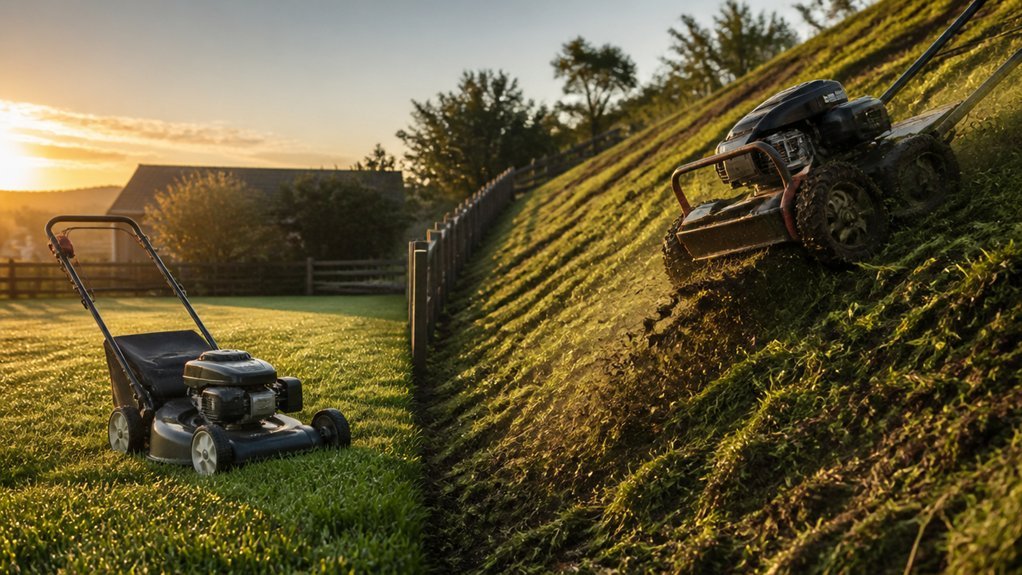
Terrain dictates your mower selection more decisively than any other single factor. On flat Terrain, you’ll find Push mowers optimal—they’re lighter, simpler, and demand no drive system maintenance. You’ll maneuver effortlessly without powered assistance.
When facing Slopes, you need Self-propelled systems. Rear-wheel-drive or all-wheel-drive configurations deliver superior Traction on inclines, transferring power where grip matters most. Front-wheel-drive self-propelled models suit flat ground but lose effectiveness on hills as weight shifts rearward.
The drive system’s added weight becomes advantageous here: powered wheels pull you uphill, reducing muscular strain and fatigue. You’ll control descent speed through variable drive engagement rather than brute resistance.
Match your equipment to topography. Flat yards reward minimalism; uneven ground demands mechanical advantage. Your body’s endurance and cut quality both depend on this calculation.
Recommended Products

Multi-Function Convenience: Easily switch between mowing, trimming, and edging for three-in-one versatility with your string trimmer

Convertible Design: The removable wheeled deck allows quick transformation into a small lawn mower for versatile yard care
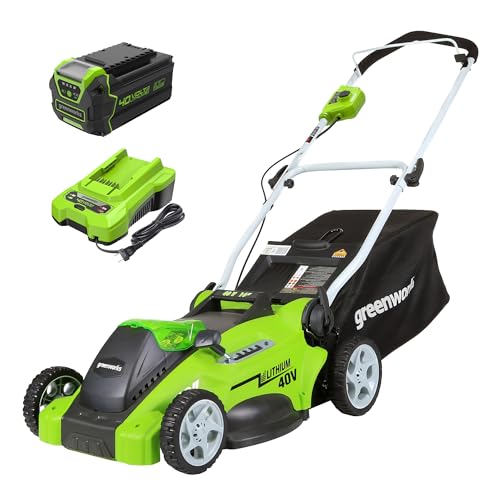
[16" LAWN MOWER] - This 40V lawn mower cuts up to 1/3 acre with fully charged 4.0Ah battery (varies based on grass condition and operator technique)
Push Mower Types: Manual, Electric, and Gas Options
Once you’ve determined flat ground suits your property, you’ll select from three distinct push mower architectures: manual reel, electric, and gas-powered. Each push mower type demands your physical effort for propulsion, differentiating self-propelled vs push dynamics fundamentally.
You’ll operate a manual reel mower through direct mechanical force alone; it requires no fuel, produces zero emissions, and demands minimal upkeep, though you’ll struggle cutting thick grass or ascending any incline.
You’ll power an electric mower via battery or cord, gaining quieter operation and reduced environmental impact without sacrificing adequate cutting force for medium lawns.
You’ll deploy a gas mower when confronting larger areas requiring maximum torque, accepting increased weight, noise levels, and exhaust emissions as operational trade-offs.
Your terrain, lawn size, and maintenance tolerance ultimately determine optimal push mower selection.
Recommended Products

SCISSOR-LIKE CUT: No ripping or tearing of grass blades for a better and healthier lawn
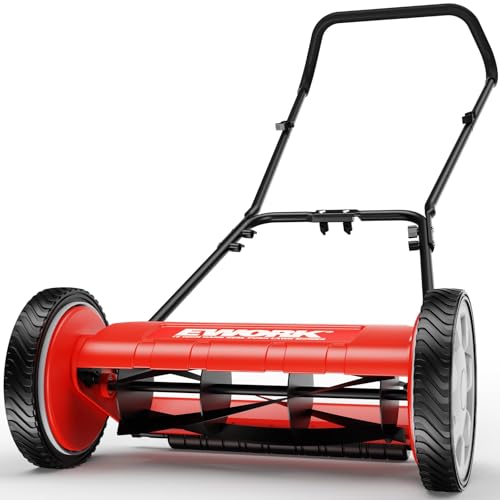
⚠️This push lawnmower has a maximum width of 23 inches and a working width of 16 inches.

5-blade reel with a cutting width of 14” and durable 10” polymer wheels for maximum maneuverability
Self-Propelled Drive Types: FWD, RWD, and AWD Compared
How do you match a drive system to your yard’s demands? You evaluate three Self-Propelled Drive Types: Front-Wheel Drive, Rear-Wheel Drive, and All-Wheel Drive.
You select Front-Wheel Drive when you navigate flat, even lawns with obstacles. FWD delivers superior maneuverability but loses traction on inclines.
You deploy Rear-Wheel Drive for slopes and uneven terrain. RWD positions weight over driven wheels, enhancing traction and control where gravity challenges stability.
You choose All-Wheel Drive for irregular, hilly, or diverse conditions. AWD maintains grip across varied ground, though you’ll manage added weight and cost.
Drive layout affects traction, maneuverability, and stability—it doesn’t alter cutting quality. You remain engaged; Self-Propelled operation requires walking and steering, never hands-free autonomy.
Recommended Products

[80V 21” SELF-PROPELLED LAWN MOWER] - Get more done, faster, with Greenworks electric lawn mowers. This 80V lawn mower cuts up to 1/2 acre with a fully charged 4.0Ah battery (varies based on grass condition and operator technique)
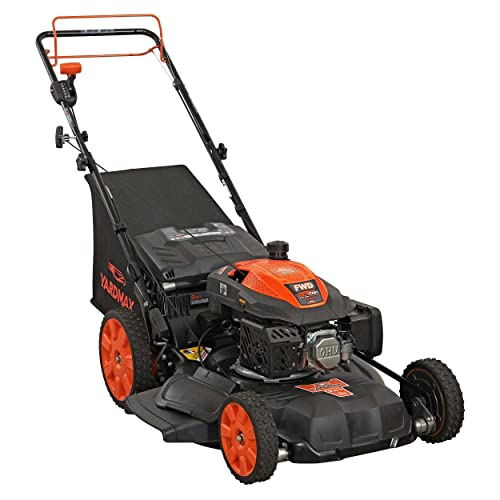
Exclusive and industry-leading CVT (Continuously variable transmission) offers superior speed variability to adjust the mower pace to your walking speed by simply selecting the 6-speed shift lever

STARTS IN 1-2 PULLS, EVERY TIME - 170cc OHV ENGINE BUILT FOR THE LONG HAUL: Our 170cc overhead valve (OHV) engine is cold-start optimized with an auto-choke system, so you're cutting grass-not fighting your mower. Unlike underpowered alternatives, this engine is rated for season-after-season use with consistent RPM output. Zero guesswork on specs: what you see listed is exactly what's in the box
How Much Effort Does a Self-Propelled Mower Actually Save?
Where does the real effort difference lie between a self-propelled mower and a push model? You’ll find it in the drive system’s mechanical advantage. A self-propelled unit actively drives the wheels, converting engine power into forward motion. You’re guiding, not propelling.
You’ll expend markedly less physical effort over any substantial cutting session. On slopes and larger yards, the drive system slashes fatigue by eliminating the push force entirely. You simply engage the lever and match your pace to the selected speed.
The trade-off emerges in handling. Self-propelled models carry extra drivetrain weight, so you’ll maneuver more mass during turns or transport. And you’ll commit to periodic maintenance—belt adjustments, transmission checks—to preserve drive integrity. The effort savings dominate operation, but you’re balancing that benefit against weight management and upkeep duties.
Recommended Products

11” Rear mower wheel, non-drive (free wheel) for Yardmax push mowers.

Dimensions: Wheel Diameter: 8 inch; Wheel Width: 2 inch; Bore: 1/2 inch
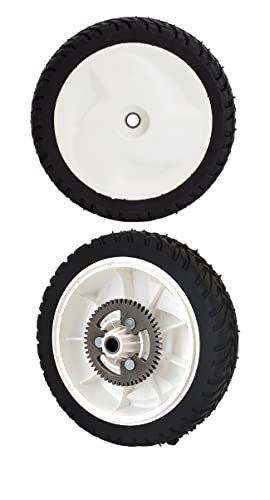
Lawn Mower Wheel Replaces Toro 22” Recycler Gear Rear Wheel Drive 105-3036
Upfront vs. Long-Term Costs: The True Price Difference
Why does a self-propelled mower command $200 to $1,400 more than its push counterpart? You’re paying for integrated drivetrains, transmissions, and propulsion systems that push mowers simply don’t carry. Your upfront costs run $130–$800 for push mowers versus $330–$2,200+ for self-propelled models.
You’ll face divergent long-term maintenance demands. Push mowers need oil changes and blade sharpening. Self-propelled units add drive belt replacements, transmission servicing, and gear system inspections. You’re absorbing higher lifecycle costs with self-propelled ownership.
However, you’ll evaluate cost-performance through operational context. On larger or sloped lawns, self-propelled mowers yield measurable time savings and reduced physical strain. You’re potentially recovering elevated upfront costs via productivity gains. Heavier drivetrain weight becomes irrelevant when the propulsion system does your labor.
Recommended Products
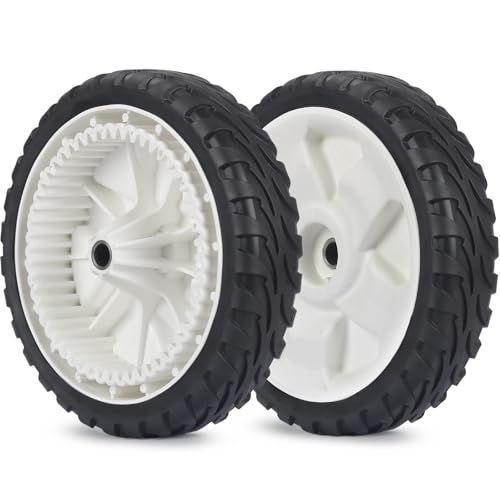
DIMENSIONS: Tire Diameter: 8 inch; Tire Width: 2 inch; Bore: 1/2 inch

【REPLACES PART NUMBER】The Lawn Mower Front Drive Wheels Replaces Toro119-0311, 137-4832, 115-2878, Stens 205-360

【Precision Replacement】:Direct aftermarket replacement for part number 634-05040. Seamlessly replaces worn, cracked or damaged factory wheels for reliable equipment operation.
Do Self-Propelled Mowers Perform Better?
When you evaluate lawn mower performance, you’re measuring more than raw cutting ability—you’re assessing efficiency, physical demand, and terrain adaptability.
Self-propelled performance immediately distinguishes itself through measurable reductions in mowing effort. The integrated drive system—whether FWD, RWD, or AWD—actively propels cutting decks forward, eliminating operator strain during extended sessions.
You’ll notice traction varies significantly across drivetrain configurations. FWD excels on flat terrain; RWD and AWD optimize terrain suitability on slopes and uneven ground where push mowers falter entirely. On expansive or inclined properties, you’re completing cuts faster with substantially lower physical toll.
However, cut quality hinges on maintenance/blade sharpness, not propulsion type. You’ll find drivetrain weight doesn’t inherently degrade cuts, though heavier units demand vigilant blade upkeep. Self-propelled models don’t surpass push mowers in shear cutting capability—they dominate in operational efficiency and human-factor engineering.
Recommended Products

Do You Have a Passion For Mowing The Lawn Mower & Gardening or know someone who does? Any avid gardener or horticulturist is sure to enjoy wearing this clothing this spring as they plant their flowers and greens in their beautiful gardens.

1. Best-Fit Yard and User: For small-to-medium lawns with open grass and landscaping; ideal for users comfortable pushing who want fewer passes.
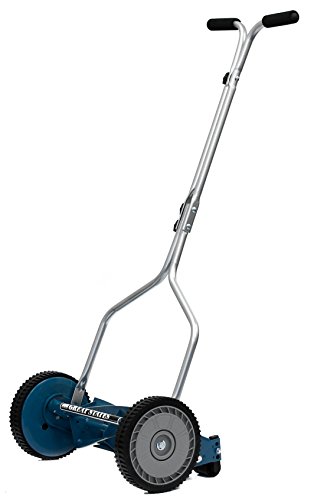
Small push lawn mower with 4-blade reel and 14" cutting width; 8.5" polymer wheels provide optimal maneuverability
Maintenance Compared: What Each Mower Type Needs
Performance advantages mean little if you can’t sustain them, and maintenance demands reveal the true cost of ownership between these mower categories. You’ll notice your self-propelled mower demands more from you than a push mower because its drive system requires regular inspection. You must check front-, rear-, or all-wheel-drive components, monitor drive belts, and service transmissions periodically. You’ll also perform oil changes and air filter replacements.
Your push mower simplifies this routine. You’ll handle standard upkeep with blade sharpening as your primary recurring task. However, you can’t ignore that dull blades on your self-propelled unit strain the engine more severely, forcing you to sharpen more frequently than with your non-driven push mower. Heavier drivetrain components add handling complexity too. Ultimately, you’ll invest more time and money maintaining your self-propelled mower’s drive system versus your push mower’s straightforward demands.
Recommended Products
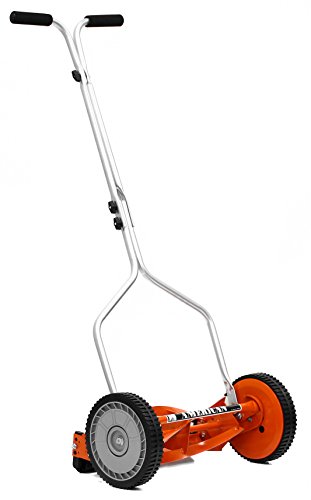
4-blade reel mower with a cutting width of 14” and durable 8.5” polymer wheels for maximum maneuverability. Lightweight at only 19 pounds. Reel Lawn Mowers are great for small lawns..Deluxe hand-reel mower ideal for most turf grasses.

SCISSOR-LIKE CUT: No ripping or tearing of grass blades for a better and healthier lawn
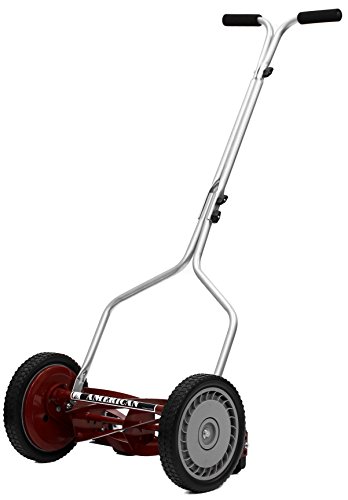
5-blade reel with a cutting width of 14” and durable 10” polymer wheels for maximum maneuverability
Should You Spend More on a Self-Propelled Mower?
How much does your physical effort cost you? You’ll spend approximately $330 to $2,200 on a self-propelled mower versus less for a push mower, but you’re trading upfront cost against biomechanical load. If you’re mowing flat, small lawns, a push mower delivers comparable cut quality at lower financial and maintenance cost. However, your terrain needs dictate the real value proposition: Front-Wheel Drive handles level ground, while Rear-Wheel Drive and All-Wheel Drive systems manage slopes that exhaust you with manual pushing. Performance diverges measurably when lot size or elevation increases—self-propelled mowers reduce cycle time without degrading cut quality. You’ll recover the incremental cost through preserved energy and faster completion rates on demanding properties. Match drive configuration precisely to your landscape topography.
Recommended Products

EXCEEDS THE POWER OF GAS: EGO's cordless electric mower delivers up to 7.0 ft-lbs of cutting torque for performance that exceeds gas-powered mowers.

40V 21” LAWN MOWER - Get more done, faster, with Greenworks electric lawn mowers. This 40V self-propelled lawn mower provides up to 45 minutes of run-time with fully charged 5.0Ah battery (varies based on grass condition and operator technique).Front wheels : 8 Inches
Conclusion
Your terrain and lawn size dictate optimal mower selection. On flat, small yards under ¼ acre, you’ll maximize value with push mowers—lower acquisition costs, minimal maintenance, and sufficient performance. For slopes exceeding 15° or medium-large lawns, you’ll require self-propulsion: RWD maintains traction on hills, AWD handles uneven terrain, and sustained drive reduces operator fatigue. Calculate total ownership costs—propulsion adds 40-60% upfront and ongoing maintenance. Your biomechanical demands and property constraints determine whether propulsion investment yields ROI through time savings and reduced physical strain.