
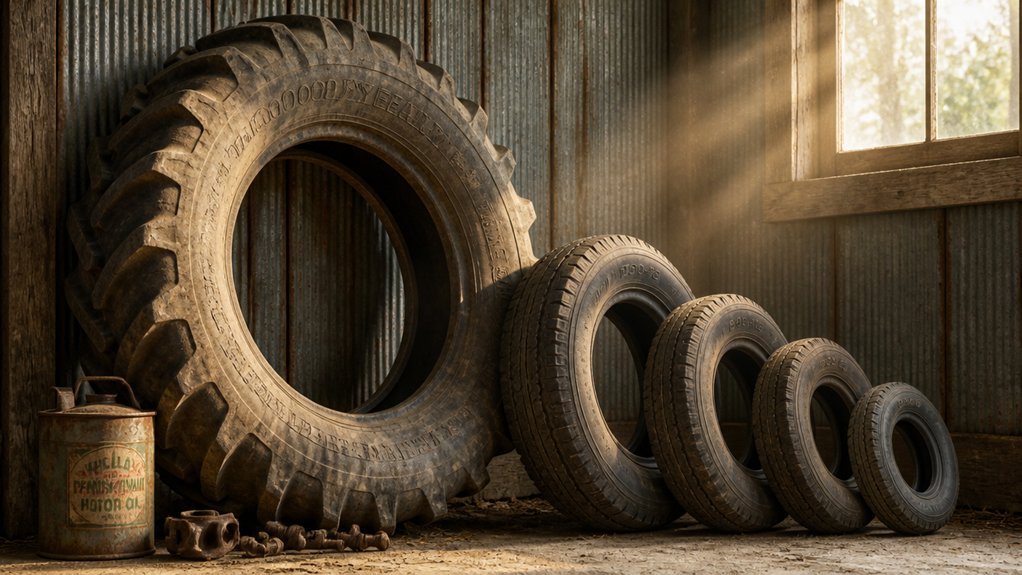
You need the right tire size to protect your tractor’s driveline and maintain proper load distribution. Misreading a sidewall marking or mismatching front and rear rolling circumferences can lead to costly repairs. A reliable size chart cuts through the confusion of metric conversions, aspect ratios, and bias versus radial specifications. You’ll want to verify your measurements before you commit to a purchase.
Read Your Tractor Tire Size Right Off the Sidewall
Where do you begin when you need to confirm your tractor’s tire size? You’ll start by reading the sidewall markings on your Ag tires. The sidewall displays tractor tire sizes in either Standard or Metric nomenclature. Metric formats appear as width, aspect ratio, and wheel diameter after an “R”—you’ll see markings like 285/75R16.
You’ll identify section width at the tire’s widest sidewall point, not the tread. Use calipers extended down the sidewall, or position straight edges on each side with a tape measure. For diameter, you’ll wrap string around the tire’s centerline circumference, mark the overlap, measure the length, and divide by 3.14.
Remove all weight from the tractor and inflate to rated pressure before measuring. Select a representative tire—never one that’s worn or deformed—to ensure your readings remain accurate.
Recommended Products
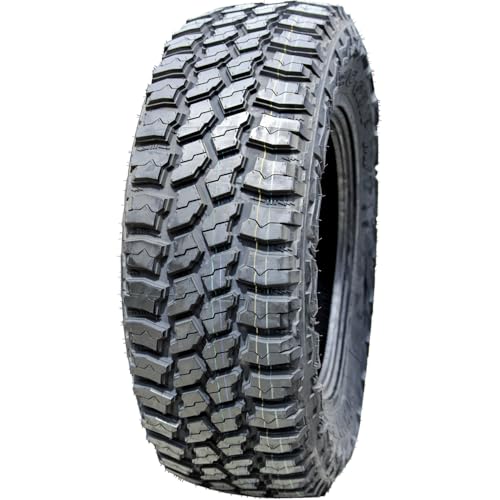
Product Type: Auto Accessory

Offset Tread Blocks Adds biting edges for superior all-weather traction on both on and off-road environments
Measure Old Tires for Size When Sidewall Markings Fail
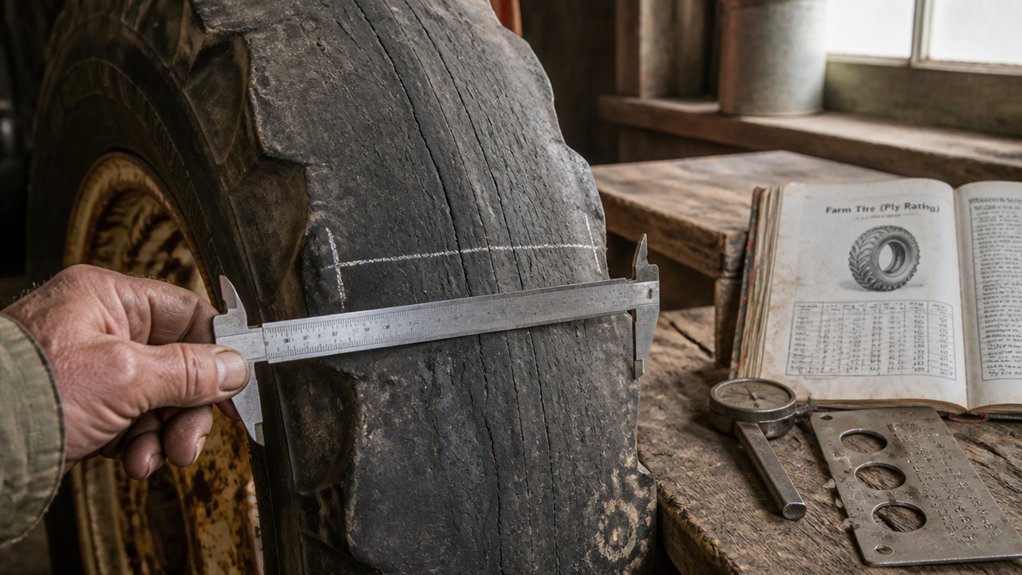
How do you determine size when a tire’s sidewall has gone bare? Remove all weight from the tire and inflate it to rated pressure. You’ll measure section width at the sidewall’s widest point, not the tread. Extend calipers down the sidewall for maximum width, or place straight edges on each side and measure the gap with a tape measure.
For diameter, wrap a string around the tire’s circumference at the centerline, mark the overlap, then measure and divide by 3.14. Alternatively, use the straight-edge method across the tire’s full height.
Once you’ve got both numbers, compare them to Databook entries for matching diameter and section width. Don’t expect exact matches—your measurements come from worn rubber, so you’ll select new tires that approximate these dimensions rather than replicate them precisely.
Recommended Products

1.IP54 WATERPROOF DESIGN: The GODESON Digital Tire Tread Depth Gauge is built to withstand harsh conditions, making it a reliable tire depth gauge tool for all your tire checks, regardless of weather.

NO FLAT LAWN MOWER TIRE: This robust flat-free lawn mower wheel is your reliable companion through every mowing season, engineered to eliminate concerns about flats or worn-out wheels
Convert Metric Tractor Tire Sizes to Standard Inches
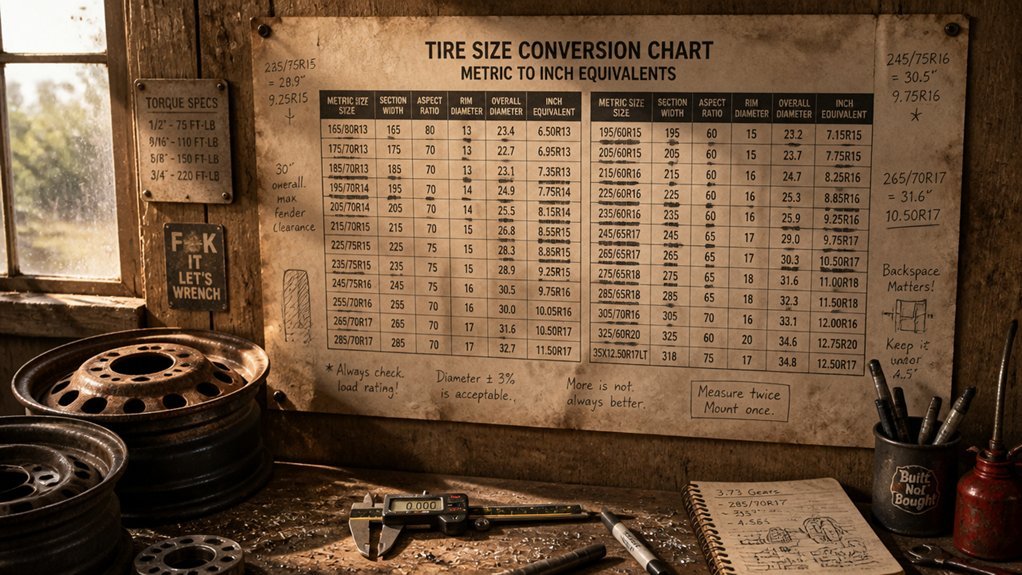
Once you’ve established the actual dimensions of a worn tire, you’ll often need to interpret modern metric markings found on replacement options. Metric sizing follows this format: width/aspect ratioR wheel diameter, such as 285/75R16. Here, 285 mm represents section width, 75 denotes the aspect ratio percentage, and 16 inches indicates wheel diameter.
You’ll convert section width to inches by dividing the millimeter value by 25.4. For a 285 mm width, you’ll calculate 11.22 inches. Multiply this converted width by the aspect ratio decimal to obtain section height: 11.22 × 0.75 yields approximately 8.42 inches. The wheel diameter transfers directly, maintaining 16 inches in this example.
Always cross-reference manufacturer Databooks when selecting replacements, as rounding tolerances in metric-to-inch conversions can produce slight mismatches against available tire models.
Recommended Products

HEAVY-DUTY CONSTRUCTION (2) two new 6.00-16 tri rib 8ply rated tractor tires are built with a robust and heavy-duty 8-ply construction, ensuring durability and resilience for heavy agricultural tasks.


Car Type: Utility
Match Front and Rear Sizes to Protect Your Driveline
Why do your front tires wear faster than your rears, or why do you feel that binding sensation during tight turns? You’ve likely mismatched your front and rear rolling circumferences. On MFWD/FWD tractors, you must maintain the manufacturer’s specified ratio between axles. When you deviate, you’ll strain the driveline and accelerate wear across all four tires.
You’ll degrade traction under heavy loads when diameters don’t align. If you change rear tire diameter, you must recalculate and adjust front sizing accordingly. On articulated 4WD units, this requirement becomes critical—any rear diameter modification demands a matching front change to preserve steering response and chassis balance.
You protect your drivetrain by ensuring consistent speed ratios and even load distribution. Check your operator’s manual for the exact rolling circumference specifications, and verify measurements before you purchase replacements.
Recommended Products

Designed for use on Jeeps, light trucks, and SUVs

Product Type: High-performance all-terrain tires designed for versatile driving conditions

LEGENDARY TOUGHNESS, MADE TOUGHER: The next evolution of all-terrain tires is here. The BFGoodrich All-Terrain T/A KO3 tire raises the bar in toughness and durability. Again.
Choose Bias or Radial Construction for Your Field Conditions
Where exactly does the “R” sit in your tire’s size designation—between the width and rim diameter—and what does that single letter reveal about how your tire handles the field? That “R” signals radial construction, and you’ll choose this after locking in your tire size. Radial tires deliver superior ride comfort and reduced heat buildup, but you’ll weigh that against bias tires’ lower cost and specific field advantages.
Your selection must preserve proper diameter and width correspondence to your tractor, or you’ll invite driveline strain and premature wear. On MFWD/FWD tractors, you must maintain consistent rolling circumference between rear and front tires regardless of construction type—mismatches bleed performance fast.
With articulated 4WD tractors, altering rear diameter forces a matching front change to sustain traction and handling characteristics. Construction type isn’t merely comfort; it’s integrated system compatibility.
Find Your Exact Match in the Ag Tire Databook
You’ve pinned down your construction type—now pull out the Ag Tire Databook to cross-reference your measurements against listed specifications. Compare your recorded diameter and section width against the tables to locate an exact or closest match. The Databook notes that your measurements may originate from used tires, so new options won’t align perfectly—you’ll select the nearest available size.
Determine whether you need bias or radial construction. Look for an “R” on the sidewall to confirm radial build.
Maintain strict diameter and width correspondence with your vehicle’s specifications—reliability of fit depends on this precision.
On MFWD/FWD tractors, match rear and front tires carefully. The Databook specifies proper rolling circumference ratio; don’t ignore this guidance, as mismatch damages driveline components.
Conclusion
You’ve got the tools to read, measure, and convert any tractor tire size that crosses your path. Keep your front-to-rear rolling circumference ratio locked in, verify specs against the Ag Tire Databook, and select bias or radial construction based on your field demands. Precision here protects your drivelile, balances your loads, and keeps your machine running exactly as the manufacturer intended. Don’t guess—measure, match, and maintain.
Recommended Products
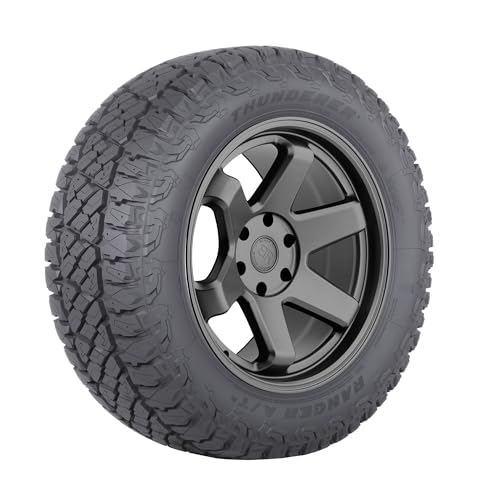
Thunderer Ranger A/TR

Product Overview: The Accelera Epsilon AT is a 285/75R16 126/123R E 10 Ply Rated All Terrain Tire Manufactured For Light Trucks
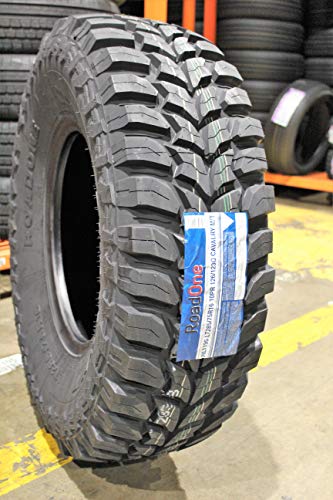
Aggressive, directional mud terrain tire