
You’re about to buy a replacement bar, and you don’t realize you’re measuring wrong. That “20-inch” bar in your cart might leave you inches short of your cut—or overtax your engine until it seizes. The gap between total length and usable cutting length trips up even experienced operators, and choosing blind risks catastrophic kickback. Let’s fix that before you pull the trigger.
Bar Length Explained: What You’re Actually Measuring
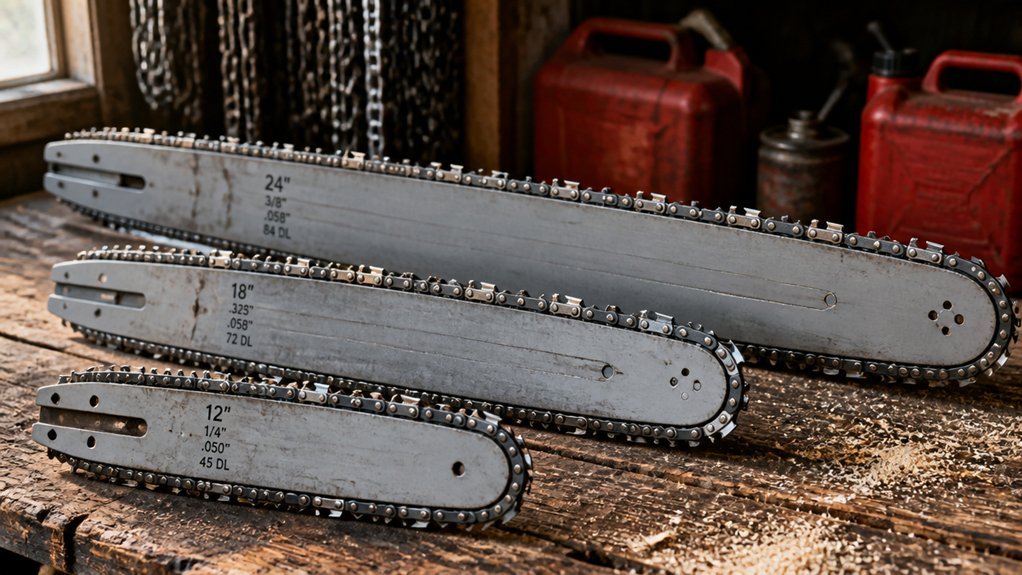
How do you know which bar length you’re actually getting? You must distinguish between total bar length and useful length. Manufacturers often list bar length as the distance from the bar entry point to the chainsaw bar tip, typically spanning 10 to 20 inches for residential models. However, you’ll need to measure the useful length—the cutting span from the saw body to the tip—as this determines your actual cutting capacity.
You can’t assume identical bar lengths yield identical performance. When you select a chainsaw bar, you’re choosing a component that must match your saw’s pitch and gauge specifications. You’ll encounter 16, 18, and 20-inch options most frequently; these balance maneuverability against capability. Remember, larger bars demand more power and elevate kickback risk. You must verify compatibility before operating.
Recommended Products
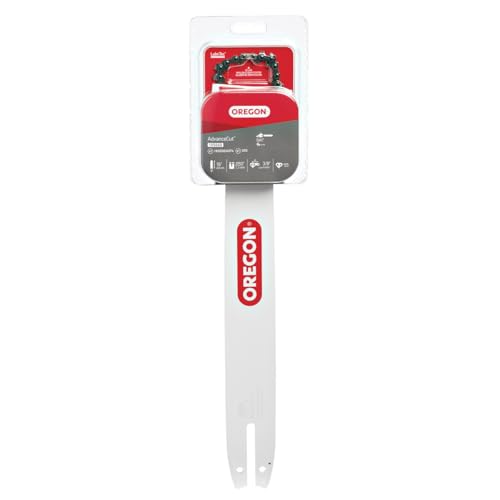
Upgrade your chainsaw with Oregon's premium bar & chain combo. Please ensure your saw uses a 16" bar with 3/8" low profile, .050" gauge saw chain with 55 drive links and A074 motor mount

Upgrade your chainsaw with Oregon's premium bar & chain combo. Ensure that your saw uses a 16" bar with 3/8" low profile, .050" gauge saw chain with 56 drive links and A041 motor mount

Complete 16 In Chainsaw Chain Kit: 16" Chainsaw Guide Bar And Chain Combo - Replacement Parts-3/8" Low Profile Pitch, 0.50" Gauge,56 Drive Links(4 Chain+1bar) Fits Most Chainsaw Brands Running The Same Specs. M-akita, Echo, Homelite, Poulan, Greenworks, Ryobi, Husqvarna, Etc.
How to Measure Your Chainsaw Bar Correctly
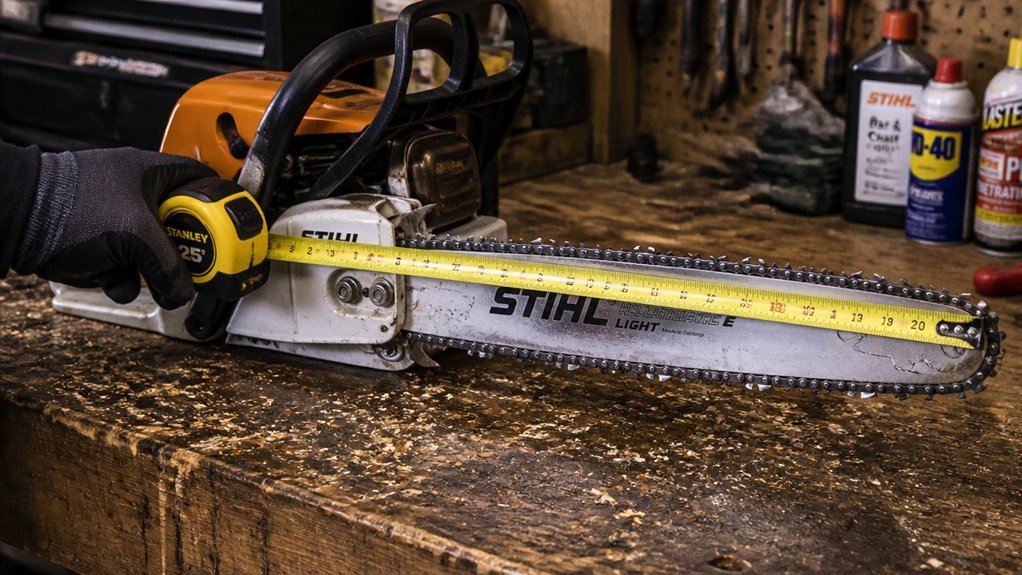
Knowing the difference between total and useful length prepares you to take accurate measurements. Place your bar on a flat surface and measure from the bar body to the tip, excluding the mounting portion. Round to the nearest standard size—typically 16, 18, or 20 inches.
If stamped markings aren’t visible, count the drive links on your chain to determine bar length indirectly. This method ensures you’re selecting properly sized replacement components.
Never assume compatibility based on measurements alone. Always cross-reference your findings against manufacturer specifications for your exact saw model. Incorrect bar length creates dangerous operating conditions, including chain derailment or binding.
Verify clamp area fitment and oiler hole alignment before installation. Precision in measurement prevents equipment damage and personal injury.
Recommended Products

Upgrade your chainsaw with Oregon's premium bar & chain combo. For saws with 18" bar, .325" narrow kerf .050" gauge saw chain with 72 drive links, and K095 motor mount. For saw sizes 38-55 cc

Includes one Husqvarna SP33G 18 Inch Chainsaw Chain replacement compatible with the following Husqvarna chainsaw models: 435, 440, 445, 450R, 543XP, 545 (MIII) and 550 XP (MIII)

Genuine Husqvarna Replacement Parts: Husqvarna chainsaw bar is designed for use with select Husqvarna chainsaws (455 Rancher and 460 Rancher) and chainsaw chains
Match Your Saw’s Power to the Right Bar Size
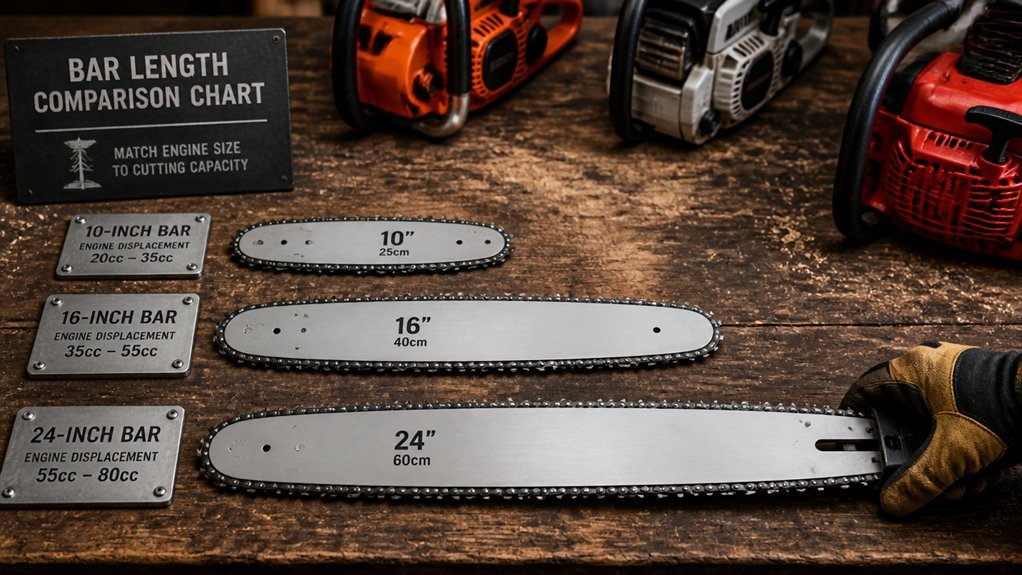
Why risk bogging your engine or losing control mid-cut? You must align bar length with saw power to maintain operational safety and efficiency. Engine displacement directly determines your maximum effective bar length.
Follow these bar size recommendations: under 25 cc, mount 10–12 inches; 26–35 cc, 12–16 inches; 36–75 cc, 14–28 inches depending on sub-range; 76+ cc, 20–50+ inches. Specifically, 50–70 cc pairs with 16–18 inches, 70–90 cc handles 18–24 inches, and 90+ cc exceeds 24 inches.
Longer bars demand greater engine power, increasing fuel consumption, kickback risk, and maintenance requirements. You should always consult your owner’s manual for minimum and maximum specifications. Matching bar size to both engine displacement and intended use prevents stalling, reduces hazards, and optimizes cutting performance. Never exceed manufacturer limits.
Recommended Products

Upgrade your chainsaw with Oregon's premium bar & chain combo. For saws with 20-inch guide bar, 72 drive link, 3/8-inch pitch and .050-inch (1.3 mm) gauge chain, and K095 motor mount
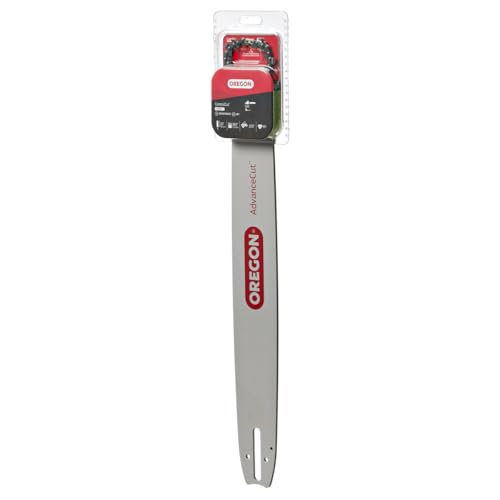
Upgrade your chainsaw with Oregon's premium bar & chain combo. Ensure that your saw uses a 20" bar and .325" pitch .063" gauge saw chain with 81 drive links, and D025 motor mount

GUIDE BAR SPECIFICATION: Replacement Guide Bar: 20", .325” Pitch, .058" Gauge, 76 Drive Links.
Why Your Bar and Chain Must Match on Pitch and Gauge
What happens when your chain pitch and gauge don’t align with your bar? You’ll experience poor tracking, accelerated wear, and potential derailment—creating serious safety hazards.
Your chain drive links must seat precisely within the bar groove. When bar gauge and chain gauge mismatch, the chain binds or wobbles. When chain pitch conflicts with the sprocket nose pitch, engagement fails and tension becomes erratic.
Check your bar markings for specified chain pitch and gauge. If markings wear off, consult your manufacturer manual immediately. Remember: bar length, chain pitch, and bar gauge must all correspond to your saw’s power output and mechanical tolerance. You’re risking catastrophic failure if you force mismatched components. Verify specifications before every installation. Precision fitting protects you from kickback, chain breakage, and uncontrolled cutting action.
Recommended Products

Comprehensive Measurement Capability: Measures the chainsaw chain pitch, guide bar groove width, chain gauge and file size

PRO-GRADE 3-PACK REPLACEMENT: Receive three 12 Inch chainsaw chains featuring a 3/8"LP Pitch, .050" Gauge, 45 Drive Links and Semi Chisel, ensuring you're always prepared for the job.

Precision Measuring Tool: This measuring tool accurately identifies chainsaw chain pitch (1/4", .325, 3/8", .404"), chain gauge, guide bar groove width, and round file size, all in one compact, red-colored Measuring Tool
Best Chainsaw Bars for Firewood, Felling, and Limbing
How do you select the optimal bar length for your specific cutting task? You’ll match your chainsaw bar size to the job’s demands and your saw’s power output.
For firewood, you’ll typically run a 16-18 inch bar, which balances maneuverability against cutting depth for average rounds. When you’re tackling particularly large firewood, you’ll step up to a 20-inch bar, provided your engine’s displacement supports it.
For felling, you’ll generally employ an 18-20 inch bar. This bar length exceeds average tree diameters, giving you efficient cutting leverage and safer plunge cuts without overreaching the bar tip.
For limbing, you’ll downsize to a 12-14 inch bar. This shorter chainsaw bar size improves your control on small-diameter limbs, reduces fatigue during extended overhead work, and minimizes kickback risk in tight branch structures.
Always verify compatibility with manufacturer specs.
Recommended Products

All-Season Non-Toxic & Eco-Friendly Performance: This biodegradable, non-toxic chainsaw oil provides reliable protection from -15°F to 500°F, perfect for both electric and gas saws. Its ultraclean formula minimizes environmental impact in 100% loss applications.

Fix Poor Cutting & Chain Problems — Removes packed sawdust, sap, and debris that cause uneven cutting, chain binding, overheating, and reduced performance

Helps prevent premature wear, especially on guide bar noses.
One Bar or Two? How to Cover All Your Cutting
Whether you stick with one bar or invest in two depends on your cutting workload, saw power, and how frequently you shift between task types. You must evaluate bar length against your typical job diameters. Common homeowner tasks suit 16–18 inch bars, while milling demands 22–28 inches.
When choosing one bar or two bars, consult power-to-bar guidelines. Your 50–70 CC saw handles 16–18 inches; larger displacement permits 24–28 inches. Exceeding these risks dangerous overloading and premature failure.
Consider maintenance and weight. Longer bars add significant mass and require intensified lubrication and inspection routines. If you alternate between firewood and felling, carrying two bars—perhaps 18 and 24 inches—eliminates adjustment delays while keeping each within safe operational parameters. Match your configuration to actual demand.
Recommended Products
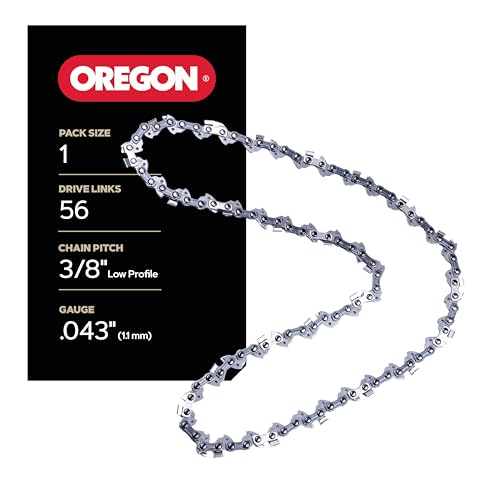
𝗩𝗘𝗥𝗜𝗙𝗬 𝗙𝗜𝗧: This saw chain is for chainsaw models that run 3/8" low-profile pitch, .043" (1.1 mm) gauge (guide bar slot), 56 drive links, 16" (40cm) bar and fits chainsaws up to 42cc - DOUBLE CHECK THE CHAINSAW MANUAL & VERIFY THE FIT

𝗩𝗘𝗥𝗜𝗙𝗬 𝗙𝗜𝗧: This saw chain is for chainsaw models that run 3/8" low-profile pitch, .043" (1.1 mm) gauge (guide bar slot), 55 drive links, 16" (40cm) bar and fits chainsaws up to 42cc - DOUBLE CHECK THE CHAINSAW MANUAL & VERIFY THE FIT

Upgrade your chainsaw with Oregon's premium bar & chain combo. For saws with a 16" bar, A041 motor mount, and 3/8" low profile, .043" chain with 56 drive links
Bar Length Mistakes That Wreck Your Saw
Why do so many operators burn out their saws prematurely? You’re likely violating the power-to-bar guideline, forcing an underpowered engine to drive a bar length it can’t sustain. When you mount a longer bar than your CC rating allows, you induce chronic bogging, stalling, and escalating fuel consumption. You’re also accelerating drivetrain wear and inflating maintenance costs.
You’re compounding the error if you’re using total bar length rather than true bar length measurement—the useful cutting span from the saw body to the tip. This miscalculation pushes you outside manufacturer specifications.
Don’t assume universal fit. You must verify pitch, gauge, and model compatibility. Check your owner’s manual for the recommended range. Common bar lengths—16, 18, 20 inches—serve most operators, but only when you’ve confirmed mechanical suitability. Ignore this, and you’re sacrificing control and safety.
Recommended Products

Includes one Husqvarna X-Force 18 inch chainsaw guide bar, designed for use with these Husqvarna chainsaws: 435, 435(e), 440, 440(e), 445, 445(e), 450, 450(e), 450 Rancher, 543XP, 545(MIII) and 550XP(MIII)
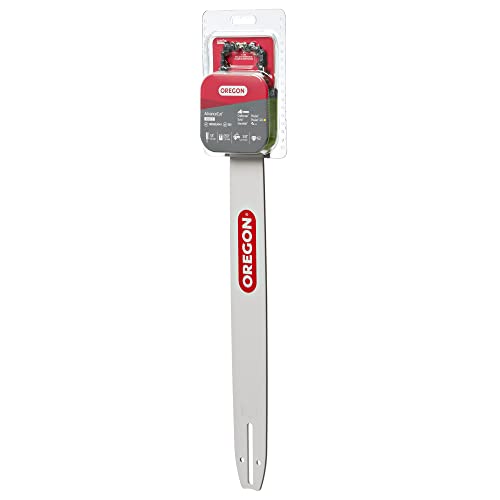
Upgrade your chainsaw with Oregon's premium bar & chain combo. For saws with an 18-inch (45cm) guide bar, 62 drive link, 3/8" low profile pitch and .050" gauge chain, and A041 motor mount
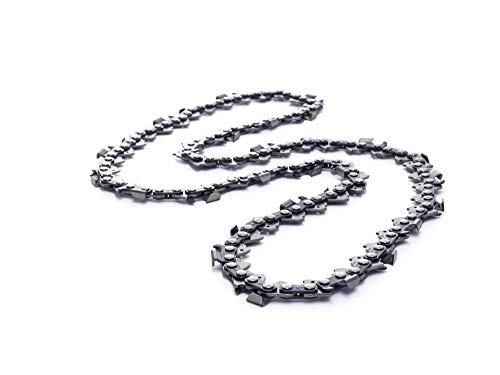
Includes one Husqvarna SP33G 18 Inch Chainsaw Chain Replacement compatible with the following Husqvarna chainsaw bar models: Husqvarna 450 Rancher, 460 Rancher, 435(E), 440(E), 445(E), 543XP and 550XP(MII)
Bar Length Picks by User Type
What bar length matches your actual workload? You’ll match your tool to your actual cutting demands, not your aspirations.
If you’re running a homeowner saw for occasional firewood or storm cleanup, you’ll select a 16–18 inch bar on a 50–70 CC powerhead. This configuration handles roughly 95 percent of domestic tasks without overtaxing your equipment or compromising chain speed. You’ll avoid premature clutch and bearing wear by resisting oversized attachments.
If you’re a professional arborist, you’ll carry an 18–20 inch bar for general removals and rigging work, plus a 12–14 inch top-handle unit for pruning and confined-space operations. Dual setups let you’ll adapt to canopy work without overreaching.
If you’re milling slabs, you’ll run dedicated milling bars in the 22–28 inch range. These specialized rails maintain parallel plunge cuts across entire log faces, ensuring uniform slab thickness you can’t achieve with standard chains.
Recommended Products

Includes one Husqvarna 20 Inch Chainsaw Guide Bar
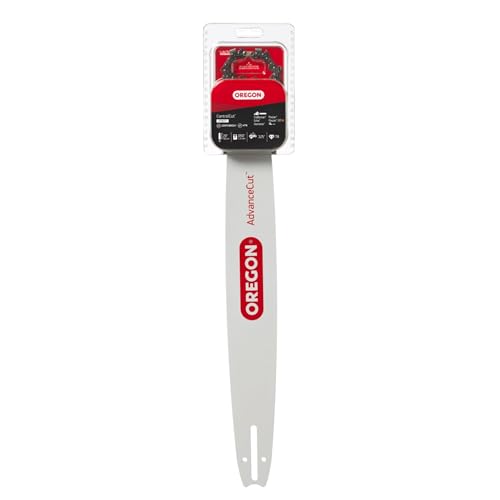
For Craftsman, Echo, McCulloch and Poulan chainsaws
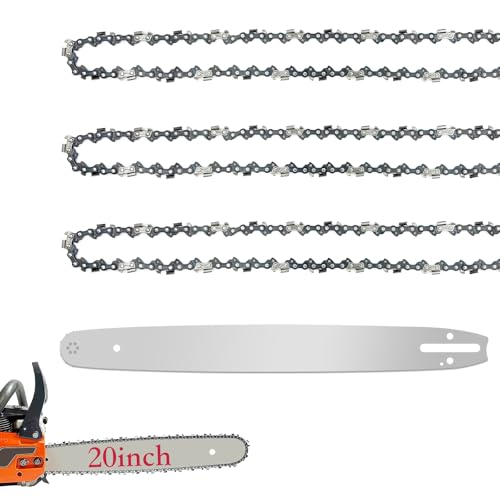
CHAINS PARAMETERS: 3 Chains and 1 Bar Combo, 20 Inch Chainsaw Bar and Chain Combo for Stihl, 3/8" Pitch, .050" Gauge, 72 Drive Links, Full Chisel, German steel.
Conclusion
You’ve now got the technical foundation to select, measure, and match chainsaw bars with precision. Always verify your measurements against manufacturer specifications, confirm pitch and gauge compatibility, and never exceed your saw’s power capacity. Prioritize safety: shorter bars reduce kickback risk, while proper maintenance prevents catastrophic failures. Choose bar length based on your primary cutting tasks, keep a secondary bar for versatility, and inspect components before every operation. Your saw’s performance and your safety depend on these details.
Recommended Products

Upgrade your chainsaw with Oregon's premium bar & chain combo. For saws with a 14" bar, 50 drive links, 3/8" pitch and .050" gauge chain, and A074 motor mount

Oregon premium AdvanceCut chain: Replacement for 8" (20cm) guide bars that require 34 drive links, pitch: 3/8" low profile, .043" gauge. For chainsaws and pole saw sizes up to 42cc

Specifications: 3-Pack 12 Inch, 3/8"LP Pitch, .050" Gauge, 44 Drive Links, Semi Chisel. This chainsaw chain met the kickback performance requirements of ANSl B175.1-2012 when tested according to the provisions of ANSl B175.1-2012. Low kickback chain meets the kickback performance requirements of CSA Standard Z62.3.