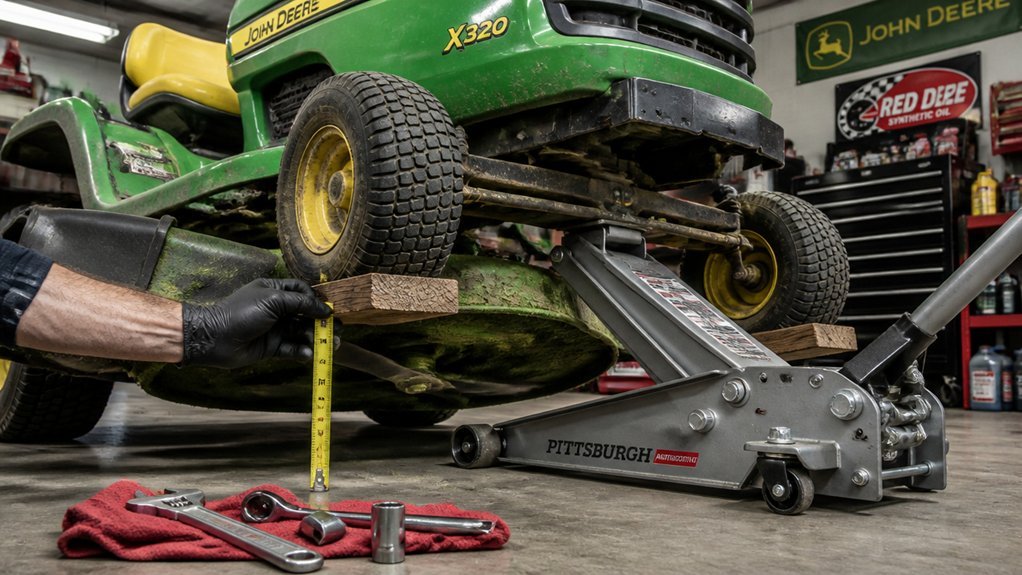


You’ll start by parking your mower on level ground, engaging the brake, and disconnecting the spark plug—skipping any of these steps risks serious injury. Once secured, you’ll need to choose between removing the deck or jacking the machine, but that decision depends on your specific model and available tools. The real challenge comes when you’re staring at a seized bolt or wondering whether your old blade is worth sharpening.
Park, Chock, and Disconnect the Spark Plug
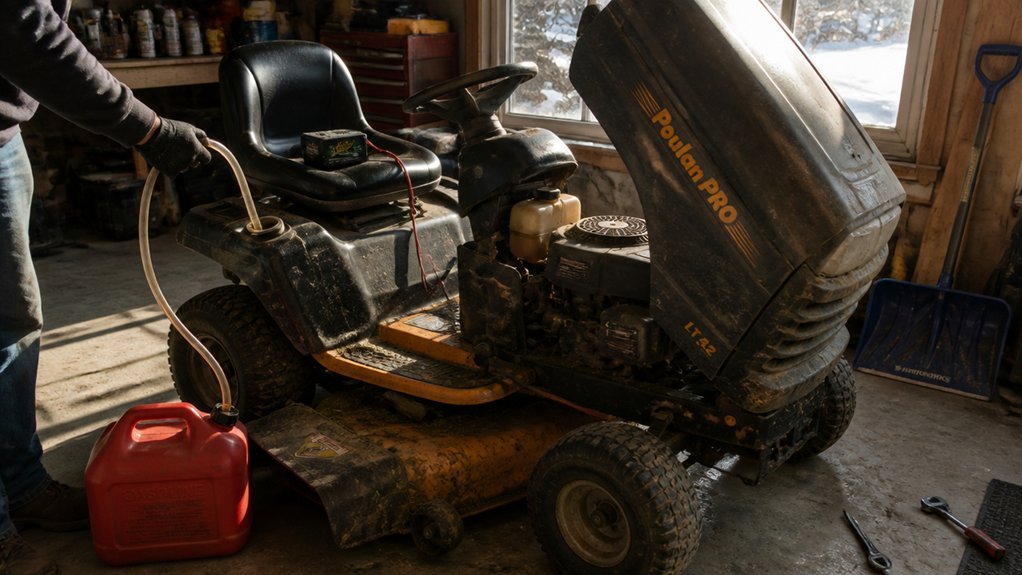
Where should you begin? You park the riding mower on a flat, level surface. You’ll turn off the engine, remove the key, and engage the parking brake. You’ll disconnect the spark plug wire—this eliminates ignition risk during blade removal. If your model allows rear wheel access, you’ll chock the back wheels to prevent rolling. You’ll verify the mower deck sits at its highest position, maximizing clearance beneath the cutting deck for subsequent maintenance steps. These precautions establish blade safety protocols before you approach the riding mower blades. You’re ensuring no accidental starts occur while you work near the blade bolt.
This preparation phase precedes physical blade interaction—you’re securing the environment, not yet executing blade removal. You’re building procedural reliability through methodical shutdown and isolation. You’ll maintain this vigilance throughout service.
Recommended Products

Universal Blade Removal Tool, Holds Blade In Place For Faster, Safer Removal, Fits All Walk Behind and Riding Mower Decks To 42"

Univeral Blade Removal Tool

Replace Part Number: 490-850-0005, 4908500005, 490 850 0005, 339079
Access the Blades: Deck Removal or Jack Method

How will you reach the blade hardware? You’ve got two approved approaches: deck removal or the jack method.
For deck removal, ensure you’ve set the parking brake and disconnected the spark plug. Follow your operator’s manual precisely to detach the cutting deck from the riding mower, lowering it carefully to the ground.
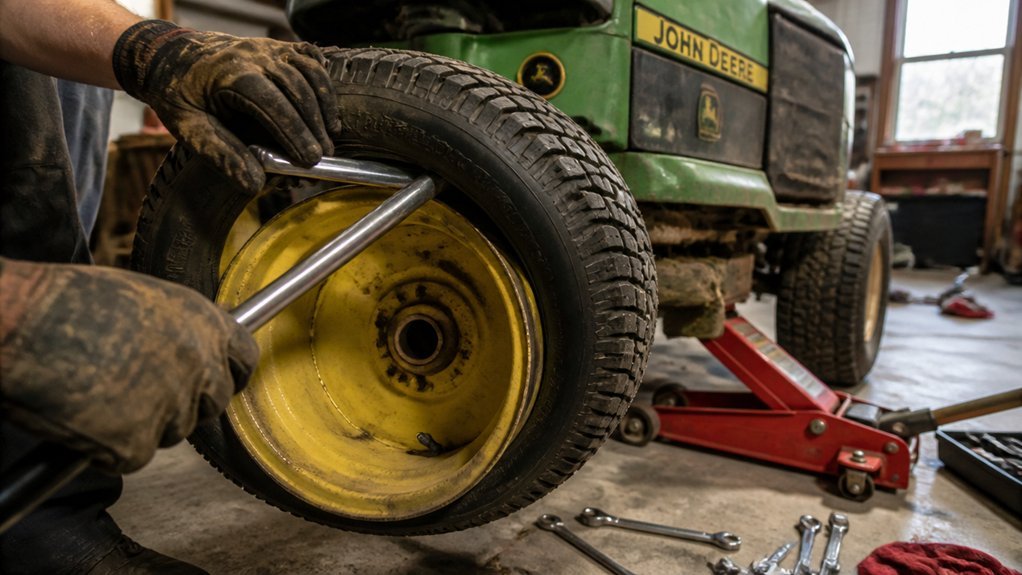
For the jack method, raise the mower to its highest position, then elevate the front using a rated jack and secure jack stands. Both methods demand strict safety precautions—never work under an unsupported machine.
Once elevated or detached, perform thorough debris clearance around the blades. Verify you’ve got unobstructed access to the blade bolt, which you’ll turn counterclockwise during removal. Always secure the blade to prevent rotation before applying torque.
Recommended Products

Lawnmower Blade Bolt Application Range: The bolt washer set is suitable for various riding and zero-turn mower blades fixing. Compatible with Husqvarna, Craftsman, AYP, Poulan, Poulan PRO, Weed Eater, Roper, Sears and other brands of lawnmowers.

Part Number: 532193003 14457 174365 193003 193003-A 532-1930-03 532174365 539107522 532193003-A

Compatible with OEM Part Husqvarna 532173920 532180054 539107519 512258301 575938201 575938301 521739201 954633774 917173920 24679 PP24006 24679GS, Craftsman 180054 173920, Ariens 21547939, Oregon 195-062, 340-222, Perfect Compatible with Husqvarna 48 inch Mower Blades and Husqvarna 48 inch Mulching Blades, Ensuring Perfect Fit and Performance
Remove the Old Blades
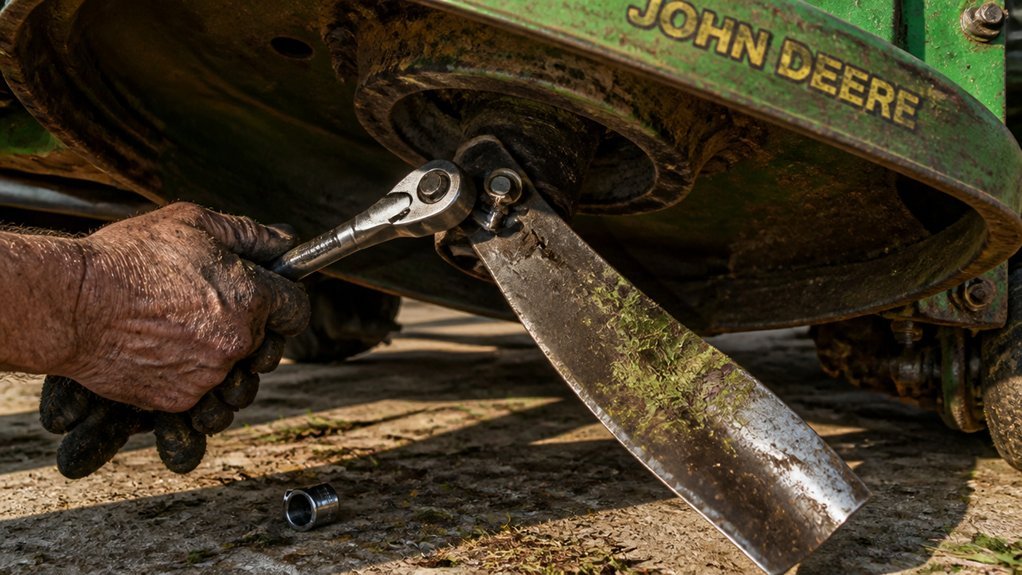
What’s the safest way to free that worn blade from its mount?
You’ll set the riding mower to its highest deck position, then clear debris from the cutting area. Don those safety gloves or wrap the blade with heavy cloth to protect your hands during this blade removal phase.
Position your tool wrench on the blade bolt. Apply steady torque counterclockwise while securing the blade to prevent rotation—you’re breaking the fastener’s resistance without losing control. Once loose, fully extract the blade bolt and store it safely. Carefully detach the blade from the mandrel or adapter. Before setting it aside, study the blade orientation: note any stamped markings or cutting edge position. This attention to detail streamlines reassembly and elevates your mower maintenance practice.
Recommended Products

Table Saw Accessories For Ryobi: Package Includes 0101010312 Table Saw Wrench * 1 Pcs.0101010313 Table Saw Wrench * 1 Pcs. 0101010312 0101010313 Table Saw Arbor Wrench fits...
Inspect and Decide: Sharpen or Replace
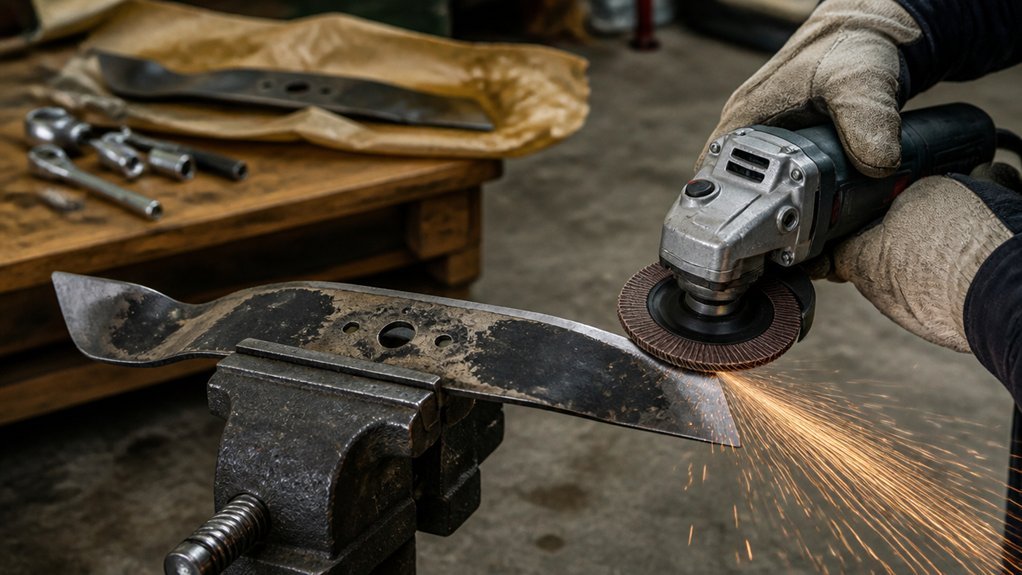
Once you’ve freed the blade from its mount, you’ll need to assess its condition before committing to either sharpening or replacement. Conduct a thorough wear evaluation: examine blade sharpness, check for bending, cracks, chips, or corrosion. If dullness is the only defect, you’ll proceed with sharpening edge restoration, preserving the original bevel and angle. However, blade replacement becomes mandatory when you detect severe nicks, structural damage, or loss of balance/tair that grinding can’t correct. Consult your operator manual for model-specific service life limits—some manufacturers define maximum sharpening cycles.
For twin-blade deck considerations, precise tolerances demand matched condition; uneven wear between riding mower blades compromises cut quality and mower deck integrity. Replace paired blades simultaneously when imbalance threatens operational safety.
Recommended Products

500 lbs Load Capacity: The lawn mower lift jack boasts a powerful lifting capacity of 500 lbs, providing reliable support for heavy vehicles such as lawn mowers, tillers, brush cutters, and ATVs, allowing for blade sharpening or replacement without disassembling the mower platform, saving significant maintenance costs.
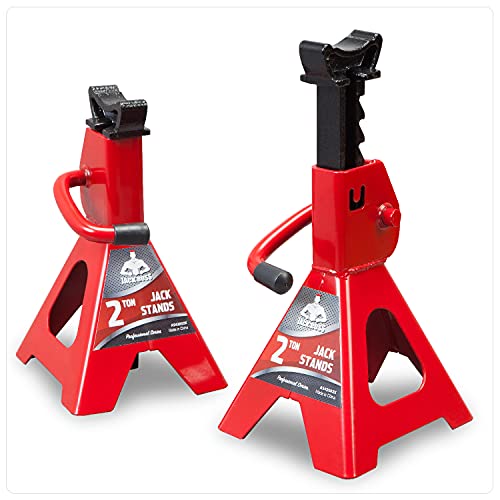
Specifications:2 ton (4,000 lb) capacity for single jack stand; Lifting range from min 9.8 " to max 15"; Net weight: 10.5 lb, which suitable for most 2 Ton Low profile autos, not recommendable for Pick-Up, Truck, too big SUVs etc. whose automobile chassis higher than 15".

Heavy-Duty 300lb Capacity: This adjustable riding lift jack is designed to safely lift and support up to 300 lbs, making it perfect for tractors, ATVs, and zero-turn lawn mowers. Whether you're performing maintenance or repairs, this sturdy lift jack ensures reliable support and durability for heavy-duty lifting tasks.
Install New Blades and Torque to Specifications
Whether you’re mounting a freshly sharpened blade or a new replacement, proper orientation is critical: position the blade so the GRASS SIDE faces downward, then align the center hole with the star pattern on the mandrel assembly before fully seating it.
Prioritize center hole alignment—blade installation demands precise engagement with the mandrel assembly’s star pattern. Verify blade seating: the blade must sit flush with zero play. Thread the bolt by hand, then apply blade bolt tightening using a calibrated torque wrench set to 45–55 ft-lbs (62–75 Nm) per manufacturer torque specification. Confirm blade balance through visual marking alignment.
Operate the riding mower blades through one complete cutting cycle, then execute a post-start torque check. Re-tighten immediately if you’ve detected any torque loss. Correct grass side orientation prevents hazardous imbalanced rotation.
Recommended Products
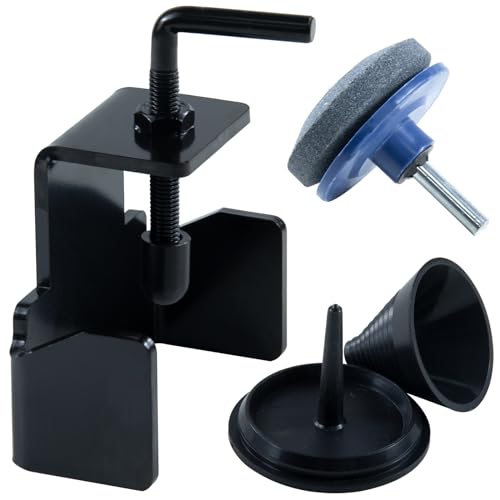
Replaces: 490-850-0005 Universal Lawn Mower Blade Removal Tool Cub Cadet Replaces Troy Bilt 490-850-0005 Lawn Mower Blade Holder Tool, Cub Cadet 490-850-0005 Lawn Mower Blade sharpening kit, 490 850 0005 John Deere Blade Removal Tool; Made of steel material that ensures durability and longevity, while the compact size makes it easy to store in your tool shed

VERSATILE – The most versatile sharpener in the market to sharpen and hone both single and double beveled blades including knife, mower blade, pruner, loppers, hedge shears, axe, machete, hatchet, scissors, edged tool, etc.
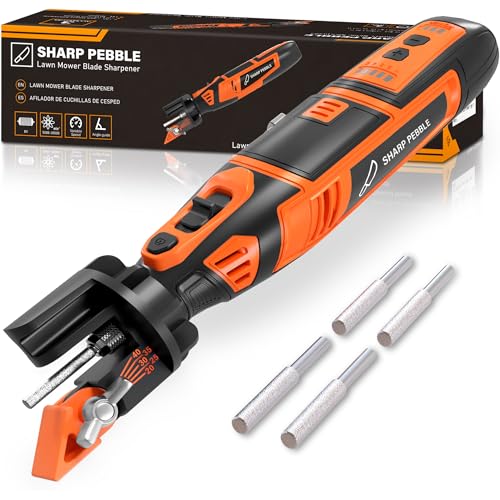
SHARPEN YOUR MOWER BLADE IN MINUTES: Blade removal is optional with this cordless lawnmower sharpener — many standard residential blades can be sharpened right on the mower, saving you the hassle of disassembly. Routine touch-ups take about 2–3 minutes per blade; badly worn edges take longer and are best done with the blade removed.
Conclusion
You’ve secured the blades at 45–55 ft-lbs, verified balance, and reconnected the spark plug. Lower the deck, remove wheel chocks, and test the mower on a small patch. Listen for vibration or uneven cutting—signs of improper installation. Dispose of worn blades responsibly. Maintain a sharpening schedule to preserve cut quality and deck longevity. You’re ready for safe, efficient operation.
Recommended Products

The lawn mower blade removal tool for all walk-behind and riding lawn mowers up to 42 inches is easy to use and allows for easy and safe removal of the mower blade

LAWN MOWER BLADE REMOVAL TOOL: Replaces MTD 490-850-0005, Troy Bilt 490-850-0005, Cub Cadet 490-850-0005, Riding Lawn Mower Blade Removal Tool for Cub Cadet 490-850-0005 Blade Removal Tool Cub Cadet Blade Removal Tool, Lawn Mower Blade holder Tool, Troy Bilt Blade Removal Tool, Lawn Mower Blade lock Tool, 4908500005 Blade Removal Tool;

Universal Compatibility: The 750-058 Blade Lock is designed to work with most walk-behind and ride-on lawn mowers, A versatile mower blade removal tool for homeowners and professionals