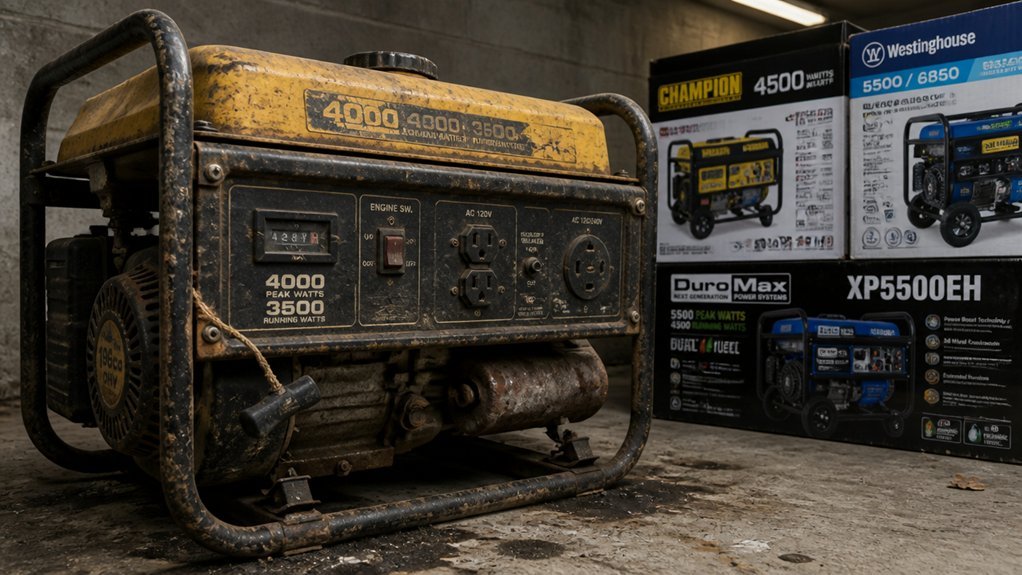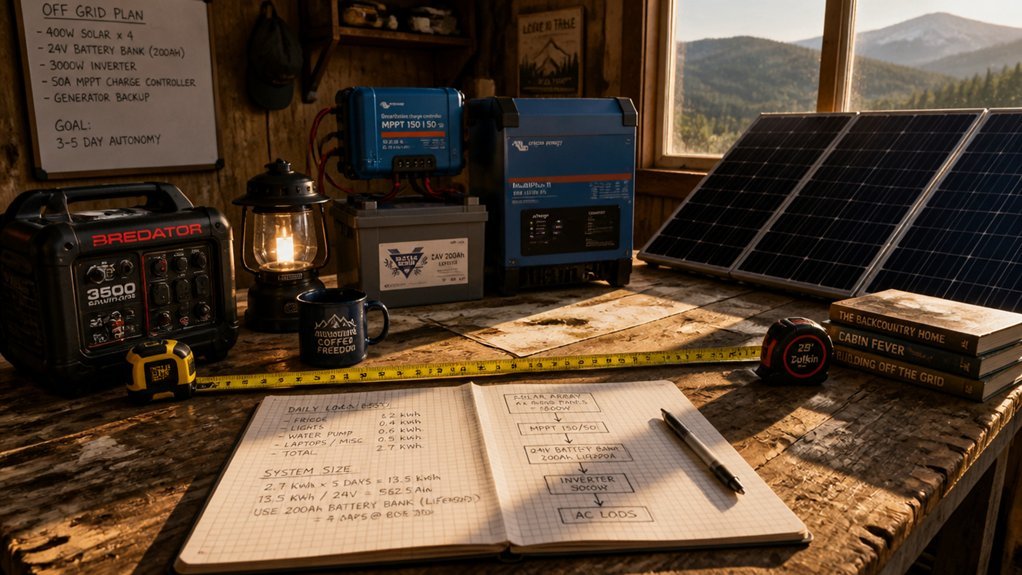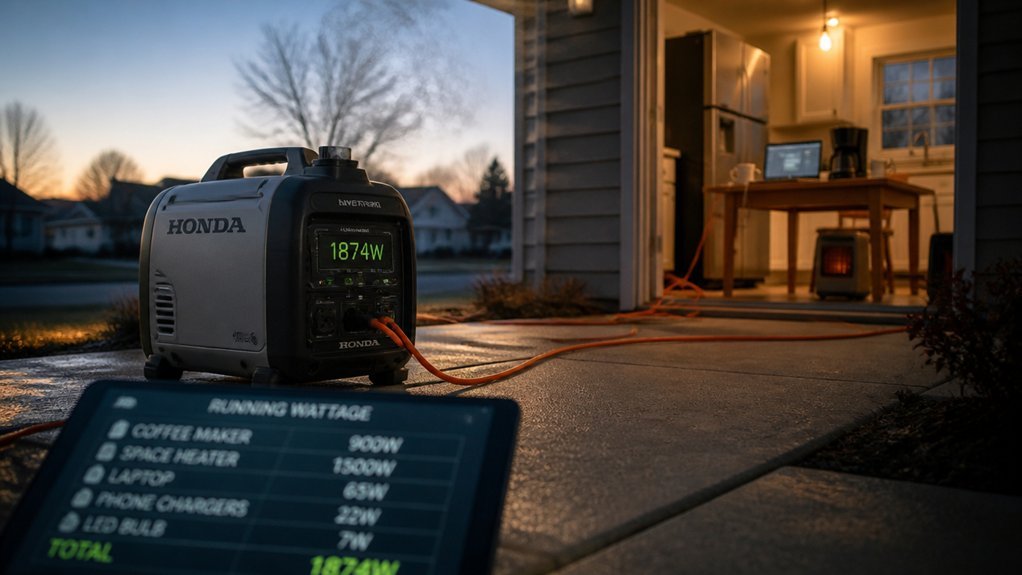

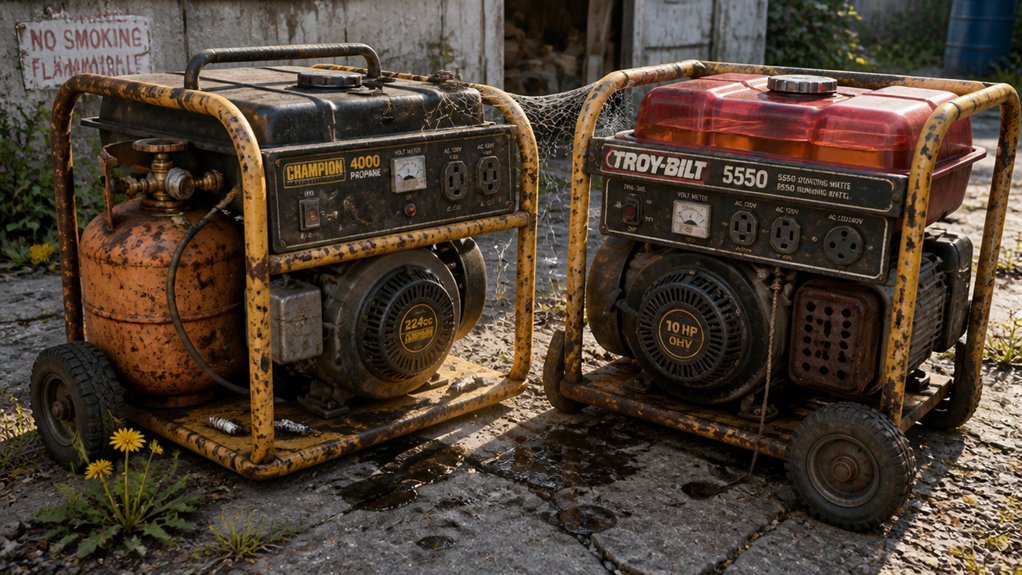
You’re standing in the generator aisle, weighing a 20-pound propane tank against a 5-gallon gas can, and the specs blur together. Both fuels start engines, but their energy densities diverge sharply—gasoline packs roughly 25% more BTUs per gallon, while propane degrades essentially zero over decades of storage. Your camping patterns, maintenance tolerance, and refueling access will determine which gap matters more. The wrong choice costs you runtime, reliability, or both.
Which Fuel Works Better for Your RV Setup: Propane vs. Gasoline?
How precisely should you weigh propane against gasoline when configuring your RV’s power system? You’ll analyze energy density, maintenance demands, and operational logistics systematically.
Propane tanks deliver indefinite storage stability and cleaner combustion, reducing fuel maintenance significantly. You’ll note propane’s 91,500 BTU per gallon against gasoline’s 114,000 BTU per gallon, understanding that gasoline-powered generators achieve superior runtime per gallon despite higher emissions.
For your RV setup, calculate practical output: a 20-lb propane tank powers a 2,200W generator roughly 25–30 hours at 25% load. You’ll trade propane’s lower long-term maintenance costs against gasoline’s roadside availability. Consider fuel flexibility through tri-fuel configurations, combining propane’s stability with gasoline accessibility. You’re optimizing combustion chemistry, logistical constraints, and lifecycle economics simultaneously.
Recommended Products

2, 200 peak watts/ 1, 800 Rated watts (gas) & 2, 000 peak watts/ 1, 600 Rated watts (LPG)
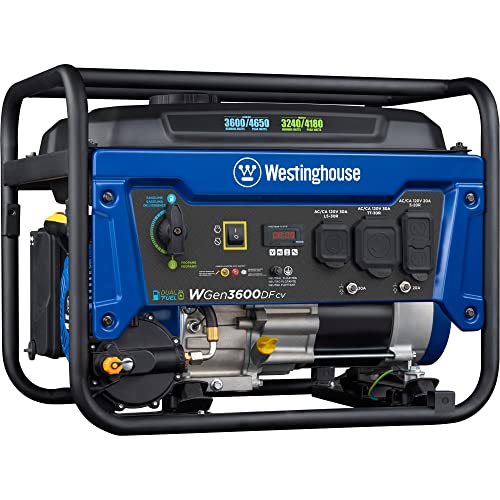
4650 Peak Watts & 3600 Rated Watts (Gasoline); 4650 Peak Watts & 3240 Rated Watts (Propane); 4 Gallon Fuel Tank (with Fuel Gauge); Up To 14 Hours of Run Time Per Tank

224cc dual-fuel engine runs on both gasoline (6800 surge watts, 5100 rated watts) and propane (6000 surge watts, 4500 rated watts)
Match Your Fuel Choice to How You Actually Camp

Where exactly does your camping style intersect with fuel chemistry and logistics? Your propane vs gas fuel choice hinges on operational parameters you prioritize. For seasonal campers, propane delivers indefinite long-term storage and reduced maintenance, eliminating fuel degradation concerns during dormancy. You gain refueling availability through cylinder exchanges, though planning remains essential.
Conversely, road-trip campers leveraging gasoline access ubiquitous stations, ensuring continuous operation across variable routes.
Cold weather performance differentiates these systems: propane maintains reliable cold-start capability where gasoline formulations gel or vaporize poorly. Noise constraints at established campgrounds favor propane’s combustion characteristics, producing lower decibel output during operation. You must align your power needs with these variables—base camping suits propane’s stability, while mobile scenarios exploit gasoline’s distribution density. Match your fuel choice to your actual camping pattern, not theoretical ideals.
Recommended Products

With 5,500 watts of power, the XP5500HX Dual Fuel generator will keep you powered at home or on the go, while keeping your family safe from harmful fumes with CO Alert

Note: Unscrew the tank cap to get all of the accessories.
Why Energy Density Changes Everything About Run Time

Why does a gallon of gasoline outlast a gallon of propane at identical loads? You must examine propane energy density versus gasoline’s superior energy content. Gasoline delivers roughly 114,000 BTU per gallon; propane yields only 91,500 BTU per gallon. This gasoline vs propane disparity directly governs your run time.
You convert BTU per gallon into usable power output through engine combustion. At 0.2931 watts per BTU, gasoline’s higher density generates more watts per gallon, extending generator runtime significantly. For example, you’ll extract approximately 83.5 hours from 5 gallons of gasoline versus 67.1 hours from propane at identical 2,000-watt loads.
Your fuel efficiency at varying loads modifies this advantage. Half-load operation preserves gasoline’s edge but tempers it through combustion efficiency factors. You observe energy density’s foundational role in predicting operational duration.
Recommended Products
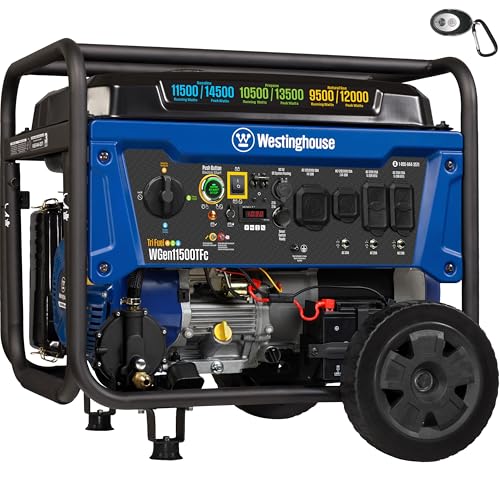
Perfect as a backup power source for larger homes or a dependable source of portable power

Power Your Entire Home - With 13,000 watts of power, the DS13000MXT Tri Fuel generator will keep your whole home running during a storm or power outage, while protecting your family from harmful fumes with CO Alert.

With 13,000 watts of power, the XP13000HXT Tri Fuel generator will keep your whole home running during a storm or power outage, while protecting your family from harmful fumes with CO Alert
Compare Real-World Run Times for Propane and Gasoline
Although energy density establishes the theoretical foundation, you’re ultimately comparing measurable hours of operation when selecting between fuels. A precise run time comparison reveals how BTU energy density translates to actual fuel consumption. You’ll observe that gasoline delivers approximately 114,000 BTU per gallon, while propane provides 91,500 BTU per gallon—this differential directly impacts runtime outcomes.
With a 5-gallon tank and 2000 W load, your gasoline generator runtime extends to roughly 83.5 hours, whereas propane generator runtime reaches only 67.1 hours under identical conditions. At reduced load rates, consumption scales proportionally; a 10 kW unit at half-load consumes approximately 1 gallon of propane hourly. You’re calculating propane output by converting BTUs to watts (multiplying by 0.2307107) before dividing by your specific electrical demand.
Storage, Refueling, and Tank Requirements Compared
How do you balance accessibility against longevity when fueling your generator? You must weigh gasoline’s ubiquitous refueling against propane’s superior storage characteristics.
Gasoline offers immediate accessibility at any station, yet you confront gasoline stability limitations—untreated fuel degrades within months, demanding stabilizers and rotation schedules. You sacrifice indefinite storage for convenience.
Conversely, you select a propane tank from 20-lb cylinders to 100-lb tanks, enabling indefinite storage without degradation. You extend run time proportionally with tank size; scaling capacity directly increases operating hours before swap-out.
Energy density differences matter: your 5-gallon gasoline tank yields 83.5 hours at 2,000W versus 67.1 hours for equivalent propane. You trade slight efficiency loss for shelf life reliability and elimination of fuel system contamination.
Your best choice depends on usage frequency, storage duration requirements, and tolerance for refueling logistics.
Recommended Products
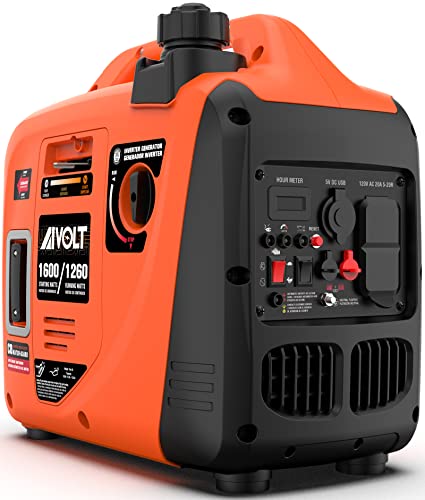
🔌 Safe for Sensitive Electronics | <3% THD Clean Power Inverter Generator - This portable inverter generator with advanced inverter tech delivers stable, clean power (THD <3%), safe for your phones, laptops, or small tools. It’s the perfect for home office backups during blackouts or generator for camping - keep your devices charged without worry

Dual-fuel design runs on both gasoline (2800 surge watts, 2250 rated watts) and propane (2800 surge watts, 2000 rated watts)

9500 Running Watts and 12500 Peak Watts (Gasoline); 8500 Running Watts, 11200 Peak Watts (Propane); Remote Start with Included Key Fob, Electric and Recoil Start; Up to 12 Hours of Run Time on a 6. 6 Gallon Fuel Tank with Fuel Gauge
Cut Maintenance Costs With Propane’s Cleaner Burn
Your fuel choice directly shapes what you’ll spend keeping your generator operational over its lifetime, and propane’s combustion chemistry offers measurable advantages in component preservation. Propane’s cleaner burn produces minimal carbon residue, directly extending maintenance intervals across critical systems. You’ll encounter fewer fuel system deposits, which eliminates frequent carburetor cleaning and reduces fuel filter replacement frequency. This cleaner combustion profile protects valves and injectors from soot-induced abrasion, measurably improving component longevity. Propane’s indefinite storage stability prevents fuel degradation, removing preventive maintenance tasks tied to gasoline’s oxidation and varnish formation. When you aggregate these factors, maintenance costs drop substantially for propane-powered generators. The systematic reduction in wear mechanisms—carbon accumulation, deposit formation, and fuel-related corrosion—creates a predictable, lower-cost operational profile over the equipment’s service life.
Recommended Products

Dual-fuel design runs on both gasoline (3600 surge watts, 2900 rated watts) and propane (3500 surge watts, 2600 rated watts)

Powerful RV and Parallel Home Generator: Built-in 30A outlet is ideal for RV use and easier parallel capability; Run microwaves, refrigerators, hair dryers, small AC units, and more; Advanced inverter technology supplies reliable power for computers

Powerful Camping, RV, and Home Generator: Ideal for microwaves, refrigerators, hair dryers, small AC units, and more, this house generator features advanced inverter technology to supply power reliable enough for computers
When Gasoline Outperforms Propane on the Road
Where does gasoline’s chemistry translate into practical superiority for mobile power generation? You exploit gasoline energy density to maximize run time from compact tanks, crucial when you’re traversing remote stretches between stops. The refueling network rewards you with ubiquitous access—you’ll locate stations in virtually any town, eliminating route constraints. Portability favors gasoline systems; you’ll find lighter, more compact units that simplify vehicle loading. Upfront cost advantages let you deploy capital efficiently, acquiring capable equipment without premium expenditure. However, you must manage shelf life limitations—stabilizers become essential for intermittent use. While emissions and maintenance demands exceed propane alternatives, you’re trading operational purity for immediate logistical dominance. On the road, gasoline’s infrastructure integration and energy concentration deliver uncompromising mobility.
Recommended Products

𝐃𝐮𝐚𝐥 𝐅𝐮𝐞𝐥 𝐏𝐨𝐰𝐞𝐫 — 𝐆𝐚𝐬𝐨𝐥𝐢𝐧𝐞 & 𝐏𝐫𝐨𝐩𝐚𝐧𝐞 (𝐋𝐏𝐆) Delivers 4400W surge / 3600W rated watts (Gas) and 4000W surge / 3300W rated watts (LPG). Use gasoline for maximum output, or propane for cleaner combustion and longer engine life. For best performance, keep continuous load below 2800W (80% of rated power) and always connect the highest-wattage appliances first. The built-in overload protection will safely shut down the generator if total load exceeds limits, protecting your devices.

𝗣𝗼𝘄𝗲𝗿𝗳𝘂𝗹 𝗢𝘂𝘁𝗽𝘂𝘁 - 4400 peak watts and 3400 running watts, perfect for RV camping and home backup

Operate your 4000-watt portable generator right out of the box on either gasoline or propane, plus features CO Shield carbon monoxide auto shutoff system
The Real Environmental and Cost Trade-offs
Why does the cleaner-burning profile of propane reshape your total cost calculus when evaluating long-term generator ownership? In the Propane vs gas generator comparison, you must weigh environmental impact against operational economics.
Propane’s cleaner combustion reduces soot and carbon deposits, directly lowering your maintenance costs and extending engine longevity. However, you sacrifice energy efficiency per unit volume—gasoline delivers superior run time per gallon due to its higher BTU density.
Your fuel costs analysis shifts when you account for shelf life: propane’s indefinite stability eliminates degradation losses, while gasoline demands stabilizers and suffers evaporation.
Fuel availability favors gasoline for immediate refueling, but you offset propane’s higher initial infrastructure costs through reduced downtime and extended service intervals.
Your optimal choice depends on usage frequency, storage duration, and local fuel accessibility.
Recommended Products

13500 Peak Watts, 10500 Running Watts (Gasoline); 12500 Peak Watts, 9500 Running Watts (Propane); 10000 Peak Watts, 8500 Running Watts (Natural Gas); Remote Start with Included Key Fob, Electric and Recoil Start; Up to 19 Hours of Run Time on a 9.5 Gallon Fuel Tank with Fuel Gauge

TRI-FUEL FLEXIBILITY FOR ANY SITUATION: Run on gasoline, liquid propane, or natural gas with a simple dial turn, delivering 9,500 running watts and 12,500 starting watts to power home backup, job sites, or RV setups

12500 Peak Watts, 9500 Running Watts (Gasoline); 11200 Peak Watts, 8500 Running Watts (Propane); 9500 Peak Watts, 7500 Running Watts (Natural Gas); Remote Start with Included Key Fob, Electric and Recoil Start; Up to 12 Hours of Run Time on a 6. 6 Gallon Fuel Tank with Fuel Gauge
Tri-Fuel Generators: Combine Propane and Gasoline Benefits
The trade-offs between propane and gasoline need not confine you to a single choice. You gain strategic flexibility through tri-fuel systems, which integrate propane, gasoline, and natural gas capability within one unit.
You optimize operational parameters by leveraging switchable fuel functionality. When you face constrained fuel availability, you alternate between high-energy-density gasoline for immediate demands and storable propane for extended runtime. You connect to natural gas infrastructure where pipelines exist.
You mitigate supply chain vulnerabilities through multiple sourcing pathways—retail stations, cylinder exchanges, or utility lines. Fuel compatibility demands careful component integration, including regulators and carburetion systems. You accept elevated maintenance complexity from multi-fuel hardware.
You achieve extended uptime unavailable to single-fuel alternatives. While upfront costs increase, you secure operational continuity across diverse emergency scenarios through systematic fuel diversification.
Make Your Final Fuel Decision: A Quick-Reference Framework
How do you distill complex fuel variables into an actionable decision? You compare Runtime, Fuel density, and logistics systematically. Gasoline delivers ~114,000 BTU/gal versus Propane’s ~91,500 BTU/gal, meaning identical tanks yield longer Gasoline runtimes—83.5 hours versus 67.1 hours at 2,000 W with 5-gallon capacity. However, you weigh this against Shelf life: Propane stores indefinitely, while Gasoline degrades without additives. You evaluate Emissions—Propane burns cleaner, reducing maintenance—and Refueling accessibility, where Gasoline dominates urban availability. You assess Storage constraints: Propane requires tank space but offers stability; Gasoline demands treated containers and ventilation. Your framework balances energy density against longevity, availability against environmental impact, and immediate convenience against long-term resilience.
Recommended Products
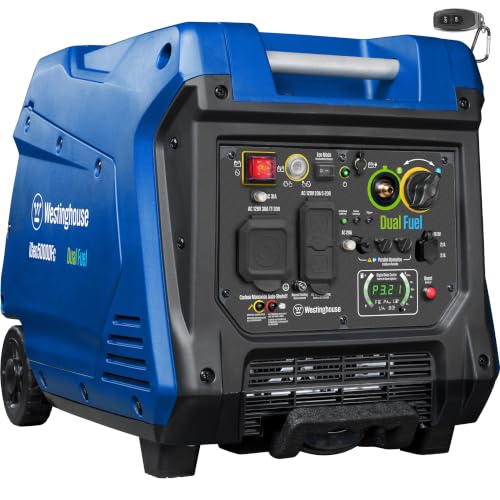
5000 Peak Watts and 3900 Rated Watts at Less Than 3% THD – Telescoping Handle – Gas or Propane Powered – Remote Start With Included Key Fob, Electric and Recoil Start. Grounding System-Floating Neutral

QUIET, SMART, VERSATILE: The iGen2800DFc is a dual fuel inverter generator- Gasoline: 2,800W peak/2,200W running, Propane: 2,520W peak/1,980W running; Up to 12 hours of run time at 25% load; All the benefits of an inverter like quieter operation and low THD: Only 45 pounds so it’s easy to move
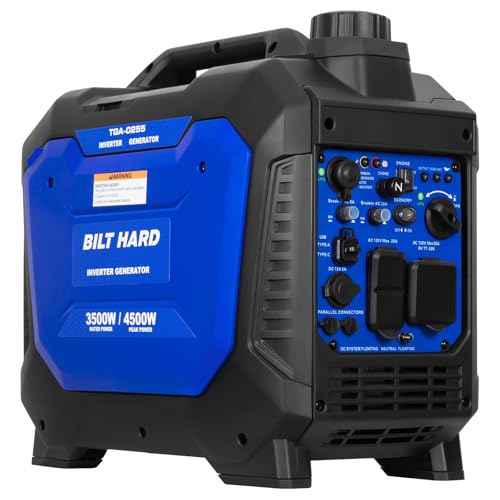
Dual-Fuel Operation (Gasoline & Propane): Features a 141cc OHV air-cooled engine operating on gasoline (4500 peak watts / 3500 rated watts) or propane (4150 peak watts / 3200 rated watts). Includes propane (LPG) hose with regulator.
Conclusion
Your generator fuel choice hinges on operational priorities. You’ll prioritize gasoline for extended deployments and rapid refueling access, leveraging its superior energy density and infrastructure ubiquity. You’ll select propane when storage stability, maintenance reduction, and emissions control dominate—ideal for intermittent or remote use. You’ll evaluate tri-fuel systems if flexibility outweighs unit cost. Match your selection to deployment frequency, refueling logistics, and maintenance tolerance; no universal solution exists.