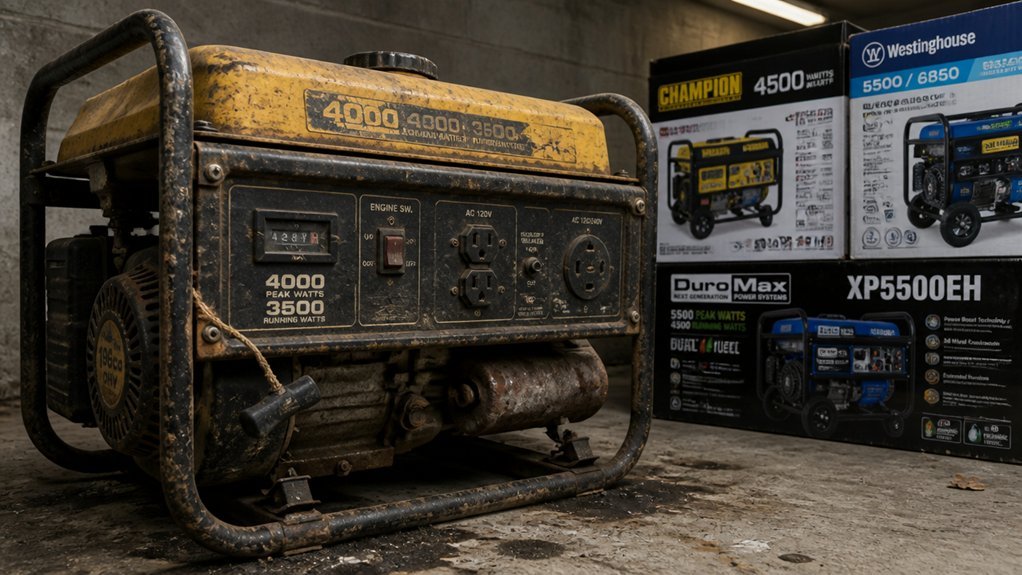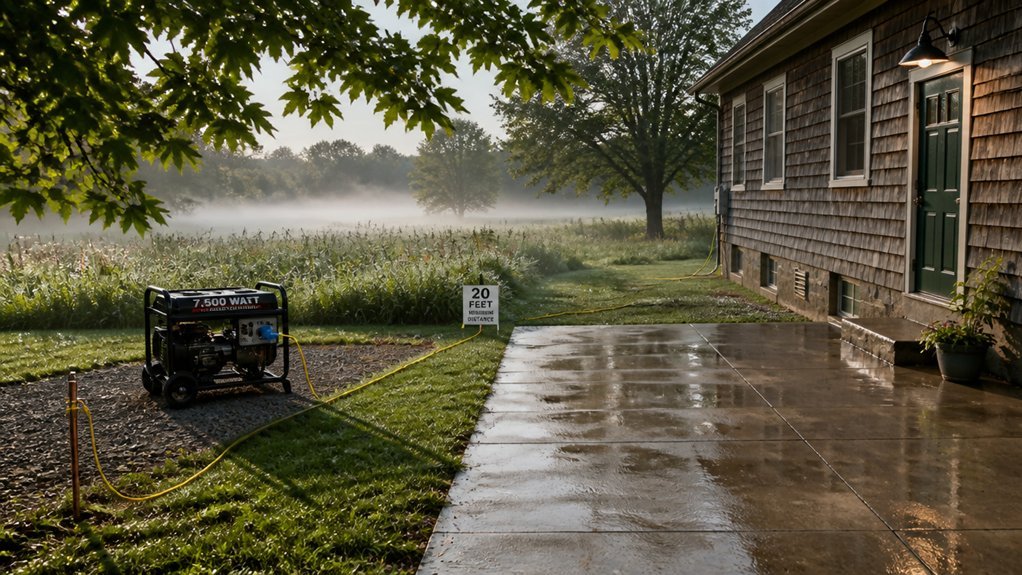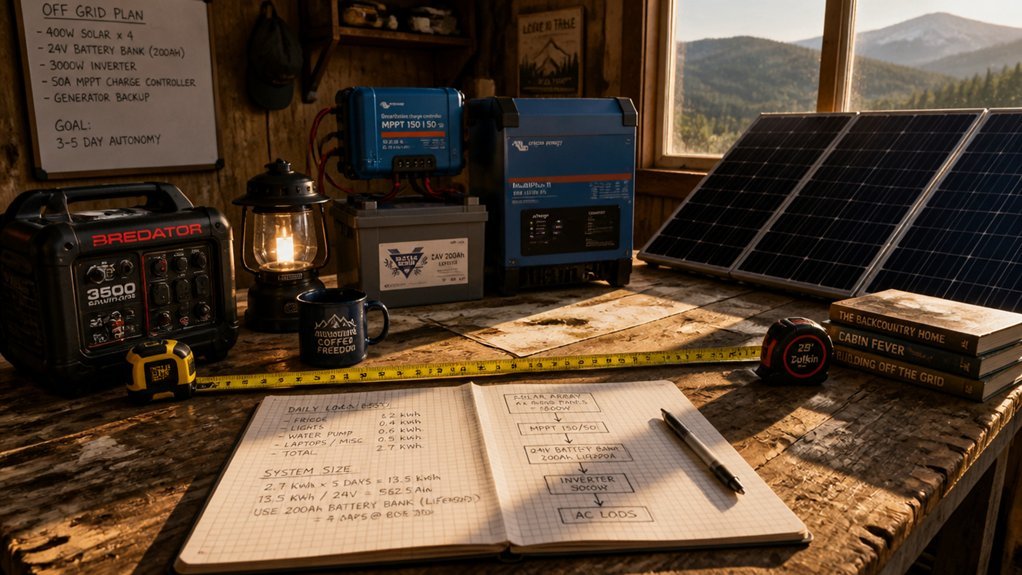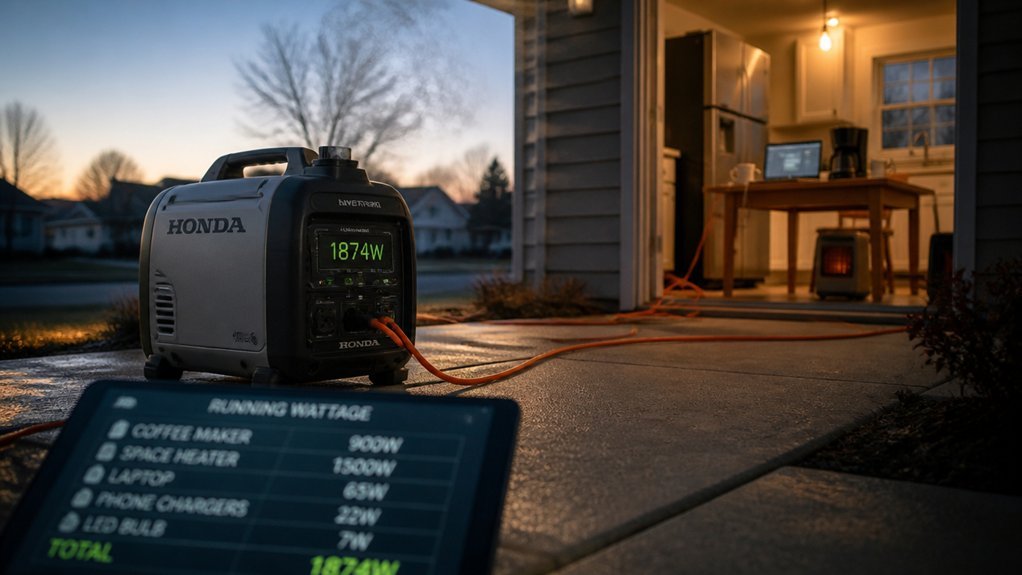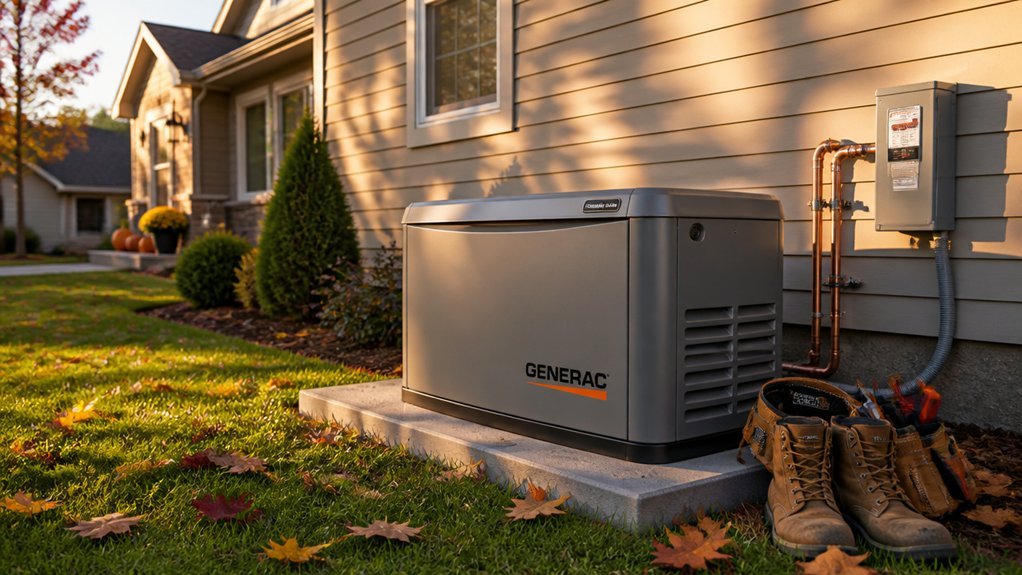

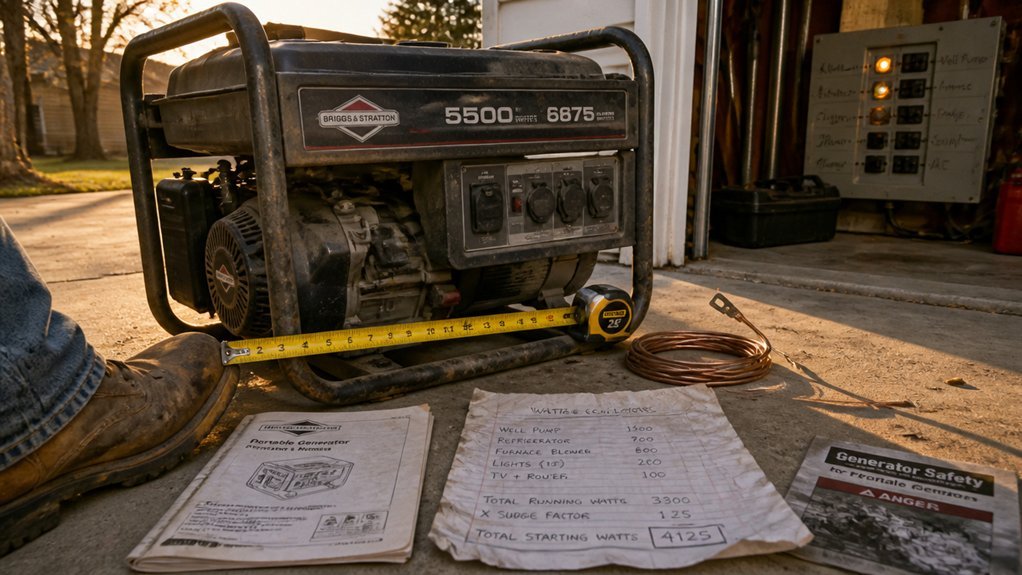
You need a generator that matches your home’s electrical load, but that calculation isn’t as simple as adding up wattage numbers from your appliances. Start-up surges, code-mandated safety margins, and your specific utility requirements all complicate the sizing process. Get it wrong, and you’ll face either costly oversized equipment or dangerous overload conditions. The next sections break down exactly how to nail this calculation.
How to Calculate Generator Size for Your House
Determining which generator capacity safeguards your home demands a methodical load calculation rather than guesswork. You’ll start by inventorying essential appliances and their running watts—refrigerators draw approximately 700 W, sump pumps around 1,000 W. You must account for startup surges from motors, which typically exceed running wattage by three to five times.
Your generator size calculation requires this formula: Minimum Generator Size (kW) = (Total Running Watts × 1.2) / 1,000. You’re multiplying by 1.2 to accommodate surge demands, then converting to kilowatts. For example, if your running watts total 4,500 W, you’ll calculate (4,500 × 1.2) / 1,000 = 5.4 kW minimum capacity.
You’re advised to consult a licensed electrician for final verification against your service panel configuration and NEC-compliant load matching.
Recommended Products

PrecisionPower Technology delivers best-in-class power quality with less than 5 percent total harmonic distortion for clean, smooth operation of sensitive electronics and appliances

Up to 20% more fuel efficient than leading competitors, this 22-kilowatt generator provides 22,000 watts of continuous power on propane and 19,800 watts on natural gas, with no refueling, no manual operation, and no extension cords needed

Remote Monitoring Anywhere: With Generac 7172 10kW Mobile Link Wi-Fi connectivity, effortlessly track generator performance from anywhere. Stay updated on status and maintenance alerts, ensuring peace of mind even when you’re away
Four Factors That Affect Generator Size
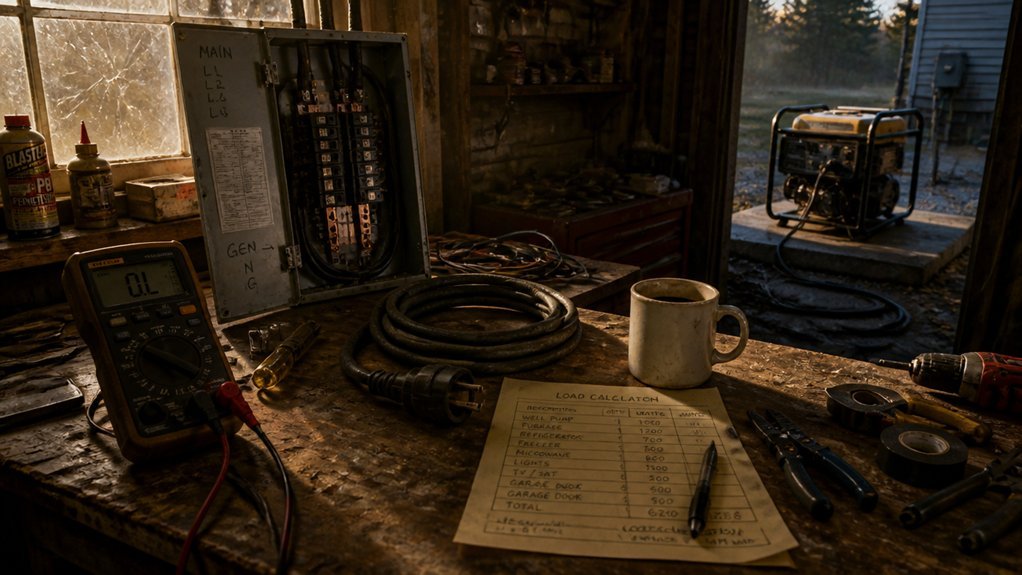
Why do similarly-sized homes often require vastly different generator capacities? You must evaluate four critical factors to determine your precise load requirements.
Home size establishes your baseline wattage range. You’ll need 2–4 kW for tiny homes versus 15–22 kW for large residences, as square footage directly correlates with lighting, appliance, and general load demands.
Your heating method dramatically alters your calculation. Electric resistance heating forces you to size for substantial resistive loads, while gas or propane systems keep your generator requirements considerably lower.
Backup scope determines whether you’re powering essentials or entire electrical systems. Whole-home coverage demands markedly higher capacity than selective circuit backup.
Additionally, if you’re charging an electric vehicle during outages, you’ll add considerable running watts to your total. Size accordingly.
Recommended Products

WHOLE-HOME AUTOMATIC STANDBY BACKUP: Monitors utility power continuously and transfers your entire 200-amp home electrical load to a compatible Generac standby generator automatically, with no manual action needed

WHOLE-HOME AUTOMATIC BACKUP POWER: Service entrance rated at 200A, this switch replaces your main disconnect and transfers your entire home to a compatible Generac standby generator with no manual action required

Designed for use with single-phase generators, this transfer switch seamlessly transfers power from utility to generator
Whole Home or Select Circuits: What’s Right for You?
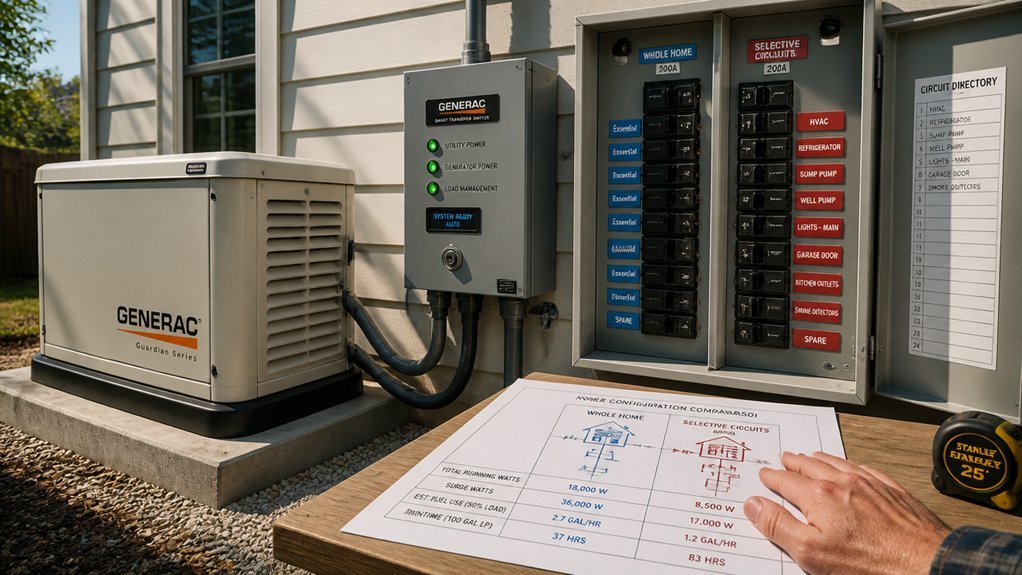
How do you balance uninterrupted comfort against installation cost and fuel efficiency? You’ll decide between whole home backup power or select circuits based on your load calculations and priorities.
Whole home systems energize every circuit automatically through an automatic transfer switch, typically requiring 12 kW–22 kW generators to cover central air, appliances, and NEC-mandated safety margins.
Select circuits backup prioritizes essential loads—refrigeration, lighting, sump pumps, medical equipment—allowing smaller 5 kW–10 kW units with reduced fuel consumption and lower capital expense.
Your scope selection directly impacts running and starting watt requirements. Each added circuit increases demand.
You’ll conduct an in-home assessment to determine optimal circuit prioritization, ensuring code-compliant load calculations that match your comfort expectations against budget and efficiency targets.
Recommended Products

5000 Peak Watts and 3900 Rated Watts at Less Than 3% THD; Telescoping Handle; Gas Powered; Remote Start With Included Key Fob, Electric and Recoil Start

【Extened Runtime】: This protable generator comes with 1.06-gallon fuel tank, allows for up to 17 hours of operation at 25% load, or 8.6 hours at 50% load, with parallel function and ECO mode, providing long-lasting power. perfect for RVs, camping, home backup emergency.

Powerful & Clean Energy Output:4500W peak watts / 3500W running watts, delivering dependable power for RVs, camping, home backup, and outdoor work. Advanced inverter technology provides clean and stable electricity, making it safe for sensitive electronics like laptops, CPAP machines, and mobile devices.
Portable or Standby: Which Generator Type Matches Your Needs?
Once you’ve mapped your circuits and calculated your load requirements, you’ll match those specifications to a generator type that fits your operational expectations.
Portable generators offer lower upfront costs and suit short outages, but you’ll handle outdoor setup, fuel management, and limited runtime. These units typically cap at 9.5 kW, restricting you to essential loads.
Standby generators install permanently, connect to natural gas or propane, and automatically energize your entire electrical system during grid failures. Systems ranging 25–150 kW deliver whole-house backup without your intervention.
Your decision hinges on temporary versus continuous coverage. You’ll also verify that either generator type accommodates startup surges—motor-driven appliances demand substantially higher locked-rotor amperage than running watts, and undersizing risks voltage drop and equipment damage.
Recommended Products

【4550W Strong Power】 Delivers 4550 starting watts and stable rated output. Handles your RV air conditioner, refrigerator, sump pump, and power tools with ease — reliable power for home, jobsite, or camping.

9500 Running Watts and 12500 Peak Watts (Gasoline); 8500 Running Watts, 11200 Peak Watts (Propane); Remote Start with Included Key Fob, Electric and Recoil Start; Up to 12 Hours of Run Time on a 6. 6 Gallon Fuel Tank with Fuel Gauge

RELIABLE 4500W POWER OUTPUT – Delivers 4500 peak watts and 3800 running watts to power refrigerators, freezers, sump pumps, power tools, RV appliances, and other essentials. Ideal for home backup, camping, tailgating, jobsites, and emergency power outages.
Why Professional Sizing Beats DIY Calculations
What separates a generator that merely runs from one that truly protects your home? Professional sizing.
When you rely on DIY calculations, you miss critical variables motor startup surges, HVAC loads, and EV charging demands create. A licensed electrician performs a load analysis that captures both running and starting watts across your circuits. This process identifies your exact power needs without overbuilding capacity.
Professional sizing ensures code-compliant panel upgrades, properly sized transfer switches, and safe fuel connections. Your electrician evaluates climate, insulation, occupancy, and home size to balance backup coverage with cost efficiency. Licensed dealers also verify fuel-type compatibility and provide warranty protection plus maintenance plans.
You avoid the expensive failures of undersizing or oversizing. Your standby system integrates seamlessly, delivers reliable backup, and meets NEC requirements—protecting your investment and your home.
Recommended Products

Switch between gasoline (4750 surge watts, 3800 running watt) and propane (4350 surge, 3500 running) with the simple turn of the selection dial

Digital readout helps manage oil changes and maintenance schedule
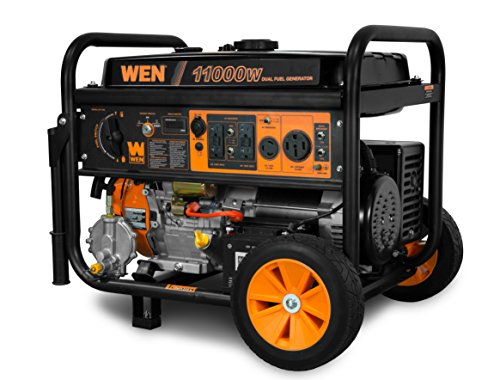
Switch between gasoline (11,000 surge watts, 8,300 running watt) and propane (9,500 surge, 7,500 running) with the simple turn of the selection dial
Conclusion
You’ll size your generator by totaling running watts, multiplying by 1.2 for surge capacity, and converting to kilowatts. Match this to your heating type, essential loads, and EV charging needs. Choose between whole-home units (12–22 kW) or select-circuit systems (5–10 kW), then decide on portable or standby configurations. Always engage a licensed electrician to verify load calculations, ensure NEC compliance, and properly install your transfer switch—DIY sizing risks code violations and equipment failure.
Recommended Products

Remote Monitoring Anywhere: With Generac 7171 10kW Mobile Link Wi-Fi connectivity, effortlessly track generator performance from anywhere. Stay updated on status and...