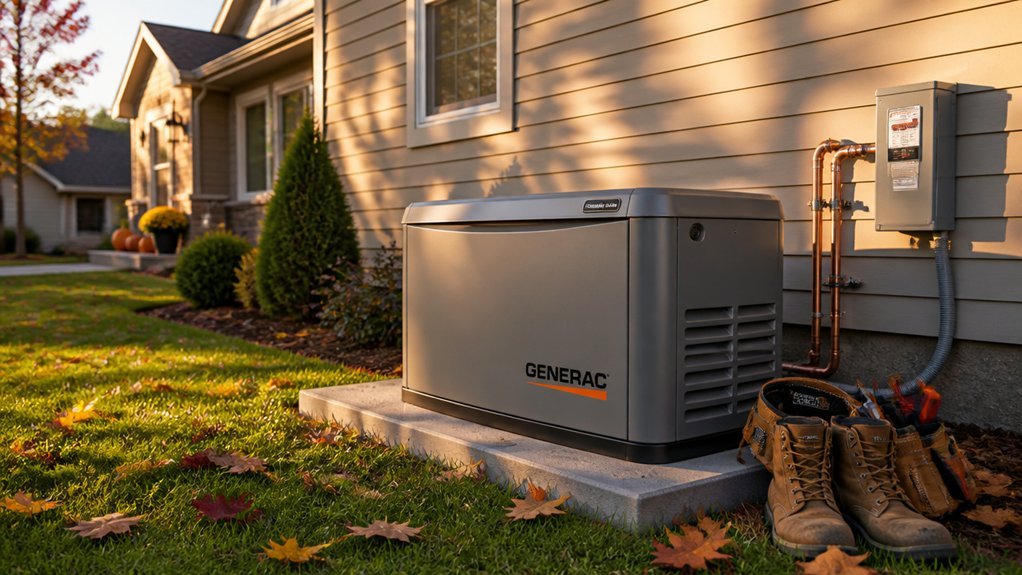

You need reliable backup power, but runtime isn’t unlimited. Your generator’s endurance hinges on fuel type, tank capacity, and load—natural gas flows indefinitely, while diesel and propane hit hard caps. Standby units promise extended operation, yet even they’re bound by maintenance intervals and thermal limits. The gap between rated expectancy and real-world performance often surprises owners.
How Long Can a Generator Run? Runtime Ranges by Type
How much runtime you get depends entirely on generator type. Standby generators typically deliver up to 3,000 runtime hours total, with continuous operation generally capped near 500 hours non-stop for engine preservation. Your fuel type critically dictates endurance. Natural gas units connect to utility lines, so you’ll achieve theoretically indefinite runtime with uninterrupted supply and maintenance. Propane tanks constrain you to 2–10 days per fill; a 500-gallon tank depletes faster under higher load. Diesel generators offer 24–48 hours per tank, though you’ll extend this by increasing fuel tank size or reducing load. You must calculate your specific demand against capacity, as these variables directly modify your achievable continuous operation window across all standby generators.
Recommended Products
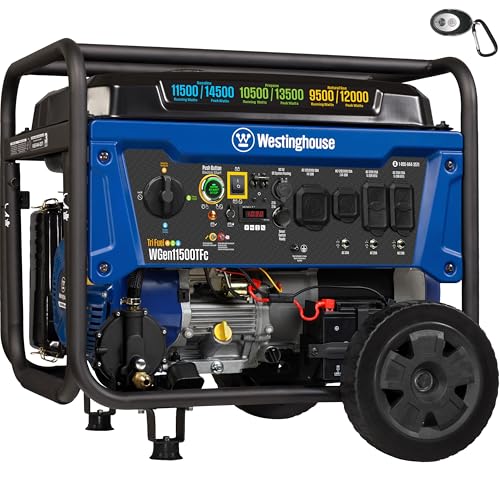
Perfect as a backup power source for larger homes or a dependable source of portable power

PrecisionPower Technology delivers best-in-class power quality with less than 5 percent total harmonic distortion for clean, smooth operation of sensitive electronics and appliances

[High Gas Flow] High Gas Flow up to 350000 BTU. Max work pressure: 1/2 PSI. 15 FT 3/4" ID Natural Gas Hose with a 3/4" Male Pipe Swivel Fitting and 3/4" Male QD Plug , with Quick-connect Adapter. Solid brass stronger connectors. The hose wall is upgraded with metal material, thickness is thickened more Safety. Long 3/4 Gas Flex Line Hose for NG/LP Propane Appliances Construction Heaters.
Standby vs. Portable: Runtime Limits and Real-World Limits
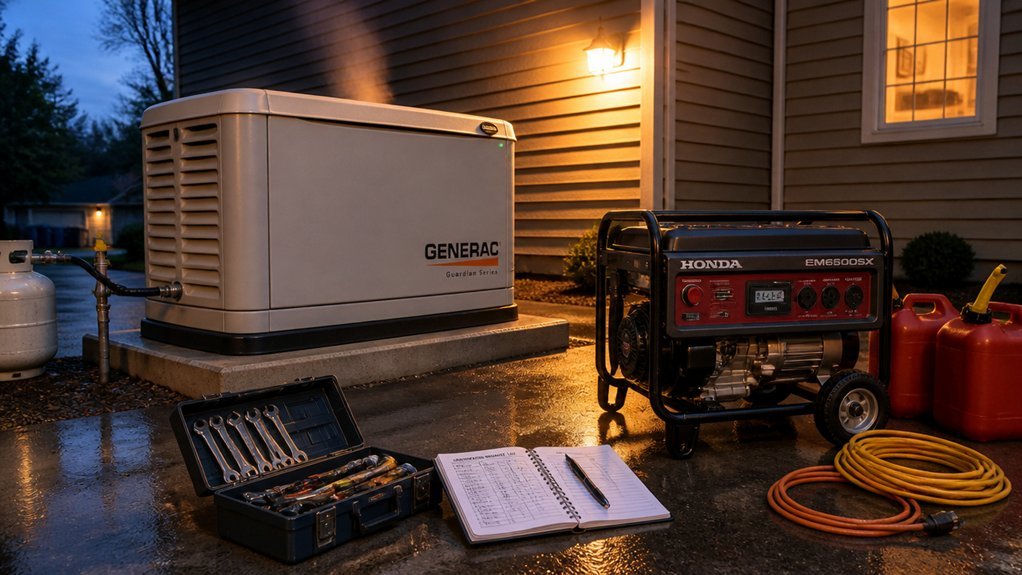
Where exactly does your generator’s endurance break down when you need it most? Your standby generators achieve substantially extended run-time compared to portable generators, with natural-gas units achieving indefinite continuous operation contingent upon uninterrupted fuel supply and rigorous maintenance protocols.
You’ll observe propane standby systems delivering 120–240 hours from a 500-gallon tank at moderate load size.
Conversely, your portable generators typically exhaust fuel within 6–18 hours, rendering them unsuitable for sustained continuous operation.
You’ll maximize operational longevity by adhering to the 500-hour threshold for non-stop running on standby units, though cumulative life expectancy reaches approximately 3,000 hours.
Your maintenance schedule, fuel type availability, and load size directly dictate practical performance boundaries. Monitor these parameters precisely; your generator’s effective run-time depends entirely on this disciplined management.
Recommended Products

13,000 Watts of Reliable Power for Home Power Backup – Keep your home, job site, or RV powered during storms and outages with dual fuel capability and a heavy-duty build.

Switch between gasoline (14500 surge watts, 11500 running watts), propane (12500 surge watts, 10300 running watts), and natural gas (10500 surge watts, 8750 running watts) with a simple turn of the selection dial

Automatically restore power in just 10 seconds with the premium power of a Kohler generator that delivers advanced voltage and frequency regulation while still protecting valuable electronics
How Fuel Type Determines Maximum Runtime

Why does your generator quit when it does? Your fuel type directly governs your continuous runtime. With natural gas, you tap a utility line; your generator runs indefinitely while supply flows, making it optimal for extended outages.
Your propane tank imposes a hard ceiling—a 500-gallon unit powers a 10–20 kW generator roughly 5–10 days at 50% load, then you’re dry.
Your diesel fuel tank yields 24–48 hours typically, though larger tanks stretch endurance.
You must match your load expectations to your fuel architecture: natural gas eliminates refill logistics, while propane and diesel demand monitoring and resupply.
You’ll trade shelf life advantages in propane against natural gas’s unbroken supply chain.
Your runtime constraint isn’t mechanical—it’s chemical, stored, or piped.
Recommended Products

COMPACT & PORTABLE: With a weight of just 39.7 lbs and equipped with a user - friendly carrying handle, this camping - oriented portable generator is effortlessly movable for camping trips, tailgating events, and other outdoor pursuits

HIGH POWER OUTPUT: The inverter generator produces up to 2500 peak watts and 1900 running watts, powerful energy in a tiny body, perfect for powering essential devices during outdoor activities or emergencies.
Tank Size and Natural Gas: Calculating Days of Power
When exactly does your fuel supply become the bottleneck? Your propane tank size directly governs your run-time. A 500-gallon tank delivers 120–240 hours of power to a 10–20 kW unit at 50% load, translating to 5–10 days of continuous operation before refueling interrupts your outage duration. You must calculate tank capacity against your generator’s consumption rate to predict your operational ceiling.
Your standby generator’s fuel supply architecture determines resilience. Natural gas eliminates tank capacity constraints entirely—you draw from utility pipelines indefinitely, provided infrastructure remains intact. For extended outage duration, you’ll find natural gas enables theoretically unlimited continuous operation, while propane systems impose finite boundaries requiring logistical planning. Your runtime calculations must account for these fundamental supply mechanics when designing backup power systems.
Recommended Products

POWER FOR CAMPING & OUTAGES: The 208cc engine delivers 4000 starting watts and 3200 running watts with under 3% THD. This generator for camping or outages powers a refrigerator, lights, fans, chargers, laptops, or small appliances within rated load.

𝐑𝐄𝐋𝐈𝐀𝐁𝐋𝐄 𝐏𝐎𝐖𝐄𝐑 𝐎𝐔𝐓𝐏𝐔𝐓 – 𝟐𝟓𝟎𝟎𝐖 𝐏𝐄𝐀𝐊 / 𝟏𝟖𝟎𝟎𝐖 𝐑𝐔𝐍𝐍𝐈𝐍𝐆: Equipped with a high-efficiency 79cc 4-stroke OHV engine, this portable generator delivers 2500W peak and 1800W running power—ideal for powering essentials like a refrigerator (700W), fan (75W), laptop (50W), or lighting during camping trips, power outages, or RV adventures. You can double the output power by connecting a second generator of the same model.

【Reliable Power】 Produces 2500 peak watts and 1900 rated watts with clean power (THD < 3%), safely powering sensitive electronics such as smartphones, tablets and laptops
How Load Size Cuts Runtime: and How to Manage It
Your fuel supply determines your ceiling, but your electrical demand governs how quickly you hit it. Runtime shrinks as load increases because fuel consumption rises proportionally with electrical draw. You’ll extend runtime through partial-load operation: a 3,500W unit delivers roughly 10–12 hours at 50% load versus significantly less at full capacity. For sustained continuous operation, target 70–80% of rated output to optimize thermal management and efficiency.
Practice load-shedding—sequentially powering nonessential appliances—to preserve fuel for critical systems. Prioritize essential appliances: refrigeration, medical equipment, and climate control. Consider an inverter generator for variable loads; its demand-matching engine speed reduces fuel burn during light use, stretching effective runtime without sacrificing power quality. You control your outage duration through deliberate load management and strategic equipment selection.
Recommended Products
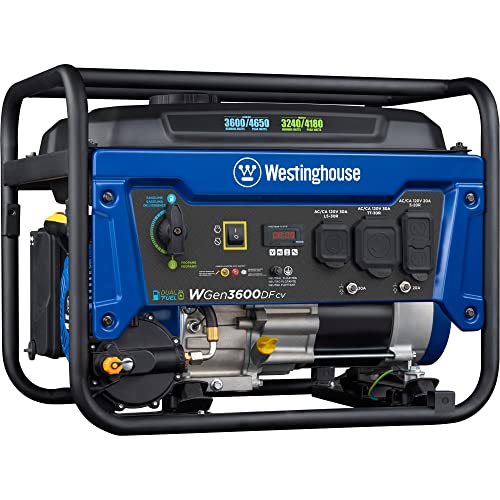
4650 Peak Watts & 3600 Rated Watts (Gasoline); 4650 Peak Watts & 3240 Rated Watts (Propane); 4 Gallon Fuel Tank (with Fuel Gauge); Up To 14 Hours of Run Time Per Tank

[Strong Power] This inverter generator has a starting power of 2550W that can your daily needs of various electrical appliances and equipment in camping, outdoor activities, commercial use, or home backup power.

5000 Peak Watts and 3900 Rated Watts at Less Than 3% THD – Telescoping Handle – Gas or Propane Powered – Remote Start With Included Key Fob, Electric and Recoil Start
The 500-Hour Rule: Safety Limits for Continuous Operation
How long can you safely push a generator before mechanical failure becomes a real risk? The 500-hour rule defines critical safety limits for standby generator continuous operation. You’ll find this benchmark in Generac specifications: up to 500 hours per event, with total life expectancy of 2,500–3,000 hours contingent upon rigorous maintenance.
You must schedule oil changes every 50–75 hours during extended generator runtime to mitigate engine wear. Implement load management by prioritizing essential circuits, and you’ll reduce thermal stress while preserving fuel supply integrity. Cooldown periods and periodic shutdowns extend operational lifespan.
Manufacturers mandate professional inspections to validate reliability beyond baseline thresholds. You’re operating at the edge of engineered tolerances when approaching 500 hours—monitor parameters closely, adhere to prescribed maintenance intervals, and you’ll maximize safety margins without catastrophic failure.
Recommended Products

Gas Type & Pressure - For both NG & LP Gas, 2 Positions, LPG=10" W. C & NG=4" W. C, Max inlet pressure PSI: 1/2 (3.5KPa), Outlet pressure 4" or 10" Water Column

Whole House Protection: Keep your family comfortable and connected during power outages. Avoid the disruption of losing refrigeration, heating/cooling, lights and connectivity of your devices with a Home Standby Generator that automatically detects an outage and delivers backup power to your home.
[High Gas Flow] High Gas Flow up to 275,000 BTU. Max work pressure: 1/2 PSI. 50 FT 3/4" ID Natural Gas Hose with a 3/4" Male Pipe Swivel Fitting and 3/4" Male QD Plug , with Quick-connect Adapter. Solid brass stronger connectors. The hose wall is upgraded with metal material, thickness is thickened more Safety. Long 3/4 Gas Flex Line Hose for NG/LP Propane Appliances Construction Heaters.
Maintenance That Protects Runtime During Extended Use
The 500-hour threshold defines operational limits, but sustained runtime demands a rigorous maintenance protocol to prevent degradation. You’ll execute oil changes every 50 hours of continuous use, or every few days during non-stop operation, to maintain viscosity and lubrication integrity. Your maintenance plan incorporates systematic inspections of air filters, coolant levels, spark plugs, and belts to preempt mechanical failures. You conduct regular testing monthly to detect degradation before extended outages demand full deployment.
You’ll implement periodic shutdowns with proper cool-down intervals, preserving thermal cycling tolerance and extending engine lifespan. This data-driven approach—combining frequent oil changes, component monitoring, and scheduled downtime—ensures your generator sustains standby performance across weeks or months of continuous use without catastrophic degradation.
Recommended Products

With 13,000 watts of power, the XP13000HX Dual Fuel generator will keep your whole home running during a storm or power outage, while protecting your family from harmful fumes with CO Alert

With 13,000 watts of power, the XP13000EH Dual Fuel generator will keep your whole home running during a storm or power outage

Dual Fuel: Operate your 4500-watt portable generator right out of the box on either gasoline or propane, plus features CO Shield carbon monoxide auto shutoff system
How to Extend Generator Runtime on Limited Fuel
When fuel reserves constrain continuous operation, you’ll optimize runtime by ruthlessly prioritizing essential loads—identifying critical circuits (refrigeration, medical equipment, security systems) and shedding non-essential demand to prevent generator overload and maximize hours per gallon.
Your fuel capacity directly dictates generator runtime. A standby generator paired with a 500-gallon propane tank delivers 5–10 days of continuous operation at 50% load for 10–20 kW units. Diesel systems achieve 24–48 hours per tank, enabling extended outages with scheduled refills. You’ll contrast this with portable units requiring refueling every 6–18 hours.
Maintain fuel storage integrity: deploy stabilizers for gasoline, monitor propane levels, and prevent diesel contamination. These protocols preserve fuel quality, ensuring your limited fuel sustains essential loads through prolonged grid failures without interruption.
Choosing Between Standby and Portable for Your Outage Needs
Selecting between standby and portable generators demands matching your outage duration requirements against each system’s operational capabilities. You’ll evaluate standby vs portable based on projected run-time needs.
For long outages exceeding 24 hours, you’ll prefer standby units with automatic startup. A natural gas fuel source theoretically supports indefinite continuous operation, while propane models depend on fuel tank size—typically 500-gallon reservoirs limiting duration. You’ll achieve roughly 3,000 total operational hours across lifespan with proper maintenance, though you’ll limit non-stop runs to 500 hours to prevent mechanical degradation, performing oil changes every 50–75 hours.
You’ll select portable generators for shorter outage duration scenarios. These deliver 6–18 hours per fueling with approximately 2,000 total hour lifespans. You’ll accept manual refueling interruptions and reduced continuous operation capability. Your decision hinges on fuel source availability and maintenance tolerance.
Conclusion
Your generator’s continuous runtime hinges on fuel type, tank capacity, and load percentage. Natural gas delivers theoretically indefinite operation; propane yields 5–10 days from a 500-gallon tank at 50% load; diesel spans 24–48 hours per tank. Never exceed 500 hours without maintenance intervals. Monitor consumption, reduce non-critical loads, and you’ll maximize operational duration while protecting engine integrity.
Recommended Products

9500 Running Watts and 12500 Peak Watts (Gasoline); 8500 Running Watts, 11200 Peak Watts (Propane); Remote Start with Included Key Fob, Electric and Recoil Start; Up to 12 Hours of Run Time on a 6. 6 Gallon Fuel Tank with Fuel Gauge
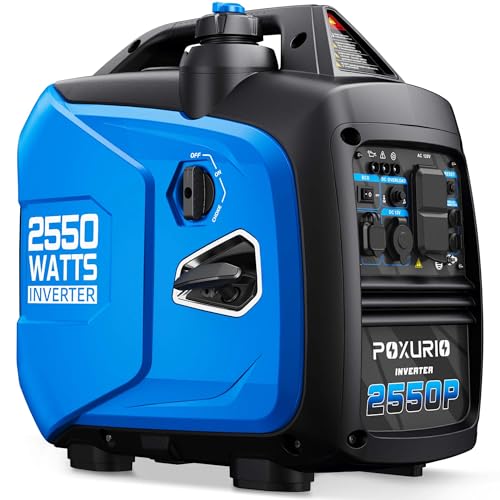
[Strong Power] This inverter generator has a starting power of 2550W that can your daily needs of various electrical appliances and equipment in camping, outdoor activities, commercial use, or home backup power.

Before ordering,PLEASE TAEK A LOOK AT THE 2ND PICTURE to check the dimensions carefully. Full length: 24.5", Full width: 17.7", height :6.5, Mounting dimensions (hole to hole): Length :23.25" , Width :16.1", Height: 5". A few customers didn't check the dimensions then returned the tanks without quality issue, complaining it was not the right sizes for their generators. This should have been avoided if read the product description carefully before ordering. Thank you for understanding. Fuel gauge and rubber grommets are already assembled ( many other tanks don't)