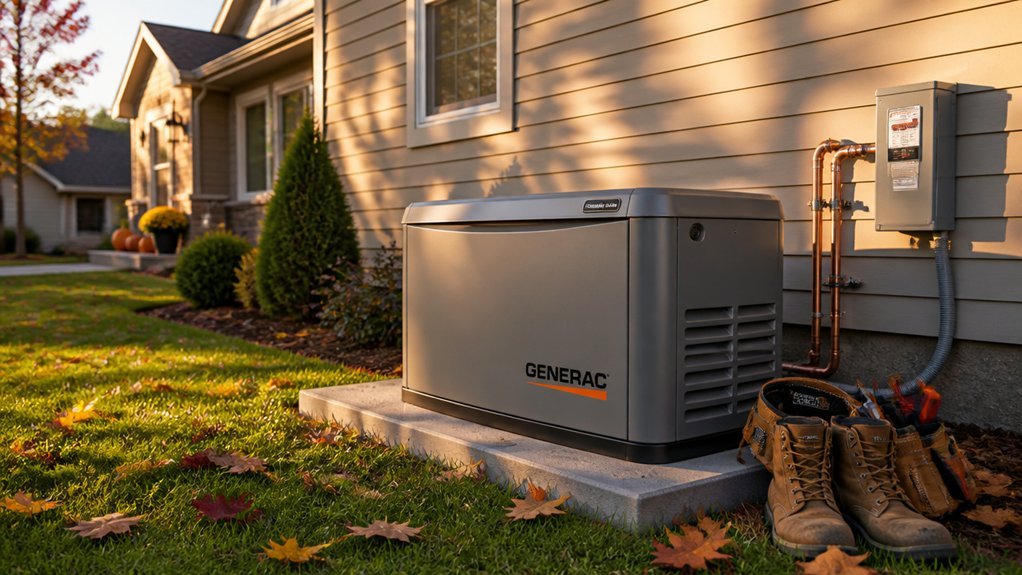

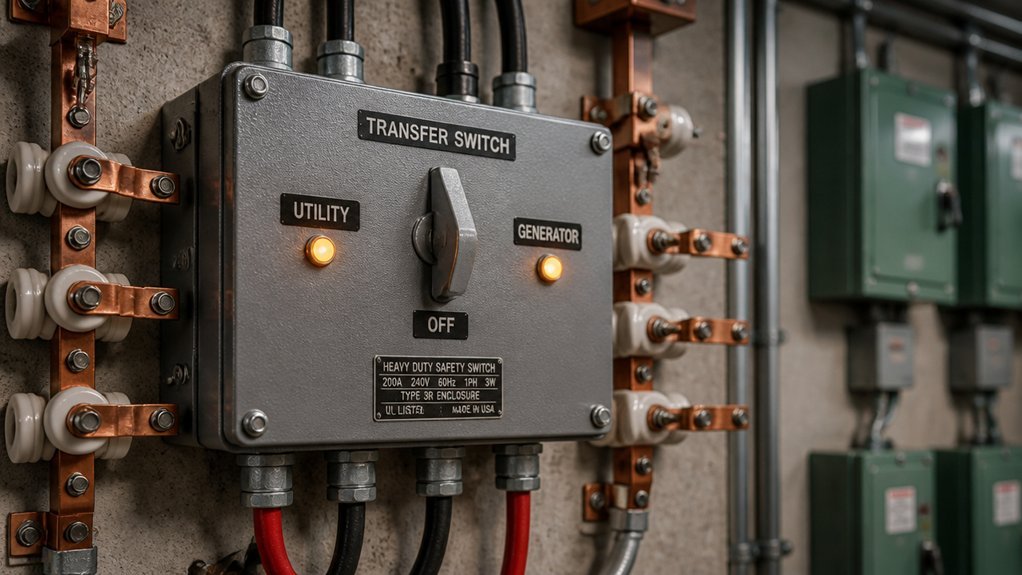
You need a transfer switch to safely bridge your building’s electrical system between utility power and a standby generator. Without one, you’re staring down lethal backfeed risks, code violations, and failed inspections. The device isolates your circuits from the grid, prevents lineman electrocution, and automates generator startup—yet you’ve still got critical decisions ahead. Manual or automatic? Open or closed transition? Your choice dictates whether your critical loads see even a moment of darkness.
What a Transfer Switch Does: Safety, Code, and Your Generator
How does your generator safely power your home without endangering lineworkers or violating electrical code? You install a transfer switch between your utility service and electrical panel. This device ensures code compliance by physically isolating your generator from grid infrastructure, eliminating backfeed risks during any power outage.
Your transfer switch monitors incoming utility power and, upon detection of loss, commands your generator to start. An automatic transfer switch completes this sequence within seconds, maintaining critical loads without manual intervention. You’re protected by isolation transformer technology or electromechanical interlocks that guarantee single-source energization—never simultaneous grid and generator supply.
You achieve safety through mandatory hardware; utility workers face lethal voltage if your generator accidentally energizes downed lines. Your installation satisfies NEC Article 702 requirements, preventing fire hazards and equipment damage while enabling hardwired appliance operation throughout extended outages.
Recommended Products

Seamless Power Transitions:125A generator transfer switch Designed for seamless switching from mains to standby power, whether in industrial, commercial or residential environments, it ensures uninterrupted power to gas generators, solar power, dryers and stoves and more to meet the varying needs of users.

【CONVERSION FUNCTION】: The automatic transfer switch seamlessly transitions between power sources, ensuring continuous power supply during power outages, thereby protecting your appliances and eliminating downtime

Technical Parameter: Line Voltage: AC220V, Line Current: 6A-63A, Operating Frequency: 50HZ/60HZ, Conversion Time: 2S or so; Installation Dimension: 128mm*122mm hole: M6
Manual or Automatic: How to Choose Your Transfer Switch
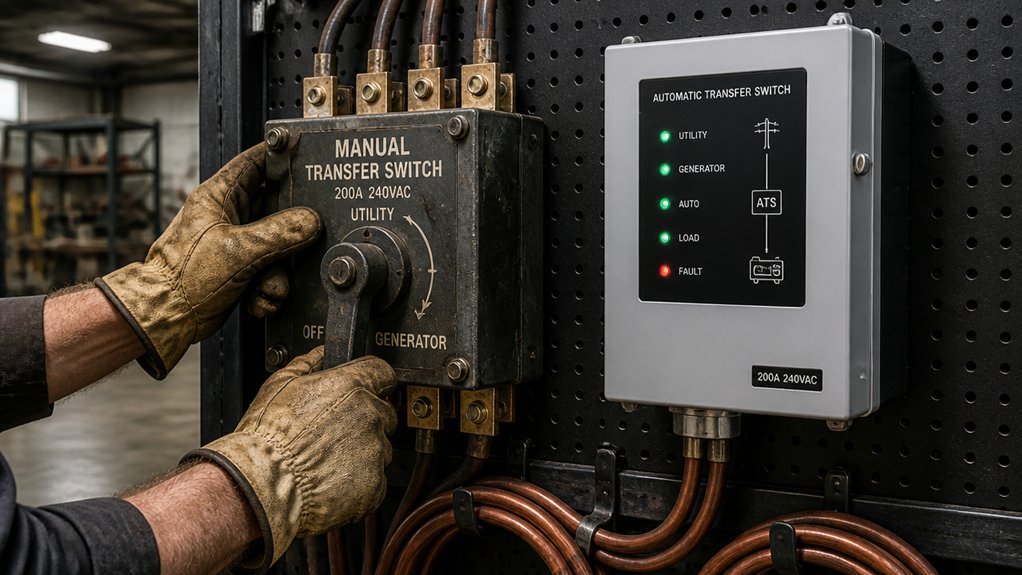
Whether you’re managing a portable generator for occasional outages or a standby system for continuous protection, your transfer switch selection hinges on the balance between automation and cost.
You’ll operate a manual transfer switch via lever or push-button when switching between utility and generator power source. This option costs roughly $300–$500 and pairs well with portable generators where you accept user-in-the-loop operation. You’re responsible for initiating each transfer at your circuit panel.
You’ll deploy an automatic transfer switch when serving safety-critical loads requiring unattended operation. This device uses a smart controller to execute seamless transfer within seconds of primary source failure, making it standard with standby generator installations. Expect $400–$800 for residential units; commercial models exceed $2,000.
Both configurations demand professional installation and proper integration with your load center. You’ll weigh automation preference, accessibility, and whether your application tolerates transfer delays or mandates immediate, automatic response.
Recommended Products

Current rating 50 Amps,operating voltage 240 volts,need some basic knowledge on electrical circuits

Easy&Efficient Transfer Switch: The 100A manual transfer switch allowing seamlessly transfers power from the electric company to auxiliary power(gas generator, solar) with a simple movement of transfer switch lever; With a maximum handling capacity of 100A, a power capability of 24,000W, a commonly used voltage of 120/240V AC, the manual generator transfer switch effortlessly powers entire household and circuits like dryers, stoves and HAVC equipment during an emergency

【100 Amp Generator Transfer Switch】This transfer switch is perfect for shifting power from the utility grid to an auxiliary source (e.g., a gas generator or solar setup). Just a quick flick of its lever guarantees seamless power management. With a max capacity of 100 amps and a 24,000 - watt power rating, it can effortlessly power your whole home, even high - demand appliances like dryers and stoves
Open vs. Closed Transfer Switch Transitions: Will You Lose Power?
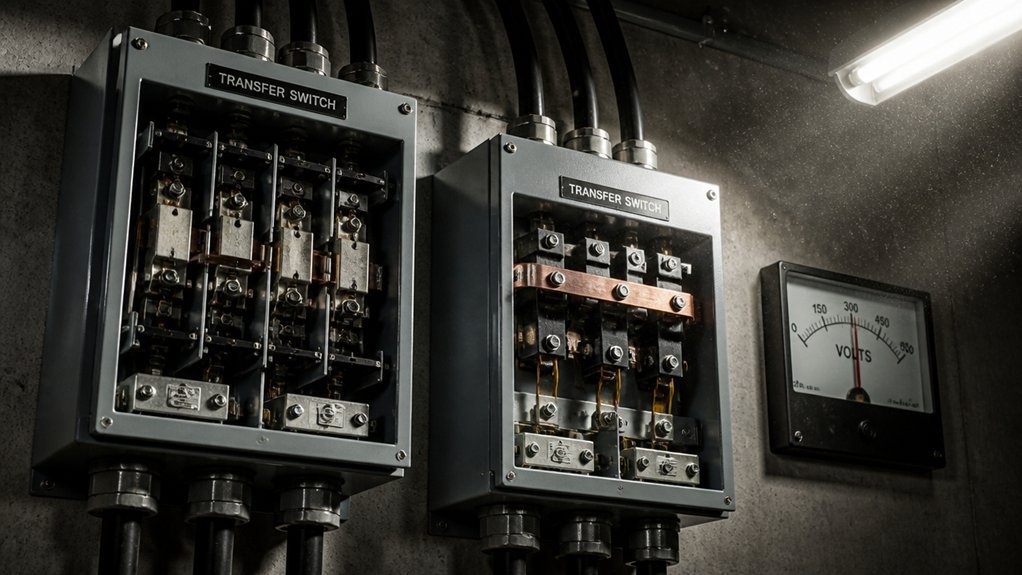
After you’ve settled on manual or automatic operation, you still face another decision that directly affects your power quality during switchover. You’ll choose between an open transfer switch and a closed transfer switch.
An open transfer switch uses a break-before-make sequence. You disconnect from one source before connecting to another. This creates a momentary power loss, but you avoid backfeeding risks. You’ll prefer this for inductive loads where arcing poses hazards.
A closed transfer switch employs make-before-break logic. You’ll overlap connections briefly—typically under 100 milliseconds—so you experience no interruption. However, you’ll need precise synchronization of voltage and phase between sources. Utilities may restrict this power transfer method.
Your switchover duration and load sensitivity determine your selection. You balance continuous operation against technical complexity and regulatory constraints.
Recommended Products

This is the original, authentic, and patented EZ Generator Switch

Functions and Features: 100a 2p dual power auto transfer switch is a PC-level infrequent switching switch, mainly used for automatic or manual conversion of two power supplies, and can test whether the common power supply or backup power supply is normal. When the common power supply A is abnormal, the backup power supply B is quickly switched and put into use within 0.05 seconds to ensure the continuity, reliability and safety of power supply. When the common power supply returns to normal, it automatically switches from the backup power supply to the common power supply. Both power supply A and power supply B can be connected to the mains/generator/photovoltaic, with four wiring.

Premium-Material Transfer Switch - 200 amp generator transfer switch is built from galvanized steel with a protective coating and upgraded to 1.5mm thickness, this transfer switch is strong, rust-resistant, and corrosion-resistant. It operates stably and reliably even in harsh weather conditions-including rain, snow, hail, and high winds-making it ideal for both indoor and outdoor use.
Code-Required Features: Service Entrance and Bypass Isolation
Your transfer switch selection isn’t complete until you’ve addressed the code-mandated safeguards that govern where and how power enters your facility. You’ll achieve NEC compliance by specifying a service entrance rated transfer switch, which incorporates the main service disconnect and isolates utility power at the building entry point. This configuration eliminates the need for an additional breaker within your panel and permits outdoor installation, reducing structural penetrations.
You’ll enhance electrical safety and backfeed prevention by positioning the isolation switch between the meter and distribution equipment. The design simplifies generator connection at the service entrance, ensuring alternative sources integrate without compromising protection.
When you require maintenance flexibility, you’ll specify bypass isolation capabilities, allowing continued operation during servicing. These features satisfy stringent code requirements while streamlining installation and improving system reliability.
Recommended Products

Functions and Features: ATS transfer switches G2R is a PC-level infrequent switching switch, mainly used for automatic or manual conversion of two power supplies, and can test whether the common power supply or backup power supply is normal. It can switch power supply (can be city power grid and inverter power supply)in 0.05 seconds to build uninterruptible power supply. When the normal power is abnormal, the spare power works at once, which therefore ensures the continuirty, reliability,and safety of power supply. When the normal power supply is normal, it will automatically switch back from the backup power to the normal power supply

Nirakoka RV Automatic Transfer Switch has been pre-wired to automatically change the primary source of AC current from shore power to generator or inverter power when activated.

HCDC HD060 Automatic transfer switch, an easy to mount 15Amp inline transfer relay provides switching between AC INPUT 2 (Utility or Shore Power) and AC INPUT 1 (Inverter or Generator) AC source. When AC INPUT 2 is powered, the load power will be switched to AC INPUT 2. When AC INPUT 2 is powered off, the load power will be switched to AC INPUT 1.
Sizing Your Switch: Home Backup to Industrial Scale
How do you right-size a transfer switch without overspending on capacity or risking failure under load? You begin sizing by calculating your total load demand and matching it to generator capacity. For home backup, you’ll often size for 5,000+ watts to cover critical circuits or full-house loads, selecting an automatic transfer switch that mounts beside your circuit breaker panel.
At industrial scale, you’re engineering standby power systems requiring tens of thousands of watts, with open or closed transition options controlling load transfer speed and safety.
You can specify a service entrance rated transfer switch to sit between the meter and panel—often outdoors—reducing penetrations and simplifying generator connections. You must verify utility requirements, procure permits, and engage a licensed electrician for installation. Proper sizing ensures seamless automatic transfer without overload or equipment failure.
Recommended Products

Eaton BRMIKBR Type BR Mechanical Interlock Kit

WHOLE-HOME AUTOMATIC BACKUP POWER: Service entrance rated at 200A, this switch replaces your main disconnect and transfers your entire home to a compatible Generac standby generator with no manual action required

【Smart Automatic Switching 】:This ATS (Automatic Transfer Switch) ensures uninterrupted power by automatically switching to the backup power source within 0.05 seconds when the main power fails. When normal power is restored, it switches back automatically, maintaining continuous, reliable, and safe power supply for your equipment.
Conclusion
You need a properly selected transfer switch to safely bridge utility and alternate power sources. You’ll isolate your system from the grid, prevent dangerous backfeed, and achieve code-compliant operation. Whether you select manual or automatic, open or closed transition, your choice depends on load criticality and your facility’s operational requirements. Size your switch to your service entrance, verify bypass isolation features, and you’ll ensure reliable, standardized protection across residential, commercial, or industrial applications.
Recommended Products

【Seamless Power Switching for Uninterrupted Supply】Automatically switches to backup power when the main source fails, and back again once it's restored—no manual action needed, ensuring continuous power flow. Widely used in shore power, solar inverters, and generators.
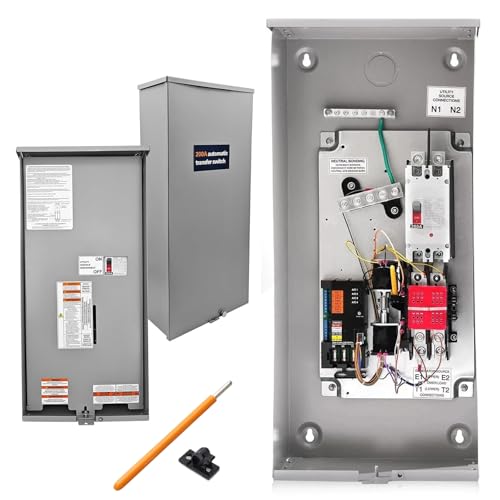
Seamless Power Transitions : This 200 Amp Automatic Transfer Switch is designed to seamlessly transfer the electrical load between a utility (primary) power source and a generator (backup) power source, it powers your entire household, including high-demand appliances, during outages.
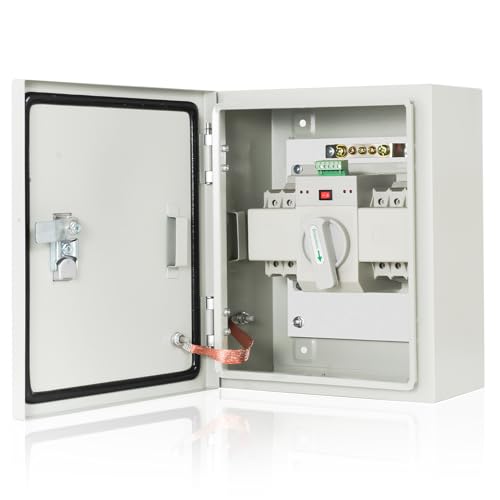
Versatile Application & Reliable Protection This 125A automatic transfer switch provides seamless dual power transfer for residential, commercial, and industrial applications. Designed as a reliable transfer switch for home generators, it ensures complete protection for your electrical equipment and systems during power outages.