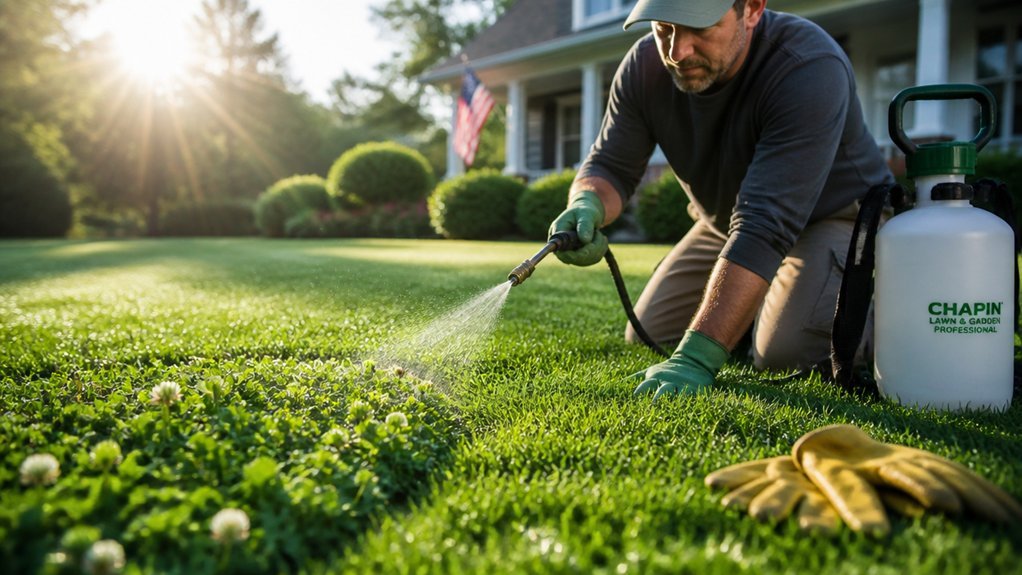

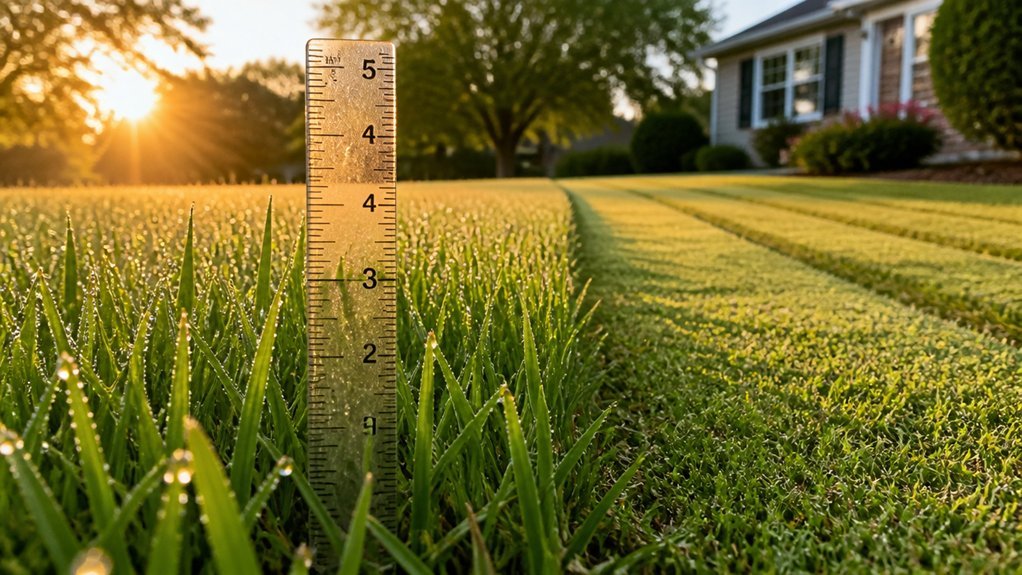
You’ve set your mower height too low, and now your lawn looks scalped. The problem isn’t just aesthetics—it’s root health, drought resistance, and weed invasion waiting to happen. Cool-season grasses need three inches minimum, while warm-season varieties demand precision within narrower ranges. Get this measurement wrong, and you’ll fight brown patches all season. The fix starts with understanding your turf type’s specific needs.
Cool-Season Lawns: Why 3 Inches Is the Minimum
A 3-inch cut serves as your baseline for cool-season turf resilience. You’ll promote deeper root development and improved drought tolerance by maintaining this mowing height in cool-season lawns. The taller canopy shades soil surfaces, directly supporting weed suppression through reduced light penetration to germinating seeds.
You must remove no more than one-third of leaf tissue per mow to avoid stressing the stand. Sharpen your blade regularly—clean cuts heal faster and reduce pathogen entry points. In typical Midwest conditions, 3 inches optimizes soil cooling and moisture retention, but you’ll adjust slightly based on specific species and microclimates.
Taller grass translates to cooler soil temperatures and better water conservation. You’re building a denser sward that outcompetes invasives. Prioritize consistency; erratic cuts weaken turf and invite problems. Your maintenance discipline determines long-term stand persistence.
Recommended Products

Oregon Replacement Deck Leveling Gauge


Part Number:AM130907 490-900-0041 750-442 TY15272
Warm-Season Lawns: Lower Heights for Denser Turf
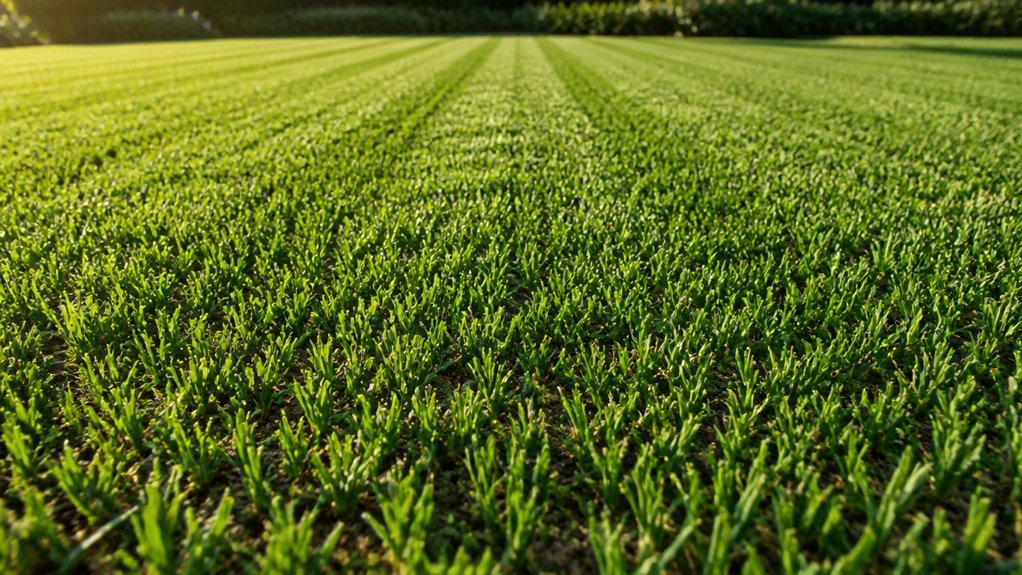
Cool-season lawns demand taller canopies, but warm-season species respond differently to the blade. You’ll achieve optimal density by lowering your mowing height during active growth from late spring through early fall. Common bermudagrass thrives at 1¼ to 1½ inches, St. Augustine requires 2 to 2½ inches, and dwarf hybrid bermudas demand ¼ to ¾ inch depending on cultivar. These reduced heights stimulate runner production and lateral spread, creating tighter turf that naturally resists encroachment.
You’re managing a trade-off: lower mowing height improves warm-season grasses’ density and weed suppression through competitive exclusion, yet you mustn’t remove more than one-third of leaf tissue per cut. Monitor growth carefully and mow before grass exceeds 4.5 inches when maintaining a 3-inch target. Avoid scalp mowing except for occasional cosmetic renovation; return to standard height immediately afterward to preserve carbohydrate reserves and recovery capacity.
Recommended Products

Push blade lawn mower sharpening kit to maintain the cutting power of the blades

VERSATILE – The most versatile sharpener in the market to sharpen and hone both single and double beveled blades including knife, mower blade, pruner, loppers, hedge shears, axe, machete, hatchet, scissors, edged tool, etc.

3-In-1 mower blade for mulching, bagging and side discharging
Why Your Lawn Turns Brown After Mowing
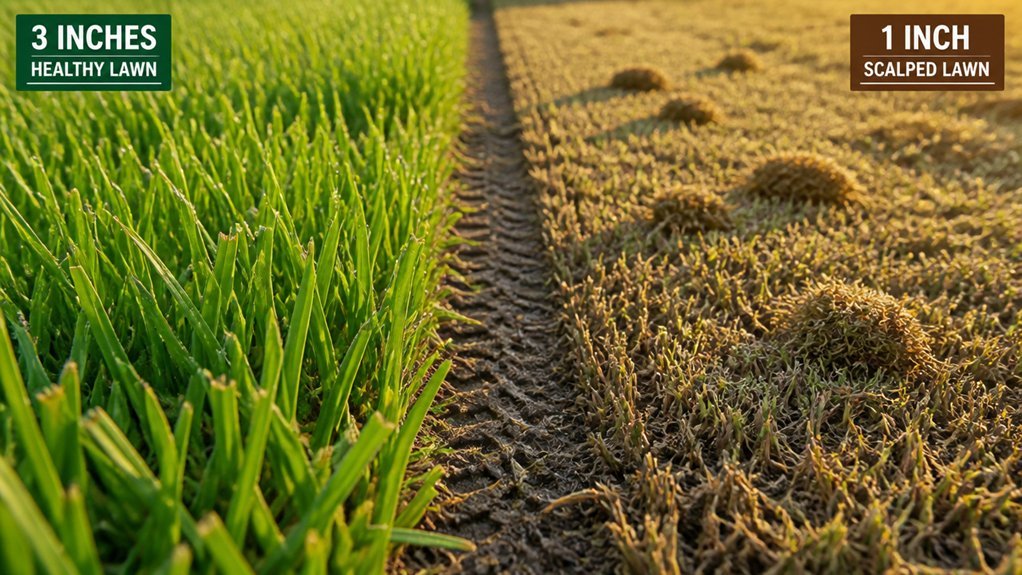
Why does your lawn look toasted after you just cut it? You’ve likely cut into the stem stubble, which signals you’ve set your mowing height too low. Raise the mower by one notch so you’re cutting only leaf blades and avoiding plant stress.
Browning intensifies during hot months when you scalp Bermudagrass in June and July. Temporarily raising your mowing height protects the turf and promotes recovery. Maintaining three inches or higher reduces soil warming and drought stress, preventing browning in warm-season lawns.
Your clipping management matters too. Heavy clippings left to clump suffocate grass and extend browning. Bag excess debris or disperse clippings evenly to prevent damage. Adjust your mowing height seasonally, manage clippings properly, and you’ll eliminate post-mow browning while maintaining healthier turf.
Recommended Products

Part Number: MOK30-0015 AM130907 TY15272 750-442 490-900-0041
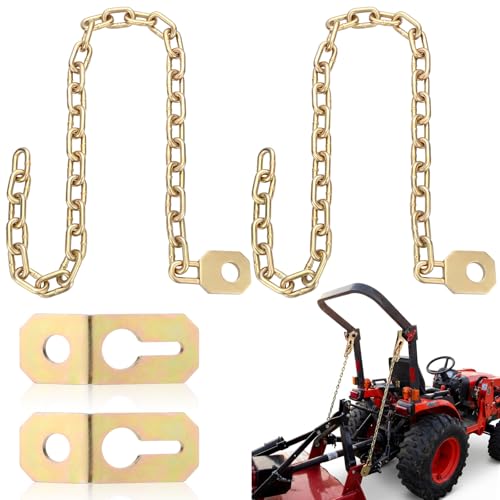
Package: you will receive 2 mower deck height stabilizer kits; Each kit includes a mounting bracket and chain, built for lasting use; These kits serve as reliable replacement parts for your lawn mower
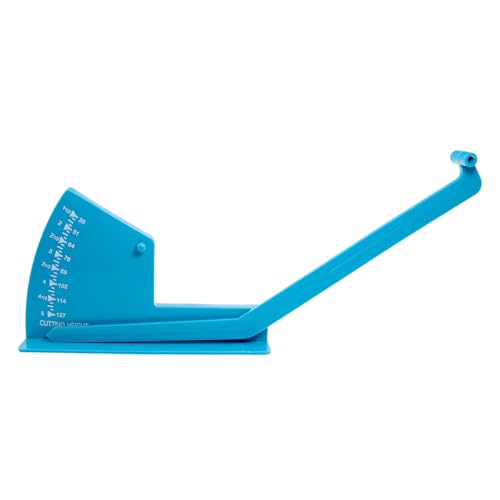
Practical material: High-quality blue plastic, resistant to seawater corrosion and outdoor environmental wear, suitable for long-term use in damp environments such as ships and docks, steady and long-lasting.
Sharpen Your Blades for Cleaner Cuts
Setting your mowing height correctly won’t matter much if you’re slicing grass with dull blades. Sharp blades produce clean cuts that seal quickly, reducing disease entry points and water loss. Dull blades tear tissue, creating jagged edges that expand surface area and increase drought and heat stress vulnerability.
You should inspect your blades before each mowing season and sharpen them regularly to maintain cutting performance. Ragged cuts delay recovery and create openings for weed colonization, directly undermining turf health. Pulped grass blades decompose slowly and stress the sward further.
After sharpening, reattach blades securely and balance them precisely. Unbalanced blades generate vibrations that damage spindles and yield uneven cuts. You’ll optimize your mowing height settings only when your blades cut cleanly without tearing, supporting resilient turf through reduced mechanical stress and faster healing.
Recommended Products
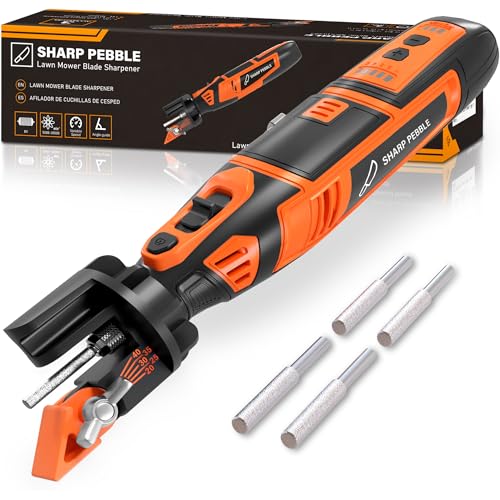
SHARPEN YOUR MOWER BLADE IN MINUTES: Blade removal is optional with this cordless lawnmower sharpener — many standard residential blades can be sharpened right on the mower, saving you the hassle of disassembly. Routine touch-ups take about 2–3 minutes per blade; badly worn edges take longer and are best done with the blade removed.
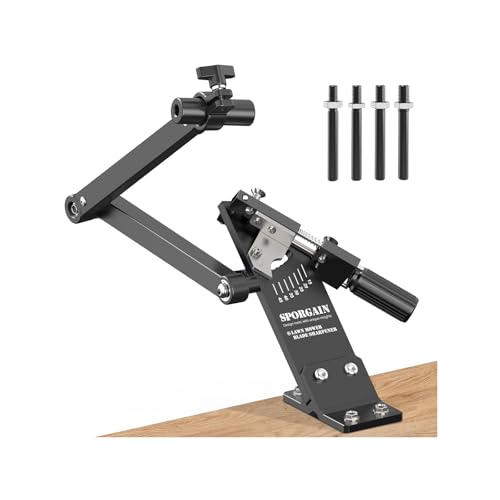
[ Updated ] Lawn Mower Blade Sharpener: SporGain mower blades sharpener suitable for Blades standard straight, mulching and high-lift mower.

Accurate Lawn Mower Blade Balancer: Ensure your mower blades are perfectly balanced after sharpening with the SporGain Lawn Mower Blade Balancer. Reduces blade wobble, vibration, and engine wear, giving your lawn a smoother, cleaner cut every time.
Leave Clippings on the Lawn
Where should those grass clippings go? Leave them right on the lawn. Decomposed clippings add the equivalent of one fertilizer application annually, directly supporting lawn nutrition while improving soil quality and reducing runoff. You’ll also enhance carbon sequestration and promote greener, healthier turf.
Your mowing height determines clipping length. When you cut at proper mowing height, clippings stay small and decompose quickly. If they’re too long, you’ll need to mulch by mowing several times or rake them off entirely—long clippings smother turf and block sunlight.
Don’t use clippings from herbicide-treated areas as mulch on other plants or in compost.
For best results, maintain sharp blades and consistent mowing practices that produce fine, evenly distributed clippings. This approach maximizes nutrient return and minimizes maintenance effort.
Recommended Products

Premium Compatibility – 【REPLACE PART NUMBER】 583719501 Front Drive Wheels、532402657 Front Drive Wheels、194231X460 Front Drive Wheels、532402567 Front Drive Wheels、401274X460 Front Drive Wheels、194231X427 Front Drive Wheels、532403111 Front Drive Wheels.

Compatible with Toro and Wheel Horse, replacing part numbers 108798, 94-1599, and 2519718.
When to Raise Your Mowing Height
How do you know when your mower needs a height adjustment? Watch your bermuda grass: if it appears brown for 2–3 days after mowing in June or July, you’ve cut into stem stubble. Raise the mower by one notch to remove only leaf blades.
You should also raise mowing height when weather turns hot and dry. This promotes stress reduction by encouraging deeper rooting and preserving moisture. For consistent maintenance, monitor turf height throughout the season and adjust as needed to prevent scalping or overgrowth.
Never remove more than one-third of leaf tissue in a single cut. Always focus on keeping leaf blades intact. Return to your prior mowing height before the late-winter scalp to maintain seasonal consistency.
Recommended Products

Compatible with all American Lawn Mower, Great States, Earthwise, and Scotts reel mowers

For Fine Reel Sharpening: fine 120 grit grinding compound designed for back lapping reel lawn mowers. Helps refine blade edges and improve cutting smoothness with minimal metal removal

Includes 1 commercial mulching blade for many 22 in. cut Toro recyclers
Stop Mowing When Grass Stops Growing
When should you park the mower for the season? You’ll stop mowing when grass growth ceases naturally, typically near late October, though you shouldn’t rely on fixed calendar dates. Watch for seasonal cessation signals instead.
Before winter arrives, maintain proper mowing height through your final cut. You’re minimizing disease pressure and reducing vole habitat that longer blades create. Don’t let grass grow unchecked simply because temperatures drop; you’re actively managing winter readiness through precise timing.
Your seasonal mowing schedule must align with actual growth patterns, not assumptions. You’ll monitor grass growth weekly as autumn progresses, adjusting your approach accordingly. Once cessation occurs, you’re finished—no additional cuts needed. This technical approach protects your lawn’s structural integrity through dormancy and ensures optimal spring recovery conditions.
Recommended Products

Maintains a even cutting depth and stops scalping due to sagging deck Category-1 ( For Top Link pin diameter 3/4" and Lower Link pin diameter 7/8" ) 5/16" Proof Chains ||...
Conclusion
You’ll maximize turf health by matching your mower height to grass type—three inches for cool-season varieties, lower for warm-season species. Keep blades sharp, remove only one-third of blade length per cut, and adjust seasonally. Let clippings feed your lawn rather than bagging them. Raise the deck during drought or heat stress, and park the mower once growth stops. These practical adjustments strengthen roots, build density, and reduce maintenance demands year-round.
Recommended Products

【Wide Compatibility】 Lawn Mower Blade Sharpener Compatible with Great States, Ameri-can Lawn Mower, Earthwise, and Scotts manual reel lawn mowers, not compatible with...