
You track oil changes and filter replacements, but your mower blades often go ignored until the grass looks ragged. The truth is, blade maintenance follows a schedule most owners never learn. Replace too late, and you’re tearing grass rather than cutting it—opening your lawn to disease and drought stress. The real question isn’t whether you’ll replace them, but whether you’ll know when.
5 Signs Your Blade Needs Replacing, Not Just Sharpening
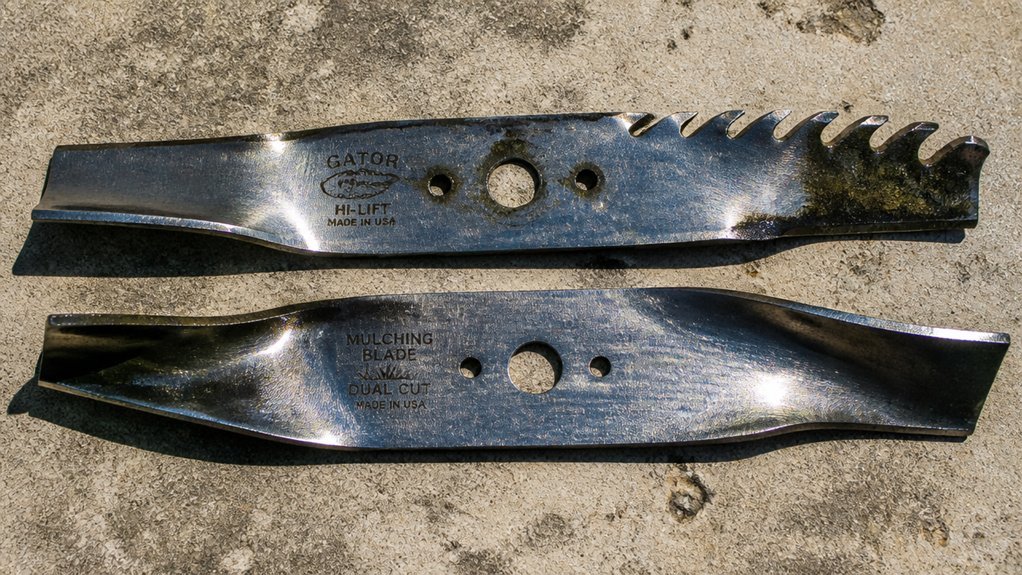
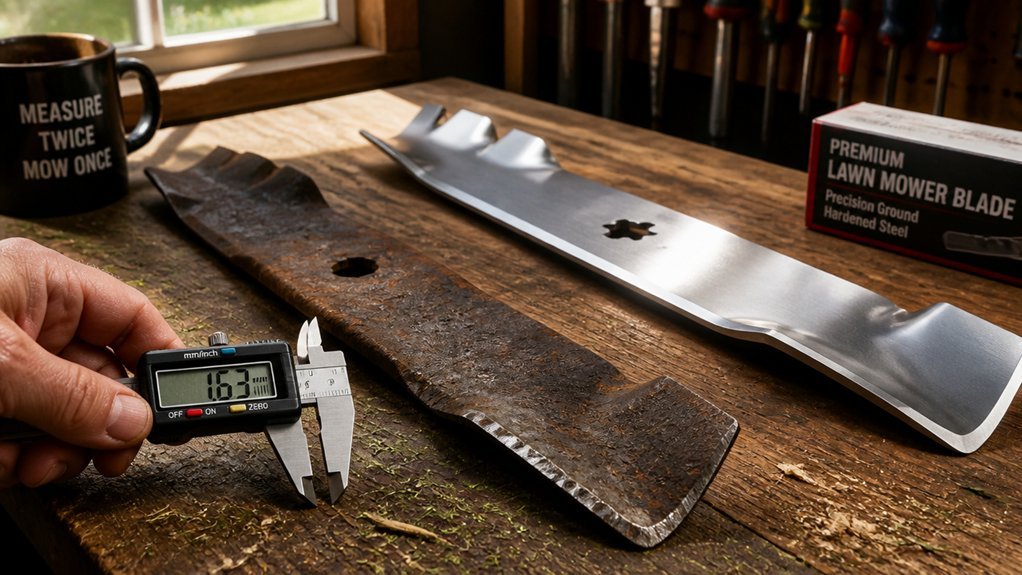
How do you know when sharpening won’t cut it anymore? You’ll spot the signs blade needs replacing through performance failures and visible damage. Uneven cuts across your lawn indicate bent or unbalanced blades that sharpening won’t fix. Inspect for cracks, deep gouges, or severe rust—these damaged blades compromise structural integrity and require blade replacement regardless of edge condition.
Frayed grass tips signal dull blades, but when wear and tear thins the metal significantly, you’ve lost critical blade thickness. Multiple sharpenings reduce mass, disrupting mower balance and creating excessive vibrations. Safety as blade wears demands vigilance: thin, lightweight blades risk catastrophic failure at high RPMs. You can’t restore metal that’s gone. When you’ve sharpened repeatedly and the blade feels noticeably lighter, replace it.
Recommended Products

Includes 1 commercial mulching blade for many 22 in. cut Toro recyclers

SNAP-IN BLADE MODULE: The snap-in ceramic blade module is compatible with The Lawn Mower 2.0, 3.0, and 4.0 series. When replaced every three months, you can keep your trimmer running smoothly and efficiently. Because it’s light years beyond other trimmers, The Lawn Mower snap-in blade module creates grooming experience like no other.

3-In-1 mower blade for mulching, bagging and side discharging
Sharpen or Replace? 4 Ways to Decide
When you’re staring at a worn blade, you’ll need clear criteria to choose between sharpening and replacement. First, sharpen blades every 20–25 hours of use, or at least once per mowing season, to maintain optimal cutting quality. Second, inspect for structural failure: deep gouges, bending, or chips constitute irreparable damage, making blade replacement mandatory. Third, evaluate dull blades causing ragged grass tips—if sharpening no longer restores clean cuts, you’ve reached signs to replace. Fourth, assess rusty blades; severe corrosion prevents proper edge restoration and creates dangerous imbalance, degrading mowing performance. For robotic mowers, you can’t sharpen—monitor cutting quality closely and execute blade replacement when performance drops, typically 2–3 times per season. Any damaged blade beyond correction demands immediate replacement to protect lawn health and equipment longevity.
Recommended Products

Individual Blade Length: 22 1/2”

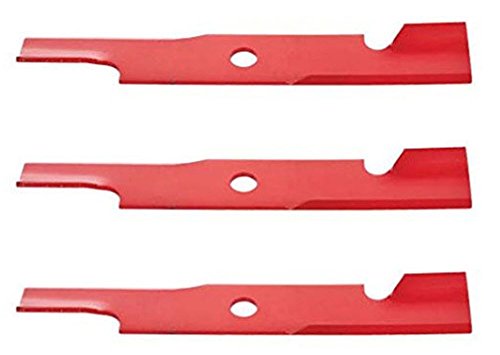
(3) Blades for 48"
How Often to Replace Blades by Mower Type

Replacement intervals vary sharply across mower types, so you’ll need to match your maintenance schedule to your equipment.
For residential mower models, you’ll typically replace mower blades every 100–200 hours of operation. You’ll sharpen every 20–25 hours or once per season, but you’ll perform blade replacement when you encounter a damaged blade with bends, deep gouges, or excessive rust that sharpening can’t restore. Sharp vs dull assessments determine whether maintenance suffices or replacement becomes necessary.
Commercial mower applications demand more aggressive schedules—expect 2–4 blade replacements annually depending on acreage and terrain intensity. Your replacement interval compresses markedly under heavy workloads.
Robotic mower systems operate differently. You’ll discard and replace disposable blades 2–3 times per season, approximately every 100–150 hours, as sharpening isn’t possible. You’ll monitor cutting efficiency and intervene upon visible damage or performance degradation.
Always consult your model guidelines; manufacturer specifications override general recommendations and optimize blade longevity for your specific design.
Recommended Products

Push blade lawn mower sharpening kit to maintain the cutting power of the blades

Compatible with Multiple Brands: This reel lawn mower sharpener is compatible with reel trimmers, making it a versatile choice for reel lawn mower owners. Please note: Only for REEL lawn mowers.
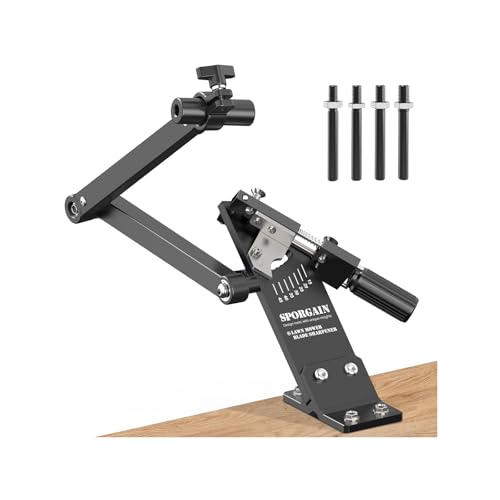
[ Updated ] Lawn Mower Blade Sharpener: SporGain mower blades sharpener suitable for Blades standard straight, mulching and high-lift mower.
How to Replace Your Mower Blade Step by Step
Knowing when your blade requires replacement gets you only halfway there—executing the swap correctly maintains cutting performance and prevents equipment damage.
Begin every blade replacement with essential safety precautions: disconnect the spark plug, drain fuel, and secure the deck. Remove the old mower blades using a breaker bar—note the orientation for proper reinstallation. Inspect mounting hardware for wear; replace bolts showing deformation. When you replace blades, match specifications exactly—incorrect sizing compromises cutting quality and creates dangerous imbalance.
For robotic mowers, discard disposable units at each sharpening interval rather than attempting maintenance. Check that new installations rotate freely without deck contact. After installation, verify torque specifications to prevent loosening during operation. You maximize mowing maintenance efficiency by replacing a dull blade showing ragged cuts, excessive vibration, or blade damage rather than pursuing futile sharpening when gouges exceed repair limits.
Recommended Products

★LONG SERVICE LIFE: The blades and screws are made of superior stainless steel and has an additional titanium carbide coating, super-tough, high strength, which ensures a long service life.

Now available in Stainless Steel and Titanium Coated!
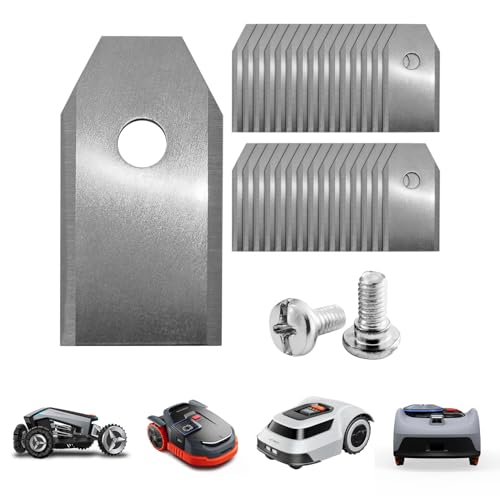
EXTRA LONG, SHARP & DURABLE STAINLESS STEEL BLADES – FOR CLEAN, PRECISE CUTTING: Made by Green Piece, these robotic mower blades are crafted from premium stainless steel and designed to be extra long for enhanced coverage and reach. Built for superior strength, long-lasting durability, and exceptional cutting performance, they deliver smooth, clean cuts—helping your lawn look sharp, healthy, and professionally maintained.
6 Habits That Keep Your Blades Sharp Longer
Why let preventable wear dictate your blade replacement schedule? You control blade maintenance through disciplined habits that minimize blade wear and delay when you replace blades.
Inspect blades after every session. You catch nicks, bends, or dull blades early, preventing accelerated deterioration.
Sharpen blades every 20–25 hours of operation, or at least once per mowing season, to sustain optimal cutting performance.
Adjust mowing frequency to conditions; you reduce stress on edges by avoiding overuse. Mow when grass is dry and terrain is clear—you eliminate rock impacts that cause irreparable damage.
Store your mower in a dry, sheltered space, removing blades for extended periods to prevent corrosion.
Select high-quality blades and employ proper technique. You minimize resistance, extend service life, and avoid common lawn care pitfalls that compromise mower maintenance efficiency.
Recommended Products

Includes 3 commercial mulching blades for 54 in. Craftsman, Husqvarna, and Poulan mowers

Replaces OEM Part: Toro 116-6358-03, 120-9500-03, 120-9500, 120-9500-S, 116-6358, 116-6358-S, 20120P

Specs: Oem Replacement Belt, Belt Application: Deck, Belt Type: Wrapped, Length: 167", Width: 5/8"
Conclusion
Your mower blades demand precise attention. Monitor operational hours—replace every 100–200 hours for residential units, more frequently for commercial applications. Inspect for structural damage: bends, gouges, and corrosion compromise integrity beyond sharpening’s scope. Match replacement blades exactly to manufacturer specifications. Implement preventive habits: avoid debris impact, maintain balanced rotation, and store properly. Timely replacement ensures optimal cutting performance and equipment longevity.
Recommended Products

Replaces OEM Parts: Husqvarna 532180054, 180054, 532173920, 173920, 539107519, 575938201, 588811002, Craftsman CMXGZAM110149, AYP 532180054

WHAT IS THE SNAP-IN BLADE MODULE: The snap-in ceramic blade module is compatible with all The Lawn Mower models. When replaced every three months, you can keep your trimmer running smoothly and efficiently. Because it’s light years beyond other trimmers, The Lawn Mower snap-in blade module creates grooming experience like no other.

SKINSAFE TECHNOLOGY: The Lawn Mower 5.0 Ultra’s SkinSafe technology* doubles down on comfort with a built-in metal guard that acts like a comb. Thoughtfully designed at a precise distance from the guard to help reduce nicks and cuts. *SkinSafe technology does not guarantee cut protection.