
You’re weighing whether to upgrade from standard mulching blades or stick with your current setup, and the distinction between Gator and mulching designs isn’t always clear from product descriptions. Both promise finer clippings and healthier lawns, yet they achieve these results through fundamentally different aerodynamics and cutting geometries. Your mowing frequency, grass species, and whether you bag or discharge will determine which design actually delivers measurable performance gains—and one choice may force compromises you haven’t anticipated.
What Are Gator Blades and How Do They Work?
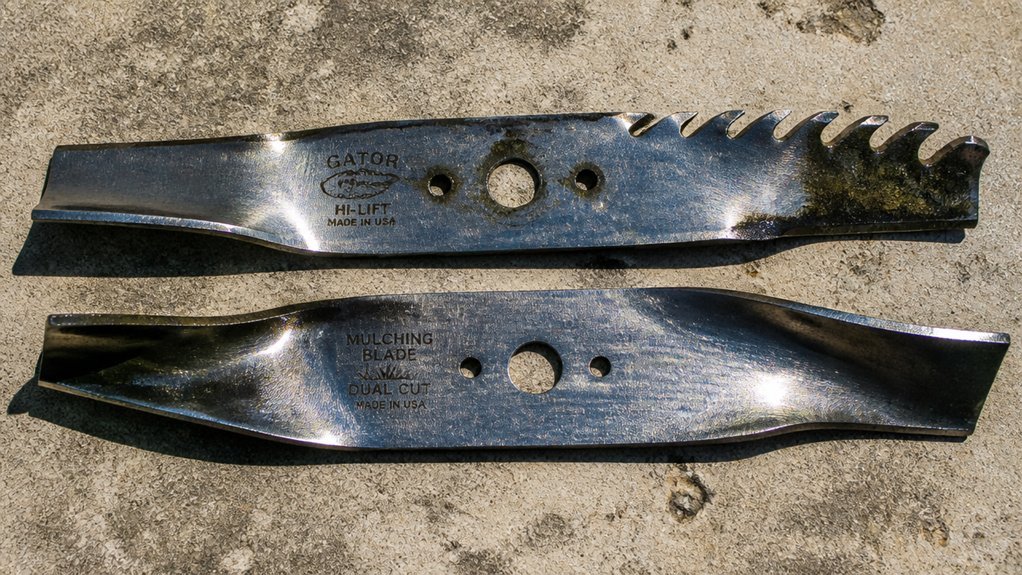
How do Gator blades transform your mowing results? You observe Gator blades leveraging patented Gator mulching teeth that recirculate cut grass through the deck multiple times, pulverizing clippings into finer particles than standard blades achieve. You’re essentially deploying a hybrid system that merges mulching and bagging functions—eliminating blade swaps for different mowing modes.
Your debris circulation intensifies through specialized teeth-and-surface geometry that accelerates airflow and shredding action. This design demands more power than conventional blades, yet you gain superior particle reduction and distribution. Your lawn mower efficiency elevates through progressive edge geometry and Fusion tungsten carbide construction (in G3/G5/G6 variants), extending operational intervals between sharpenings. You’re optimizing cutting productivity while maintaining versatility across discharge configurations—mulching, bagging, or side discharge—without hardware changes.
Recommended Products

Replaces Part Number: 742-04276, 742-04276S, 942-04276, 942-04276S, 742-0741, 742-0741A, 742-0741-0637, 942-0741, 942-0741A, 942-0741-X, SPM209370365, CMXGZAM100067.

【Application】These mulching blades are shaped to keep the grass under deck for longer allowing it to be cut into smaller pieces, which provides natural mulch for your lawn since smaller clippings will decompose quicker, perfect for bagging, discharging, or mulching grass clippings

Replaces OEM Parts: Husqvarna 532180054, 180054, 532173920, 173920, 539107519, 575938201, 588811002, Craftsman CMXGZAM110149, AYP 532180054
How Do Mulching Blades Recycle Clippings?
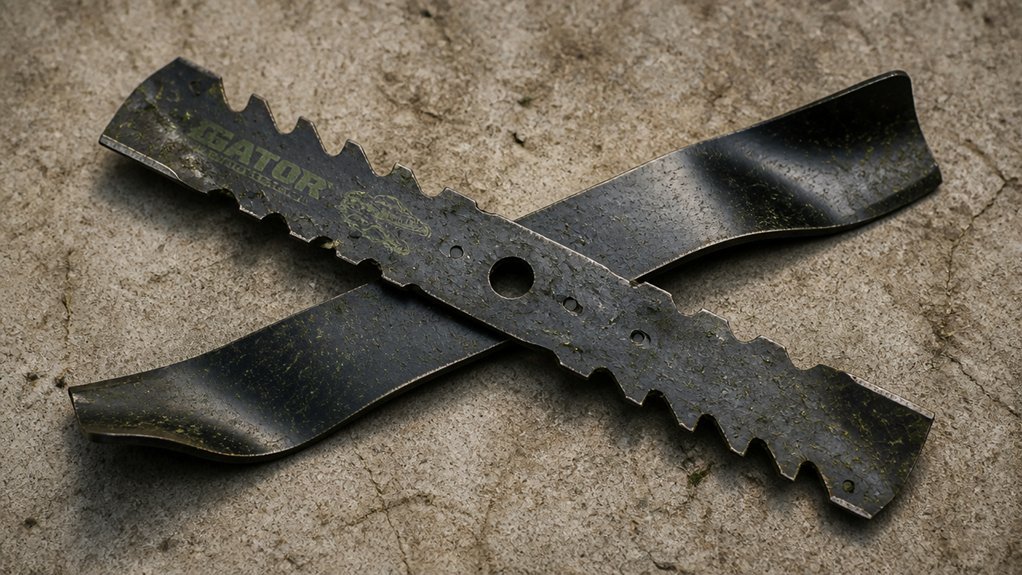
Where precisely do mulching blades direct your clippings after the initial cut? You’ll find they recirculate them within the deck itself.
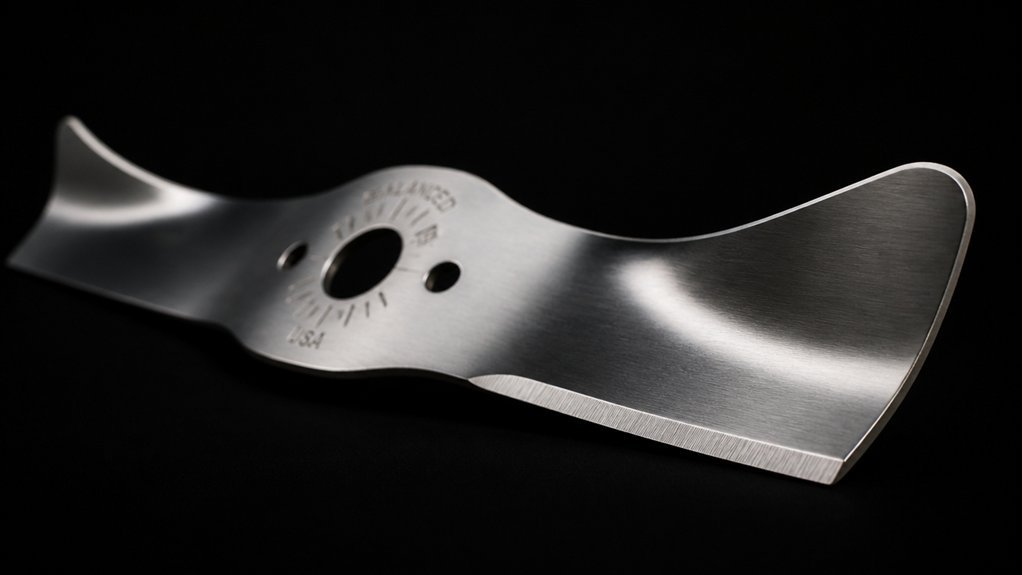
Your mulching blades feature curved surfaces and extended cutting edges that create continuous deck circulation, lifting and re-cutting clippings repeatedly until they reach mulch-sized pieces.
This mechanical process differs fundamentally from discharge or bagging systems. You’re not expelling material—you’re retaining it for systematic pulverization. The finer you cut, the faster those mulch-sized pieces decompose, releasing nutrients directly into your soil profile. You’re essentially converting lawn waste into fertilizer through mechanical means.
However, you’ll encounter limitations. Your deck circulation requires precise engineering; clogged decks or overgrown conditions disrupt the re-cutting cycle. You’re trading collection efficiency for nutrient retention, and that trade-off demands optimal conditions to maintain performance without sacrificing cut quality.
Recommended Products

Center hole: bow-tie
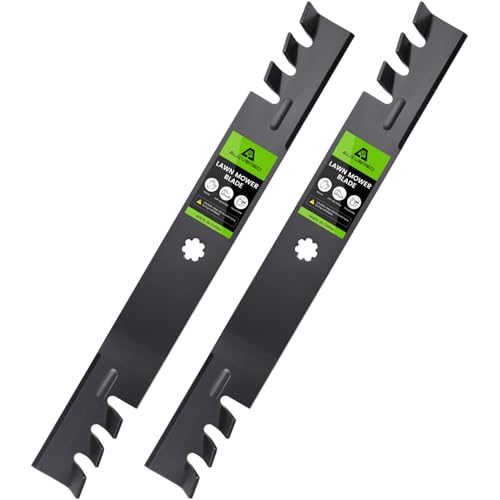
【REPLACE PART NUMBERS】- GX22151, GY20850, AM131033, AM137333, AM141033, AM137328, 50-3231, UC21583

Quality Gator 596-900 "Fusion G5" Mulching Blades
Gator vs Mulching Blades: Which Cuts Better?
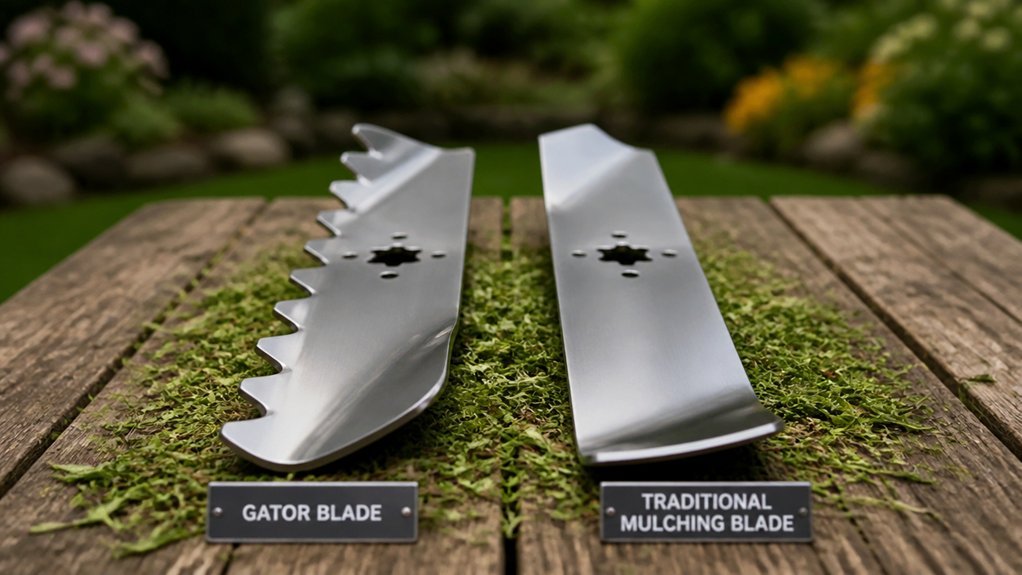
Why do cutting results differ so dramatically between these blade designs? You’ll notice Gator blades employ serrated cutting edges with patented mulching teeth that recirculate clippings multiple times, producing finer particles than standard mulching blades achieve. When you’re comparing mulching quality, Gator blades outperform through progressive geometry and aggressive airflow design—you get enhanced particle reduction without sacrificing speed.
However, if you’re prioritizing pure mulching in dry, manageable conditions, traditional mulching blades deliver comparable fineness through dedicated 3-in-1 configurations.
The critical distinction emerges in versatility: you’re gaining superior bagging efficiency with Gator blades because their recirculation system pre-cuts material before collection.
For demanding applications, you’ll want G5 or G6 Gator blades with Fusion tungsten carbide cutting edges—these maintain sharpness longer than conventional options.
Ultimately, you’re choosing between specialized mulching excellence and adaptable performance across mulching and bagging operations.
Recommended Products

Includes 1 mulching blade for many 21 in. cut MTD, Cub Cadet, Troy-Bilt, and Craftsman mowers. Must Match Current Blade OEM Number to insure exact fit.

𝟱𝟮 𝗜𝗡𝗖𝗛 𝗟𝗔𝗪𝗡 𝗠𝗢𝗪𝗘𝗥 𝗕𝗟𝗔𝗗𝗘𝗦: Three long-lasting and heavy-duty 18-7/16 inch replacement mower blades, with superior cutting edge for enhanced mulching, fits many residential and commercial mowers

Genuine OEM Replacement: Yard Force part 1253556001, engineered for perfect compatibility with YF22-3N1SP, YF22-3N1SP-SC, and YF22-3N1SPVS-SC self-propelled lawn mowers.
Which Blade Handles Wet or Overgrown Grass?
When you’re tackling wet or overgrown grass, blade selection directly determines your cutting efficiency and deck performance. Gator blades outperform standard mulching blades in these conditions because their serrated teeth continuously recut clippings, reducing particle size and promoting deck circulation. Mulching blades struggle with wet grass, as dense clippings accumulate beneath the deck and trigger clogging that stalls your cut quality. Standard blades rely on lift mechanics that falter when moisture binds clippings together. While high-lift blades offer stronger suction, they’re not immune to clogging in saturated turf. Gator blades bridge this gap by combining mulching function with enhanced airflow, letting you process overgrown growth without switching to bagging. Choose Gator blades when you expect inconsistent moisture or irregular mowing intervals.
Recommended Products

Includes 2 commercial mulching blades for many 42" cut John Deere mowers

Compatible with EGO POWER+ 56-Volt Lithium-Ion Cordless Lawn Mowers LM2156SP, LM2150SP, LM2135SP, LM2130SP, LM2133. LM2130

【Replace Part Number】The Mulching Blades Replaces: Scag: 48110, 481706, 481710, 48184, 482461, 482877, A48110, A48184, A48184HL; Snapper: 1-7043, 7017043, 7017043YP, 7075771, 7075771BMA, 7075771BZ, 7075771BZYP; Bad Boy: 038-5350-00, 038-5350-0050
Are Premium Gator Blades Worth the Upgrade?
You’ve seen how Gator blades handle demanding conditions; now you’re weighing whether premium models justify their higher cost. The premium upgrade delivers measurable performance gains through Fusion tungsten carbide edges (G5) and Fusion technology (G6), which extend edge durability significantly. You’ll sharpen less frequently and replace blades later, reducing long-term maintenance.
G5 blades combine heavier-duty construction with carbide reinforcement, optimizing durability under load. G6 blades represent the apex: ¼-inch thickness, 3-inch width, and extreme commercial-grade longevity. Both tiers enhance mulching efficiency through patent-pending teeth that recirculate clippings for finer decomposition.
Compared to standard mulching blades, premium Gator blades deliver superior mulching and bagging capability alongside extended service life. If you mow frequently or commercially, the investment pays dividends through reduced downtime and consistent cut quality.
Recommended Products
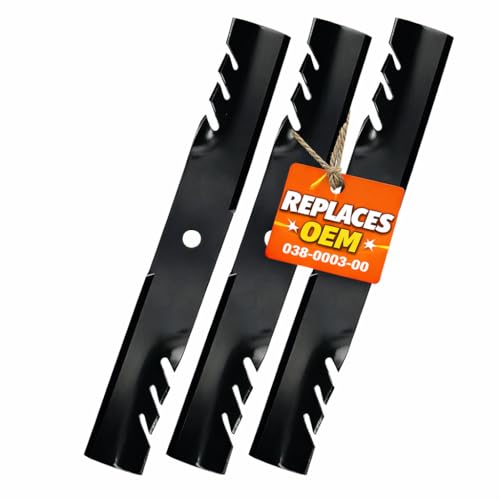
Accurate Fit For 54-inch Decks: Designed to match compatible 54inch zero-turn mower decks from Bad Boy these gator mulching blades are shaped for proper alignment. The balanced profile helps to maintain a neat and even appearance with routine mowing.
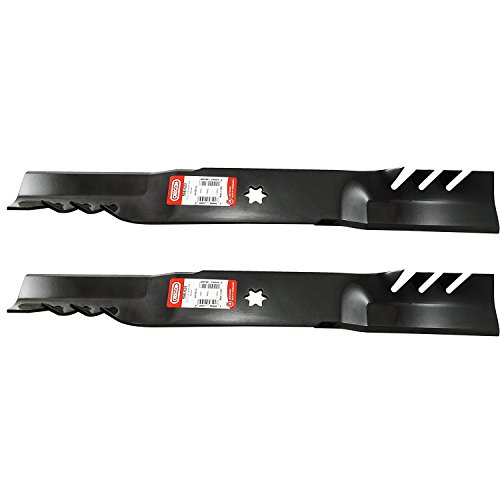
Set of 2 Blades, Quality Gator "Fusion G5" Blades - Oregon part #598-629

Replaces Part Number: 742-04276, 742-04276S, 942-04276, 942-04276S, 742-0741, 742-0741A, 742-0741-0637, 942-0741, 942-0741A, 942-0741-X, SPM209370365, CMXGZAM100067.
When Should You Choose Mulching Over Gator?
How exactly do you decide between specialized mulching blades and Gator’s dual-purpose design? You choose mulching blades when maximizing nutrient recycling outweighs versatility demands. These blades excel at cutting grass into fine particles that decompose rapidly, returning nutrients directly to your soil without supplemental fertilization.
Your lawn mowing frequency determines effectiveness: maintain intervals of 3–4 days, or you’ll face clogging as mulching blades depend on deck recirculation. You eliminate bagging entirely, reducing labor and environmental impact.
Gator blades handle mulching plus bagging through serrated teeth, but you sacrifice consistency in nutrient distribution. When you prioritize sustainable lawn health over dual-capability convenience, mulching blades outperform. You accept reduced versatility for superior ecological efficiency and soil enrichment through dedicated decomposition mechanics.
Recommended Products
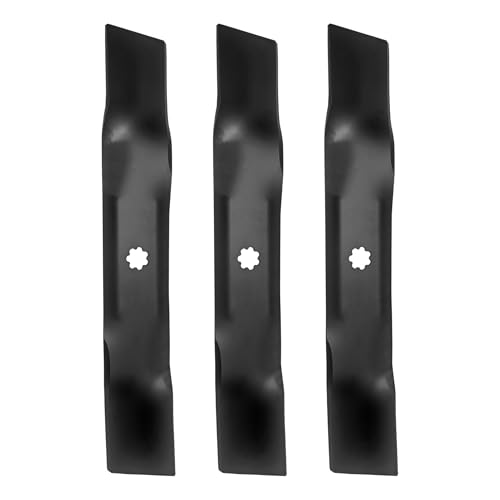
【High Quality】A ABIGAIL blades are Forged from heat-treated 65Mn manganese steel, these mulching blades offer superior impact resistance against roots and rocks. Rust-resistant powder coating ensures durability, delivering cleaner cuts and longer lifespan in demanding conditions.

Stop the guesswork! John D-eere 48" Deck Zero Turn Mower uses two different blade types.Before ordering our blades,identify your original blade's Mounting Pattern.Our blade's Mounting Pattern is 7 Star Shaped.If your blade's Mounting Pattern is Circle Shaped,use MPN M145476 GY20568 to order your correct blades elsewhere.

【Replaces OEM】 John Deere GX22151 GY20850 AM131033 AM137333 AM137328 AM141033 UC21583 50-3231
Which Blade Fits Your Lawn Conditions?
Your specific lawn conditions determine which blade architecture delivers optimal performance. If you mow every 3–4 days with moderate growth, mulching blades excel at recirculating clippings for repeated cuts, producing fine mulch that returns nutrients directly to your soil. You’ll achieve efficient clippings management without supplemental bagging.
However, if you face variable lawn conditions—alternating between frequent and infrequent mowing schedules—you’ll find gator blades more adaptable. Their serrated teeth cut and recut clippings, combining mulching efficiency with discharge versatility when grass overgrows. You avoid deck clogging risks that standard mulching blades encounter during delayed cuts.
For nutrient recycling in predictable, maintained turf, mulching blades suffice. For unpredictable growth patterns demanding flexible clippings management, gator blades deliver superior performance across diverse operational demands.
Recommended Products

𝗩𝗘𝗥𝗜𝗙𝗬 𝗙𝗜𝗧: This lawn mower blade replacement is for 42" deck with 21-3/8" blade length, 7pt. star center hole, 2.5" width x 0.203" thickness - DOUBLE CHECK THE MOWER MANUAL & VERIFY THE FIT


Conclusion
Your blade selection hinges on operational priorities. Gator blades deliver superior versatility, recirculating clippings through serrated teeth for finer mulch while maintaining robust bagging performance in adverse conditions. Premium G5/G6 variants extend edge retention, reducing maintenance intervals. Mulching blades excel when you prioritize nutrient cycling through fine decomposition, though they demand strict mowing schedules. Choose Gators for dual-functionality and reduced upkeep; select mulching blades when sustained soil amendment outweighs operational flexibility.
Recommended Products

Stop the guesswork! Craftsman 42" Deck Mower (T110 LT1000 LT2000), Poulan Pro 42''Deck Riding Lawnmower uses two different blade mounting pattern.Before ordering our blades,identify your original blade's mounting pattern.Our blade's mounting pattern is 5 Point Star Hole.If your blade's mounting pattern is 6 Point Star Hole,Use MPN 942-0616A 942-04308 to order your correct blades elsewhere

Includes two (2) Husqvarna 42-Inch Mulching Lawn Mower Blades for use on Husqvarna riding mowers

Includes 3 commercial mulching blades for 54 in. Craftsman, Husqvarna, and Poulan mowers