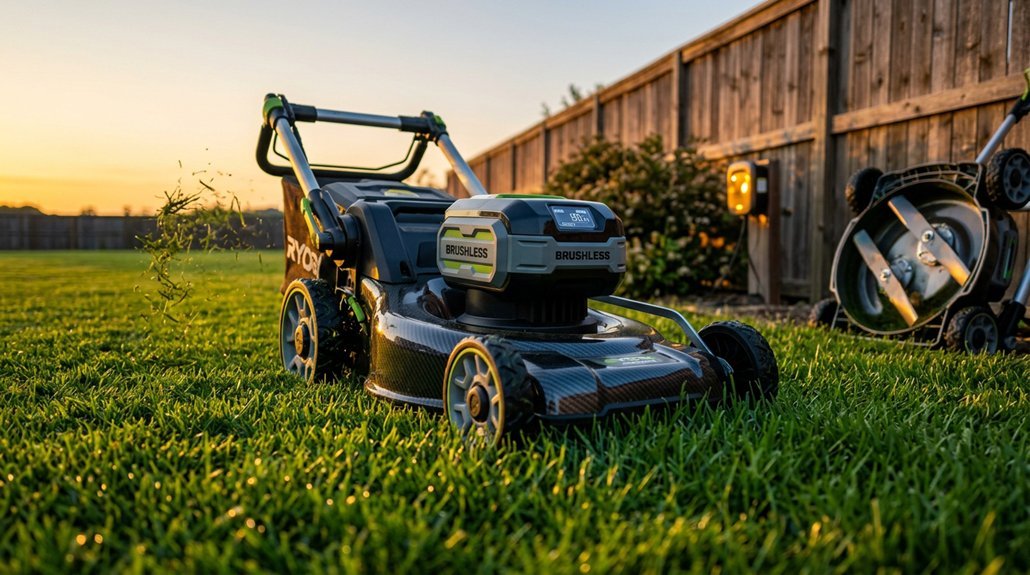


You’re weighing a gas engine’s raw torque against a battery’s clean convenience, but the better choice hinges on factors you haven’t fully measured yet. Your lawn’s size, terrain, and your tolerance for maintenance will tilt the scales in ways that aren’t obvious from spec sheets alone. The real question isn’t which technology wins—it’s which compromises you’ll actually notice after a full season of cutting.
Do Gas or Electric Mowers Cut Better?
How do gas and electric mowers actually compare when you put them to work? In this performance comparison, you’ll find gas mowers deliver higher raw cutting power, especially when you’re tackling thick or overgrown grass. However, you’re not sacrificing even cutting with quality electric mowers; many match top gas models, though you’ll notice more variability among electrics. In cutting efficiency metrics, gas models average 4.7 versus 4.5 for electrics. Your mulching performance shows similar tight margins: 4.7 for gas, 4.6 for electric. You’re getting nearly identical side discharging from both types. When you’re weighing lawn mower noise, maintenance, and environmental impact, electric mowers run quieter and demand less upkeep. Yet you’ll still see gas mowers maintaining their edge for challenging lawns where peak power matters most.
Recommended Products
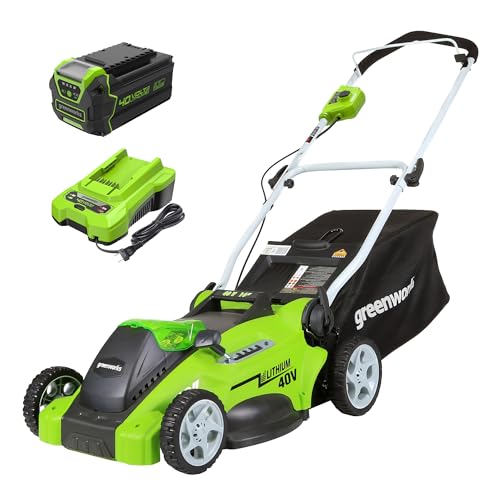
[16" LAWN MOWER] - This 40V lawn mower cuts up to 1/3 acre with fully charged 4.0Ah battery (varies based on grass condition and operator technique)

Multi-Function Convenience: Easily switch between mowing, trimming, and edging for three-in-one versatility with your string trimmer

POWERFUL PERFORMANCE: Tackle your yard with 3,300 RPM of power and a 14-inch cutting width
Can a Battery Mower Finish Your Yard?
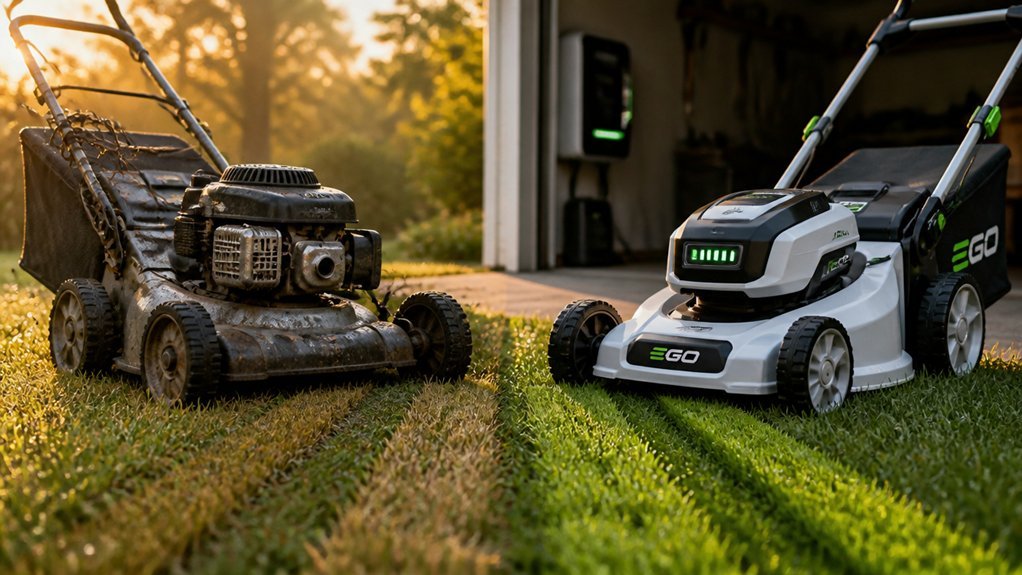
Why do battery run times matter so much? You need to know if your electric lawn mower can complete mowing before the battery dies. Most battery-powered mower models deliver 45–50 minutes of run time per charge, covering roughly one-quarter acre—adequate for compact lawns but potentially limiting for larger yards.
You’ll face a trade-off: charge time now averages under 1.5 hours, so you’re waiting rather than refueling instantly. For extensive properties, you carry multiple batteries or invest in tool-platform systems sharing power across devices. Battery life degrades with cycles, and replacement adds $100–$300+ to long-term costs—offsetting savings from reduced maintenance and lower environmental footprint.
You must calculate your yard size against realistic run time. Otherwise, you risk incomplete cuts or interrupted sessions, compromising efficiency.
Recommended Products
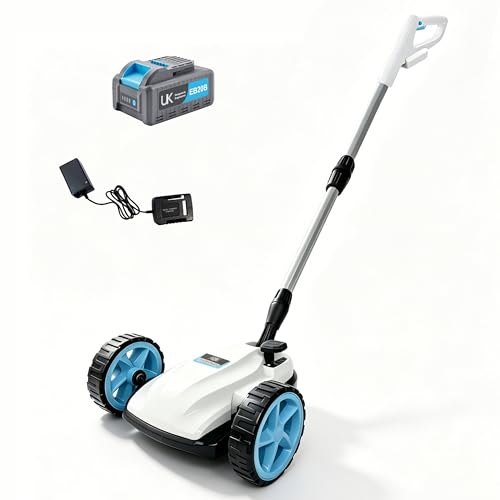
[Powerful & Efficient] This small battery mower features a high-speed 6000RPM brushless motor for fine mulching with zero maintenance. Powered by a 40V 2Ah battery, it’s ideal for small lawns up to 540 sq.ft.
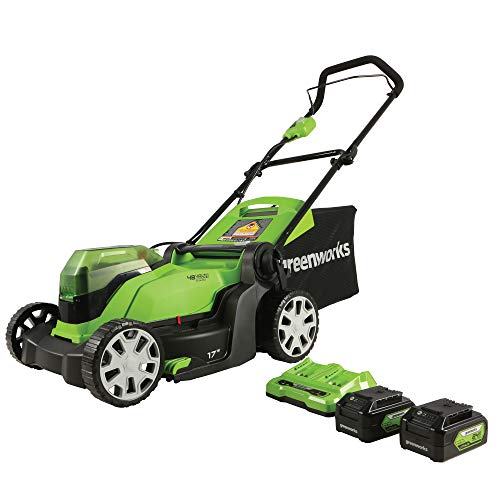
CORDLESS & POWERFUL – Greenworks 48V (24V x 2) battery powered lawn mower delivers gas-like power with up to 45 minutes run-time on (2) fully charged 4.0Ah batteries — perfect for small to medium yards up to 1/4 acre (run-time varies with grass conditions and operator technique)

[80V 21” SELF-PROPELLED LAWN MOWER] - Get more done, faster, with Greenworks electric lawn mowers. This 80V lawn mower cuts up to 1/2 acre with a fully charged 4.0Ah battery (varies based on grass condition and operator technique)
How Do Gas and Electric Mowers Handle Differently?
Once you’ve confirmed a battery mower can cover your yard, you’ll notice the real differences emerge in how these machines actually feel to operate.
Electric mowers average 4.2 in handling versus gas at 3.8, largely due to lighter weight and battery-assisted self-propulsion that reduces push effort.
Your starting mechanism differs too: electric offers instant activation, while gas requires pull-start or electric start and carries heavier heft that you’ll feel when manually pushing.
Gas self-propelled mowers typically deploy rear-wheel drive propulsion, with models like the Toro Super Recycler 21565 optimizing maneuverability through rugged terrain.
However, electric mowers excel in tighter maneuverability and easier push/pull dynamics around obstacles.
While noise handling favors electric operation, your trade-off involves raw power: gas emphasizes terrain adaptability, whereas electric prioritizes control and reduced weight for everyday maneuvering efficiency.
Recommended Products
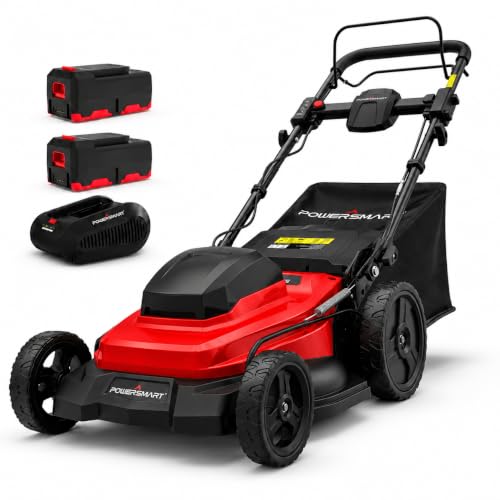
[UNMATCHED 40V CORDLESS POWER]:Driven by a high-capacity 40V 2*4.0Ah battery, this cordless lawn mower delivers incredible cutting performance—matching the power of mowers with zero emissions and whisper-quiet operation. Running at a robust 2,900 RPM no-load speed to tackle thick grass effortlessly, it includes a smart 150-minute charger. Plus, the dual-battery compartment features 1 active power port and 1 storage slot to hold your spare battery right on board.

EXCEEDS THE POWER OF GAS: EGO's cordless electric mower delivers up to 7.0 ft-lbs of cutting torque for performance that exceeds gas-powered mowers.

AERODECK TECHNOLOGY: Vented design boosts air volume in the cutting deck to prevent clogs and clumping, enhance cut quality, and optimize efficiency for less repetitive mowing. This tech also maximizes bag collection.
How Loud Are Gas vs. Electric Mowers?
Noise levels represent one of the most dramatic distinctions between these mower types, where your ears will immediately register what the decibel data confirms. Gas mowers typically operate at 90–100 dB+, while electric mowers generally run in the 60–75 dB range. At ear-level measurements, you’ll find averages around 5.0 for electric mowers versus 2.2 for gas mowers, with the quietest electric model scoring 5.5 compared to the quietest gas model at 4.2. Your 25-foot readings show similar separation: 5.3 versus 2.8. This loudness gap means you’ll need hearing protection with noisy gas mowers due to their higher decibel output and closer proximity. Across distances, electric mowers maintain superior quiet operation, with noisiest electric models still outperforming noisiest gas models on both ear-level and 25-foot readings.
Recommended Products
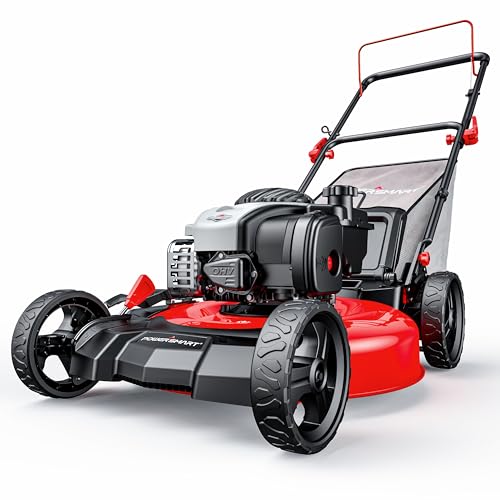
High-Performance 140cc Engine - Experience powerful and efficient mowing with our 140cc Briggs&Stratton 4-stroke engine, designed for superior torque and minimal maintenance—no oil and gas mixing required!

Powerful 170cc 4-Cycle OHV Engine: Equipped with a reliable 170cc 4-stroke OHV engine, this gas lawn mower provides consistent power for handling thick grass, overgrown areas, and regular lawn maintenance. Designed for dependable startups and smooth operation, it helps you efficiently maintain medium-sized yards

【4QL 144CC High-Performance Engine】 Powered by an advanced 4-cycle engine with exclusive 4QL lubrication technology, this mower delivers superior explosive power without the hassle of mixing oil and gas. It provides consistent, reliable torque to effortlessly tackle large lawns and steep slopes, ensuring a smooth mowing experience even in demanding conditions.
What’s the Real 5-Year Cost Difference?
How does your wallet fare when you compare five years of mowing? You’ll find the 5-year cost gap between Gas and Electric lawn mower ownership hinges on trade-offs between upfront cost and long-term operational costs.
Gas mowers typically win on upfront cost for entry-level models, but you’ll pay more for fuel, oil, filters, and spark plugs across five seasons. Electric mowers demand higher initial investment, yet you’ll slash operational costs—no fuel purchases, no oil changes, minimal maintenance. Battery replacement may cost you $100–$300, though shared battery ecosystems spread this burden across multiple tools.
Your ownership total ultimately depends on yard size. For small properties, Electric usually delivers lower 5-year cost; for expansive lawns, Gas accumulates steeper fuel and maintenance expenses, widening the financial divide.
Recommended Products

3-In-1 mower blade for mulching, bagging and side discharging

✔️ Vibration Activation – Vibration-activated hour meter works with gas/diesel engines, generators, air compressors, lawn mowers, and more. No wiring required for hassle-free use. Note: Snip the wire loop on the back to activate.
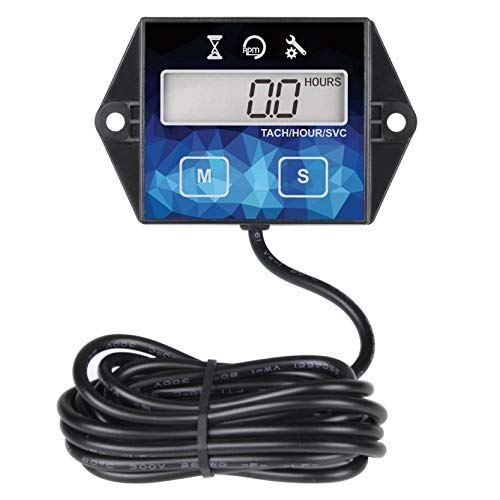
HOUR METER --- Contains tachometer, hour meter, service timers ;Help you track how many hours you put on your engine.When engine is off, display shows total run time of engine and remains visible. Total hours can reset ; 0.1 hours accuracy
Which Mower Needs Less Maintenance?
Simply put, where can you invest less time and money in upkeep? Electric mowers clearly reduce your maintenance burden compared to Gas models.
You’ll eliminate oil changes, spark plugs, carburetor cleanings, and fuel stabilizers entirely with Electric options. Whether you choose corded cordless or battery-powered units, your preventive upkeep shrinks dramatically.
Gas mowers demand seasonal oil checks, filter replacements, spark plug swaps, and winterization routines that consume hours yearly.
With Electric, you focus on blade sharpening and basic cleaning. Battery care involves proper charging cycles and cool storage—far simpler than engine maintenance. Removable batteries streamline your workflow compared to hauling bulky Gas units for service.
You’re trading combustion complexity for streamlined mechanical reliability. The maintenance differential favors Electric systems for practical homeowners seeking minimal intervention.
Recommended Products


1. Best-Fit Yard and User: For small-to-medium lawns with open grass and landscaping; ideal for users comfortable pushing who want fewer passes.

Convertible Design: The removable wheeled deck allows quick transformation into a small lawn mower for versatile yard care
Which Mower Fits Your Yard Size and Dealing Style?
Where exactly does your property fall on the size spectrum, and what terrain challenges do you face? For yards under 0.25 acres, you’ll find Electric mowers outperform Gas options with quieter operation and easier maneuverability, though corded models restrict your mobility by cord length. At 0.3 to 0.6 acres, you’ll need high-capacity battery electric mowers or carefully planned corded setups to eliminate runtime gaps and cord management issues.
Beyond 0.75 acres, you’ll require gas-powered mowers for uninterrupted runtime and sustained power, with self-propelled or riding variants easing demands on expansive terrain. Difficult terrain and slopes favor Gas mowers for superior torque and traction, though select Electric models with AWD or premium motors handle moderate slopes. In noise-sensitive neighborhoods, you’ll appreciate Electric mowers’ lower decibel output, simplifying neighbor relations regardless of yard size.
Recommended Products

40V Dual-Battery System for Stronger Cutting Performance: Powered by two 20V Max 8.0Ah batteries working together, this lawn mower delivers 40V system power to help maintain consistent cutting performance as mowing conditions change.

【Full 40V Battery Powered Lawn Mower Kit with Dual 4.0Ah Batteries & Fast Charger】 This cordless push lawn mower comes as a complete kit with 2 x 20V 4.0Ah lithium batteries and a fast charger included. The battery-powered design delivers long runtime for daily small yard lawn work without frequent recharging, no extra power accessories to buy

LIGHTWEIGHT & EASY TO MANEUVER: Weighing only 20.5 lbs, this cordless lawn mower is easy to lift, carry, and maneuver around trees, flower beds, and tight spaces. The compact 13-inch cutting deck is ideal for small yards and convenient storage.
Should You Bag, Mulch, or Side-Discharge?
Why does your grass disposal method matter when choosing between power sources? Your grass disposal method directly impacts how efficiently you finish cutting and how often you handle clippings.
Bagging Performance between Gas and Electric Mowers varies by model. Some Gas Mowers hit 4.6, while Electric Mowers reach 4.5, though most Models cluster mid-range. You maximize bagging efficiency by filling the bag fully before emptying, preventing chute clogs that slow you down.
For Side Discharge, both power types perform nearly identically—you won’t find a clear winner here.
Mulching shows Gas averaging 4.7 versus Electric at 4.6, with most Battery models clustering near 4.0 and occasional underperformers dragging scores down.
Recommended Products

Delivers up to 6.0 ft-lbs of cutting torque for performance that exceeds gas powered lawn mowers

SELF-PROPELLED LAWN MOWER – Includes PWR CORE 40 6.0Ah Battery and Auto PWR JUMP charger

Self-Propelled Drive Effortless on Hills & Flat Lawns: Activate the self-propel function with a simple lever pull. The rear-wheel drive automatically powers the mower forward, giving you extra traction and reducing pushing effort on steep slopes and uneven terrain
Conclusion
You’re weighing raw power against refined efficiency. Gas mowers dominate thick, overgrown acreage with unlimited runtime but demand fuel, noise tolerance, and regular maintenance. Electrics match cutting performance on most lawns, offering instant starts, quieter operation, and minimal upkeep—though battery limits constrain large properties. Your optimal choice hinges on yard size, terrain density, and tolerance for ongoing costs. Assess your mowing frequency, storage access, and long-term budget; the wrong match drains wallets and patience alike.
Recommended Products

Powerful Engine: Equipped with a high-performance 144cc 4-stroke OHV engine and an auto-choke for easy starting, this mower delivers reliable power and fuel efficiency.

MAXIMIZE MOWING EFFICIENCY: Features a heavy-duty 21-inch steel cutting deck that covers a wider path in a single pass. Designed to significantly reduce your mowing time, making it the perfect gas lawn mower for quick and efficient maintenance of medium to large residential yards.

Efficient Yard Care: With a 21-inch cutting width and robust construction, this gas lawn mower is ideal for small to medium-sized yards, delivering a clean and even cut effortlessly.