
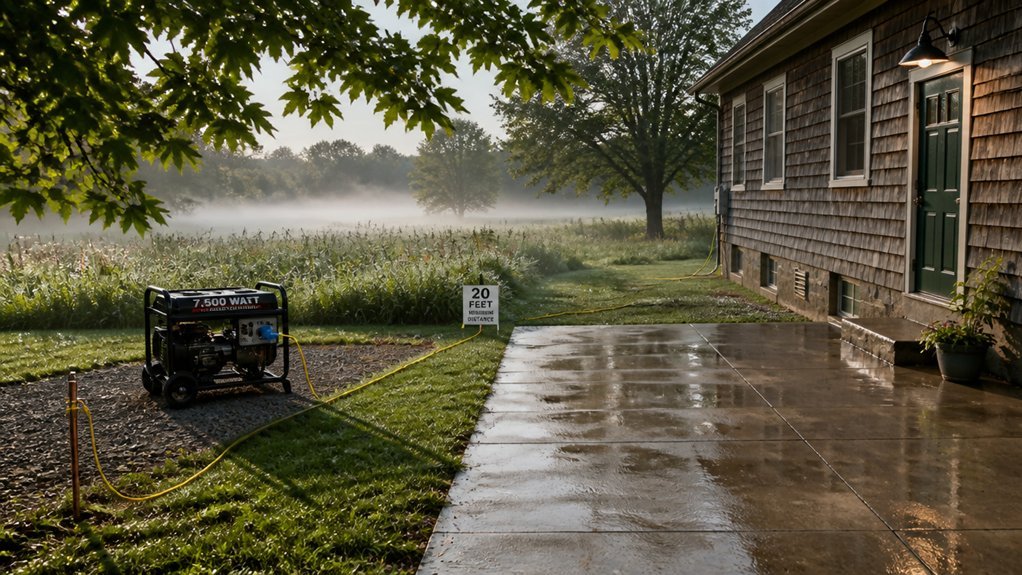
You need at least 20 feet between your generator and your house, but distance alone won’t keep carbon monoxide out. Wind patterns, HVAC pressure, and exhaust direction create invisible risks most owners overlook. Your local code may demand more clearance, and your property’s layout determines whether you’re truly protected. Before you fire up that unit, you’ll want to know why the safest placement isn’t always the most obvious one.
Why 20 Feet Is the Minimum Safe Distance for Generators
A generator’s placement isn’t arbitrary—it’s governed by hard data on carbon monoxide migration and thermal hazards. You’re dealing with exhaust temperatures reaching 1,300°F and invisible CO that doesn’t respect property lines. The CDC, CPSC, NFPA, FEMA, and USFA all converge on one figure: the 20-foot distance. This isn’t conservative padding—it’s the minimum threshold where thermal radiation drops below ignition risk and exhaust drift disperses sufficiently.
You can’t rely on CO detectors alone for generator safety. Sensors inside your home won’t catch gas entering through windows, doors, or construction gaps before it harms occupants. Modern NIST and CDC studies confirm CO accumulation indoors even at 15–20 feet under certain conditions. Automatic shutoff sensors on the unit itself don’t solve this—they’re not positioned where you’re breathing.
Recommended Products
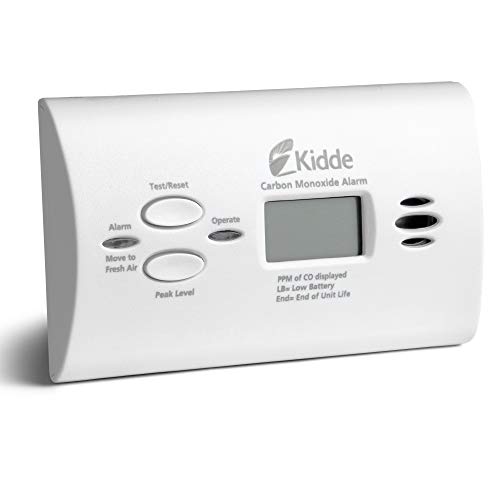
Electrochemical sensor technology detects CO gas


This CO module is exactly the same with the existing one on your Predator 4375 (3500 running watts) generator.
How Generator Exhaust Sneaks Carbon Monoxide Into Your Home
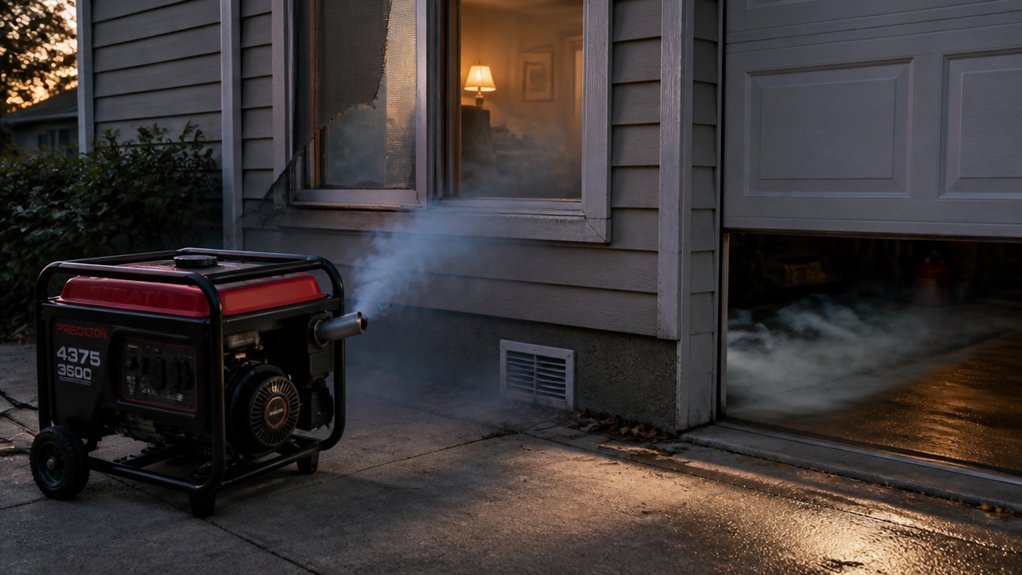
How does an invisible gas you can’t smell turn your home into a lethal space? Your generator’s exhaust carries carbon monoxide, and you can’t detect it until it’s too late. Even with your unit outdoors, you’ve got to understand how indoor air intrusion actually happens.
You place a generator 20 feet away and think you’re protected, but exhaust doesn’t travel in straight lines. Your HVAC system’s negative pressure pulls that exhaust through windows, doors, vents, and cracks you didn’t notice. Wind carries carbon monoxide toward openings. In tightly sealed homes, limited airflow traps the gas rather than dispersing it.
You’re relying on 20 feet as a minimum because studies from CDC, CPSC, NIST, and UL Solutions confirm this distance reduces—but doesn’t eliminate—indoor air intrusion. CO sensors help, but they don’t justify unsafe positioning.
Recommended Products

Improves Air Quality: Enhance your RV living experience with Camco’s patented Gen-Turi Exhaust Venting System. This RV essential redirects generator exhaust above the roofline, preventing the inhalation of harmful fumes.

UNIVERSAL MUFFLER SILENCER: Our generator exhaust extension silencer kit is highly compatible and suitable for most generators and portable generators, For mufflers without fully aligned holes or no holes at all, you can easily secure the adapter using the included self tapping screws.
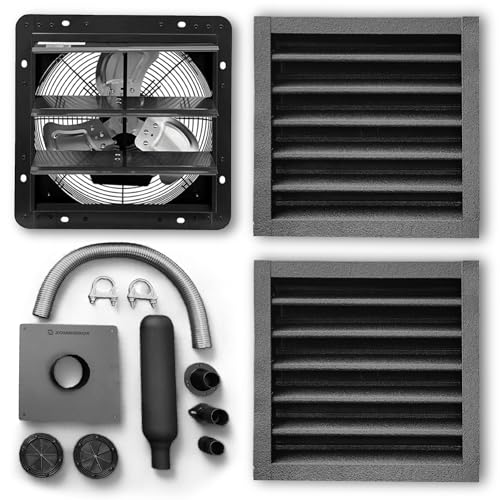
COMPLETE CLIMATE CONTROL SYSTEM: The all-in-one solution for building or upgrading your DIY generator enclosure. This comprehensive kit solves the two biggest problems with outdoor generator sheds: overheating and carbon monoxide buildup. Includes active cooling, passive intake, safe exhaust routing, and cable management
Why Exhaust Direction Matters as Much as Distance

Where you point the exhaust matters as much as where you place the machine. You might set your generator twenty feet from the house, but if you’ve aimed the exhaust toward doors, windows, or vents, you’re still channeling carbon monoxide directly into your living spaces. Cross-breezes and pressure differentials carry fumes indoors even at compliant distances.
Safety guidelines require you to direct exhaust away from all building openings and occupied structures. You’re not just checking distance; you’re analyzing airflow patterns, terrain slope, and potential settling zones. Down-sloping areas trap fumes; nearby enclosures redirect them. You must pair adequate distance with precise exhaust direction to minimize indoor CO exposure. Modern codes recognize this combination as essential. You can’t rely on separation alone.
Recommended Products

Can be Used in Any Ccenario: This heavy duty generator extension cord with multiple length options up to 100 feet; in case of power outages or emergencies; you can use the power cord to connect a portable generator and manual transfer switch to power houses; rvs and other outdoor camping equipment
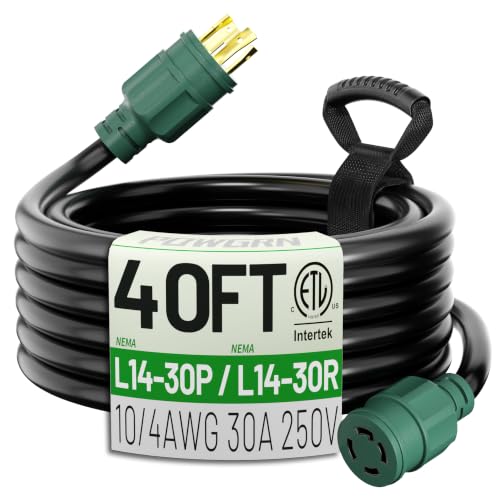
Can be Used in Any Ccenario: This heavy duty generator extension cord with multiple length options up to 100 feet; in case of power outages or emergencies; you can use the power cord to connect a portable generator and manual transfer switch to power houses; rvs and other outdoor camping equipment

【Weatherproof Generator Power Cord】Designed with a twist lock male plug, it still could be connected securely even facing hurricane, heavy rain, heavy snow.
When Hot Exhaust Turns Into Fire Hazard
Why risk ignition when you can control it? Your generator’s exhaust can reach 1,300°F, creating severe fire hazard near combustibles. You must maintain minimum 20 feet clearance from buildings, dry vegetation, wooden decks, and fuel containers. NFPA, FEMA, and USFA all endorse this distance to protect your property.
Don’t assume you’re safe at 15 feet. Wind redirects hot exhaust; poor airflow traps heat. You’re risking fire even with partial compliance. Enclosures that capture exhaust compound the danger—you need open, unobstructed outdoor placement.
Check your clearance regularly. Clear dry leaves, relocate fuel containers, and verify unobstructed airflow around your unit. You’re responsible for maintaining this buffer every time you operate your generator. Control the environment, and you’ll control the risk.
Recommended Products
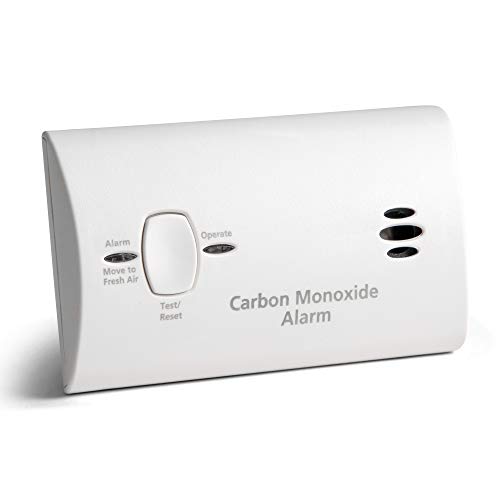
Electrochemical sensor technology detects CO gas

Fast and Accurate: The TOPTES CT-580 Carbon Monoxide Detector is a manual inspection tool equipped with a high-sensitivity, high-accuracy DDS sensor providing a quick response within 0.3 seconds. It detects CO concentrations from 0 to 1000 PPM and features two alarm thresholds, allowing for rapid assessment of environmental changes
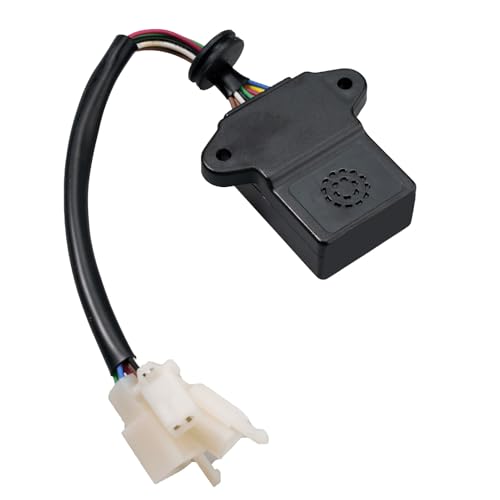
This CO module is exactly the same with the existing one on your Predator 5000 inverter generator.
The Limits of Automatic CO Shutoff Sensors
So you think a built-in sensor makes you invincible? You’re wrong. CO shutoff sensors activate when ambient CO detection reaches unsafe thresholds per PGMA G300 standards, but they don’t solve every hazard.
These systems primarily respond to external ambient conditions. They won’t prevent indoor CO buildup if you restart the unit in a garage or near a window. They can’t detect gas migrating through soffit vents, crawl spaces, or other pathways into living areas. The sensors address the immediate environment, not remote infiltration.
You’re relying on technology with defined boundaries. Outdoor generator placement remains mandatory regardless of shutoff features. Position your unit a minimum of twenty feet from structures and direct exhaust away from openings. CO shutoff sensors supplement protocol; they don’t replace it.
Recommended Products
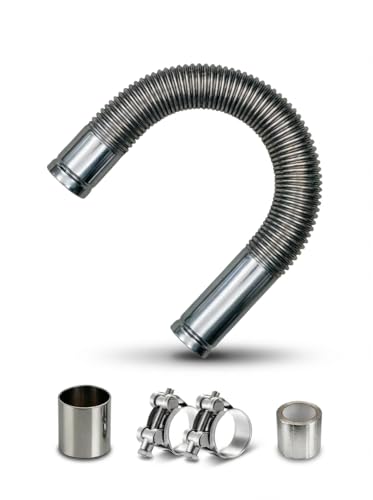
【LASER-WELDED STAINLESS STEEL FLEX PIPE】PAZLAM flexible stainless steel exhaust tubing is manufactured using laser welding technology, creating a continuous welded seam for improved strength, heat resistance, and durability compared to standard flex pipe exhaust designs

【Material】:This steel exhaust hose is made of high-quality stainless steel, sturdy, wear-resistant, bright surface without burrs, not easy to rust, reliable performance, strong sealing, ductility, and long service life.

[Attention]: (If the connector doesn’t fit, contact us for customization) The generator exhaust extension kit must be used in a generator shed generator quiet box. Generator silencer kit is only used to reduce the exhaust noise of the generator and does not reduce the mechanical noise of the generator itself. Please do not remove the built-in muffler of the generator
Where to Place Your Generator on Your Property
CO shutoff sensors have their place, but they can’t choose your generator’s location for you. Proper generator placement demands active decision-making on your part. You’ll position the unit at least 20 feet from all doors/windows, with exhaust away from structures.
For propane models, you must maintain specific clearance distances: 5 feet from wall openings, 18 inches from the backside, 3 feet on remaining sides, and 60 inches from combustibles. You’re never placing units in garages, under decks, or enclosed spaces. You’ll select level ground with unobstructed airflow, avoiding walls and heavy brush. Position downhill or route airflow away from living spaces. Local codes vary, but many jurisdictions mandate 5-foot clearance from building openings and impose additional model-specific requirements. Consult your authority having jurisdiction before finalizing placement.
Recommended Products

Electrochemical sensor technology detects CO gas & sounds an 85-decibel alarm

Revolutionize your camping experience: Top exhaust - Our generator exhaust extension kit ingeniously redirects the exhaust pipe above the RV roof, freeing you from ground-level exhaust concerns.
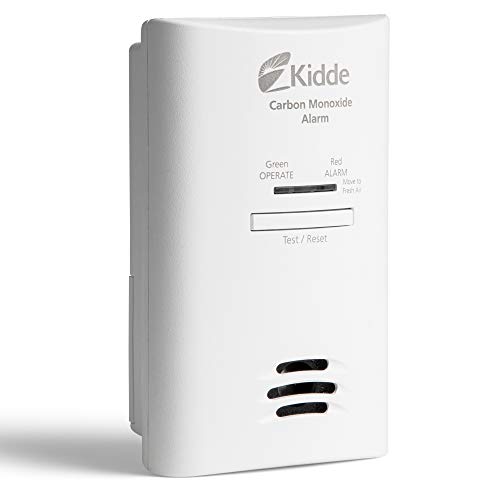
Easy Installation - simply plug-in to a standard, 120V outlet in your home
How Generator Noise Affects Where You Put It
How much noise you’re willing to tolerate directly determines where you’ll station your generator on your property.
Traditional gas generators produce 65–85 decibels, so you’ll need to balance distance from your living spaces against potential neighbor exposure. You can’t solve noise solely by moving the unit farther away, as increased distance from your house may redirect sound toward adjacent properties. You must maintain the 20-foot minimum clearance and direct exhaust away from structures while considering acoustic impact.
Inverter generators offer a technical solution, operating at substantially lower decibel levels that allow practical placement distances without significant noise intrusion. You’ll achieve compliance with zoning ordinances and maintain safety clearances simultaneously.
You can’t eliminate noise entirely with combustion units. Position your generator where you’ll minimize indoor sound transmission without compromising operational safety or creating community disturbance.
Recommended Products

[Attention]: (Connector mismatch? Contact us for customization.) The generator exhaust extension kit must be used in a generator shed generator quiet box. Generator silencer kit is only used to reduce the exhaust noise of the generator and does not reduce the mechanical noise of the generator itself. Please do not remove the built-in muffler of the generator

【FITMENT】This kit is compatible with most RV exhaust systems. Replace the part number: 44461.

【UNIVERSAL FIT WITH 3 ADAPTERS & FLEXIBLE ELBOW】Our upgraded Generator Exhaust Extension Silencer Kit comes with THREE different universal adapters, making it compatible with the vast majority of portable generators on the market. Whether your unit uses a straight pipe or a threaded outlet, one of the adapters will provide a snug fit. Paired with a 90-degree elbow, installation is effortless—even in tight or awkward spaces—making this generator silencer kit ideal for varied installation environments
When Battery Power Makes More Sense Than a Gas Generator
Noise constraints and clearance requirements disappear entirely when you switch to battery-based alternatives. You eliminate exhaust risk and combustion byproducts, so you’re not bound by the 20-foot outdoor clearance mandated for CO dispersion with gas units. Battery power lets you position units adjacent to your home or inside, provided you follow indoor safety protocols for ventilation and thermal management.
You gain silent operation without fuel storage or engine maintenance, reducing neighbor disruption during extended outages. When you size your system, match capacity—such as 2016Wh or expandable packs—to your essential loads and verify recharge options like solar or grid-tie. You can also deploy hybrid architectures: a small battery system near the house handles routine backup, while a distant gas generator addresses prolonged demands, balancing proximity convenience with runtime security.
Recommended Products

Heavy Duty 30 Amp Generator Cord: RVINGPRO 30 amp generator cord is made of 100% copper conductor with flame retardant coating and PVC jacket. Length: 20FT; Voltage: 125V/250V; Wire Gauge: 10/4 SJTW; Male Plug: NEMA 14-30P; Female Plug: NEMA L14-30R, Twist Locking Connector; Max Wattage: 7,500 Watts.

Heavy Duty 50 Amp Generator Cord: RVINGPRO 50 amp generator cord is made of 100% copper conductor with flame retardant coating and PVC jacket. Length:20 FT; Voltage: 125V/250V; Wire Gauge: STW 6/3 + 8/1 AWG; Male Plug: NEMA 14-50P; Female Plug: NEMA SS2-50R, Twist Locking Connector; Max Wattage: 12,500 Watts.

Premium 50A Generator Cord: Our generator cord is STW gauge with 6/3+8/1 AWG Cord, supporting up to 50 AMP current. Featuring a NEMA 14-50P male plug designed to fit into a 50A generator output and a twist-lock NEMA SS2-50R female plug for a secure connection to a 50A power inlet box with a NEMA SS2-50P male end. Perfect for emergency power needs in any weather!
Conclusion
You must keep your generator at least 20 feet from your house’s openings, with exhaust pointed away from structures, and you’ll need to account for wind patterns, pressure differentials, and HVAC intake locations. Don’t rely solely on CO sensors or automatic shutoffs—they’re backup systems, not primary protection. Check your local codes, maintain clearances from combustibles, and consider whether your site conditions actually support safe fossil-fuel generator operation, or if battery backup better serves your property’s constraints.
Recommended Products

🔋 LONG LIFE: Massive 2-year battery life. Disposable Detector.

ACCURATE CO GAS MEASUREMENT: Detect and measure carbon monoxide gas levels with precision using our easy-to-use CO meter

【Strong Power】The GENMAX GM5250iA Inverter Generator is equipped with a 192cc 4-stroke OHV gas engine, offering 5250 starting watts and 4700 running watts. Adopting easy smooth recoil start, premium inverter technology and a magnetic dipstick, this generator supports up to 7 hours of runtime at 25% load. It outputs stable and high-efficiency power to meet daily needs for camping, RV use, emergency power supply and job site operation.