

You need to time dethatching carefully, or you’ll stress your lawn when it’s least able to recover. Cool-season grasses demand spring or fall intervention, while warm-season varieties won’t forgive mid-summer disruption. Your grass type, local climate, and thatch depth all compete for attention in your decision. Miss the narrow window, and you’ll face weeks of brown, struggling turf instead of vigorous regrowth. The consequences of guessing wrong are more severe than most homeowners realize.
Does Your Lawn Need Dethatching?
How do you know if your lawn’s suffocating beneath its own surface? You check thatch thickness by digging a wedge-shaped soil sample and measuring the spongy layer between the grass blades and soil. When thatch exceeds 1/2 inch thatch, you’re blocking water, air, and nutrients from reaching roots.
You’ll want to act while your grass is actively growing—cool-season grasses and warm-season grasses recover differently, so timing matters for lawn recovery. Grab a dethatching rake and work through the compromised areas, pulling up accumulated material. Rake all lawn debris thoroughly to expose bare soil.
This soil access lets you assess whether overseeding becomes necessary. You’ll water deeply after clearing, then monitor regrowth. Address thatch promptly—you’re preventing deeper problems and ensuring your seasonal maintenance actually reaches where it’s needed.
Recommended Products

Ergonomic Design - Featuring an innovative wheeled structure, this dethatching rake helps reduce back fatigue by up to 70% compared with standard rakes. It lets you maintain an upright, comfortable posture during long lawn-care sessions, so you can work efficiently without straining your back.

Deep-Clean Dethatching with 19 Sharp Tines- Clear More, Clog Less, Grow Faster! This 15" extra-wide thatch rake head with 19 closely spaced steel tines (0.7" apart) digs deep to tear out thatch, moss, dead grass, and even weed roots without clogging or slowing you down. Whether you're clearing winter buildup in spring or prepping soil for fall seeding, it pulls more in fewer passes to help your lawn breathe, grow stronger, and look better- fast.
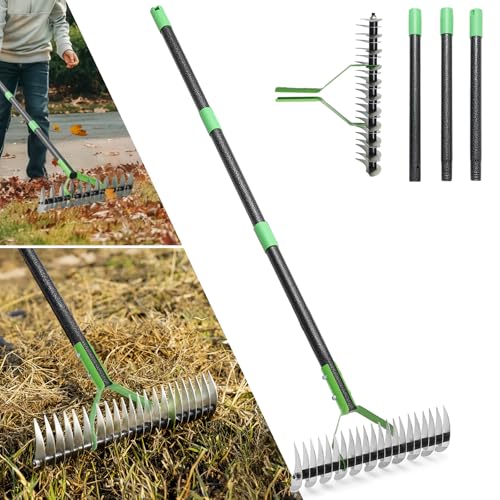
Double Side Curved Metal Tines: Our dethatcher rake features a dual-design that efficiently rehabilitates your lawn—simply flip the head to switch functions. One side is equipped with 21 closely spaced long tines that penetrate dense turf to lift stubborn thatch and dead grass. The opposite side uses 11 shorter, wider-spaced tines to gently loosen compacted topsoil, significantly improving drainage and oxygen flow to the roots. Effortless switching makes lawn care quick and worry-free.
Best Months to Dethatch Cool-Season and Warm-Season Lawns

Knowing your grass type determines when you’ll dethatch without stalling recovery. For cool-season lawns, you’ll dethatch during early spring or early fall—the active growth window lets grass rebound before harsh conditions strike. For warm-season lawns, you’ll target late spring through early summer when temperatures climb and soil penetration improves. In regions like Arizona, you’ll wait until night temperatures average 60°F+ and new growth starts before you begin. You’ll check thatch thickness first; if it’s over one-half inch, you’ll schedule dethatching during peak growth to compress the recovery period. You’ll avoid extreme heat, drought, or any stressed conditions that compromise lawn health. Timing this lawn care task precisely protects vigor and ensures your lawn recovers fully.
Recommended Products
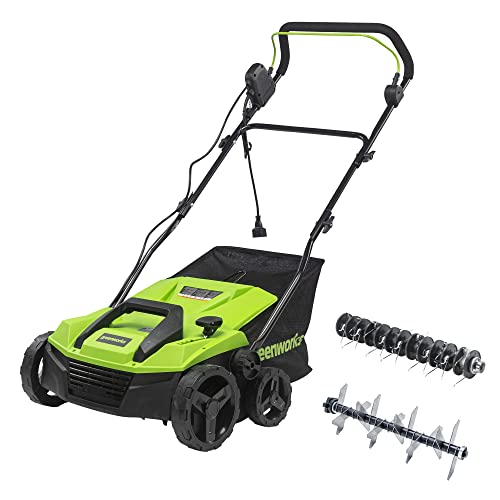
2-IN-1 DESIGN - 13A 14-Inch Dethatcher / Scarifer provides the power and versatility to keep your lawn healthy.No load speed : 3200 RPM

Note: Please follow the installation diagram on the product page.

Effortless, Ergonomic Lawn Thatch Removal: Professional thatch rake features a heavy-duty head and an extended, adjustable stainless steel handle. This design drastically reduces back-breaking bending and strain, allowing air, water, and nutrients to penetrate deep to the roots for a lush, healthy lawn all year round
How Often Should You Dethatch?
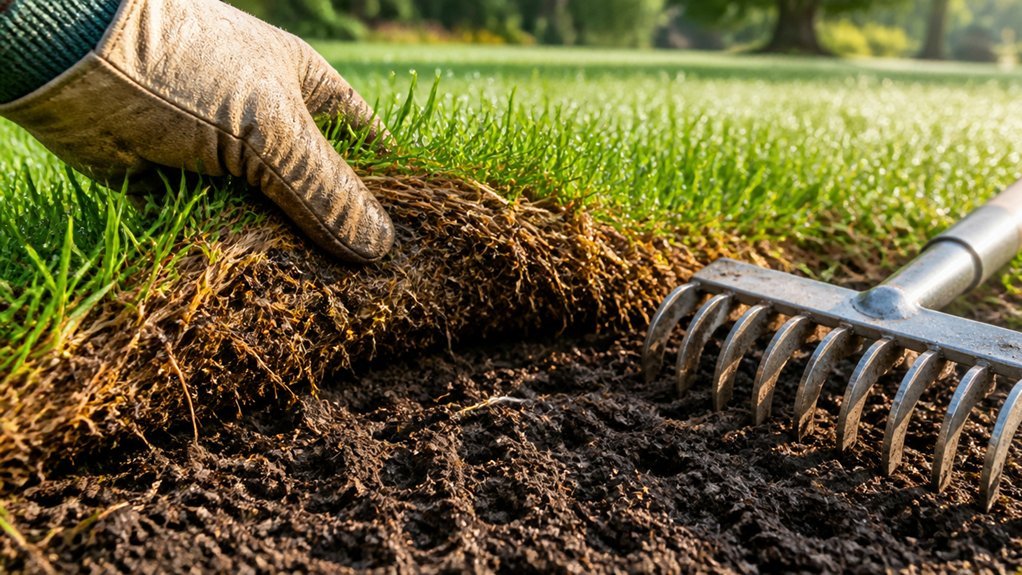
You’ll typically dethatch every 2–3 years if your lawn accumulates thatch at a moderate pace, though you’ll step up to annual sessions when grass sheds faster than it breaks down. Monitor thatch thickness regularly; once it exceeds ½ inch, you’ll initiate dethatching to prevent soil compaction and root suffocation.
Your timing hinges on grass type and growth cycles. You’ll schedule dethatching for early spring or early fall if you’ve planted cool-season varieties, aligning with peak recovery windows. You’ll target late spring through early summer for warm-season lawns when active growth accelerates healing. Avoid dethatching dormant turf, newly laid sod, or during drought stress. If thatch surpasses 2 inches, you’ll engage professionals for multiple sessions. Consistent lawn maintenance—proper mowing, aeration, and balanced fertilization—regulates thatch buildup, reducing dethatching frequency and preserving soil health.
Recommended Products

Labor-Saving Wheels: The thatch rakes for lawns with wheels design reduces the load on both arms. With just a push and pull handle, the wheels and teeth can be responsible for clearing dry grass and debris from the lawn.The wheels help you clear thatch more efficiently while protecting your body from unnecessary strain. Reducing the need to bend over and making lawn care less strenuous.

Promote Lawn Health and Neatness: This thatch rake is designed to clear away thatch buildup, dead grass, fallen leaves, and small debris across lawns and garden areas. By removing compact layers on the surface, it allows air, water, sunlight, and nutrients to reach the soil and roots, supporting steady turf growth. With a total length of 74 inches, it helps reduce bending and supports seasonal lawn maintenance tasks.

【Efficient Lawn Revival Tool】This dethatcher rake is designed to quickly remove thick layers of thatch, moss, and dead grass. Improve airflow, water absorption, and nutrient penetration with this powerful lawn dethatcher, helping your grass grow greener and healthier.
Why Your Grass Type Changes the Schedule
Where your grass falls on the warm- or cool-season spectrum dictates exactly when you’ll roll out the dethatcher. Warm-season grasses—Bermuda, buffalo, zoysia—demand dethatching in late spring to early summer when soil temperature climbs and active growth stage begins. In arid climate zones like Arizona’s desert, you’ll delay until nights average 60°F+ and new growth emerges, dodging summer drought stress that cripples recovery.
Cool-season grasses—bluegrass, fescues, ryegrass—follow different timing. You’ll target early fall, capitalizing on mild temperatures that support recovery without heat stress. Clump-forming types like tall fescue resist thatch buildup, so you’ll extend intervals between dethatching.
Your grass type governs frequency too: high-thatch species need annual dethatching; low-thatch, well-maintained lawns stretch to biennial cycles. Match timing precisely to your grass type, and you’ll protect lawn health through every season.
Recommended Products

Deep-Clean Dethatching for a Healthier Lawn - Built to remove thick thatch, moss, dead grass, and hidden lawn debris, this dethatching rake helps your grass breathe better and absorb more sunlight, water, and nutrients. The 19 closely spaced, 5-inch long steel tines reach below the lawn surface for deeper cleaning in fewer passes, making it ideal for spring cleanup, fall seeding prep, and restoring tired lawns.
Deep-Clean Dethatching with 19 Sharp Tines- Clear More, Clog Less, Grow Faster! This 15" extra-wide thatch rake head with 19 closely spaced steel tines (0.7" apart) digs deep to tear out thatch, moss, dead grass, and even weed roots without clogging or slowing you down. Whether you're clearing winter buildup in spring or prepping soil for fall seeding, it pulls more in fewer passes to help your lawn breathe, grow stronger, and look better- fast.
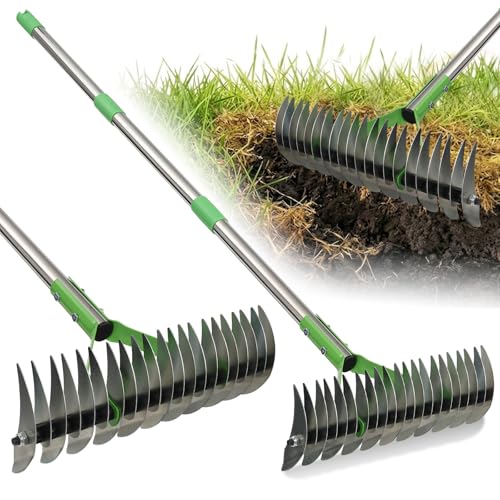
Deep Dethatching to Help Revive Thinning, Matted Lawns - This thatch rake features a 13" wide head with 21 sharp carbon steel tines and 0.6" spacing to pull up thick thatch, dead grass, moss, and compacted debris more effectively. It helps open the lawn surface so air, water, and nutrients can reach the soil more easily-especially useful for spring lawn cleanup, patch repair, and overseeding prep.
Recovery Steps After Dethatching
How quickly your lawn rebounds depends on what you do in the hours and days after dethatching. Begin recovery with immediate debris removal; rake up loosened thatch to prevent matting and enable soil penetration. Without proper clearing, you’ll block sunlight and suffocate young shoots seeking regrowth.
Your watering schedule proves critical now. Water thoroughly post-dethatching to settle roots and support lawn recovery through seasonal transition periods. You’ll encourage deeper soil penetration and faster establishment of new growth.
Delay mowing and fertilizing until you observe active regrowth—rushing triggers setbacks. This fertilizing delay protects tender grass from chemical burn when vulnerability peaks.
If your thatch exceeded two inches, expect extended recovery. Monitor closely for signs of stress: wilting, pale color, or patchy growth. Adjust watering frequency based on these indicators and current seasonal conditions until full establishment returns.
Recommended Products

【Carbon Steel & Durable Construction】Our thatch rake teeth is made of premium carbon steel with anti-rust powder coating. The dethatcher rake head has 3mm thickness, so you will not experience head tooth break or deformation. This garden rake with two sides function, best for removing weeds, thatch, grass, gravel, construction debris, prepping for laying down seeds.
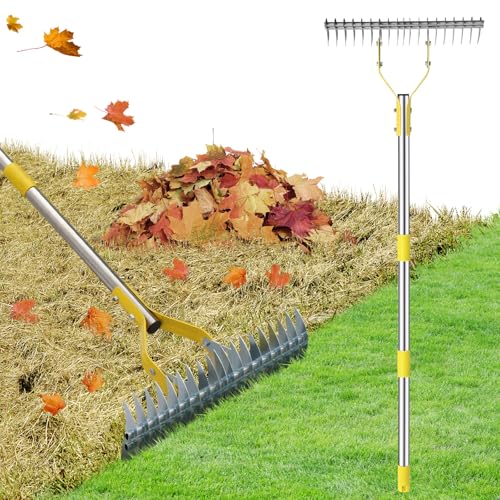
2-in-1 Raking Power, Use As Thatch Rake or Leaf Rake: Designed with 19 sturdy tines and a 15-inch wide head, this rake handles two jobs in one: loosen and remove stubborn thatch buildup to keep your lawn healthy; quickly gather leaves, pine needles, and debris for for a clean, tidy yard without needing a separate tool

We will pre-install the rake head, and some nuts may fall out in the carton during transportation. Please check carefully. We apologize for the inconvenience
Conclusion
You’ll dethatch when thatch exceeds 1/2 inch, regardless of grass type. Match your timing to seasonal growth peaks: early spring or fall for cool-season lawns, late spring through early summer for warm-season varieties. In arid regions like Arizona, you’re waiting until nights hold steady at 60°F with active new growth. Post-dethatching, you’ll water deeply, apply balanced fertilizer, and monitor recovery to ensure roots reestablish before stress periods arrive.
Recommended Products

【Dual-Sided 19-Tine Head for Dethatching & Cultivating】:This dethatcher rake features a 15-inch wide dual-sided head with 19 curved steel tines. One side functions as a thatcher rake for lifting and removing dead grass and surface buildup, while the other side helps loosen topsoil and cultivate the lawn surface. The wide head covers more ground with each pass, making lawn care more efficient.

Adjustable for Any Lawn Condition: Our thatch rake features an adjustable rake head that easily changes from 0° to 15° to match your lawn’s needs. Use a shallow angle for light surface grooming or a deeper angle for tougher thatch removal. This flexibility helps you handle different soil types, thatch thicknesses, and grass sensitivity with confidence.

Keep Your Lawn Healthy and Tidy: versatile thatching rake alloy steel tines can pull up the thatch, leaves, dead branches and other debris from your lawn, allowing more air, water, sunlight and nutrients into the soil, which will keep your grass healthy. This adjustable thatch rake can give you a tidy and beautiful lawn