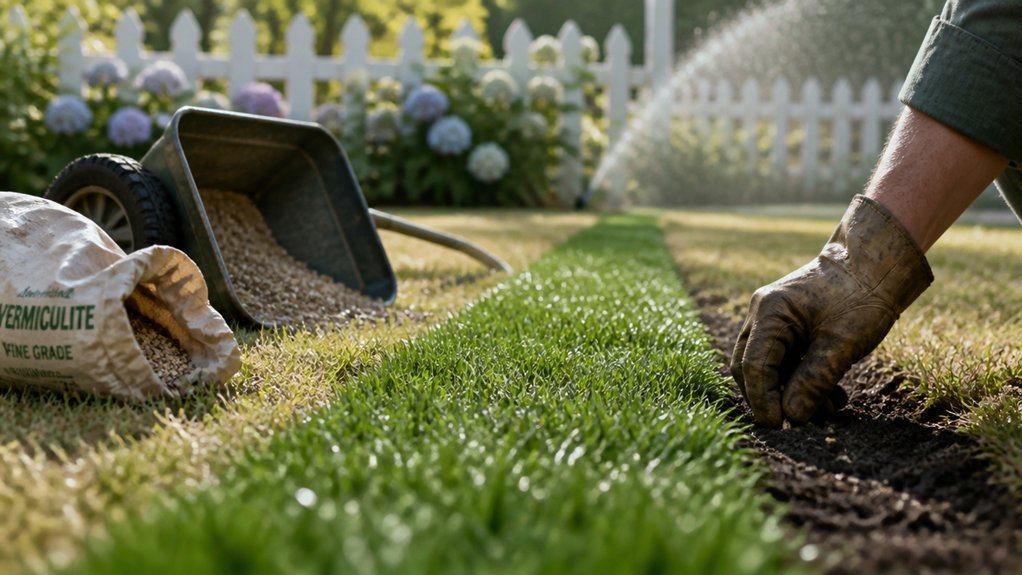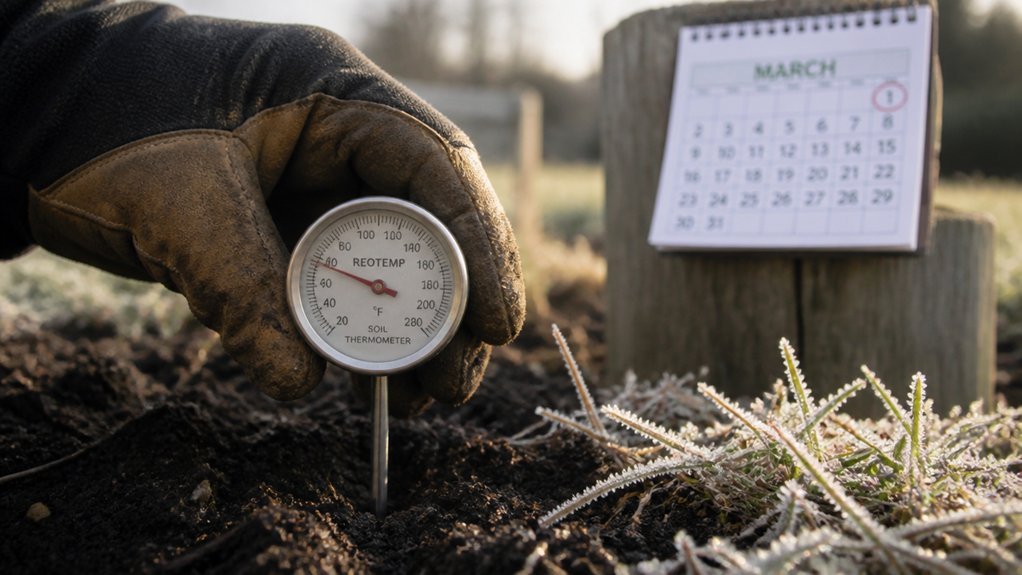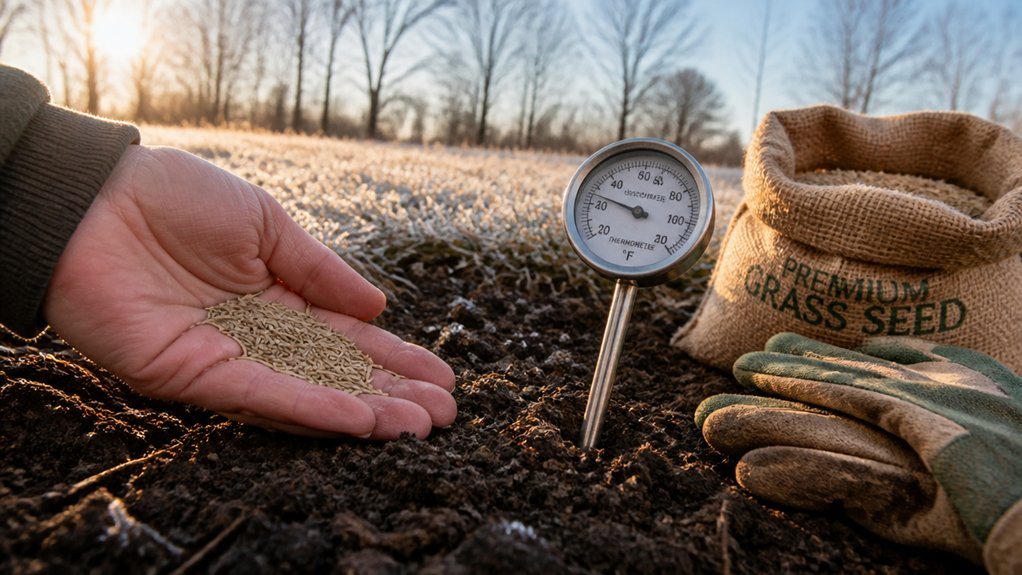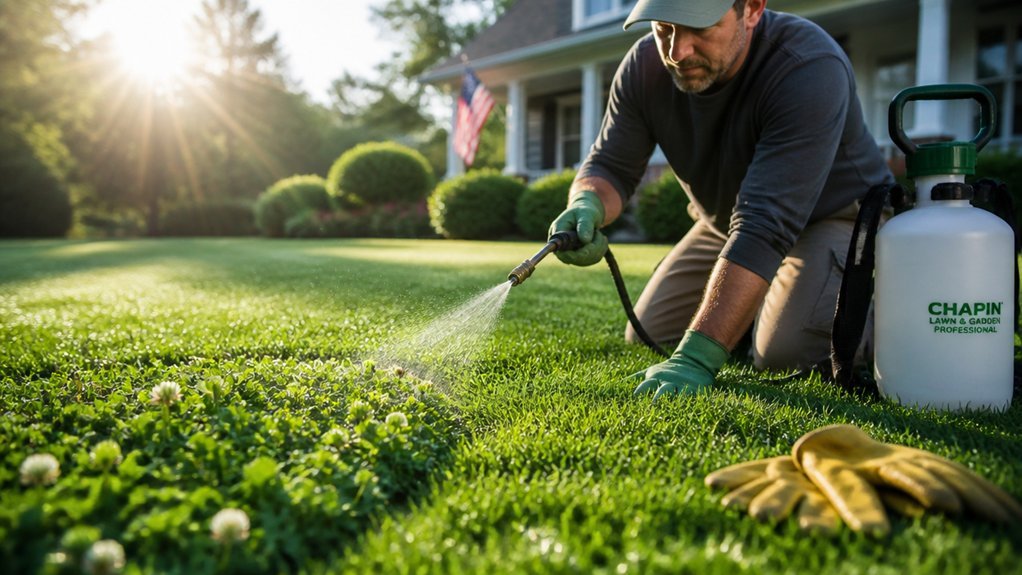

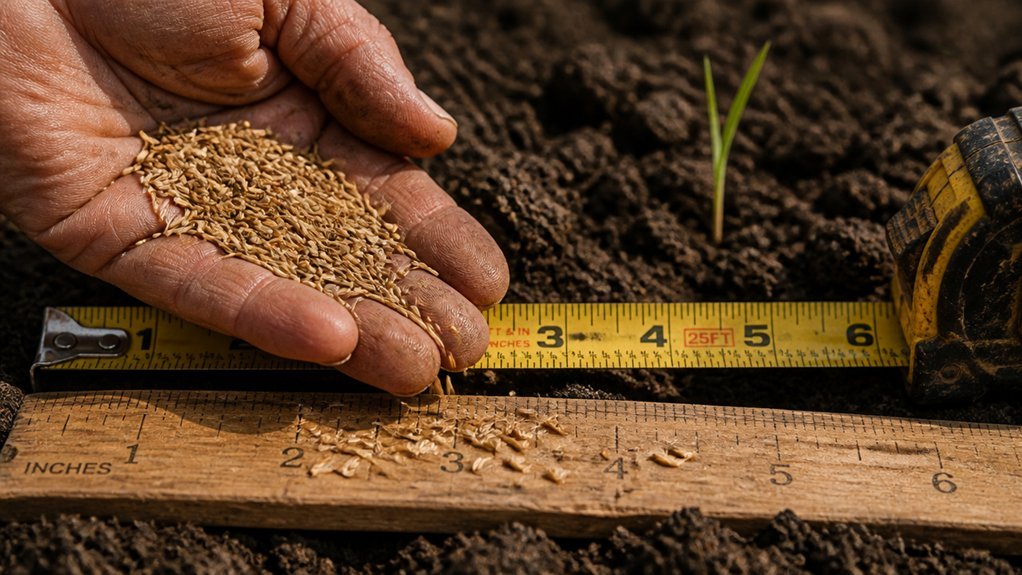
You need precise seed rates to avoid costly failures. For new lawns, you’ll apply 0.004–0.008 lb per square foot; overseeding requires roughly half that amount. These aren’t arbitrary figures—they’re derived from agronomic research on germination density and competition. Yet your specific conditions—soil temperature, grass species, and seed quality—will shift these targets considerably. The consequences of guessing are patchy establishment or wasted product.
Calculate Grass Seed Per Square Foot
How do you determine exactly how much grass seed you’ll need for your lawn? You’ll calculate your seeding rate based on total area and establishment goals.
For new lawns, you’ll apply 4–8 pounds per 1,000 square feet, or 0.004–0.008 lb per square foot. For overseeding, you’ll halve that rate to roughly 0.002–0.004 lb per square foot.
You’ll factor germination timelines into your lawn care schedule: ryegrass emerges in 5–10 days, tall fescue in 7–12 days, and bluegrass in 14–21 days.
You’ll maintain consistent soil moisture for 2–3 weeks post-planting.
You’ll weigh method costs—hydroseeding at $0.07–$0.21 per square foot, slice seeding at $0.08–$0.18, or overseeding with aeration at $0.07–$0.23—against your precision requirements and budget constraints to optimize your seed rate application.
Recommended Products

APPLICATION: Apply this sun and shade grass seed in the spring or fall to grow a new lawn or overseed an existing lawn to thicken grass and help crowd out weeds
APPLICATION: Apply this sun and shade grass seed in the spring or fall to grow a new lawn or overseed an existing lawn to thicken grass and help crowd out weeds

QUICKLY GROWS TURF - This rapidly establishing grass seed mixture grows quick-turf for problem areas. It's designed to fill in troubled areas in lawns or grow an entirely new lawn quickly. It germinates in 7 -10 days
Pick Climate-Appropriate Grass for Your Region
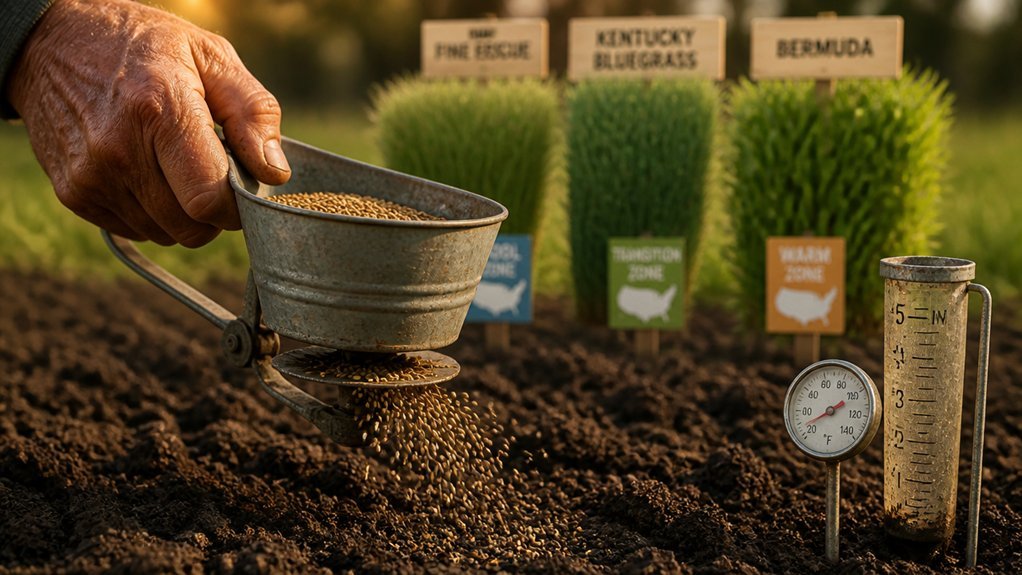
Why does your seeding rate matter if you’ve selected the wrong species? You’ve wasted seed, water, and labor.
Your climate dictates species selection, which directly determines appropriate seed rates and germination expectations. You’ll plant cool-season grasses—tall fescue, Kentucky bluegrass, perennial ryegrass—where temperatures range 60–75°F; these establish actively in spring and fall. You’ll sow warm-season grasses—bermudagrass, zoysiagrass, Bahiagrass—where sustained heat exceeds 80°F; these thrive summer-planted.
You’re applying 4–8 pounds per 1,000 sq ft for new lawns, halving that for overseeding, but species-specific germination timelines govern your watering: ryegrass emerges in 5–10 days, tall fescue in 7–12 days, bluegrass in 14–21 days. You’ve got to maintain consistent moisture for 2–3 weeks regardless. Match grass to climate first; only then do precise application rates deliver measurable results.
Recommended Products

This pack of lawn seeds is ideal for new lawns, overseeding and lawn repair

HEISMAN is an elite mix of 85% Kentucky Bluegrass and 15% Perennial Ryegrass. Heisman is ideal for any consumer looking to have the best-looking lawn and landscape. 15% Perennial Ryegrass provides quick germination while 85% Kentucky Bluegrass provides durable blades of grass that fills in, thickens your lawn, and over time, will crowd out the Perennial Ryegrass leaving the customer with a pure Kentucky Bluegrass lawn and landscape.

PREMIUM FINE TURF: This elite mix combines 20% Hard Fescue, 40% Chewings Fescue, and 40% Creeping Red Fescue, making it ideal for northern and southern lawns. Ideal for homeowners, landscapers, groundskeepers, turf managers, golf course crews, and property managers, it creates lush, fine-textured turf for full sun to dense shade conditions.
Measure Your Lawn’s Square Footage
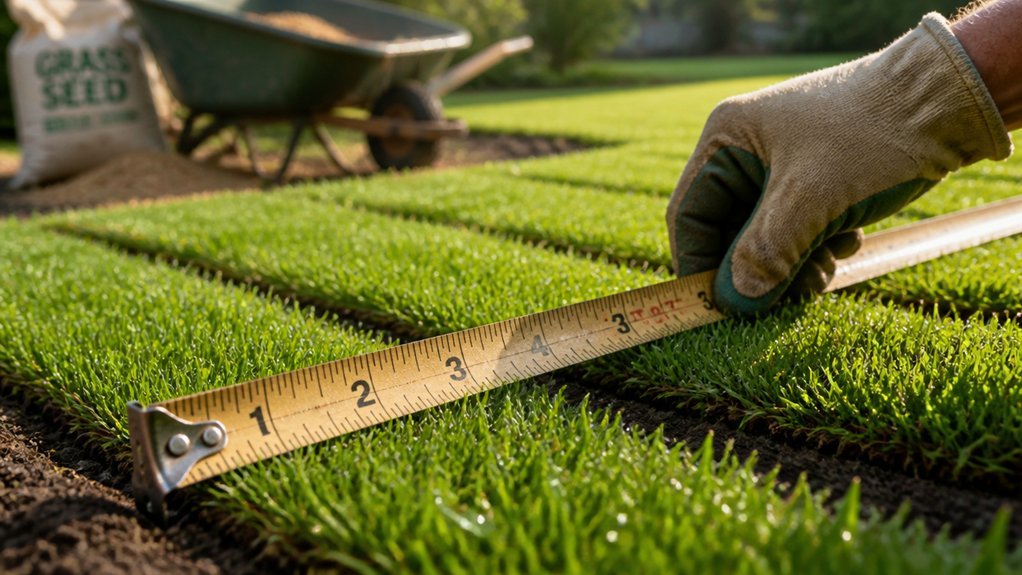
Once you’ve matched your grass species to your climate, you’ve got to quantify your actual lawn area before opening any seed bag. Measure your lawn area in square feet by calculating the length times width of each section, then subtract non-lawn spaces—driveways, sidewalks, and flowerbeds—to determine true turf square footage.
Always check seed coverage specifications on the product label, since blends vary dramatically; some cover 1,000 square feet per pound while others require one pound per 200 square feet. You’ll apply higher rates for new lawns versus reduced quantities for overseeding existing turf. Typical new lawn seeding ranges 4–8 lb per 1,000 square feet, with overseeding at roughly half. Invest in higher quality seed with fewer fillers—it germinates more efficiently, minimizing bare spots and preventing overcrowding.
Recommended Products

Early fall grass seeds for lawn grow well in partial shade to full sun and in a wide range of soils

ECOSEED ALTERNATIVE LAWN SEED: Organic cool-season fine fescue blend designed as a no mow alternative lawn with a soft, natural look. Grows low and dense with minimal mowing and no routine fertilization once established

GRASS TYPES: This grass seed mix contains Tall Fescue grass seed and Kentucky Bluegrass seed
Seed New Lawns vs. Overseed: Rate Doubles
What distinguishes establishing a new lawn from rejuvenating an existing one? Your seed rate changes substantially between overseeding vs new lawn scenarios. For bare soil establishment, you’ll apply a seeding rate per 1000 sq ft of 4–8 pounds depending on species. When overseeding, you’ll cut that rate roughly in half because existing grass provides infrastructure; dense application creates excessive competition and wastes seed.
You’ll optimize coverage guidelines by applying the bag’s heaviest recommendation for new lawns and reducing appropriately for established turf. This distinction supports bare spots prevention—you’re filling voids without smothering living grass. Germination rates vary by species: ryegrass emerges in 5–10 days, tall fescue in 7–12 days, bluegrass in 14–21 days. You’ll always verify specifics against your purchased seed’s labeled rates rather than estimating independently.
Recommended Products
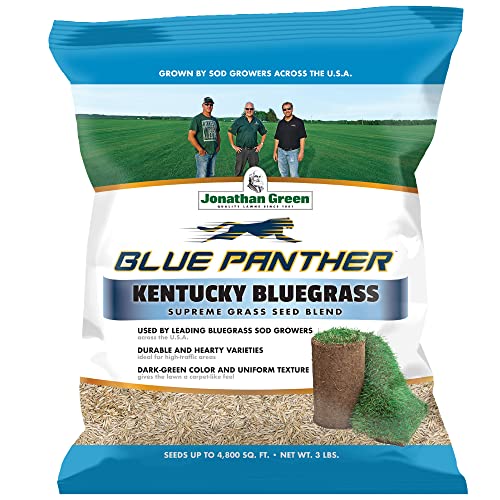
100% KENTUCKY BLUEGRASS GRASS SEED - Use our Blue Panther Kentucky Bluegrass Grass Seed when you want to keep a 100% KBG lawn or introduce KBG into an existing lawn. These bluegrasses are grown by leading sod growers across the USA.
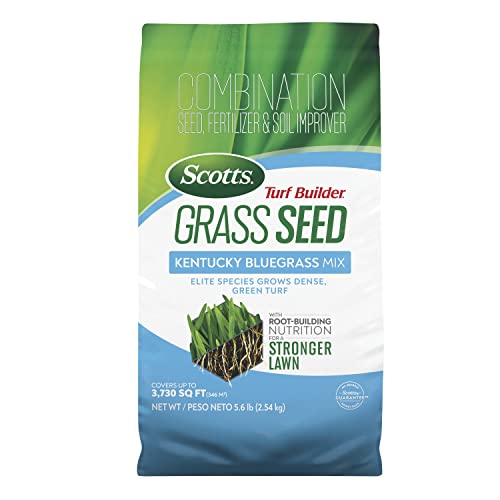
STRONGER LAWN FROM THE ROOTS UP: Kentucky Bluegrass seed with our Root-Building Nutrition, a combination of expertly crafted ingredients, helps establish deep roots to grow a thick, green lawn
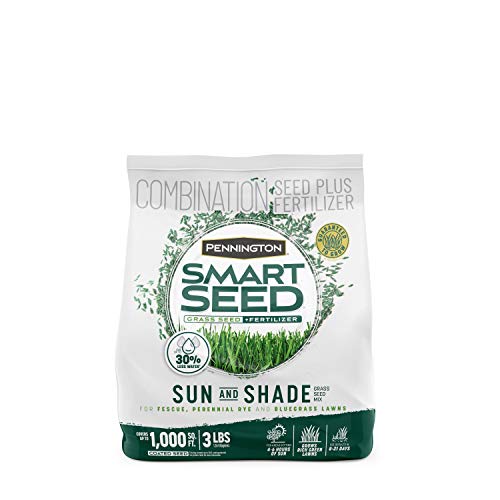
This grass seed and fertilizer all in one pack is for areas getting 4 to 6 hours of sunlight
Check Bag Coverage Rates Per Square Foot
Your seeding rate depends heavily on what the manufacturer specifies, so you’ll need to examine the bag before any application. Bag coverage varies significantly by species and brand, with seed coverage ranging from approximately 200 square foot per pound to 1,000 square foot per pound depending on the specific mix. For a new lawn, you’ll apply the heaviest recommended rate—typically 4–8 lb per 1,000 square foot—while overseeding rates require roughly half that quantity. Always assess seed quality carefully; higher-grade products contain fewer fillers and therefore deliver greater coverage per pound. Never estimate bag coverage independently. You’ll avoid costly application errors by verifying the stated square foot coverage printed on each bag rather than relying on generic assumptions or prior experience with different products.
Recommended Products

SUN AND SHADE GRASS SEED: This combination lawn seed, grass fertilizer, and soil improver thrives in a variety of conditions
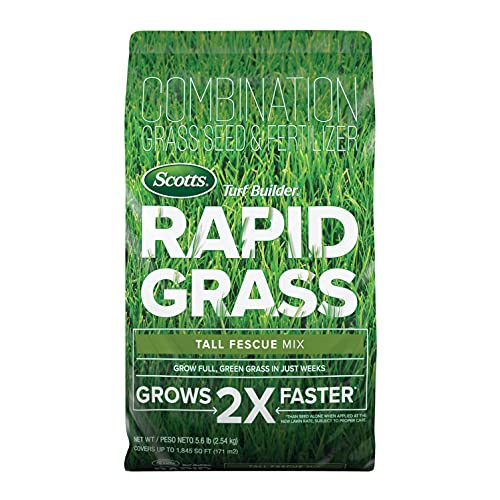
FAST GROWING GRASS SEED MIX: Scotts Turf Builder Rapid Grass Tall Fescue grass seeds for lawns grows grass 2X faster than seed alone (when applied at the new lawn rate, subject to proper care)
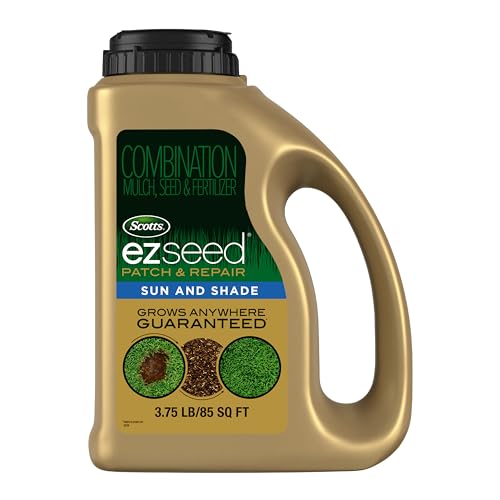
WHEN TO APPLY : This lawn seed mix of Kentucky bluegrass seed, perennial ryegrass, and fine fescue grass seed germinates best when daytime temperatures are between 60°F and 80°F with no danger of frost
Fix Over- and Under-Seeding Mistakes
How do you recover when you’ve applied too much or too little seed? You address over-seeding by reducing your seed rate in subsequent applications, as excessive density triggers competition that weakens germination. For under-seeding, you’ll need to reapply at the correct overseeding rate—typically half the new-lawn standard of 4–8 pounds per 1,000 sq ft—to ensure adequate coverage without waste.
You correct both errors through aeration, which mechanically creates channels for improved seed-to-soil contact. When overseeding with aeration, target the lower end of the $0.07–$0.23 per sq ft range to optimize soil penetration. You maintain consistent moisture for 2–3 weeks post-application, adjusting irrigation frequency based on species-specific germination windows: Ryegrass (5–10 days), Tall Fescue (7–12 days), or Bluegrass (14–21 days).
Recommended Products

Sun and shade grass seed for use in full sun to medium-shaded areas

3 IN 1 PRODUCT: This lawn care product contains a combination of grass seed, lawn fertilizer for grass, and soil improver to help establish deep roots for a thick, green lawn to be proud of
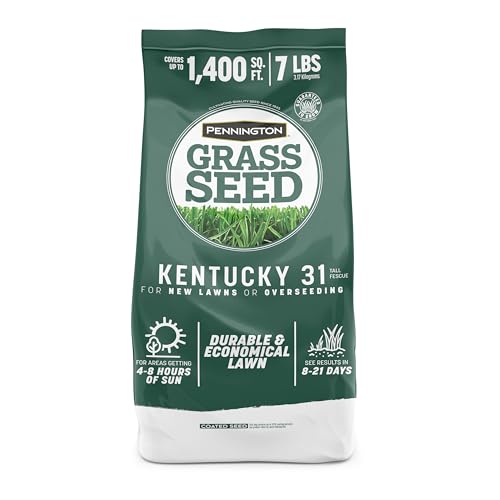
A grass seed for lawns that grows thick blades of grass that stand up to hot summers and heavy rains
Higher Quality Seed = Less Per Square Foot
You shouldn’t settle for excessive application rates when premium seed delivers superior results with less material? You’ll achieve density turf with reduced seed quantity when you select premium blends exhibiting elevated germination rates and minimal filler content. Higher seed quality means more viable seeds per pound, directly lowering your coverage rate requirements.
You’re optimizing resource allocation by choosing fresh, high-grade seed that minimizes weed contamination and maximizes genetic vigor. Research demonstrates that premium blends with superior disease resistance and regional adaptation achieve target coverage with decreased pounds per 1,000 square feet. You must calibrate application equipment precisely—avoid over-application even with superior material. Your calculation of seed quantity should integrate actual germination rates rather than nominal specifications. Technical selection of appropriate premium blends ensures efficient establishment without compensatory over-seeding.
Recommended Products

Persistence under high heat and drought conditions

PREMIUM GRASS SEED BLEND: Expertly formulated with perennial ryegrass, fine fescue, and Kentucky bluegrass for a fast-growing, dense, sun and shade lawn. Great for climates in central and northern regions. Lush Green Grass in Weeks!
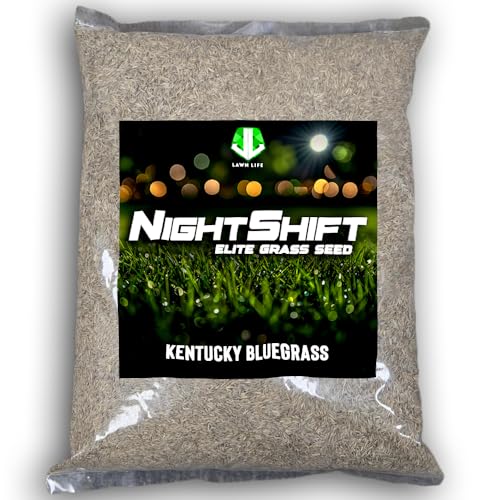
Unmatched Dark Green Hue: Our Kentucky Bluegrass Dark Blend features specially selected cultivars that help create the darkest, most luxurious lawn, setting your outdoor space apart with its mesmerizing richness and depth.
Spread Seed Evenly Across the Lawn
Where should you begin distributing seed to guarantee uniform coverage across your entire lawn? You’ll start by calculating your exact lawn size and selecting the appropriate seed rate: 4–8 pounds per 1,000 square feet for new lawns, or roughly half that for overseeding. You’ll verify the bag’s stated coverage rate, always following the heaviest recommended rate for new establishment rather than lower overseeding guidelines.
You’ll load a calibrated spreader and walk in parallel passes, overlapping edges slightly to spread evenly and eliminate striping. You’ll avoid over-application, which increases weed pressure, or under-application, which creates bare patches. You’ll double-check bag-specific coverage data—often 1 lb per 200–1,000 sq ft—and adjust quantities to your precise lawn size. Consistent technique ensures optimal germination across all cool-season species.
Recommended Products


Fast Growing: Grow grass 2X faster than seed alone with Scotts Turf Builder Rapid Grass Southern Gold Blend for Tall Fescue Lawns (when applied at the new lawn rate, subject to proper care)

Be Bee Friendly: Designed to provide high-quality food for our at-risk pollinators while maintaining the typical recreation associated with the turfgrass lawn
Water New Seed: Moisture, Not Flooding
When should you start watering after sowing your lawn? Begin immediately. Seed germination requires consistent moisture in the seedbed for 2–3 weeks post-planting. Apply light, frequent watering—typically 2–3 times daily—to prevent drying without causing runoff. Your watering schedule must account for species-specific germination windows: ryegrass emerges in 5–10 days, tall fescue in 7–12 days, and bluegrass in 14–21 days. Adjust your watering guidance based on these timelines, reducing frequency as seedlings establish. Remember that overseeding rate (typically half new-lawn rates of 4–8 pounds per 1,000 square feet) affects water needs; lighter densities dry faster. After establishment, transition to deeper, less frequent irrigation to promote drought-tolerant root systems. Maintain precise moisture balance—neither saturated nor desiccated—to optimize outcomes.
Recommended Products

STRONGER LAWN FROM THE ROOTS UP: Kentucky Bluegrass seed with our Root-Building Nutrition, a combination of expertly crafted ingredients, helps establish deep roots to grow a thick, green lawn

Elite Kentucky Bluegrass mix. Used on some of the nation's top sports fields

OPTIGROWTH-ENHANCED PERENNIAL GRASS SEED: Midnight Kentucky bluegrass is highly rated in NTEP evaluations for its dark blue-green color, soft texture, and heat and cold tolerance. Ideal for homeowners, landscapers, groundskeepers, turf managers, golf course crews, and athletic field managers, this OptiGrowth-coated seed supports uniform distribution and easier spreading for lawns, parks, golf courses, and athletic fields.
Patch Bare Spots: Recalculate Square Footage
How do you avoid wasting seed on areas that don’t need it? When patching bare areas, recalculate your square footage by excluding healthy turf, driveways, and structures.
New lawns typically demand 4–8 lb seeding rate per 1000 sq ft, but overseeding uses roughly half that quantity—apply 2–4 lb instead.
For isolated bare spots, measure each patch individually; don’t estimate.
If your bag specifies 1 lb covers 200–1,000 sq ft depending on species, apply that guidance precisely.
You’ll prevent over-application, reduce costs, and accelerate germination.
Remember: ryegrass emerges in 5–10 days, tall fescue in 7–12 days, bluegrass in 14–21 days.
Recalculating square footage ensures accurate seed rate calculations, efficient overseeding, and successful restoration without waste.
Recommended Products
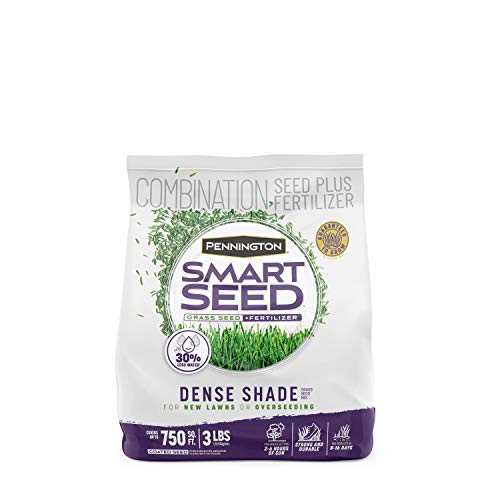
Save up more water year after year with Pennington Smart Seed mix versus ordinary Kentucky blue grass seeds for lawn
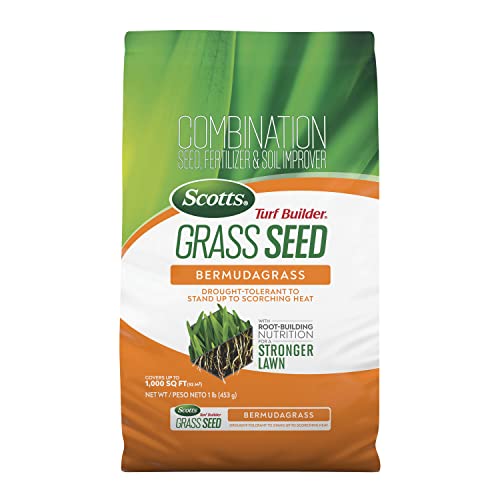
The redesigned Scotts Turf Builder Grass Seed Bermudagrass is drought-tolerant to stand up to scorching heat and features Root-Building Nutrition for a stronger lawn
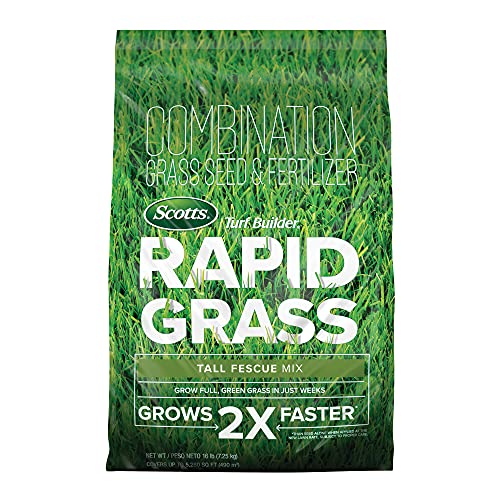
FAST GROWING GRASS SEED MIX: Scotts Turf Builder Rapid Grass Tall Fescue grass seeds for lawns grows grass 2X faster than seed alone (when applied at the new lawn rate, subject to proper care)
Conclusion
You’ll calculate precise seed quantities using region-specific rates: 0.004–0.008 lb/sq ft for new lawns, halving that for overseeding. Calibrate your spreader against bag coverage claims, which range 200–1,000 sq ft per pound depending on cultivar quality. Measure accurately, adjust for bare patches, and verify moisture without saturation. Evidence-based application prevents waste and ensures establishment.