
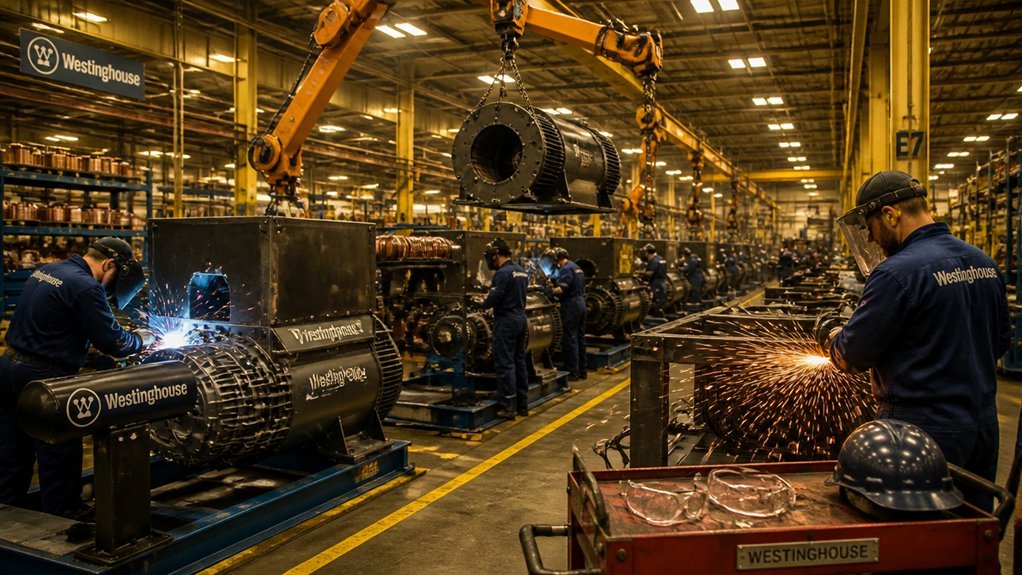
You probably assume Westinghouse generators carry traditional American manufacturing pedigree, but the reality is more layered. The engineering originates in U.S. design centers, yet licensed overseas production—primarily Vietnam and China—handles actual assembly. You’ll encounter American Warranty Services managing claims, not Westinghouse directly, while parts sourcing varies by production run. This licensing model shapes everything from component consistency to service responsiveness. Understanding who actually controls quality matters more than brand heritage when you’re evaluating long-term reliability.
Who Really Makes Westinghouse Generators: The Licensing Truth
Where exactly does Westinghouse manufacturing originate? You must understand that Westinghouse licensing operates as a brand management framework rather than direct production control. The manufacturing origin traces to third-party partnerships, with engineering specifications developed domestically while fabrication occurs at overseas facilities. You’re examining a model where intellectual property and quality standards remain US-centric, but physical production shifts to contract manufacturers in Vietnam and China.
Your analysis reveals how this structure impacts supply chain predictability. The warranty network, administered through American Warranty Services, attempts to bridge the gap between offshore production and domestic consumer expectations. You encounter a technical reality: brand heritage and actual fabrication separate under licensing agreements. For procurement decisions, you’re evaluating specification compliance against geographic manufacturing dispersion, recognizing that engineering oversight and build location represent distinct operational vectors in portable power generation.
Recommended Products

QUIET, SMART, POWERFUL: The iGen2550c is a gas powered inverter generator: 2,550W peak, 1,900W running; Runs up to 11 hours at 25% load; Compact build and the benefits of an inverter like low noise and low THD; LED data center shows fuel level, power output, remaining run time and voltage output

224cc dual-fuel engine runs on both gasoline (6800 surge watts, 5100 rated watts) and propane (6000 surge watts, 4500 rated watts)
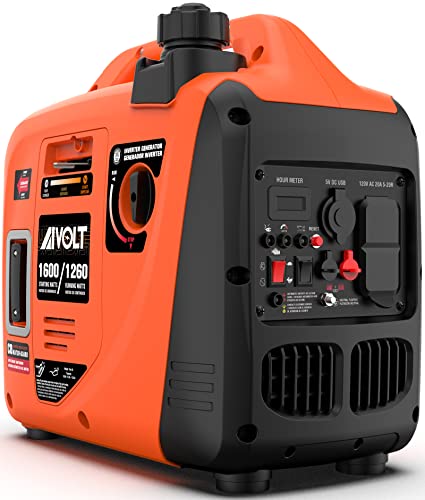
🔌 Safe for Sensitive Electronics | <3% THD Clean Power Inverter Generator - This portable inverter generator with advanced inverter tech delivers stable, clean power (THD <3%), safe for your phones, laptops, or small tools. It’s the perfect for home office backups during blackouts or generator for camping - keep your devices charged without worry
Where Westinghouse Portable Generators Are Built: US Design, Overseas Assembly
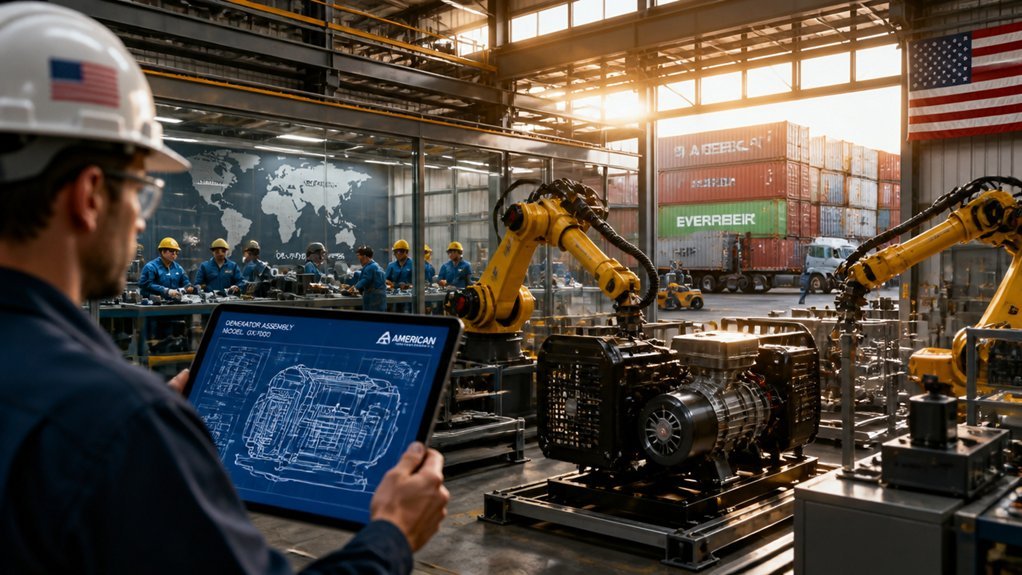
How does Westinghouse reconcile domestic engineering reputation with globalized production realities? You observe that Westinghouse portable generators originate from US design centers while relying on overseas assembly. You recognize that engineering specifications emerge domestically, yet manufacturing execution shifts to Vietnam and China facilities depending on model lines.
You analyze the iGen series—iGen12000TFc, iGen8200TFc, iGen12000DFc, iGen5000DFc—and note how inverter technology and multi-fuel configurations reflect this bifurcated workflow. You see identical patterns in WGen11500TFc variants. Design integrity remains stateside; assembly occurs elsewhere to spec.
You weigh consumer discourse carefully. Users scrutinize whether US-designed Westinghouse units match overseas-assembled counterparts in reliability and parts logistics. You’re tracking how geographic separation between conception and fabrication shapes perceived quality differentials. You conclude this operational model demands rigorous quality bridging across distributed production nodes.
Recommended Products

Dual-fuel design runs on both gasoline (2800 surge watts, 2250 rated watts) and propane (2800 surge watts, 2000 rated watts)

Operate your 4000-watt portable generator right out of the box on either gasoline or propane, plus features CO Shield carbon monoxide auto shutoff system

5000 Peak Watts and 3900 Rated Watts at Less Than 3% THD – Telescoping Handle – Gas or Propane Powered – Remote Start With Included Key Fob, Electric and Recoil Start
iGen vs. WGen: Which Westinghouse Portable Generator Line Fits You
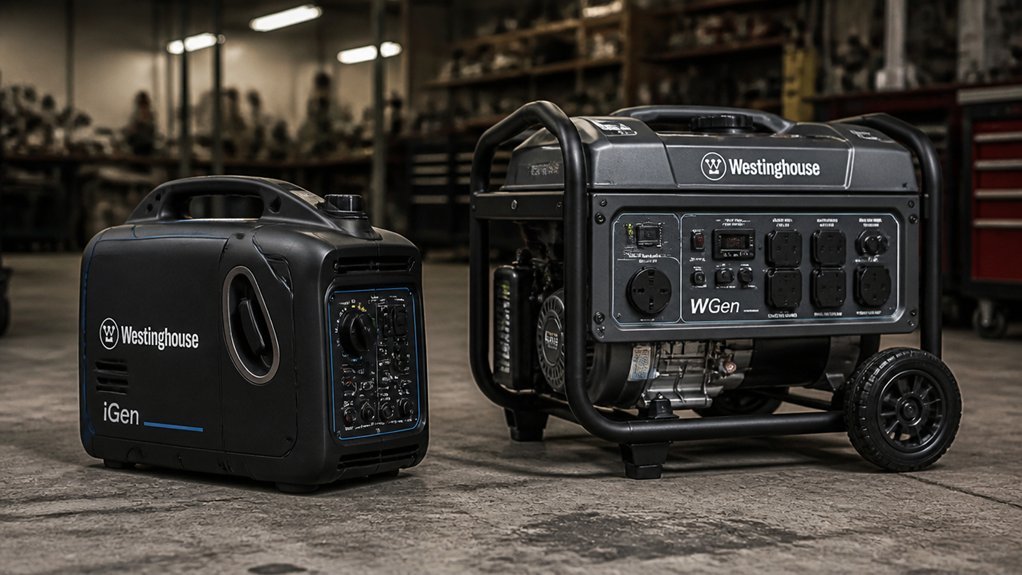
Westinghouse’s bifurcated production model—domestic engineering paired with overseas assembly—directly shapes what you’re evaluating when choosing between the iGen and WGen lines.
You’ll prioritize iGen when application demands inverter-grade output stability, RV compatibility, and reduced acoustic footprint. The iGen12000TFc delivers 9,000W rated/12,000W peak at 64 dBA, while the iGen5000DFc offers 3,900W/5,000W dual-fuel capacity at 111 lbs—optimized for mobile, noise-sensitive deployments requiring extended runtime.
You’ll select WGen when raw wattage, fuel flexibility, and robust starting options outweigh decibel constraints. The WGen11500TFc provides 11,500W rated/14,500W peak at 74 dBA with tri-fuel capability and redundant starting methods. Both Westinghouse lines incorporate tri-fuel variants and electric/recoil/remote starting, but you’re trading iGen’s portability and harmonic precision for WGen’s brute-force output and construction-site durability.
Recommended Products

【Seamless Power Switching for Uninterrupted Supply】Automatically switches to backup power when the main source fails, and back again once it's restored—no manual action needed, ensuring continuous power flow. Widely used in shore power, solar inverters, and generators.

Dual fuel design runs on both gasoline (8000 surge watts, 6500 rated watts) and propane (7200 surge watts, 5850 rated watts)
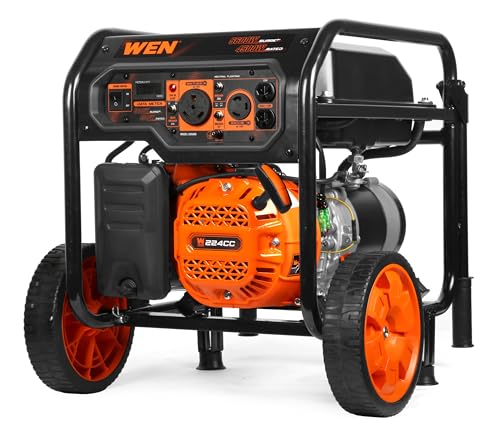
Keep your family safe with 5600 starting watts and 4500 running watts of power
Dual-Fuel, Tri-Fuel, and Inverter Tech: Your Options Explained
Why limit yourself to gasoline when your power demands span multiple fuel ecosystems? Westinghouse delivers inverter generators engineered for fuel flexibility, including dual-fuel (gasoline/propane) and tri-fuel (gasoline/propane/natural gas) configurations. You’ll find clean sine-wave output in models like the iGen12000TFc (tri-fuel: 9,000W rated/12,000W peak) and iGen5000DFc (dual-fuel), ensuring safe operation of sensitive electronics. The iGen8200TFc provides 6,600W rated/8,200W peak at 134.5 pounds with tri-fuel runtime reaching 17 hours at 25% load, while the iGen12000TFc extends to 19 hours. You’re selecting between recoil, electric, or remote starting systems across noise profiles from 52–74 dBA, with RV-ready connectivity on applicable units.
Recommended Products

9500 Running Watts and 12500 Peak Watts (Gasoline); 8500 Running Watts, 11200 Peak Watts (Propane); Remote Start with Included Key Fob, Electric and Recoil Start; Up to 12 Hours of Run Time on a 6. 6 Gallon Fuel Tank with Fuel Gauge
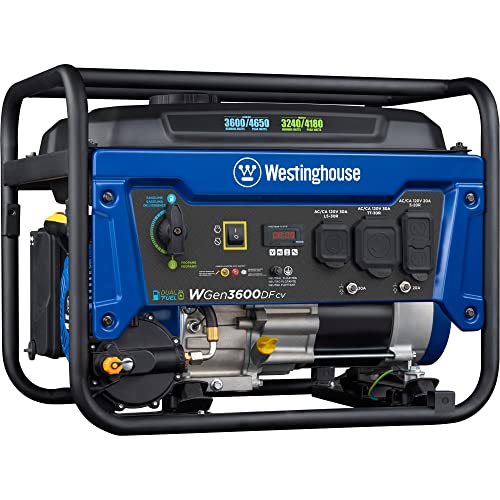
4650 Peak Watts & 3600 Rated Watts (Gasoline); 4650 Peak Watts & 3240 Rated Watts (Propane); 4 Gallon Fuel Tank (with Fuel Gauge); Up To 14 Hours of Run Time Per Tank

1,200 Peak Watts/ 900 Running Watts of power
Which Fuel Type Should You Choose: Gas, Propane, or Both?
Selecting the right fuel configuration for your power application requires weighing energy density, availability, and operational priorities. You’ll find that gasoline delivers 36% higher energy density per gallon than propane, yielding maximum wattage output from your iGen12000DFc or iGen5000DFc. However, you sacrifice runtime efficiency and shelf stability—gasoline degrades within 12 months without stabilizers.
You gain operational flexibility with dual-fuel capability, switching between gasoline for peak load demands and propane for extended storage or cleaner-burning operation. Propane eliminates carburetor fouling and provides indefinite shelf life, though you’ll accept 10–15% output derating. Your tri-fuel options like the iGen12000TFc add natural gas compatibility for stationary backup scenarios. You should prioritize dual-fuel models when fuel procurement uncertainty or storage constraints dominate your requirements.
Recommended Products

【Extened Runtime】: This protable generator comes with 1.06-gallon fuel tank, allows for up to 17 hours of operation at 25% load, or 8.6 hours at 50% load, with parallel function and ECO mode, providing long-lasting power. perfect for RVs, camping, home backup emergency.

[Strong Power] This inverter generator has a starting power of 2550W that can your daily needs of various electrical appliances and equipment in camping, outdoor activities, commercial use, or home backup power.

Easy to use, compact, plug-and-play parallel system featuring illuminated plugs and switches
How Westinghouse Generator Quality Compares to Honda and Champion
How do you weigh engineering heritage against manufacturing reality when evaluating generator quality? In the Westinghouse vs Honda quality comparison, you examine divergence between R&D pedigree and production execution. Honda maintains vertically integrated manufacturing with proprietary engines, delivering superior harmonic distortion control and longevity benchmarks. Westinghouse leverages US-engineering design with Vietnam/China assembly, achieving competitive inverter topology at lower price points. You analyze specs: the iGen12000TFc delivers 9,000 rated watts with tri-fuel flexibility, while Honda’s EU7000iS caps at 5,500 watts but offers superior <3% THD. Champion occupies the cost-optimized segment, matching Westinghouse on fuel versatility but lagging in noise attenuation—Westinghouse's 52 dBA iGen5000DFc outperforms Champion's comparable models. You assess that Westinghouse bridges premium engineering and accessible manufacturing, sacrificing marginal durability metrics for feature density and cost efficiency.
Recommended Products

Dual‑Fuel Operation: It delivers 3,800 starting watts and 3,300 running watts with gasoline, and 3,500 starting watts and 3,100 running watts with propane

𝐃𝐮𝐚𝐥 𝐅𝐮𝐞𝐥 𝐏𝐨𝐰𝐞𝐫 — 𝐆𝐚𝐬𝐨𝐥𝐢𝐧𝐞 & 𝐏𝐫𝐨𝐩𝐚𝐧𝐞 (𝐋𝐏𝐆) Delivers 4400W surge / 3600W rated watts (Gas) and 4000W surge / 3300W rated watts (LPG). Use gasoline for maximum output, or propane for cleaner combustion and longer engine life. For best performance, keep continuous load below 2800W (80% of rated power) and always connect the highest-wattage appliances first. The built-in overload protection will safely shut down the generator if total load exceeds limits, protecting your devices.

Lightweight Yet Mighty Power - Weighs only 64 lbs with built-in wheels and telescoping handle, gliding this surge 4300 watts generator smoothly over rough terrain so you can focus on adventure instead of heavy lifting.
Warranty, Parts Availability, and Dealer Support: What to Expect
Where exactly does your recourse lie when a Westinghouse generator fails mid-season? You navigate warranty claims through American Warranty Services (AWS), which contracts a North American service network for repairs. You access dealer support through this contracted infrastructure, though service quality varies regionally.
You encounter mixed reports on parts availability: some users obtain components readily through direct manual support lines, while others face restricted access when purchasing outside authorized dealer channels.
You confront legitimate concerns about long-term parts availability, particularly given offshore manufacturing footprints and shifting market dynamics. You can’t assume the Westinghouse branding guarantees sustained supply chain continuity.
You assess whether third-party service networks meet your operational requirements compared to vertically integrated competitors. You weigh these support ecosystem limitations against acquisition cost when assessing total lifecycle ownership economics.
Recommended Products

【FUNCTION】: After starting the onboard generator or backup power source, power is automatically switched to AC appliances. Seamlessly integrates inverters, shore power, and generators for reliable power management

Seamlessly integrates with inverters, shore power, and generators for reliable electricity management.

This is the original, authentic, and patented EZ Generator Switch
Westinghouse vs. Generac: Which Portable Generator Brand Wins
When you’re comparing portable generators for demanding applications, you’re weighing Westinghouse’s value-oriented inverter and tri-fuel platforms against Generac’s vertically integrated service infrastructure and domestic manufacturing footprint.
You evaluate Westinghouse’s iGen series—delivering 52–64 dBA operation and tri-fuel flexibility up to 12,000 W rated output—against Generac’s equivalent portable lines. You recognize Westinghouse’s AWS-administered warranty networks provide coverage, though you encounter variability in parts availability and dealer density. You contrast this with Generac’s broader U.S. manufacturing footprint and established aftermarket support channels, which you’re likely to find more responsive for long-term service needs.
You assess whether Westinghouse’s price-accessible feature set—dual/tri-fuel options, remote start, RV-ready inverters—offsets your concerns about overseas assembly and warranty execution complexity. You determine your priority: Westinghouse’s technical specifications at entry-level cost points, or Generac’s domestic supply chain reliability and integrated service ecosystem.
Recommended Products

Provides 4,000 peak watts and 3,200 rated watts of power

Powerful & Clean Energy Output:4500W peak watts / 3500W running watts, delivering dependable power for RVs, camping, home backup, and outdoor work. Advanced inverter technology provides clean and stable electricity, making it safe for sensitive electronics like laptops, CPAP machines, and mobile devices.
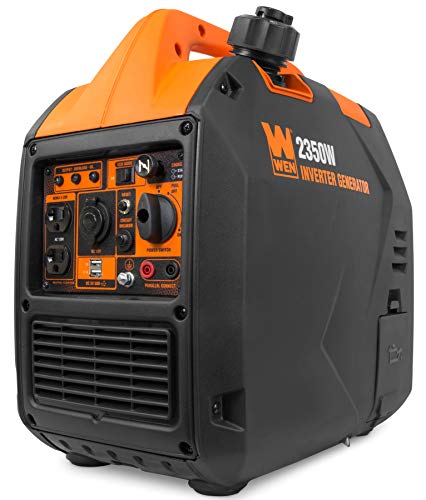
Ultralight body weighs in at a mere 39 pounds for easy transport and storage
Price vs. Performance: Are Westinghouse Generators Worth It?
Your comparison of Westinghouse and Generac narrows to a straightforward calculation: whether Westinghouse’s price-to-performance ratio withstands scrutiny when you’re sizing up actual ownership costs against delivered capability.
You evaluate inverter-based architectures like the iGen12000TFc, which delivers 12,000 peak watts at 64 dBA across 19 hours runtime, or the iGen8200TFc at 60 dBA with 134.5-pound portability. These tri-fuel configurations—gasoline, propane, natural gas—expand operational flexibility without proprietary infrastructure. The WGen11500TFc trades acoustic refinement for raw output: 14,500 peak watts, electric start, and remote activation. Weight penalties (230 lbs) accompany this tier.
You measure price-performance against runtime density, fuel versatility, and noise attenuation. Westinghouse’s dual-fuel and tri-fuel portfolio targets RV integration and backup redundancy. You determine value by correlating wattage-per-dollar with operational longevity under variable load profiles.
Recommended Products

[2450W Strong Power] Experience reliable starting 2450 watt age to run your essentials, from sump pumps to power tools and RV air conditioners. Our advanced inverter technology produces clean and stable sine wave power, ensuring it's perfectly safe.

【Universal Fit】: The storage cover size is 20L *11.5W*16H inches, exclusively designed to protect your Honda Power Equipment EU2000i, EU2200i, EU2200ic, EU2000i Camo, EU2000i Companion and Westinghouse Inverter Generators - Including the WH2000iXLT, WH2200iXLT, WH2400i, iGen2200, iGen2500, and iPro2500. Ryobi RYI2300, Powermate 2000, Pulsar G2319N, Predator 2000

98cc engine generates up to 2800 surge watts and 2250 rated watts
Should You Buy a Westinghouse Generator in 2024?
How do you weigh brand heritage against engineering pragmatism when a 12,000-watt tri-fuel inverter sits hundreds below comparable Generac or Honda units? You analyze the iGen12000TFc’s 9,000W rated output, 52–74 dBA range, and 17-hour runtime at 25% load against your specific load requirements. You recognize that Westinghouse generators deliver RV-ready outlets, tri-fuel flexibility, and portable frames at 111–230 lbs.
But you confront brand legitimacy directly. You understand these units aren’t manufactured by the historic Pittsburgh conglomerate; instead, licensed production overseas introduces variables in parts availability and service continuity. You calculate whether inverter generators at this price segment offset that risk through pure specification density. You’re buying engineering compromise, not institutional legacy. For budget-conscious operators prioritizing fuel versatility over resale confidence, you’ll likely conclude: proceed with documented maintenance schedules.
Recommended Products

Dual-fuel design runs on both gasoline (3600 surge watts, 2900 rated watts) and propane (3500 surge watts, 2600 rated watts)

QUIET, SMART, VERSATILE: The iGen2800DFc is a dual fuel inverter generator- Gasoline: 2,800W peak/2,200W running, Propane: 2,520W peak/1,980W running; Up to 12 hours of run time at 25% load; All the benefits of an inverter like quieter operation and low THD: Only 45 pounds so it’s easy to move
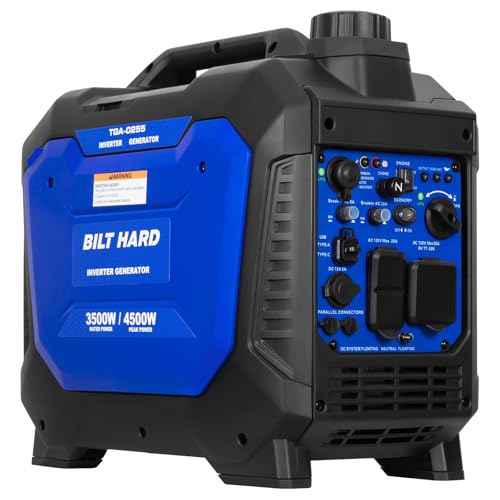
Dual-Fuel Operation (Gasoline & Propane): Features a 141cc OHV air-cooled engine operating on gasoline (4500 peak watts / 3500 rated watts) or propane (4150 peak watts / 3200 rated watts). Includes propane (LPG) hose with regulator.
Conclusion
You’ve analyzed Westinghouse’s licensing model, overseas manufacturing footprint, and competitive positioning against Generac. You now understand that U.S.-engineered specs don’t equate to domestic assembly, and that your purchase decision hinges on warranty network adequacy versus upfront cost savings. Evaluate your runtime requirements, fuel flexibility needs, and dealer proximity. If you prioritize inverter efficiency and multi-fuel capability at lower price points, Westinghouse warrants consideration—but verify parts availability in your region first.