
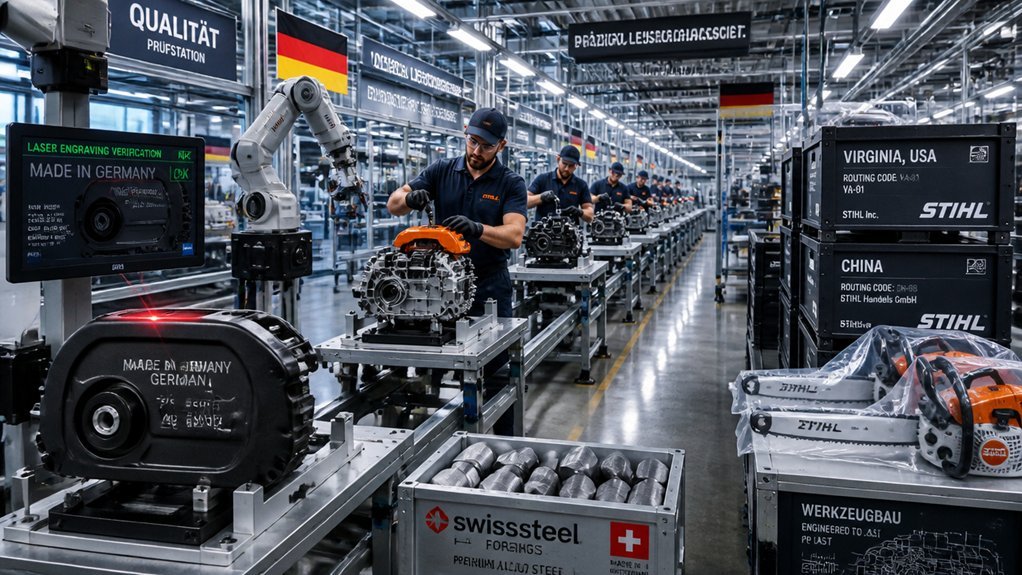
You might assume a STIHL chainsaw in your garage was built in Germany, but the reality spans seven countries and a deliberately decentralized strategy. Over half of global production happens at in-house facilities engineered to cut shipping distances, not costs. Your specific saw could have been assembled in Virginia Beach, had its bar forged in Waiblingen, or its metallurgy refined in Weinsheim. The deeper question is whether origin affects durability—and the data suggests it matters less than you think.
Where Are STIHL Chainsaws Made? The Complete Answer
Where exactly does your STIHL chainsaw come from? You’re looking at a product built through STIHL’s global manufacturing network spanning eight countries with strategic in-house production of critical components. You’ll find saw chains manufactured in Wil, Switzerland, while magnesium crankcases come from Weinsheim, Germany, and guide bars from Waiblingen, Germany. Your chainsaw exemplifies regional production philosophy—near-market manufacturing reduces transport costs, CO2 emissions, and delivery times.
You’ll notice that over 50% of STIHL products, including chainsaws, are produced in-house, covering carburetors, cylinders, crankcases, and bars. Final assembly occurs at distributed global plants rather than centralized facilities. You’re also connected to North American operations through STIHL Inc. Virginia Beach, which markets chainsaws through authorized dealers and exports to 80+ countries, completing your chainsaw’s international production footprint.
Recommended Products
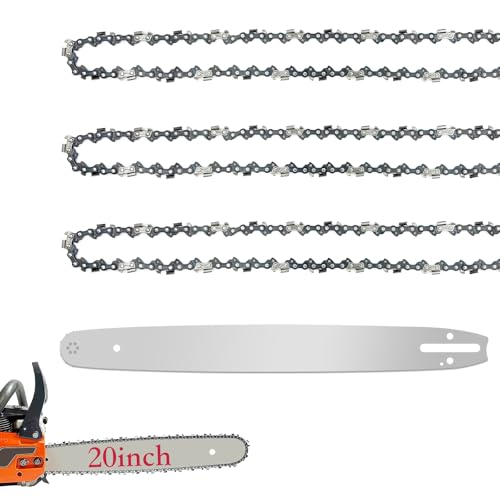
CHAINS PARAMETERS: 3 Chains and 1 Bar Combo, 20 Inch Chainsaw Bar and Chain Combo for Stihl, 3/8" Pitch, .050" Gauge, 72 Drive Links, Full Chisel, German steel.
Professional manufacturing, high accuracy and not easy to break, solid and make chainsaw more incisive.

10" bar length - .050" Gauge - 3/8" Low Pro Pitch - 7 Tooth Count
Germany: Where Every STIHL Chainsaw Is Engineered
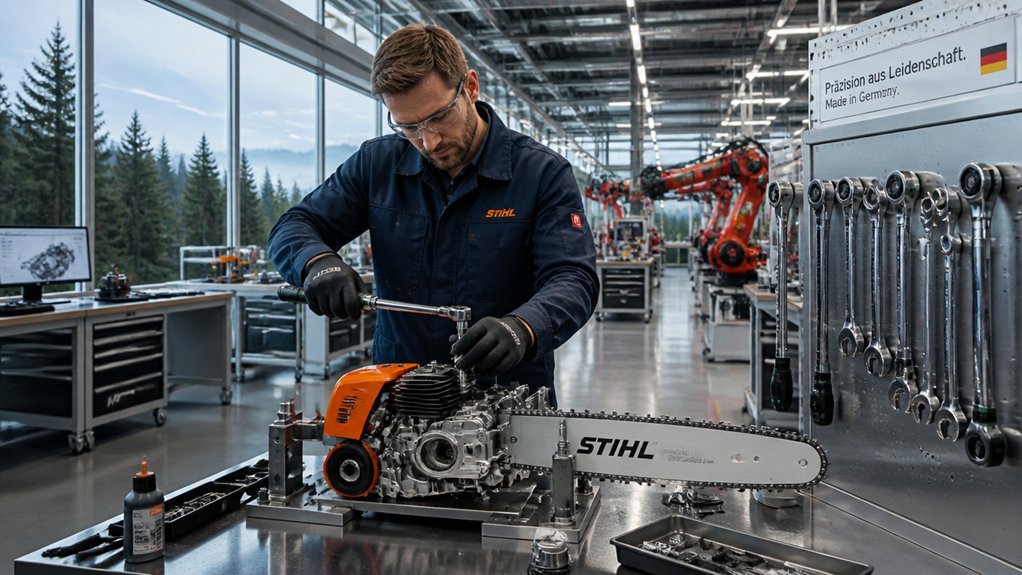
How exactly does a chainsaw emerge from German engineering? You find the answer in STIHL’s integrated approach, where Germany anchors every phase of creation. At Waiblingen, you witness bar design and guide bar production operating under one roof, ensuring precision you can measure.
You travel to Weinsheim, where pressure casting transforms raw material into magnesium crankcases with tolerances that define durability. These aren’t outsourced components—you’re looking at in-house production exceeding 50 percent of STIHL’s total output.
Germany functions as the nucleus of product development, coordinating engineering decisions that ripple across global markets. You recognize how this vertical integration eliminates compatibility gaps; components engineered together perform as unified systems.
When you examine a STIHL chainsaw, you’re holding German-engineered hardware where crankcase metallurgy and bar geometry originate from controlled, domestic facilities.
Recommended Products

[MODEL FIT] Designed to match MS170 and MS180 chainsaws with a precise fit for repair and replacement needs helping restore your saw with a dependable engine housing part.

This is a crankcase splitter tool for Stihl Husqvarna chainsaws and other small engines that used for splitting and separating both sides of the crankcase shell, and can be found on chainsaws and other small engines.

Replacement for HUSQVARNA 61 268 272 272XP Chainsaw
United States: Virginia Beach and Southeastern Assembly Plants

Why does a German-engineered chainsaw roll off an assembly line in Virginia Beach? You’ll find STIHL Inc operating its U.S. production hub there, serving as the central manufacturing and distribution point for the American market. The Virginia Beach facility anchors STIHL’s assembly plants in the southeastern United States, where you’re seeing in-house manufacturing capabilities that produce select product components and assemble finished units. You’ve got a green roof facility—the largest privately funded one in Virginia—housing administration operations since October 2019. Your dealer network spans across the United States, while the export network reaches more than 80 countries globally. You’re looking at a facility that integrates regional production into STIHL’s worldwide manufacturing architecture without duplicating specialized functions handled elsewhere in the corporate structure.
Recommended Products

WHY CHOOSE THESE CHAINS:5-Pack Value- Multiple replacements for long-term use.Smooth, fast cutting with minimal kickback for safety.

【SPECIFICATIONS】2 Pack 8 Inch, 3/8" LP Pitch, .043" Gauge, 33 Drive Links, semi-chisel.

Oregon premium AdvanceCut chain: Replacement for 8" (20cm) guide bars that require 34 drive links, pitch: 3/8" low profile, .043" gauge. For chainsaws and pole saw sizes up to 42cc
Brazil, Switzerland, China, and Austria: Specialized Production Roles
STIHL’s global manufacturing footprint extends well beyond its U.S. operations into specialized production centers across four additional countries, each assigned distinct technical functions within the supply chain.
You find that Brazil hosts a critical facility in Sao Leopoldo, where production sites engineer cylinders optimizing gas exchange and thermal management for Stihl chainsaws. Switzerland maintains its Wil location, leveraging decades of in-house expertise to manufacture saw chains with Swiss-precision tolerances. China’s Huizhou plant fulfills specialized roles producing oil pumps that meet exacting specifications for lubrication systems. While Austria’s contribution completes this continental distribution, these four nations integrate seamlessly—each addressing discrete mechanical demands. This geographic segmentation of specialized roles ensures component-specific excellence: South American thermal engineering, Alpine cutting components, East Asian fluid mechanics, and Central European manufacturing standards coalesce within STIHL’s transnational supply architecture.
Recommended Products

Strong Compatibility: Metal crankcase splitter tool is fit for 502 140B 51 61‑01, 502516101, with compatibility and performance.

Applicable for Stihl 026 036 038 044 046 064 065 066 MS260 MS360 MS361 MS380 MS381 MS440 MS441 MS460 MS461 MS640 MS650 MS660

Ships from Vermont
In-House Manufacturing: How STIHL Quality Stays Consistent Globally
What mechanisms enable a manufacturer to maintain identical performance standards across continents? You find the answer in Stihl’s commitment to in-house manufacturing, with over 50 percent of products produced internally across seven production sites. This vertical integration ensures quality consistency through precise component interplay.
You observe Stihl’s global production network spanning eight countries and four continents, designed for near-market production that reduces transport emissions while improving responsiveness. Key components—saw chains in Wil and Bronschhofen, cylinders in Sao Leopoldo, crankcases in Weinsheim—demonstrate this distributed yet controlled approach.
Integrated development centers on the German founding company as the product development nucleus, creating a three-way loop connecting development, production, and sales. You see this in models like the MS 500i, featuring crankcase sensors and a demand-driven oil pump—evidence of how centralized engineering with distributed manufacturing maintains uniform standards.
Recommended Products

Include: 3/8" .063" 25inch 84 Drive Links 3003-000-9831 Guide Bar + Full Chisel 3/8" .063" 25inch 84 Drive Links Saw Chain
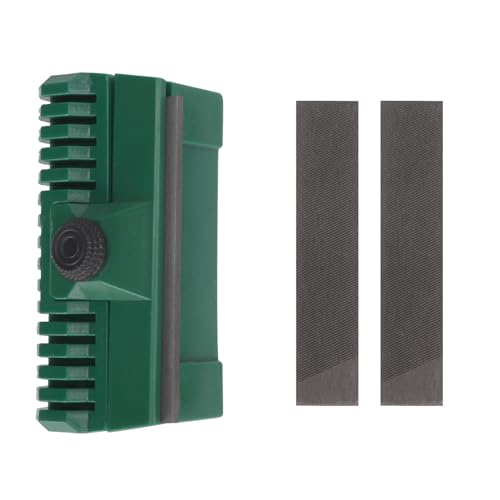
Deburring: Remove burrs from the bar track and level the bar track to reduce track breakage and prevent the bar from being scratched
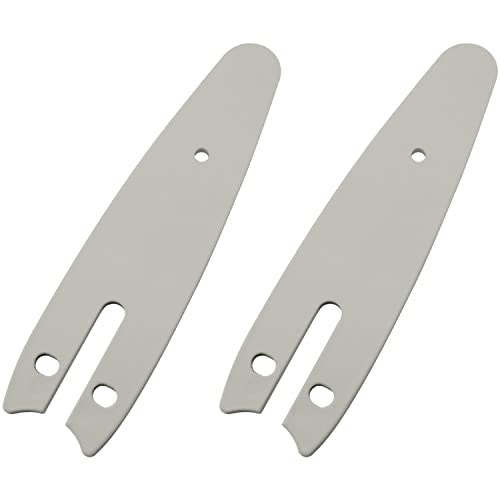
The package includes: 2 mini chainsaw guide plates, which are enough for your daily use and replacement. The mini size is convenient to carry and store, and does not take up too much space.
Should You Care Where Your STIHL Chainsaw Was Built?
Your purchasing decision rarely benefits from guessing a product’s origin, but manufacturers with distributed production networks raise legitimate questions about whether geography affects what you’re actually buying.
You evaluate STIHL’s approach by examining how its STIHL production network operates across eight countries with in-house manufacturing covering over 50% of output. You find component coordination happens between specialized international production sites: Wil produces saw chains, Weinsheim manufactures magnesium crankcases, and Virginia Beach molds power tool housings. Wisconsin/USA facilities and other production centers share quality control standards regardless of location.
You recognize battery-powered production concentrates at STIHL Tirol with supplemental capacity at Waiblingen, Qingdao, and Virginia Beach. Close-to-market manufacturing prioritizes CO2 reduction through shortened logistics rather than outsourcing advantages. You conclude facility location matters less than integrated engineering coordination when assessing build quality.
Conclusion
You now understand that STIHL engineering originates in Germany—specifically Waiblingen and Weinsheim—while production spans seven manufacturing sites producing over half of global output. Virginia Beach anchors North American operations, and specialized facilities in Brazil, Switzerland, China, and Austria handle targeted components. Your chainsaw’s birthplace matters less than STIHL’s vertically integrated quality control; in-house manufacturing ensures consistent metallurgy, crankcase precision, and bar fabrication regardless of assembly location.
Recommended Products
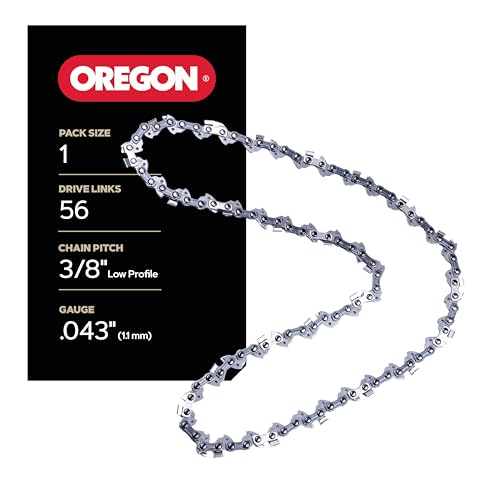
𝗩𝗘𝗥𝗜𝗙𝗬 𝗙𝗜𝗧: This saw chain is for chainsaw models that run 3/8" low-profile pitch, .043" (1.1 mm) gauge (guide bar slot), 56 drive links, 16" (40cm) bar and fits chainsaws up to 42cc - DOUBLE CHECK THE CHAINSAW MANUAL & VERIFY THE FIT

Chain fits these chainsaw models with a 10" bar: Craftsman 315.341300, 79240 and 79245 Pole Saw, 358.34550, CR2500A, CMCCS610, Husqvarna 436 LI, T536 and 536 LiXP, Echo CS-271, PPT-2620, PPF-2620

FITS 6.5 Amp 9.5 in. Electric Pole Saw 56808, 68862, 62896, 63190