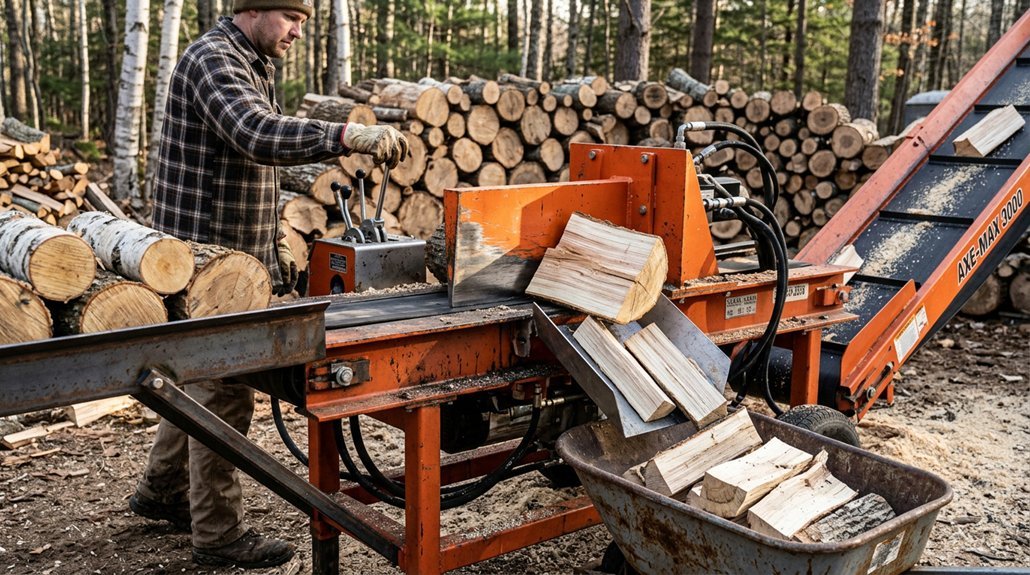

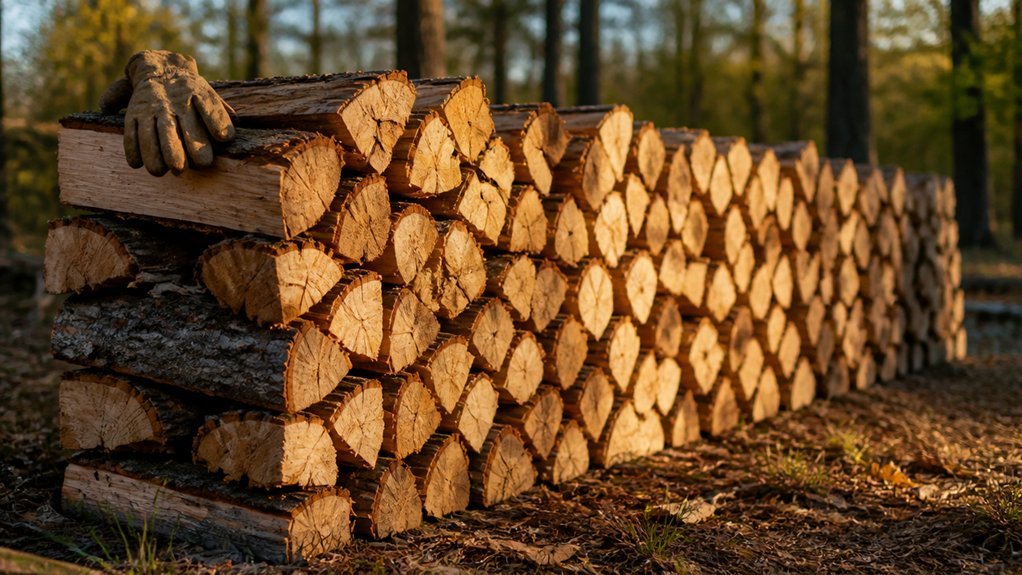
You’re facing a winter heating decision, and you need precision. A “cord” isn’t casual slang—it’s a legally defined 128 cubic feet of stacked wood, 4×4×8 feet. But here’s where suppliers trip you up: face cords, ricks, and “loose thrown” loads vary wildly. You’ll pay $200 or $500 depending on moisture content, species density, and whether you’re actually getting full measure. Before you order, you must verify three critical factors that determine your real cost per BTU.
What Is a Cord of Firewood? (Exact Size and Legal Definition)
How exactly do you measure firewood when you’re buying it? You start by knowing that a full cord of firewood is legally defined as 4 feet high by 4 feet wide by 8 feet long, giving you 128 cubic feet of stacked space. However, you won’t get 128 cubic feet of actual wood; the practical volume is closer to 90 cubic feet because of the air gaps between pieces. Most firewood is cut to 16-inch lengths, so you’ll typically see a cord arranged as three rows deep within that 8x4x4 feet stack. You must stack the wood tightly to verify you’re getting what you pay for. Don’t forget: moisture content matters for safety and efficiency, so you’ll want seasoned wood that burns cleaner and stores more energy per cord.
Recommended Products

🌲【Accurate and fast measurements reveal hidden water leaks】: It has 2 high-precision pins that can penetrate the surface to be tested and quickly measure moisture content to estimate potential moisture increase throughout the home. COCZOW moisture meter is the ideal tool for measuring moisture.

HUMIDITY SENSOR: Our handy meter tool can quickly determine what level of remediation is needed to keep your family safe from black mold. High levels of dampness that go untreated are the leading cause of harmful fungus growth in the home.

✅【Accurate & Trusted Measures, Identify Moisture Level】With accurate & trusted performance, Mecurate moisture meter can detect moisture content from wood to building material. A reliable must-have tool for home owners, woodworkers, painters & architects to detect moisture level and spot hidden damage, which would save potential expensive repairs.
Face Cord, Rick, or Full Cord: Which Size Do You Need?

Now that you understand the legal definition of a full cord, you’ll need to decide which measurement actually fits your heating needs and storage constraints. A full cord delivers 128 cubic feet of stacked space—roughly 75–90 cubic feet of actual burnable wood—making it optimal for primary seasonal heating if you’ve got adequate dry storage and ventilation to prevent mold and pest infestation.
A face cord, measuring 8 feet long by 4 feet high with 16-inch logs, provides about 42.7 cubic feet—roughly one-third the volume. You’ll find face cords useful for trial orders, supplementary heating, or limited storage areas.
Always verify log lengths and stacking dimensions before purchasing; imprecise measurements expose you to short-loading. Calculate your burn rate, assess your drying space, and select accordingly.
Recommended Products
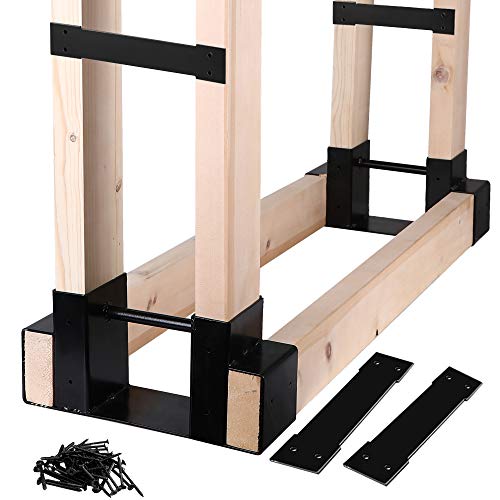
WHAT YOU GET -- A pair of firewood log brackets with wood screws,13.2" *3.7"*6". (Lumbers are not included).

Large Capacity & Adjustable: The Upgraded fire wood rack measures appr 48"W x 10"D x 28" H, The length of the wrought iron wood pile keeper can be adjusted to fit on outside inside porch, backyard deck, indoor

8FT Large Firewood Rack: Store more firewood in one organized space with this 8FT firewood rack, designed to hold up to 1/2 face cord of split logs. The 96-inch long frame provides ample room for stacking firewood beside your home, fireplace, or outdoor living area
How Many Pieces of Firewood Are in a Cord?

Exactly how many individual pieces you’re hauling home matters when you’re budgeting a heating season and stacking for stability. A full cord of firewood—4 feet high, 4 feet wide, and 8 feet long—contains roughly 560 to 600 pieces of firewood when split to standard 16-inch lengths and stacked three rows deep. You’re looking at 128 cubic feet of tightly arranged wood.
If you’re purchasing a face cord, which is one row of that stack, you’ll receive approximately 180–200 pieces of firewood. That’s about 42.7 cubic feet.
For smaller loads, a half cord—4 by 4 by 4 feet—yields roughly 90–100 pieces of firewood. Always verify split size and row depth with your supplier, as uneven cuts affect your piece count and heating reliability.
Recommended Products

Stabilizing Magnet Base: Easy to use and sturdy. Strong magnets give the fire wood measuring tool good stability and can be stably attached to both sides of the chain saw bar.

【QUICKLY CUT WOOD BLOCKS OF UNIFORM LENGTH】This is a quick, adjustable and telescopic firewood measuring tool. For quickly measuring and cutting firewood blocks of uniform length. Easier than using traditional tools.

【SOLID ALUMINUM CONSTRUCTION】 Unlike cheap plastic or fiberglass rods that splinter and break, our firewood measuring tool is machined from Solid 6061 Aluminum Alloy. It is lightweight (only 3.9oz/110g) yet robust enough to withstand the rugged forest environment. The anodized Golden Orange finish ensures high visibility in piles of wood chips and fallen leaves.
How Many Bundles Equal One Cord of Firewood?
Once you’ve calculated your piece count, you’ll still face the practical challenge of how firewood’s sold at gas stations, campgrounds, and big-box stores. Firewood bundles dominate retail channels, so you’ll need conversion standards to compare against a full cord of wood.
A standard firewood bundle contains approximately 0.75 cubic feet of stacked wood. Since a full cord of wood occupies 128 cubic feet, you’ll require roughly 170 bundles to equal one cord. However, you’ll encounter significant variability—log density, split size, and packing tightness affect volume.
For smaller purchases, note that approximately 28 bundles equal a half face cord (about 90–100 pieces). When you’re calculating heating needs, you’ll want to verify bundle dimensions before buying, as undersized bundles compromise your stack’s thermal output and create unsafe burning conditions from improper seasoning.
Recommended Products

Signature Sweet & Fruity Smoke – Adds natural sweetness to pork, poultry, fish, and veggies, blending beautifully to create a rich mahogany smoke ring.

ACCURATE FIREWOOD MEASURING TOOL – Engineered for precision, the Mingo Marker eliminates measuring errors and delivers consistent firewood length marker results on every log. This chainsaw measuring tool and firewood marking tool ensures uniform cuts every time — no guessing, no wasted wood, no recutting.

Robust Smoke Flavor & Steady Heat – Oak delivers a bold, smoky flavor and long-burning, high heat with minimal smoke and ash—perfect for smoking brisket, ribs, and hearty meats to rich perfection.
How Much Does a Cord of Firewood Cost in 2024?
Where should you expect your investment to land when purchasing a full cord in today’s market? The average price sits near $296 USD, though you’ll encounter substantial regional variation. A full cord measures 4×4×8 feet—128 cubic feet stacked—with actual wood volume closer to 90 cubic feet accounting for air gaps. Face cords, commonly sold to homeowners, represent one-third of this volume at roughly 42.7 cubic feet each.
Your price typically ranges $200–$500 depending on location and species. Kiln-dried varieties command higher prices than air-seasoned alternatives, yet deliver superior moisture consistency and caloric output. When calculating heating costs, verify you’re comparing full cords rather than face cords—dealers occasionally obscure this distinction. Always request species identification and moisture content documentation before completing your transaction to ensure safe, efficient combustion.
Recommended Products

"Do You Struggle to Start Your Fire? Discover the Solution: Smoak Firewood Kindling and Firestarter - Ignite with Ease!"

Clean & Efficient Burning – Made from 100% kiln-dried hardwood sawdust with an ultra-low 8% moisture content, for long-lasting, high-heat burns and minimal ash or creosote

Kiln Dried Premium Oak Firewood (includes firestarter)...Box size 12H x 12W x 12L (mini logs 8 inches) 25-30lbs
Red Flags: How to Check Your Firewood Delivery
How easily can you verify that your delivered firewood matches what you paid for? You’ll need to measure the stack yourself. A full cord must equal 128 cubic feet stacked (4 ft × 4 ft × 8 ft). Don’t accept loose piles—air gaps inflate apparent volume. You must restack and measure; expect 30–40% void space, reducing solid wood to roughly 75–90 cubic feet.
Inspect every log’s length—16 inches is standard. Confirm you’re receiving a full cord, not a face cord (merely 42.7 cubic feet). Check moisture content with a meter; kiln-dried guarantees often specify 8–18% core moisture. Wet wood won’t burn efficiently and creates dangerous creosote buildup. Demand documentation specifying unit type and moisture guarantees. You’ll protect your investment and your chimney.
Recommended Products

Wood Moisture Meter: Insert a stainless steel pin into the surface of the object to be measured to get an accurate reading with ±0.5% measurement accuracy

WATER LEAK DETECTOR detects relative moisture content from leaks and flooding

High Precision & Wide Range: Equipped with dual high-precision probes, the BOBOVAV Wood Moisture Meter delivers ultra-accurate results with fast percentage-format readings that eliminate guesswork; features an extra-wide 0.0-58.0% moisture range and ±2.0% accuracy; helps ensure reliable material selection for woodworking, construction, and water damage restoration projects
How Long Does a Cord of Firewood Last?
After verifying your delivery measures up, you’ll need to plan your consumption.
A full cord—128 cubic feet stacked, roughly 90 cubic feet of actual wood—yields 560–600 burnable pieces at 16-inch lengths. Your burn rate depends on usage intensity. Occasional to moderate use consumes 1–2 face cords per season; regular supplemental heating demands 2–3 face cords. For primary heat with daily stove operation, you’ll burn through 3–5 full cords. Track your burn rate carefully: begin with a single face cord to establish baseline consumption patterns, then scale quantities accordingly. Remember, three face cords compose one full cord. Precise monitoring prevents dangerous mid-season shortages and ensures adequate, safe stockpiling without excessive surplus that attracts pests or creates spontaneous combustion hazards from improper stacking.
Recommended Products

New Designed Larger Capacity Firewood Holder: Spacious firewood holder. Measuring 34(L) × 13(W) × 31(H) inches, it can hold up to 1000 pounds, which is enough for long cold winters. With a great size and decorative look, it fits outdoor porches, backyards, decks, fire pits, patios, living rooms, and apartments

【Product Specifications】- Each wood storage bracket is 13"x 3.8"x 6"(L*W*H), 5.3 lbs in weight, 13 GA (2.95mm) thick steel plate. Simply attach the brackets to 2 x 4s wood with the included screws. (2 x 4s lumbers are not included)

Durable Design: Built with 2mm thick steel tubes and a double-layer powder coating, this firewood rack and cover set is rustproof and built to last. Paired with heavy-duty 600D PU-coated Oxford fabric, it offers full protection against strong wind, rain, snow, sun, and dust. Sturdy, long-lasting, and designed to keep your firewood organized and protected year-round!
When Should You Order Firewood for Winter?
Ideally, you’ll place your firewood order several weeks to a few months before temperatures drop, securing delivery windows before demand surges and supply tightens. You’ll account for potential shortages by adding buffer stock—plan for at least one to two face cords or one full cord, depending on your heating requirements and household insulation.
In high-demand regions, you’ll submit orders by late fall, typically October through November, to guarantee winter supply. You’ll weigh seasonality and moisture content: kiln-dried wood commands premium pricing but delivers quicker ignition and cleaner combustion, minimizing your reorder frequency.
You’ll confirm log length—commonly 16 inches—and verify cubic-foot equivalents: approximately 42.7 cubic feet for a face cord, 128 cubic feet stacked for a full cord. You’ll match these delivery specifications precisely to your storage capacity and calibrated heating needs.
Recommended Products
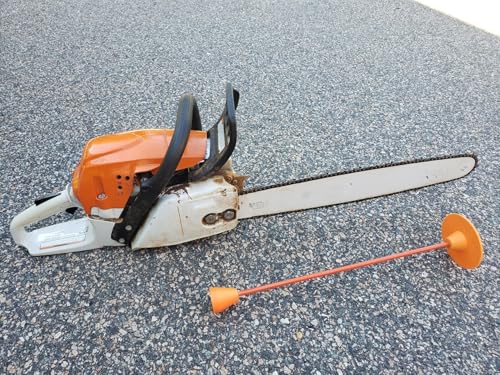
Firewood measuring: This 16 inch long tool can be attached to either side of the chainsaw bar with a strong magnet.

PRECISION FIREWOOD MEASURING TOOL – The Mingo Marker delivers consistent firewood length marker results on every log, trusted by loggers and firewood cutters for precise, repeatable cuts. This chainsaw measuring tool and firewood marking tool ensures uniform lengths every time — no guessing, no wasted wood, no recutting.

Stable Magnet Base: Strong magnetic gave the firewood measuring tool good stability that can stably attache to the either side of chainsaw bar.
How to Store a Cord of Firewood (Indoor and Outdoor)
Once you’ve secured your winter supply, proper storage becomes your next priority to preserve moisture levels and combustion efficiency. For outdoor storage, elevate your cord off ground moisture using pallets or racks, and position it in a dry, shaded location to minimize precipitation absorption. Cover the top only, leaving sides exposed for airflow—you’ll prevent mold while allowing seasoning to reach 15–20% moisture content.
For indoor storage, allocate dedicated wall space or install freestanding racks capable of supporting 4,000+ pounds. Ensure reliable ventilation; stagnant air traps moisture and promotes sap buildup, creating combustion hazards. Check that your structure accommodates 128 cubic feet of stacked volume, accounting for air gaps between logs. You’ll maintain optimal burn efficiency and reduce creosote risks through disciplined moisture management.
Recommended Products

WHITE OAK 12inch Lengths (widths average 3-4inches) box is 17x13x13 weighs 45-50lbs includes kindling & firestarter
How Much Firewood Do You Need? (Calculate by Home Size)
How precisely you calculate your firewood needs depends on square footage, insulation quality, and whether you’re heating continuously or supplementing an existing system. A well-insulated 1,000-square-foot home typically requires two to three cords per season for primary heating, while larger spaces or drafty construction demand proportionally more.
Firewood measures reveal that a full cord provides 128 cubic feet of stacked space, though actual solid wood volume runs 75–90 cubic feet due to air gaps.
You’ll calculate consumption by determining daily burn hours and stove efficiency—supplemental heating may require only one to two face cords.
Always verify moisture content stays near 15% to maximize heat output and minimize creosote buildup.
Accurate measurement prevents dangerous shortages and ensures safe, efficient combustion.
Recommended Products
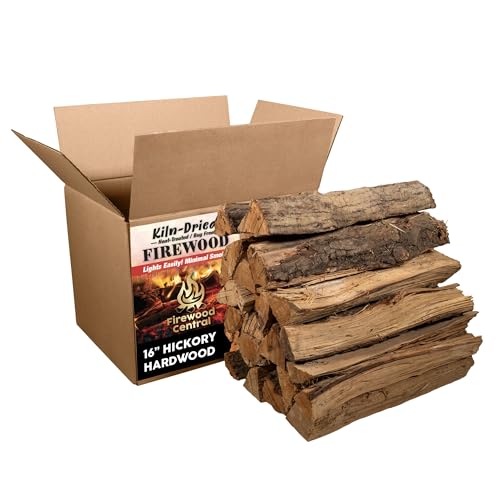
Signature Bold & Hearty Smoke – Delivers rich, robust flavor for ribs, brisket, red meat, and game, perfect alone or blended for a custom flavor.

Pennsylvania Mixed Blend – Expertly selected mix of oak, maple, hickory, cherry, walnut, and ash—each chosen for its unique burning qualities. Delivers balanced heat, an efficient burn, and a pleasant aroma.
Conclusion
You’ll get exactly 128 cubic feet of stacked space in a full cord, though you’re only purchasing 75–90 cubic feet of actual wood. Don’t rely on informal terms like “rick” or “truckload”—they’re unregulated and often scam-prone. Verify log length, stacking method, and moisture content in writing before paying. Store your cord off-ground with top cover only, maintaining 20-foot clearance from structures for fire safety. Order by early fall; seasoned hardwood won’t wait for procrastinators.