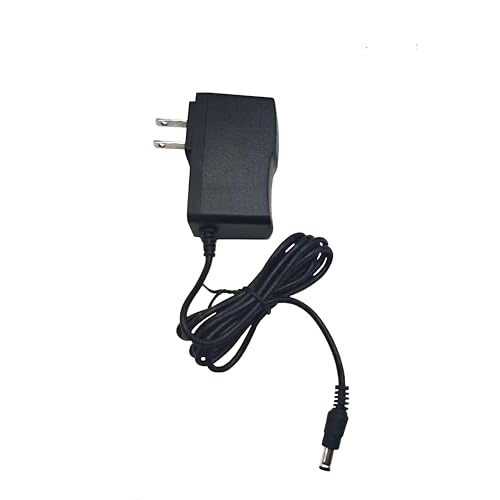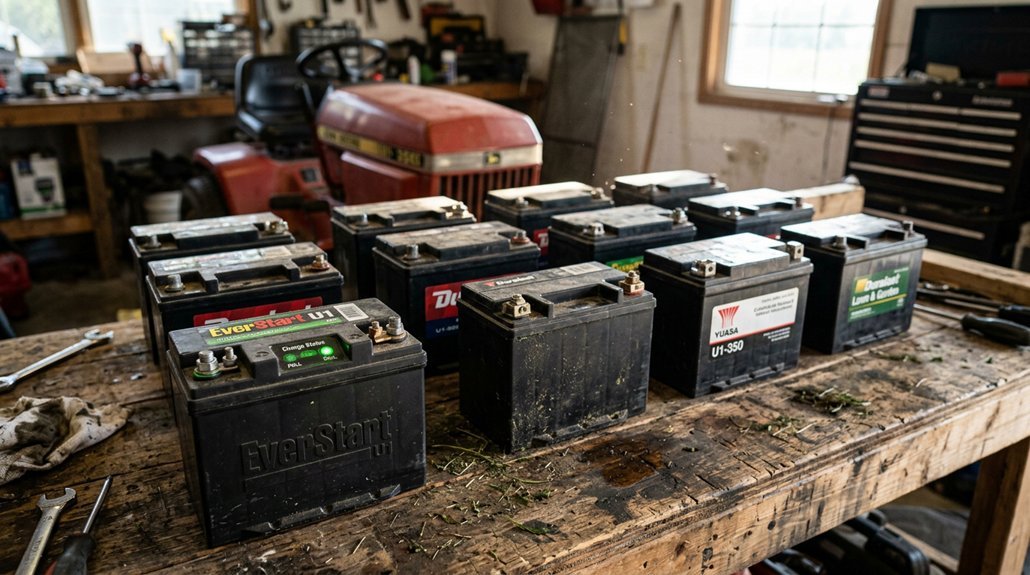

You’ll need to identify your battery chemistry before selecting a charger, as lead-acid and lithium-ion systems require incompatible voltage profiles and termination methods. Match your charger to the specifications printed on the battery case, then prepare a dry, ventilated workspace away from ignition sources. The procedure that follows prevents thermal runaway, sulfation, and premature cell failure—but one incorrect connection sequence can damage your charging equipment or the battery itself.
How to Charge a Riding Mower Battery Step by Step
Whether you’re reviving a depleted mower after winter storage or simply maintaining readiness, charging your riding mower battery demands attention to chemistry and voltage. First, identify your lawn mower battery type—lead-acid or lithium-ion—and confirm it’s 12V. Select an automatic charger matched to that chemistry.
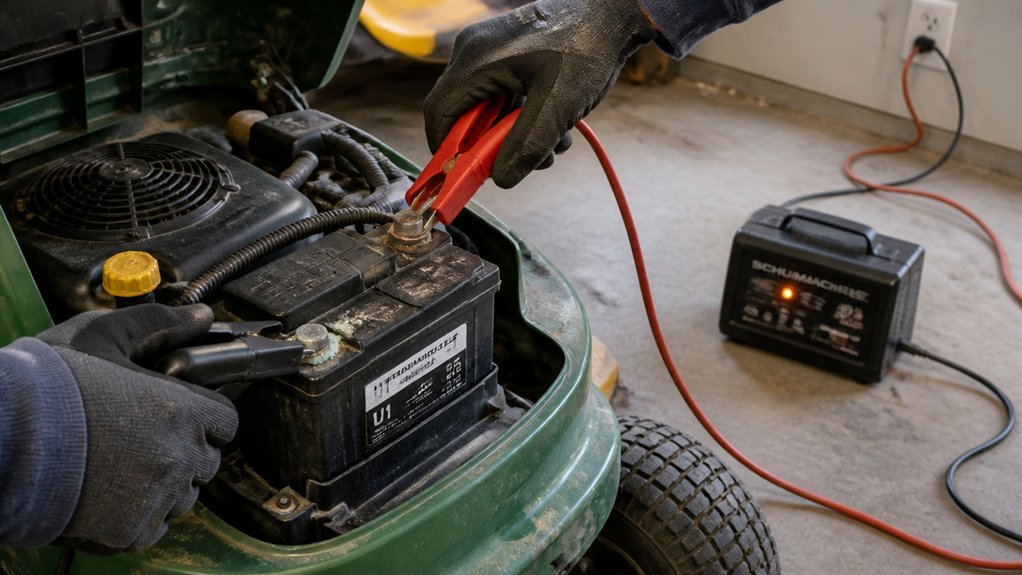
Observe safety precautions: work in a dry, ventilated area away from flammable materials. If charging in place, disconnect all power sources first. Attach charger clamps—red to positive, black to negative—ensuring secure connections. Monitor battery voltage periodically with a voltmeter; a healthy 12V battery reads approximately 12.6V.
After charging completes, unplug the automatic charger, then remove clamps in reverse order. Reinstall the battery if removed, and verify the mower starts reliably before operation.
Recommended Products

MEET THE GENIUS1 — Similar to our G750, just better. It's 35% smaller and delivers over 35% more power. It's the all-in-one charging solution - battery charger, battery maintainer, trickle charger, plus desulfator.

Charger, Maintainer & Desulfator - An all-weather battery charger, battery maintainer, trickle charger, and battery desulfator. Perfect for charging and maintaining all 12-volt lead-acid, flooded or sealed maintenance free batteries (AGM and gel cell).

Compact & Robust - Compact size for easy storage. Enhanced plastic case with top grade fire-resistant feature. Perfect for charging and maintaining all 12-volt lead-acid, flooded or sealed maintenance free batteries (AGM and gel cell). Up to 8.5FT cables with SAE quick release connection options: 7.5amp fuse protected Ring Terminals Harness and Fully insulated enhanced 50amp Alligator Clamp Harness. Works with all devices with standard SAE connectors.
How Long Does Charging Take?
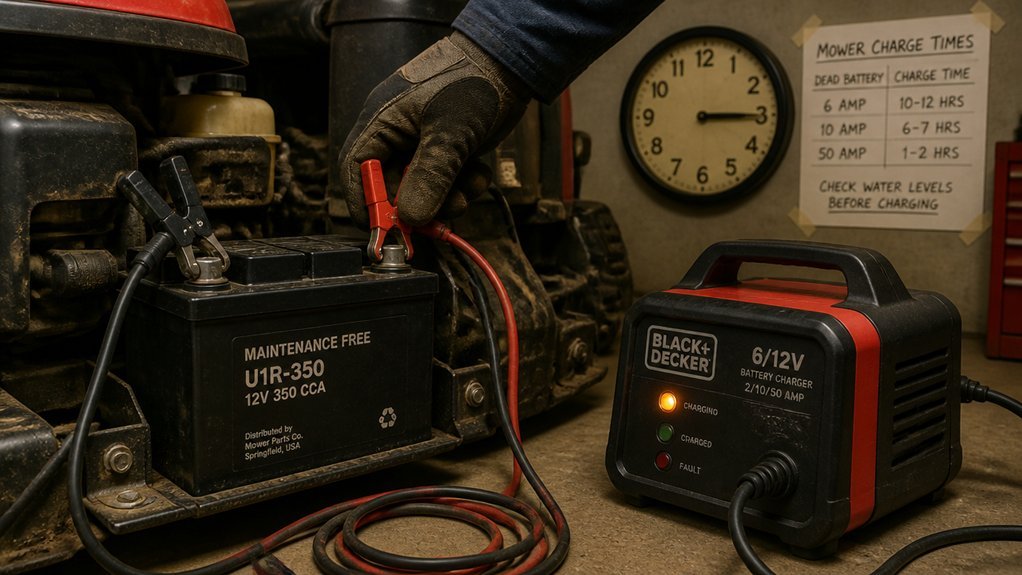
You’ve prepared your battery and connected the charger correctly; now you’re waiting for the charge cycle to complete. The charging duration for a typical riding mower battery spans 4–8 hours when you’re using a charger equipped with automatic shutoff. You’ll achieve optimal results charging your lead-acid battery at low current—approximately 2–10 amps—particularly with manual units lacking automatic features.
Monitor voltage throughout the process; you’re targeting roughly 12.6V for a fully charged 12V battery. If you’ve started below 12.4V, expect your charging time to extend accordingly.
For off-season storage, don’t rely on intermittent charging. Instead, connect a battery maintainer to preserve full charge and prevent sulfation. This approach eliminates guesswork about charging time while protecting your investment during idle periods.
Recommended Products

Compatibility - Applicable to AGM, Gel, Wet/Flooded, EFB, Calcium lead MF and deep-cycle batteries, charges and maintains all types of vehicles,including cars, automobile,motorcycles,mopeds,lawn mowers,tractors,trucks–a multi-purpose product

Compatibility - Applicable to AGM, Gel, Wet/Flooded, EFB, Calcium lead MF and deep-cycle batteries, charges and maintains all types of vehicles,including cars, automobile,motorcycles,mopeds,lawn mowers,tractors,trucks–a multi-purpose product

12V 6A Smart Charger for LiFePO4 and More Designed for 12V batteries and optimized for LiFePO4 charging, while also supporting AGM, Gel, Flooded and common Lead Acid batteries for broader everyday use.
Test Your Battery: Confirm a Full Charge
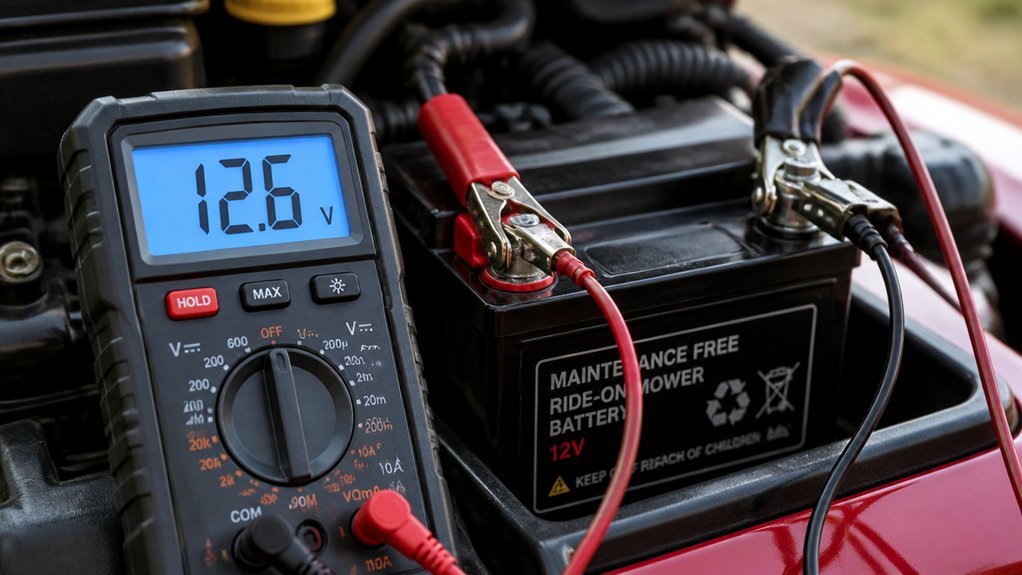
How do you know your battery’s truly ready? You’ll perform charge verification using a voltmeter. Set your voltmeter to DC voltage. Touch the red lead to the positive terminal and the black lead to the negative terminal. A fully charged lawn mower battery displays approximately 12.6 volts on your test charge reading. This no-load voltage confirms successful charging.
You’ll identify a healthy battery when readings exceed 12.4 volts. Drop below this threshold, and you’ll need additional charging. You’re measuring no-load voltage—no electrical draw during testing. If your battery won’t maintain 12.6 volts or repeatedly falls below 12.4 volts after charging, it’s failed. For 6 volts systems, you’ll adjust expectations, though most riding mowers use 12-volt architecture. Don’t confuse 4 volts discharge indicators with proper testing procedures. Record results for ongoing battery maintenance documentation.
Recheck voltage after five minutes to confirm charge stability.
Recommended Products
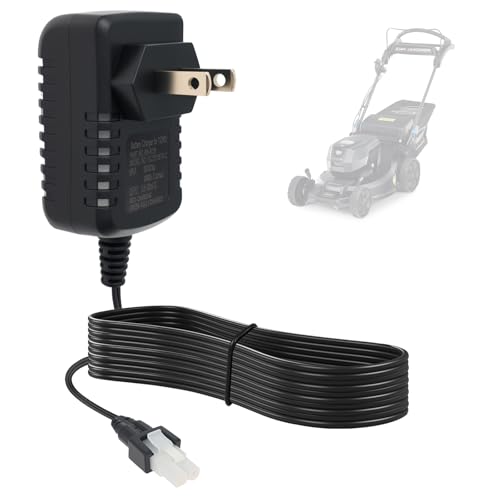
Compatible Part Numbers: 136-9126, 114-1588, 104-7401, 1141588,104-7903 105-6845, 104-7682, 115-13044,106-8397 for easy replacement and identification

🔋【3-in-1 Battery Charger, Desulfator, Maintainer】The 12V 24V battery charger is designed to charge and maintain 12 volts or 24 volts batteries, it can works as 12Amp quick battery charger. Compatible with all 12.6V Lithium-ion batteries,12V and 24V lead-acid automotive,marine, deep-cycle batteries: flooded,gel,AGM,maintenance-free,WET,CAL,EFB batteries in Car,motorcycle,lawn mower,ATV,truck,tractor,SUV,boat marine, etc.🎁Nice holiday gifts for Christmas day,New year,etc.

NOTE: Please check if it is a Huthbrother store before purchasing, if it is not a Huthbrother store, you will be missing a wire connector, which will affect the purchasing experience.
Safety Gear and Ventilation for Battery Charging
Where should you charge your riding mower battery? You’ll select a dry area with adequate ventilation to disperse hydrogen gas released during venting. Lead-acid batteries produce this flammable gas, so you’re minimizing fire risk by ensuring airflow throughout the charging area.
You’ll don proper safety gear before handling any battery. Wear protective gloves to shield your hands from corrosion and acid. You’ll also use eye protection to guard against splashes and sparks. Keep all ignition sources—flames, cigarettes, and equipment that generates sparks—well away from the battery.
You’re checking that the battery surface remains dry before connecting clamps. You’re positioning yourself to monitor the process without hovering directly over the unit. You’ll maintain this controlled environment until charging completes, ensuring hydrogen concentrations never reach explosive levels near your work space.
Recommended Products

THE ALL-NEW GENIUS2: Introducing the all-new GENIUS2, making it one of our the most powerful, highest-performing, energy-efficient, and compact charger yet.

Stay Charged: Battery Tender battery chargers and maintainers provide a full charge to your powersport vehicle’s battery before switching to float mode to maintain proper voltage levels for safe, long-term storage
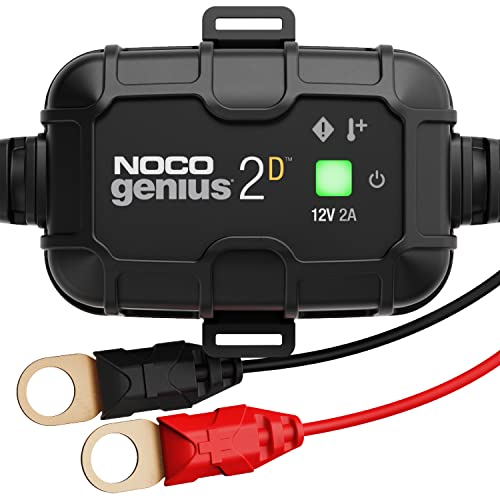
MEET THE GENIUS2D — The all-new direct-mount onboard battery charger for an under-the-hood battery charging system and year-round battery maintenance.
Signs Your Riding Mower Battery Needs Charging
Several indicators reveal when your riding mower battery requires charging. You’ll notice starting issues: sluggish cranking, clicking sounds, or complete engine failure point to insufficient charge. Dim or non-functional headlights and displays also signal low capacity.
Perform a voltage test using a voltmeter. Your 12-volt battery should read approximately 12.6 volts; measurements below 12.4 volts indicate you must recharge. Watch for corrosion on terminals, which impedes electrical flow and mimics depletion symptoms.
Document these signs before proceeding. If your battery won’t hold voltage after charging, or fails to reach proper battery voltage during testing, it’s likely degraded beyond recovery.
Use an appropriate automatic charger matched to your battery chemistry. This ensures safe, complete charging and confirms readiness for reliable starting. Monitor post-charge voltage to verify successful restoration before operation.
Recommended Products

【Excellent Material】: Car voltmeter is made of high-quality and durable ABS plastic material. ABS plastic is tough and sturdy, resistant to wear and tear, not easy to burn, with high safety coefficient, supporting a long time application. It is also water proof, so that it can withstand harsh weather conditions like rainy days.

Practical Function: The nice voltmeter monitors and displays the voltage status of the vehicle's electrical system, helping you find abnormalities in time. It can avoid equipment damage or safety accidents caused by unstable voltage. It is equipped with terminals to protect the power cord overload fuses
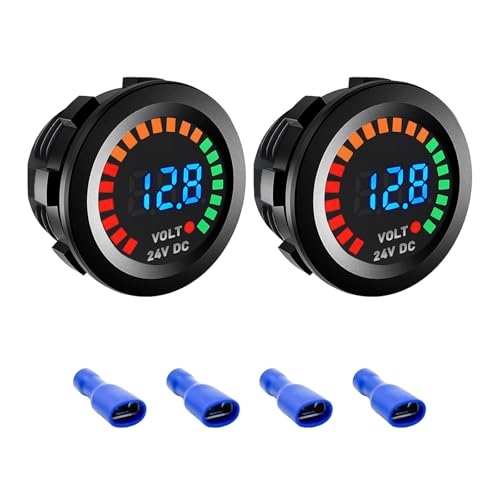
【Excellent Material】: Car voltmeter is made of high-quality and durable ABS plastic material. ABS plastic is tough and sturdy, resistant to wear and tear, not easy to burn, with high safety coefficient, supporting a long time application. It is also water proof, so that it can withstand harsh weather conditions like rainy days.
How Often to Charge: Season-by-Season Schedule
Although your riding mower’s alternator handles most charging during active use, you’ll need a deliberate schedule to maintain optimal battery health across seasons. Establish a season schedule that prioritizes in-season maintenance checks every few weeks. Monitor battery voltage regularly; perform a voltage check to verify it maintains ~12.6 volts when fully charged. If battery voltage drops below 12.4 volts, adjust charge timing immediately and connect an automatic charger matched to your battery type—lead-acid battery or lithium-ion battery specifications differ, so confirm compatibility. Watch for sluggish cranking or dim displays during operation. Consistent vigilance prevents startup failure and eliminates reliance on occasional use. Integrate these checks into your riding mower routine, and you’ll sustain reliable performance without unexpected power loss throughout the cutting season.
Recommended Products

Adaptive Smart Charging: Our battery maintainer adapts to the needs of your 12V battery, ensuring optimal charging and extending battery life. Ideal for Automotive, Motorcycle, and Lawn Mowers.
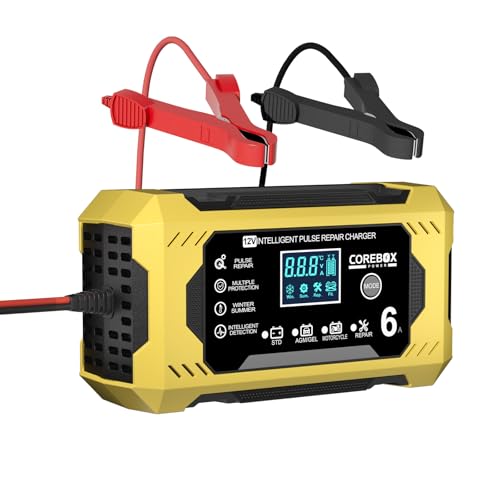
【THE PERFECT WINTER BATTERY CHARGING SOLUTION】Corebox automatic battery trickle charger with 8 charging protections is an all-in-one solution: charger, maintainer, trickle charger and desulfator. It ensures perfect maintenance of battery charging safety during the winter or vacation months, avoiding battery failure in advance. Temp compensation in hot or cold climates, reverse protection, cooling system, overcurrent, fireproof material, overcharge, short circuit.

All-in-One Charging Solution for 12V Battery: This 12V 8-Amp smart battery charger fully works with LiFePO4, AGM, GEL, EFB, VRLA and flooded lead-acid batteries, functioning as a charger, maintainer, trickle charger, and desulfator for your car, truck, motorcycle, boat and lawn equipment. Note: Only applicable to 12V car or motorcycle batteries, not compatible with 24V batteries. (Do not charge LiFePO4 (14.6V 0.2V) batteries without a BMS system)
Winter Storage Mistakes That Kill Mower Batteries
Why do so many riding mower batteries fail to survive winter? You invite sulfation when you skip a full pre-storage charge. Lead-acid batteries demand recharging every few weeks; lithium batteries need monthly top-ups or a battery maintainer. You must disconnect the battery, keep terminals clean, and watch for corrosion on negative posts that blocks current flow. Store in a cool dry space—room temperature suits lithium batteries; a battery box on a workbench works. You can’t charge during storage using mismatched chemistry chargers; select automatic chargers suited to your battery type. Perform a voltage check periodically—target ~12.6V for healthy 12V lead-acid units—and top up before deep discharge develops. Ignoring these steps guarantees spring failure.
Recommended Products

【Upgraded Battery Charger】AUTOUTLET 8 volt battery charger extends the charging cable, adds a carrying handle to make it more convenience to use; and adopts the cable clamps of thickened material which can hold the battery terminals more firmly

The Heavy duty battery charger: For charging all types of 12V & 24V lead acid batteries,including Wet/Flooded,AGM(Absorption Glass Mat),EFB(Enhanced Flooded Battery) Gel,MF(Maintenance-free),Calcium,and deep cycle batteries.Heavy duty makes battery more durable and powerful.

SAFE & RELIABLE: Smart circuits engineered with Digital Display, Automatic Shutdown design and Multilevel Protections guard against Overcharge, Over-Voltage, Overheat, Over-time Charging and Short Circuit, with intuitive Reverse Polarity LED Indicator. Spark proof during lead connection
Conclusion
You’ve identified your battery chemistry and selected a matched charger. You’ve secured a dry, ventilated workspace, disconnected mower power, connected red to positive and black to negative terminals, monitored voltage until reaching 12.6V no-load, then disconnected in reverse sequence. You’ve verified reliable starting. Follow this procedure each charging cycle, maintain seasonal charging schedules, and avoid winter storage errors to maximize battery service life.
Recommended Products

Two battery type options: 12V Lead Acid and 12V Lithium(LiFePO4); Input voltage: 100-120VAC, Output: 12V 2A
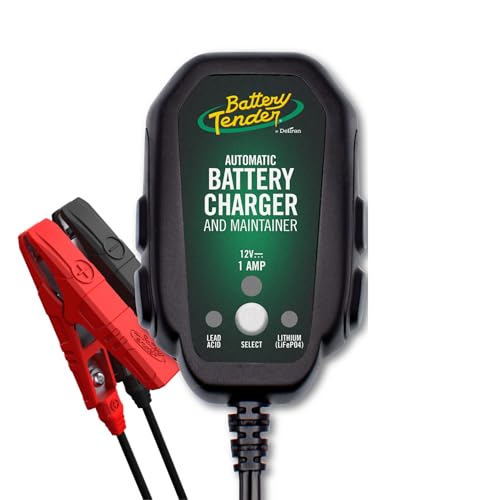
Stay Charged: 12V Battery Charger, 800mA Selectable Lead Acid/Lithium Battery Charger It will keep your battery fully charged so that it is ready to go when you are