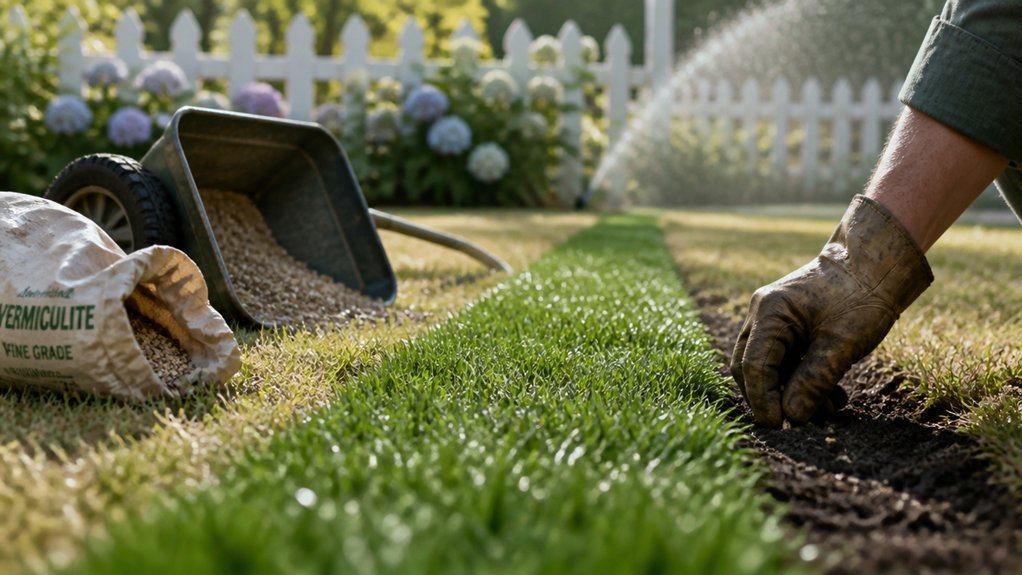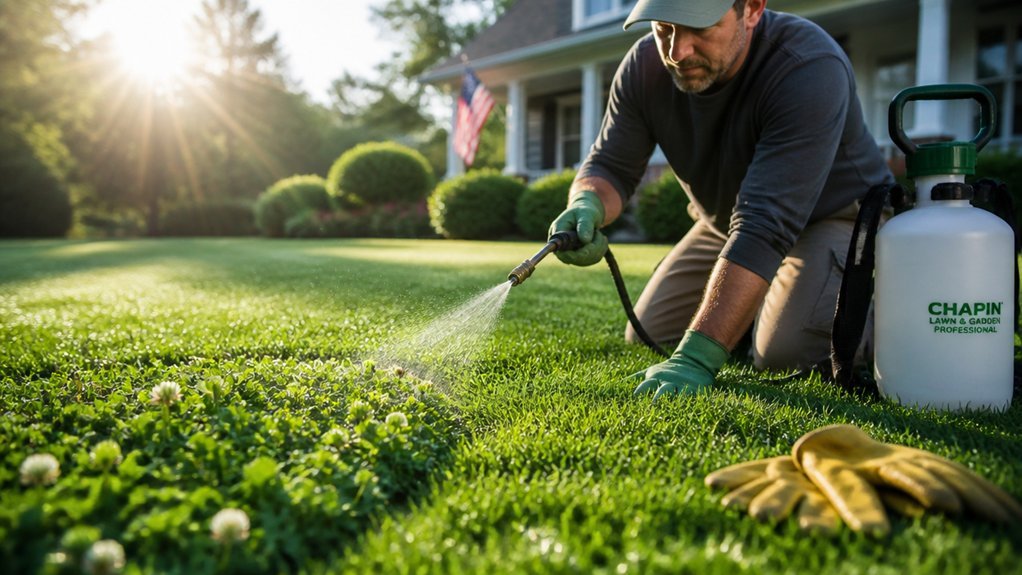


You’ve got a weed problem, but your grass doesn’t have to suffer for it. The trick isn’t a stronger chemical—it’s matching the treatment to the invader’s biology and your turf’s vulnerabilities. Misidentify the weed, or time your application wrong, and you’ll waste effort or damage the lawn you’re trying to save. The methods that actually work come down to five precise practices.
Kill Weeds Fast: Selective Herbicides and Organic Lawn Treatments
Effective weed management demands precision in both timing and product selection. You’ll apply pre-emergent herbicides in early to mid-spring to prevent grassy weeds from germinating, protecting established turf. For post-emergent control, you’ll deploy selective herbicides after weeds emerge, always monitoring label guidance to avoid turf damage.
Your lawn care strategy must incorporate lawn-friendly products like Ortho WeedClear for spot treatment of small weed populations, ensuring your grass species appears on the label. You’ll utilize hose-end sprayers or ready-to-use formulations for targeted application.
For organic lawn treatments, you’ll employ natural weed killers cautiously in hardscape areas—boiling water and solarization prevent chemical exposure but require careful application near desirable turf.
You’ll maintain dense sward through proper mowing height and regular fertilization, shading soil to suppress weed germination. These weed control methods maximize efficacy while preserving grass integrity.
Recommended Products

One application prevents crabgrass all season long
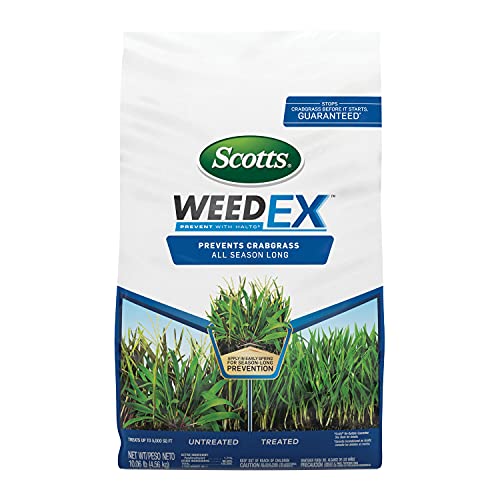
WEED PREVENTION: Scotts WeedEx Prevent with Halts is a weed control product that prevents the germination of listed lawn weeds so you can enjoy your lawn

Designed to prevent weeds; will not aid in eliminating existing weeds. Prevents grassy and broadleaf weeds, including crabgrass, poa annua, goosegrass, henbit, and more.
Identify Your Invader: Target Crabgrass, Clover, and Dandelion Correctly
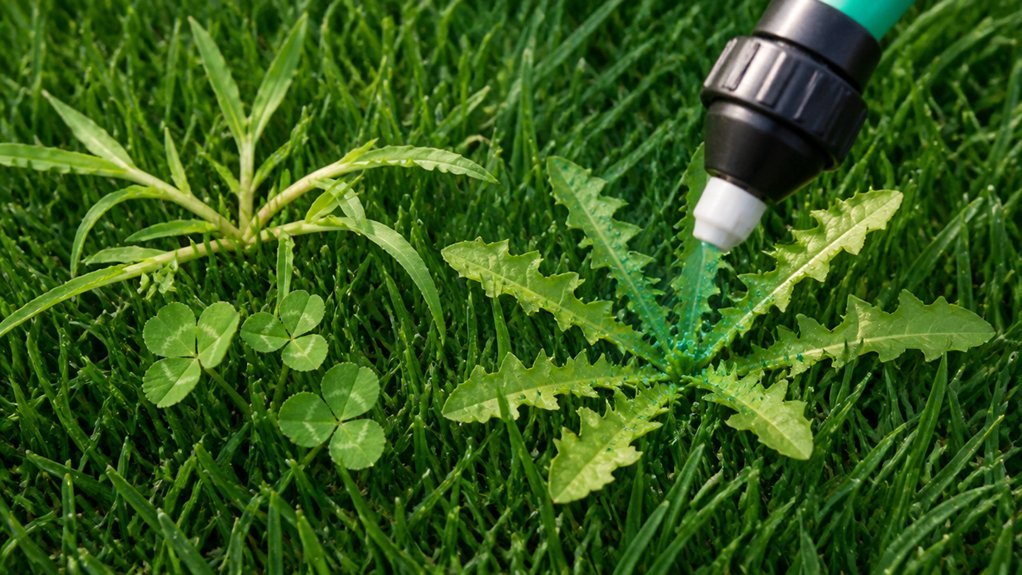
Which invader has claimed territory in your turf? Master weed identification before you treat, because crabgrass, clover, and dandelion demand different tactics. You can’t execute precision lawn care without knowing your target.
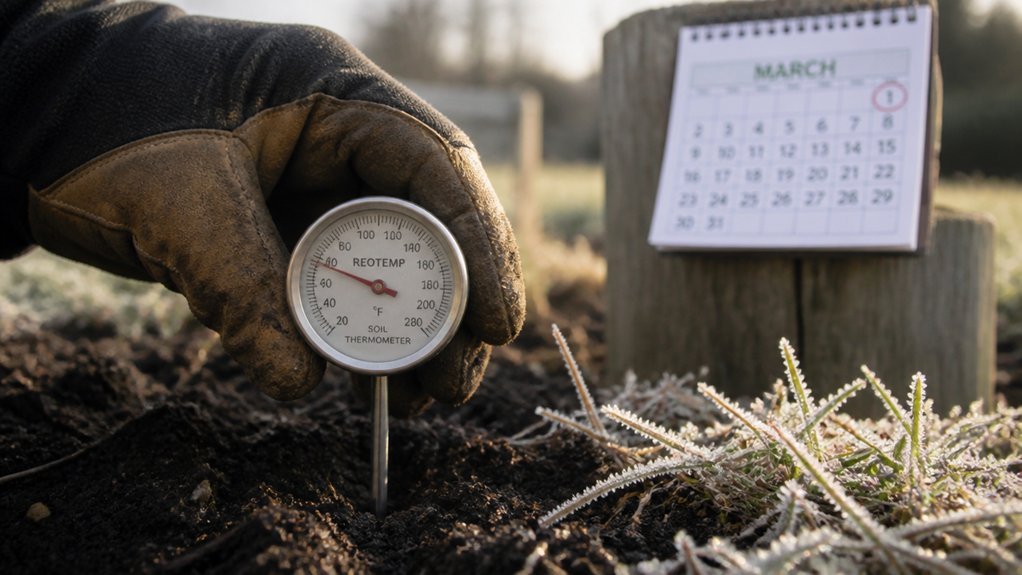
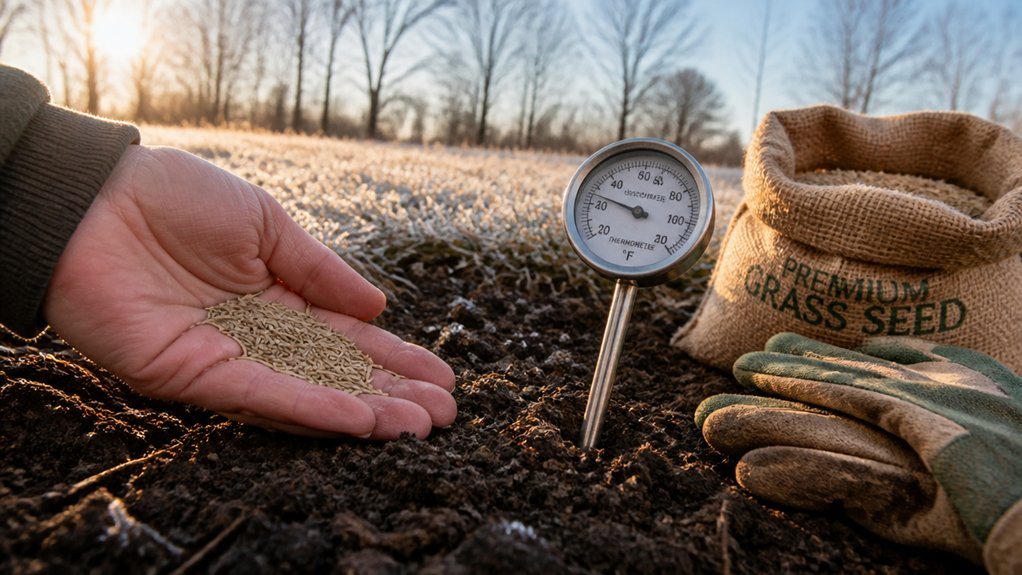
Crabgrass—an annual grassy weed—erupts when soil temperatures hit 55–60°F. You’ll stop it with pre-emergent applications in early spring, then deploy post-emergent synthetic herbicides or natural weed control for breakthroughs.
Clover, a perennial broadleaf, requires post-emergent treatment after it appears.
Dandelion? Same approach: identify first, treat second with selective products that spare your grass.
You won’t win with guesswork. Match your method to the weed’s biology and life cycle. Whether you choose synthetic herbicides or natural weed control, accurate identification ensures you kill the invader—not your lawn.
Recommended Products
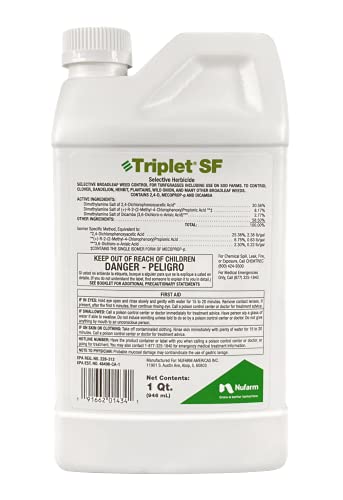
Effective control of a variety of broadleaf weeds

TRUSTED PERFORMER: Torocity contains 40.0% mesotrione; the same active ingredient as the leading brand, Tenacity Herbicide. For more than 20 years, mesotrione has been the trusted choice for effective pre emergent and post emergent weed control for lawns in both newly seeded areas as well as established turf.

Mesotrione, a potent herbicide, immediately absorbs and starts working upon application, yet it may take 2-3 weeks for full weed death. Activation requires water; if no rainfall occurs within 10 days, apply 0.15 inches of water.
Fertilize for Density: Grow Thick Grass That Crowds Out Weeds
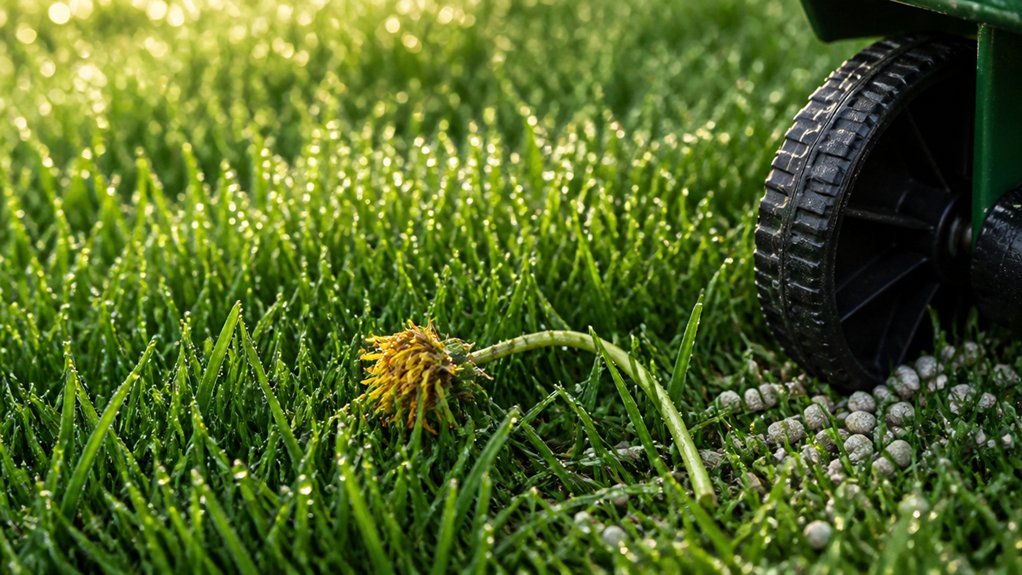
Once you’ve identified your weeds and matched the right treatment, you’ll need to shift your focus to the factor that determines long-term victory: turf density. You’ll achieve weed suppression through shade and crowding—mechanisms that block sunlight from reaching weed seeds.
You’ll prioritize lawn fertilization to fuel vigorous growth, but density requires more than nutrients. You’ll incorporate overseeding to fill bare patches where invaders establish. You’ll maintain optimal mowing height to expand canopy cover without scalping. You’ll execute deep watering to drive root systems downward, reinforcing thick turf structure. You’ll monitor soil health to ensure nutrient availability and biological activity. Combined, these practices elevate lawn density, creating conditions where grass outcompetes weeds for resources, space, and light—delivering sustainable, chemical-resistant control.
Recommended Products

WEED KILLER SPRAY FOR LAWNS: With a simple hose-end application, kill weeds in your lawn, including dandelions, chickweed, clover, crabgrass and foxtail with Ortho WeedClear Lawn Weed Killer Ready-to-Spray
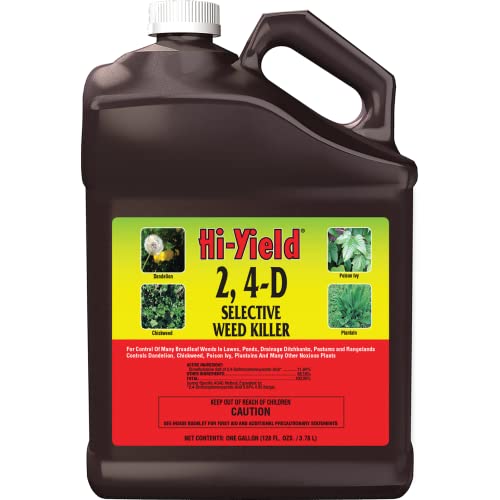
This selective weed killer kills or controls many Broadleaf Weeds and plants susceptible to 2, 4-D.

VALUE PACK FOR LAWN SPOT TREATMENT: Two 5 oz concentrate bottles make 2 gallons (256 fl oz) of finished spray, enough for multiple spot-treatment applications across a full season.
Mow High, Water Deep: Lawn Habits That Block Weed Growth
How do you transform routine lawn maintenance into a systematic weed suppression strategy? You mow high to shade soil, directly inhibiting weed germination by reducing light penetration to the soil surface. Scalping compromises this defense, increasing susceptibility to invasion.
You maintain a thick lawn through strategic fertilization, generating competitive pressure that physically crowds out weed establishment. This elevated lawn density creates an environment where invasive species can’t gain purchase.
You deep water infrequently rather than shallow, frequent irrigation. This practice drives deep root growth, anchoring turf firmly and drying surface layers where weed seeds attempt to embed. Robust root systems prevent weeds from colonizing the root zone.
These integrated mechanical and cultural practices establish self-sustaining weed suppression without chemical intervention, leveraging biological competition to maintain turf dominance.
Recommended Products

WEED CONTROL FORMULATED FOR SOUTHERN LAWNS: Sertay contains 75% sulfosulfuron; the same active ingredient as the Leading Brand, the top herbicide for grass, broadleaf, and sedge control in warm-season turf.

Pre- and Post-emergent weed control for lawns, stops weeds from growing and kills existing weeds after they appear

OPTIGROWTH-ENHANCED PERENNIAL GRASS SEED: Midnight Kentucky bluegrass is highly rated in NTEP evaluations for its dark blue-green color, soft texture, and heat and cold tolerance. Ideal for homeowners, landscapers, groundskeepers, turf managers, golf course crews, and athletic field managers, this OptiGrowth-coated seed supports uniform distribution and easier spreading for lawns, parks, golf courses, and athletic fields.
Know When to Start Over: Renovate Beyond-Repair Lawn Areas
When do you admit defeat and tear everything down? You initiate renovation when you’ve got a beyond repair lawn—typically when weeds exceed 50% coverage, turf shows extensive disease, or soil compaction prevents root penetration despite remediation.
Start-over renovation demands complete removal of damaged vegetation, thorough soil preparation including pH adjustment and organic amendment, and replanting thick lawn species suited to your region. You’re establishing dense turf from inception—your primary mechanism for long-term weed suppression.
Post-renovation, maintain aggressive cultural practices: mow at optimal height, fertilize per soil tests, and water deeply but infrequently. Monitor vigilantly for invaders. Apply pre-emergent barriers before crabgrass germination and deploy post-emergent controls precisely when broadleaf weeds appear. This systematic approach prevents recurrence and sustains your investment.
Recommended Products

Designed to prevent weeds; will not aid in eliminating existing weeds. Prevents grassy and broadleaf weeds, including crabgrass, poa annua, goosegrass, henbit, and more.


WEED PREVENTION: Scotts Halts Crabgrass & Grassy Weed Preventer prevents the germination of listed lawn weeds so you can enjoy your lawn
Conclusion
You can’t eliminate weeds through single interventions; you’ll achieve durable control by integrating correctly timed pre-emergent and selective post-emergent applications with cultural practices that strengthen turf density. You’ve got to mow high, fertilize appropriately, and water deeply but infrequently. When weed infestations overwhelm turf beyond recovery, you’ll need to renovate rather than persist with futile treatments. Your lawn’s long-term weed suppression depends on this systematic, biology-driven approach.
Recommended Products
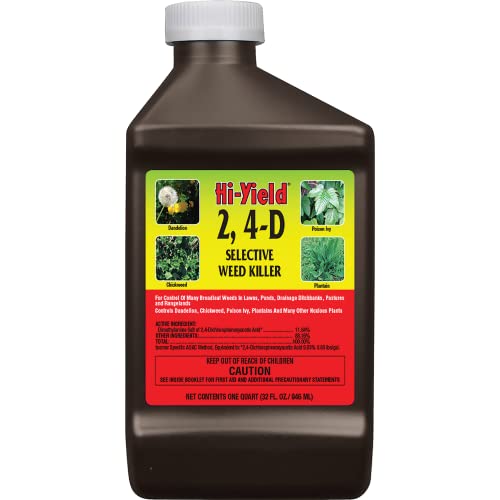
This selective weed killer kills or controls many Broadleaf Weeds and plants susceptible to 2, 4-D.

Fast Acting Broadleaf Weed Control
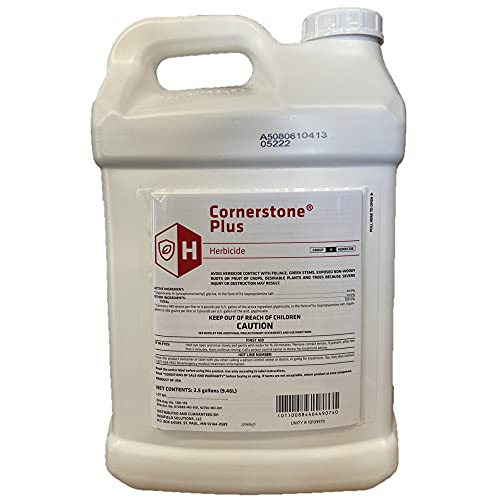
Protect gardens, lawns and landscaping with quality herbicides