
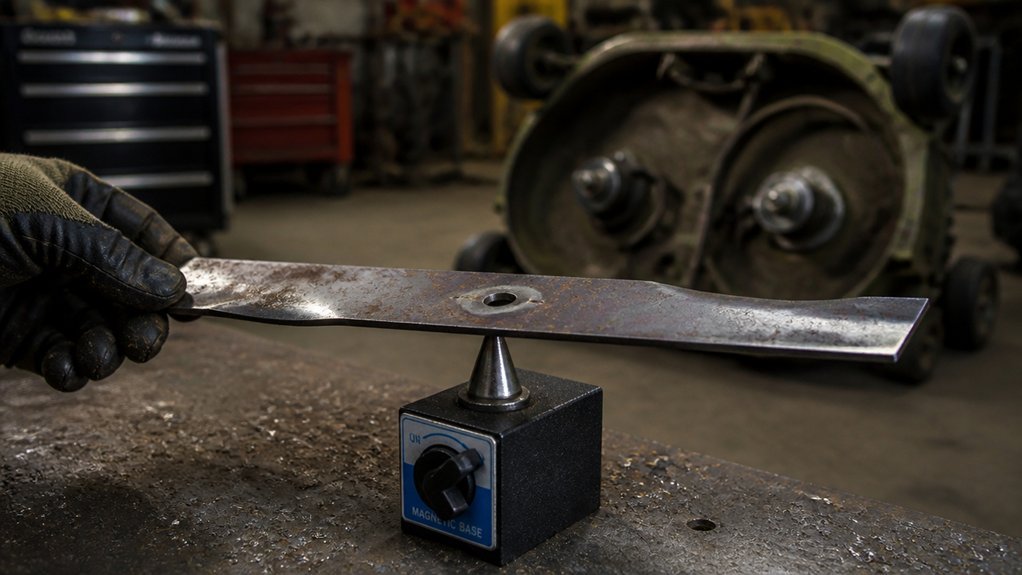
You’ve sharpened your mower blades, but you’re not done yet. An unbalanced blade will vibrate, damage your spindle bearings, and leave uneven cuts. The fix takes under five minutes with the right technique. You’ll need a cone-style balancer and a light touch with your grinder. Here’s how to get it right before you bolt that blade back on.
Why Unbalanced Blades Damage Your Mower
Why should you care about a few grams of uneven metal? Because you’re running that metal at 3,000 RPM, and physics doesn’t forgive small errors. Blade balancing isn’t optional maintenance—it’s damage prevention. When you spin an unbalanced blade, you generate oscillating forces that hammer spindle bearings, crack engine mounts, and fatigue deck welds. You’re not just feeling vibration in your hands; you’re accelerating wear across critical mower components.
That vibration transmits through the frame, loosening fasteners and degrading cut consistency. Even factory-new blades arrive with manufacturing tolerances that create imbalance. At operating speed, a few grams becomes significant centrifugal force. You’re multiplying wear with every mow. Proper blade balancing isolates these forces, protecting your investment and preserving operator comfort. Ignore it, and you’re rebuilding spindles instead of cutting grass.
Recommended Products

𝗟𝗔𝗪𝗡𝗠𝗢𝗪𝗘𝗥 𝗕𝗟𝗔𝗗𝗘 𝗕𝗔𝗟𝗔𝗡𝗖𝗘𝗥 𝗧𝗢𝗢𝗟: Verifies unbalanced and bent blades after sharpening, improving mower longevity with reduced vibration and engine wear providing a smoother cut

Accurate Lawn Mower Blade Balancer: Ensure your mower blades are perfectly balanced after sharpening with the SporGain Lawn Mower Blade Balancer. Reduces blade wobble, vibration, and engine wear, giving your lawn a smoother, cleaner cut every time.

Easy Blade Balancing for Smooth Cutting: Tired of wobbly mower blades? This round balancer simply sits on your blade's center to quickly check balance. A balanced blade cuts grass faster and cleaner, reduces mower vibration, and extends your machine's life—perfect for beginners and DIYers
Check Your Blade Balance in 30 Seconds
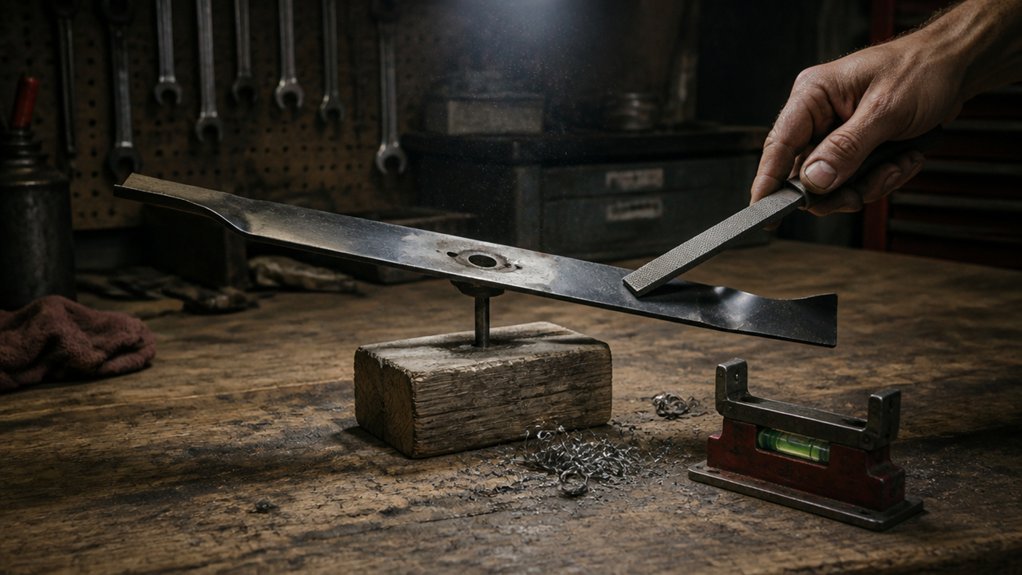
Now that you understand what unbalanced blades cost your mower, you’ll need a reliable way to check them.
Skip the nail-on-wall method—it’ll miss small imbalances due to friction. Instead, grab a dedicated blade balancer.
After sharpening, place your blade on the balancer’s low-frriction pivot. Watch which side drops—that’s your heavy end. You’ll remove material from that side only, never the cutting edge. Grind small amounts from the back edge or upper surface, then recheck. Repeat until the blade rests perfectly level.
Quality balancers run $10–$50 and come cone-style or magnetic—both deliver equal precision. True balance means zero tilt: neither end drops. This 30-second check prevents spindle damage and vibration. Don’t guess; verify every sharpen.
Recommended Products
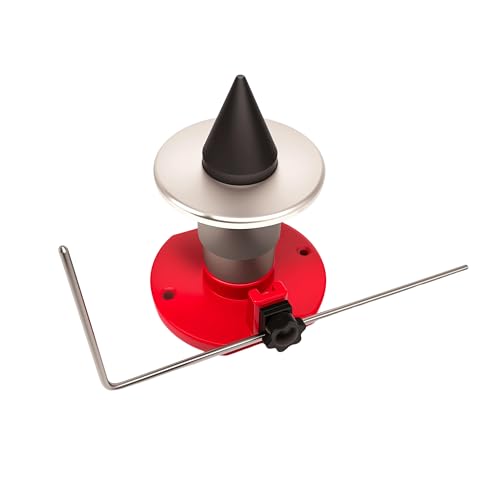
MAGNETIC DESIGN: Features strong magnetic wall mount bracket for secure storage and convenient access during blade maintenance
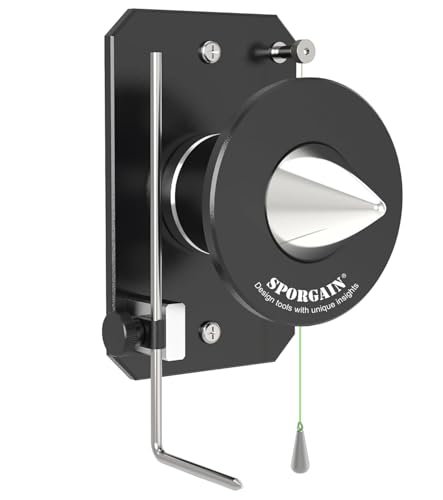
[Precision Craftsmanship]: The lawn mower blade balancer advanced finishing processes are used to ensure extreme precision in every detail, lawnmower blade balancer providing unrivalled durability and balanced performance

【Specification】Red Color; with 6 magnets
The Only Two Balancers Worth Buying
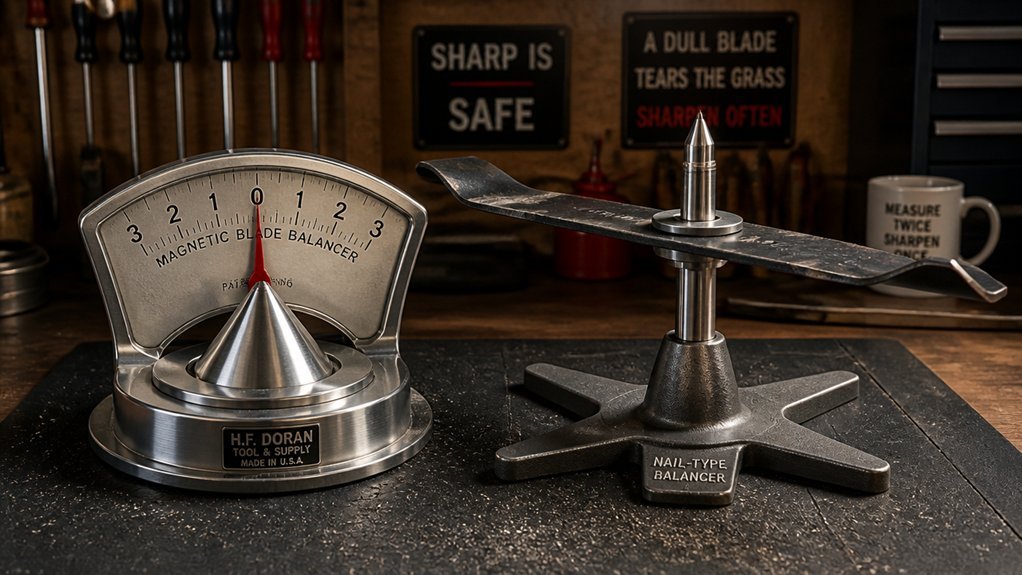
Which balancers actually deliver repeatable accuracy without wasting your money? You’ll find only two balancers worth buying for mower blades.
Cheap balancers frustrate you with inconsistent pivots and friction-induced errors. Magnetic balancers eliminate this problem—you’ll suspend mower blades on a precision shaft with minimal contact, letting gravity reveal true imbalance. Cone balancers offer your second viable option; their tapered spindle centers blades reliably, reducing wobble during testing.
Both designs cost between $10 and $50, proving you needn’t overspend. You’ll prioritize models with hardened steel pivots or rare-earth magnetic bases, as these maintain calibration through repeated use.
Generic alternatives tempt you with lower prices but introduce measurement variance. You’ll waste time chasing false readings, rebalancing unnecessarily. Invest in one proven balancer; you’ll streamline your workflow and achieve accurate blade balance consistently.
Recommended Products

Easy Blade Balancing for Smooth Cutting: Tired of wobbly mower blades? This round balancer simply sits on your blade's center to quickly check balance. A balanced blade cuts grass faster and cleaner, reduces mower vibration, and extends your machine's life—perfect for beginners and DIYers

Convenient Wall Mount: This blade balancer features a magnetic wall mount for easy storage and accessibility.

Fully functional: Lawn mower blade sharpener & Lawn mower blade balancer, used for blade sharpening and testing blade balance.
Balance Your Blades Step by Step
How precisely should you remove material from a freshly sharpened blade? You place the blade on a balancer and observe which end drops, indicating the heavier side—that’s where you’ll remove material.
When balancing mower blades, you grind only from non-cutting areas: the back edge or upper surface. Never touch your freshly sharpened cutting edge. You make light grinding passes, then return to your balancer tests. You watch closely. If one end still drops, you’ve removed too little—grind again and recheck.
Use a low-friction balancer or the nail method with steady observation. Blade balance requires patience; you’ll repeat this grind-and-check cycle until the blade rests perfectly level.
When neither end drops, you’ve achieved proper balance. You reinstall the blade for smooth, vibration-free operation.
Recommended Products

【Perfect Compatibility】This lawn mower blade balancer is designed with circular center holes, making it a perfect fit for most brands and models, including Stihl, Troy-Bilt, Husqvarna, and more. No need to worry about fit. Whether it's the model or size, the lawn mower blade balancer tool greatly gets the job done.

【Perfect Fiment】This Magnetic Wall Mount Blade Balancer fit for All Lawnmower Blades, Fits for Stihl, Troy, Husqvarna & More. Replace for part number #42-047 #339075B. Prefessional manufacture, meet or exceed for original specification and and requirement.
When to Stop Balancing and Buy New Blades
Although you can extend a blade’s service life through careful balancing, you’ll eventually reach a point where continued effort becomes impractical. If repeated blade balance attempts don’t level the blade on a low-friction balancer after multiple cycles, you’ve exceeded practical imbalance tolerance. Install replacement blades instead.
Watch for persistent wobbling or uneven tearing across the cut pattern after sharpening and balancing. These symptoms indicate structural fatigue you can’t correct. Significant edge damage, cracks from impacts, or compromised thickness also signal replacement time. Inspect mounting holes closely—elongation or bending destroys blade integrity.
Manufacturers specify imbalance tolerance limits to protect spindle bearings and ensure safe operation. When you’ve exhausted adjustment options without achieving stable equilibrium, stop. Continuing risks equipment damage and personal injury. Select replacement blades matching your mower’s specifications and resume proper maintenance protocols.
Recommended Products

Compatible with Cub Cadet, Ho-nda, Lawn-Boy, Lawnmaster, Also for Ore-gon, Scotts, Snapper, Toro, Troy-Bilt and other brand Lawn Mower.

UNIVERSAL BLADE BALANCERS – The lawn mower blade balancer is designed for precise blade balancing, ensuring a centered and level fit. The largest step on the cone measures 1.97 inches, while the base diameter is 2.36 inches

UNIVERSAL BLADE BALANCERS - Centered and level to provide accurate balancing. The largest step on the cone is 1 3/8 inches, while the base diameter is 2.36 inches. Each pack contains 2 pieces of precision blade balancers
Conclusion
You’ve balanced your blade when it rests level on the balancer with no detectable tilt. Recheck after each grinding pass—patience prevents over-correction. If the blade won’t balance after three adjustments, inspect for cracks, bends, or uneven mounting holes; replace it. Store balanced blades in matched pairs to maintain consistency. Your mower’s spindle bearings and cut quality depend on this precision.
Recommended Products

𝗟𝗔𝗪𝗡𝗠𝗢𝗪𝗘𝗥 𝗕𝗟𝗔𝗗𝗘 𝗕𝗔𝗟𝗔𝗡𝗖𝗘𝗥 𝗧𝗢𝗢𝗟: Verifies unbalanced and bent blades after sharpening, improving mower longevity with reduced vibration and engine wear providing a smoother cut

The Lawn Mower Blade Balance Tool is designed for precise blade balancing, ensuring a centered and level fit.

Lawn Mower Blade Balancer: This precision blade balancer is designed to balance mower blades after sharpening. Provides precise blade balancing and verifies unbalanced and bent blades, reduce vibration and avoid engine wear, extend mower life