
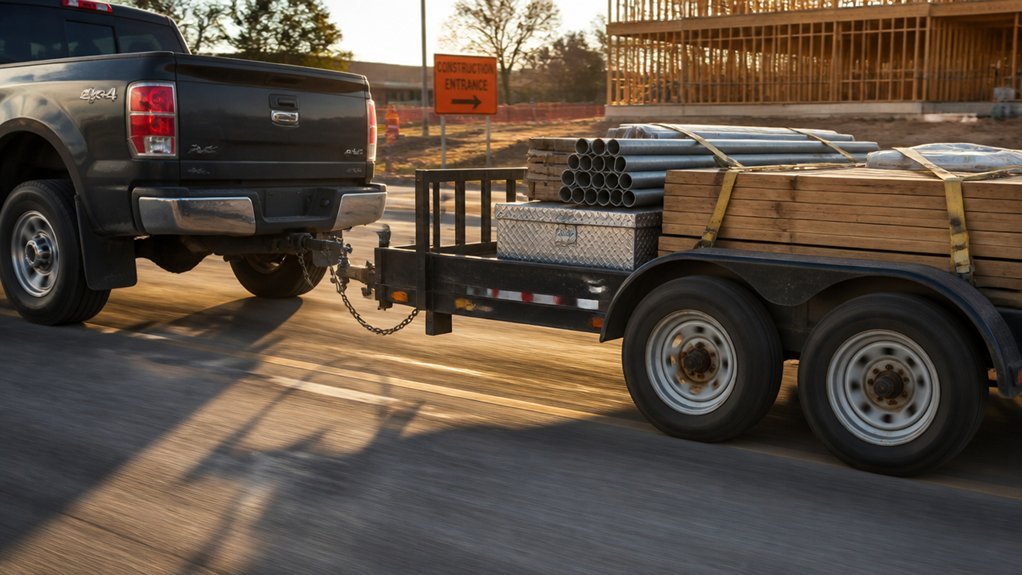
You’re hauling a loaded trailer, and your tow vehicle’s brakes are doing all the work. That’s a risk you might not survive at highway speeds or on a steep descent. State laws vary, but physics doesn’t—excess weight pushes you past stopping limits fast. The real question isn’t whether you can get away without trailer brakes; it’s whether your setup can stop in an emergency. You’re about to find out what separates legal compliance from actual safety.
Trailer Weight Thresholds: When Brakes Become Essential
How do you know when your trailer legally requires brakes? You’re navigating a fragmented regulatory landscape where thresholds vary significantly by jurisdiction. Most states mandate trailer brakes between 1,500 and 3,000 pounds gross trailer weight, though California and Nevada enforce the lower limit while others permit higher thresholds. You can’t rely solely on the common 3,000-pound rule—your compliance obligation depends on your specific location and travel routes.
You’ll encounter additional complexity with GVWR-based statutes that evaluate combined vehicle, cargo, and trailer weight against your tow vehicle’s rated capacity. Exceeding these parameters typically triggers trailer brake requirements regardless of standalone trailer weight. You must verify your home state’s regulations and any interstate destinations, as enforcement applies based on registration and transit jurisdictions. Noncompliance exposes you to liability and operational risk.
Test Your Trailer Brakes: A Simple 5-Minute Performance Check
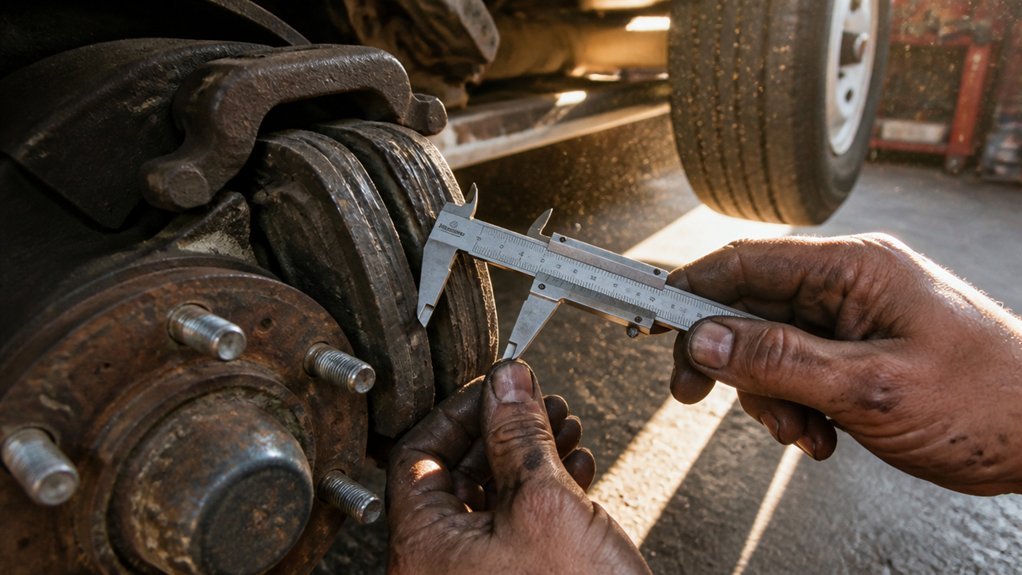
You’ve identified where brakes are legally required—now you need to verify if your existing braking system actually performs. Connect your trailer and calibrate the electrical brakes through your tow vehicle’s brake controller before conducting any braking tests.
Execute controlled stops in a safe area, comparing stopping distances with trailer brakes engaged versus disengaged. If your tow vehicle brakes harder than usual or stopping distance increases noticeably, your trailer’s braking contribution is insufficient. Test on moderate downhill grades to observe how gravity amplifies braking load. Trailer presence shouldn’t strain your vehicle’s braking capacity on descents.
Perform multiple trials if results appear inconsistent. Cross-reference your findings against the trailer’s GVWR and local braking requirements. Uncertain performance mandates professional inspection—marginal braking endangers every road user.
Recommended Products

JUNCTION BOX: The junction box is equipped with 7 color-coded terminals and wires, which can easily identify the corresponding functions of the wires and facilitate wiring. Strong junction boxes are waterproof and dust resistant to increase the service life of trailer cords

DOUBLE PRONG TRAILER PLUG: Cheemuii 7 pin trailer plug uses the premium double prong to replace the poor single prong, and the outer wrap is made of weatherproof and durable material to ensure a longer service life
Trailer Brake Laws: State Weight Limits and Interstate Travel Rules

Wherever you tow, your trailer’s braking compliance hinges on jurisdiction-specific thresholds that can trap the unwary. You must recognize that trailer brake laws vary by state of registration, yet enforcement agencies may apply their own rules to your out-of-state rig.
Many states mandate brakes at 3,000 lbs, but you’ll encounter ranges from 1,000–3,000 lbs depending on jurisdiction. Kansas requires brakes at 2,000 lbs; Nevada and California demand them at 1,500 lbs. These limits reference GVWR in some statutes, creating divergence from pure weight-based rules.
When you’re crossing state lines, conflicting requirements multiply your exposure. Complying with the strictest applicable local rule isn’t overcautious—it’s your buffer against liability and equipment violations. Audit your trailer’s GVWR against each state’s threshold before departure; your brakes aren’t optional where statute makes them compulsory.
How Trailer Brakes Shorten Stopping Distance (and Improve Control)
Why risk a longer stopping distance when your trailer can shoulder its own braking load? Your trailer brakes actively share the braking load with your tow vehicle, cutting the distance you need to stop and keeping your rig controlled during descents.
You command this system through a brake controller in your cab. It sends electrical signals to electromagnets in the trailer wheels, generating precise brake force exactly when you need it.
Without this setup, your trailer keeps pushing forward, forcing you to compensate with longer following distances and extended stopping times.
Regulated braking requirements exist specifically to manage downhill dynamics and prevent instability. Testing confirms you’ll achieve noticeably shorter stopping distances and steadier deceleration with trailer brakes engaged. You’re reducing kinetic energy faster, maintaining directional control, and mitigating the risk of trailer sway or jackknifing under hard braking.
What Happens When You Tow Without Trailer Brakes
- How much risk are you adding when your trailer contributes nothing to deceleration? You extend stopping distance considerably, forcing your tow vehicle’s brakes to dissipate kinetic energy the trailer generates. On descents or at highway speeds, this overloads your brakes, accelerating fade and reducing effectiveness.
- Your trailer’s unchecked momentum pushes against your tow vehicle, amplifying instability and rear-end collision probability. Heavier trailers compound this deterioration more severely than lighter ones, eroding control when you need it most. Many jurisdictions mandate trailer brakes above 1,500–3,000 lb thresholds; you’re violating law where applicable.
- Test your setup: brake with and without trailer brakes engaged. If stopping distance lengthens or pedal feel degrades, you’re operating beyond safe margins. You lack the deceleration performance your combined mass demands.
Electric, Surge, or Hydraulic: Which Trailer Brake Type Fits Your Setup?
When you’re selecting a braking system for your trailer, you’re choosing how much control you’ll retain under load. Electric brakes dominate road-use applications because you calibrate output and sensitivity through a brake controller, sending precise electrical signals to magnet assemblies for independent trailer braking. This adjustability reduces jackknife risk during emergency stops.
Surge brakes activate mechanically via forward momentum, eliminating electrical dependencies but sacrificing your direct control. You can’t modulate braking force; the trailer decides.
Hydraulic systems transmit pressure through fluid lines, typically reserved for specialized heavy-duty setups where compatibility constraints exist.
Evaluate your towing environment: Electric brakes suit variable terrain and load conditions requiring driver intervention. Surge brakes fit boat trailers where submersion damages electronics. Match system selection to your control demands, not convenience.
Can You Install Trailer Brakes Yourself? A Parts-and-Tools Breakdown
Where exactly you position brake assemblies determines whether your trailer stops predictably or locks unpredictably under load. Installing trailer brakes yourself demands precision: you’ll mount electric, surge, or hydraulic assemblies on each axle, integrating drums or rotors with strict manufacturer tolerances. Required tools include a volt/ohm meter, wire strippers, drill with bits, torque wrench, and brake line tools for hydraulic runs. You’ll splice 6- or 7-pin wiring harnesses, establish solid grounds, and connect to your brake controller. Electric systems require controller calibration matching trailer weight to prevent axle lockup; hydraulic setups needproperly bled lines and actuator positioning. Post-installation testing in controlled environments verifies magnet engagement, circuit integrity, and progressive deceleration under load before any road exposure.
Why Breakaway Systems Are Required (and How They Save You)
What happens if your trailer separates from your tow vehicle at highway speed? Without intervention, you’ve got a runaway trailer weighing thousands of pounds, endangering everyone in its path.
A breakaway system prevents this catastrophe. You connect a cable from your trailer to your tow vehicle; if separation occurs, the cable pulls a pin, activating an onboard battery that powers your trailer’s electric brakes. The trailer stops itself—no driver input required.
Many jurisdictions mandate breakaway systems by law, and you’ll find them standard on quality trailers. You must test yours regularly: verify battery charge, confirm cable engagement, and ensure the pin triggers braking. This backup delivers predictable stopping force independent of your tow vehicle, directly reducing crash risk when mechanical failure strikes.
Conclusion
You’ll face legal penalties, catastrophic brake fade, and loss of vehicle control if you ignore trailer brake requirements. Verify your state’s GVWR threshold—typically 1,500–3,000 pounds—before towing. Install electric, surge, or hydraulic brakes matched to your load, test controller response monthly, and maintain breakaway systems. Your stopping distance, stability, and liability exposure depend on these systems functioning under peak thermal stress. Don’t tow unbraked beyond legal limits.