

You’ve lined up your hitch, checked your mirrors, and now you’re staring at the empty space behind you that suddenly looks half its actual size. Before your spotter waves a single hand signal, you need to commit to a method that protects your rig, your property, and your confidence. One wrong move compounds fast, but you’ve got several reliable techniques to master first.
Slow Down and Survey Your Space Before Backing Your Trailer
Why rush what demands your full attention? You’re backing up thousands of pounds of equipment, and speed kills precision. Take it slow to reduce accidents and ease your nerves—you’ll improve with practice over time.
Before you begin, you must inspect your campsite thoroughly. Walk the area and identify debris, branches, rocks, potholes, and soft soil. Confirm you’ve got adequate space to maneuver safely. You’re responsible for what your rear view reveals, so don’t trust a cursory glance.
Assign a spotter to guide your maneuvers. You maintain control while they provide hand signals or verbal commands. Deploy your extended tow mirrors to eliminate blind spots. Keep your hands at the wheel’s bottom to prevent oversteering. Communicate constantly with your spotter, practice with cones in open spaces, and exercise patience.
Recommended Products

Suitable for 99% of vehicles: :Our mirror extensions for towing trailer mirrors are designed to be compatible with most vehicle models, providing excellent visibility and safety for your towing needs.car mirror extender towing mirror extensions are the perfect addition to all your caravanning or camping trips. Drive to your destination safely and securely with extended vision of your caravan,camper trailer,SUVs, trailers, RVs, trucks, and more, our tow mirror extenders offer unparalleled versatility.

【REDUCES BLIND SPOTS FOR SAFER TOWING】Designed specifically for towing, these side mirror extensions dramatically expand your field of vision. The large main mirror lets you clearly see the full length of your trailer, while the smaller adjustable mirror covers close-in blind spots near your vehicle. Perfect for lane changes, merging, and backing up with confidence on highways or narrow roads
Set Up Your Angle With the S-Turn Technique
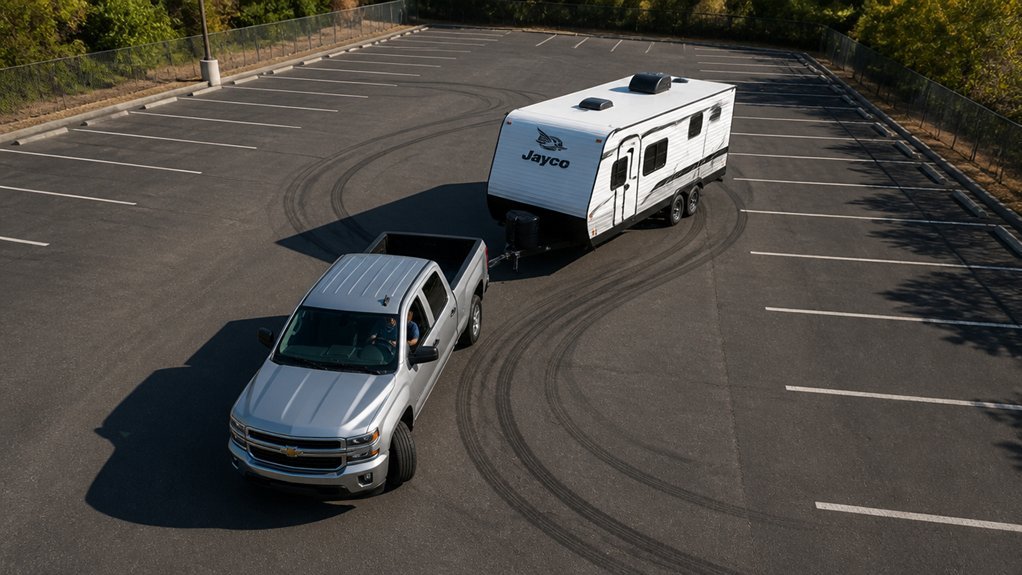
Where’s the smartest place to position your rig before you begin reversing? Position your vehicle to the right side of the entrance, pull up alongside with your bumper near the far end, then swing out left to set up for left-side trailer alignment.
Before you enter the left ditch, crank the steering back to the right and stop midway between road shoulders to prepare for backing up. You’re now staged for the critical maneuver.
In reverse, turn the wheels as if steering left to tighten the trailer’s turn radius. After a couple of feet, gradually unsteer by turning wheels right to straighten the rig. Monitor your side mirrors constantly; they’ll confirm your trailer alignment throughout the process.
Follow the trailer with your truck to maintain alignment and avoid over-correction once your initial turn is set. Use your spotter’s signals for final positioning and stop when they indicate proper alignment with your intended backing path.
Recommended Products

【High Visibility Cone】The bright fluorescent orange color throughout makes the road cone very eye-catching and easy to remind people. It can be seen from any angle, day or night.

Durable Design: Crafted from robust polyethylene vinyl plastic, these cones promise longevity and stability. Ideal for real motorcycle cones and traffic cones, they provide reliable support for repeated use and various applications
Steer From the Bottom of the Wheel When Backing Up
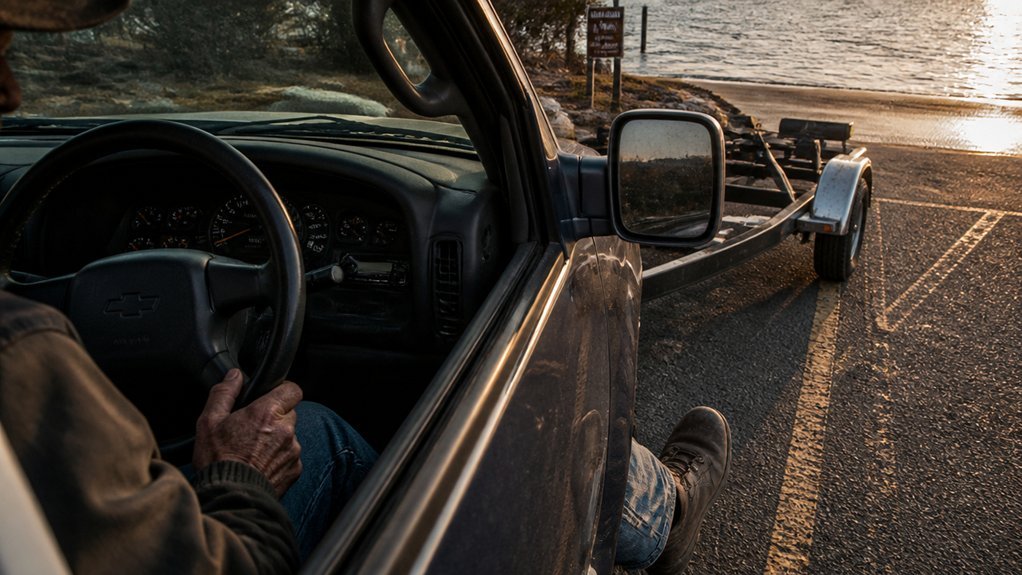
Once you’ve staged your rig with the S-turn, your hand position on the wheel determines how precisely you control the trailer’s path.
Place your hands at the bottom of the wheel—at the 6 o’clock position—when backing up. This grip creates a direct relationship between hand movement and trailer direction: push left, the trailer goes left; push right, it goes right.
Visualize your vehicle pushing the trailer, with each steering input causing the trailer to pivot opposite your hand movement. This mental model improves trailer visibility in your mind before you even look back. Keep movements slow and deliberate. Rapid turns invite jackknifing. Gradually unsteer to straighten the rig as the trailer follows your intended arc. Maintain control through measured inputs, never overcorrecting.
Recommended Products

1 MINUTE MAGNETIC QUICK INSTALL: This backup camera for truck features a base with 6 powerful magnets made from "3rd generation rare earth permanent NdFeB magnets." It remains functional in extreme conditions, withstanding temperatures as low as -452°F and as high as 1166°F without demagnetizing or falling off. The wireless backup camera base is coated with a soft rubber layer, offering excellent wear resistance while protecting your vehicle's paintwork without compromising the magnetic strength

►【Easy Installation in 8 Mins】The waterproof camera and HD monitor are powered by one power supply, No need to power the camera and monitor separately, just connect the monitor to a cigarette lighter adapter/Acc/fuse etc, then wire the camera and monitor. Plug and Play - Much less installation effort than wireless rear camera systems.

Dual Antennas Design with Enhanced Stability: Y27 RV backup camera features 2023 unique dual-antenna design and chip, offering a more stable signal and a 50% higher refresh rate. The signal can reach up to 825ft in open areas, with a working range of up to 320ft on vehicles.
Position Your Spotter Where You Can See Them
How do you keep both eyes on your trailer and maintain confidence in each backward inch? You establish unwavering spotter visibility. Position your helper where you can see their face directly in your side mirror—never behind the trailer where blind spots hide them. This placement ensures constant visual contact throughout the maneuver.
Your back-up protocol demands precision. Roll down your windows to enable clear communication; verbal cues confirm readiness before each movement. Your spotter employs deliberate hand signals—pointed direction, stop commands, distance warnings—eliminating ambiguity. Rehearse this signal vocabulary together until responses become automatic.
Assign fixed roles: you steer while they guide. Repeat this identical routine every time you back up. Consistency prevents hesitation, reduces risk, and builds trust. Your protocol isn’t optional—it’s your safety system.
Recommended Products

Easy Clip-on Install - no tools or additional hardware required
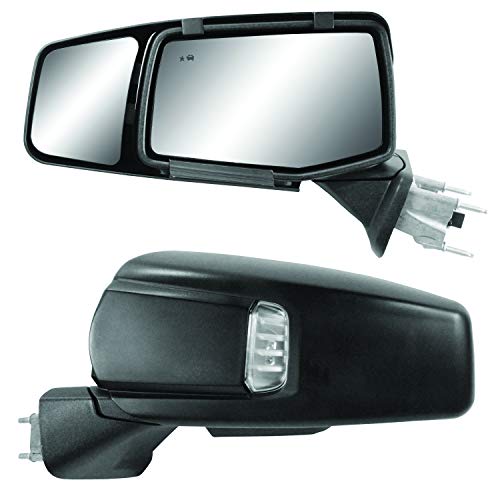
Easy Clip-on Install - no tools or additional hardware required

【REDUCES BLIND SPOTS FOR SAFER TOWING】Designed specifically for towing, these side mirror extensions dramatically expand your field of vision. The large main mirror lets you clearly see the full length of your trailer, while the smaller adjustable mirror covers close-in blind spots near your vehicle. Perfect for lane changes, merging, and backing up with confidence on highways or narrow roads
Recover From a Trailer Jackknife Quickly and Safely
Why does the trailer keep drifting off course despite your careful steering? You’re likely oversteering or moving too fast, which triggers a jackknife. Maintain a slow, controlled pace throughout backing to preserve reaction time. Watch your spotter closely; they’ll alert you before the angle becomes critical.
If the trailer swings, steer immediately toward the direction of trailer movement to recenter, then resume gradual backing with small wheel adjustments. Never jerk the wheel—abrupt inputs worsen jackknifing. Recheck alignment constantly.
When jackknifing risk escalates, stop completely. Pull forward to reset your position, then re-enter the sequence with a more gradual turn. Repeat this reset as needed. Your spotter guides each correction with clear, repeatable signals. Precision and patience prevent damage and injury.
Adjust for Small Trailers, Driveways, and Tight Backing Angles
Mastering jackknife recovery builds the foundation, but real-world backing demands adaptation to tighter constraints. You’ll find shorter trailers swing faster than longer ones, demanding slight steering input to maintain control. When backing up into driveways, rely heavily on your tow mirrors—monitor both sides continuously for trailer movement and proximity to hazards. Before committing, scan the street for poles, mailboxes, and obstacles that could snag your rig. Proceed slowly; you’re not racing against time. Make small steering adjustments and avoid rapid reversals that destabilize your setup. If the trailer jackknifes or drifts off alignment, stop immediately. Adjust your steering, then reverse. When angles become unworkable, pull forward and reframe your approach rather than forcing the maneuver.
Recommended Products

1080P HD Image Quality for Clear, Crisp Visibility: Enjoy crystal-clear 1080P HD video with a wide viewing angle, providing enhanced visibility while reversing, towing, or parking. Ideal for RVs, trucks, trailers, and SUVs. Sharp, detailed footage improves safety, helping you avoid accidents by giving you a clear view of your surroundings.

7.2" Dual-Split Screen for Full Coverage: The trailer camera features a 7.2-inch 16:9 dual-split screen, providing a wide, distortion-free view of your surroundings. This innovative design eliminates blind spots, making it perfect for trucks, RVs, and trailers. Install it anywhere for complete coverage and peace of mind
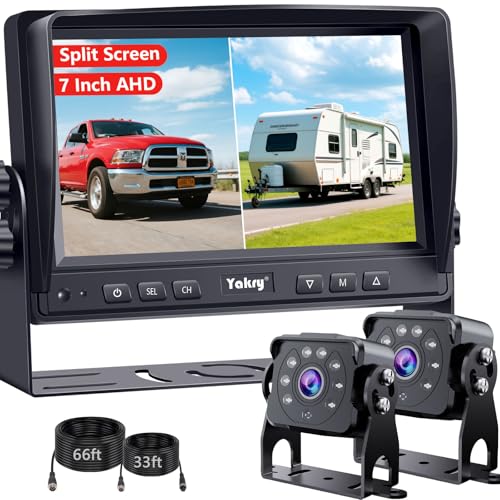
Split-Screen Dual Camera System: Maximize Safety & Coverage, watch both back up camera for truck. rv feeds simultaneously on a split-screen display—perfect for monitoring rear/front views, blind spots, or hitching trailers. Eliminate guesswork and prevent accidents with real-time dual perspectives
Practice Trailer Backing in an Open Lot First
Where better to build your backing skills than a wide, empty lot where mistakes cost nothing but time? Locate an open lot with visible lines or place cones to mark boundaries. You’ll practice backing slowly, keeping hands at six o’clock, visualizing how the trailer pivots opposite your wheel input. Watch your side mirrors constantly; they’ll reveal trailer angle and drift. Roll down windows when sight lines block your view. If you’ve got a spotter, establish clear hand signals before you start. Begin with wide, gradual arcs to prevent jackknifing, tightening your path only as you sense the trailer’s response. Repeat the sequence until the rhythm feels automatic. Repetitive practice backing in this controlled space builds muscle memory you’ll rely on when spaces get tight.
Recommended Products

Uses only a single thumb screw on each clamp for quick and easy fitting

Fits the standard mirrors of: 1999-2007 Chevy/GMC full-size pickups,silverado Sierra; 2000-2007 GMC/Chevy Tahoe, Suburban, Avalanche; 2002-2007 cadiallc escalade.
Conclusion
You’ve got the fundamentals now: survey your space, set your angle with the S-turn, steer from the bottom of the wheel, and keep your spotter visible. Stay alert for jackknifes and adjust for tight spots or smaller trailers. Most importantly, practice in an open lot until these steps feel automatic. Backing a trailer demands patience, but with repetition, you’ll build the confidence and control to maneuver safely every time.