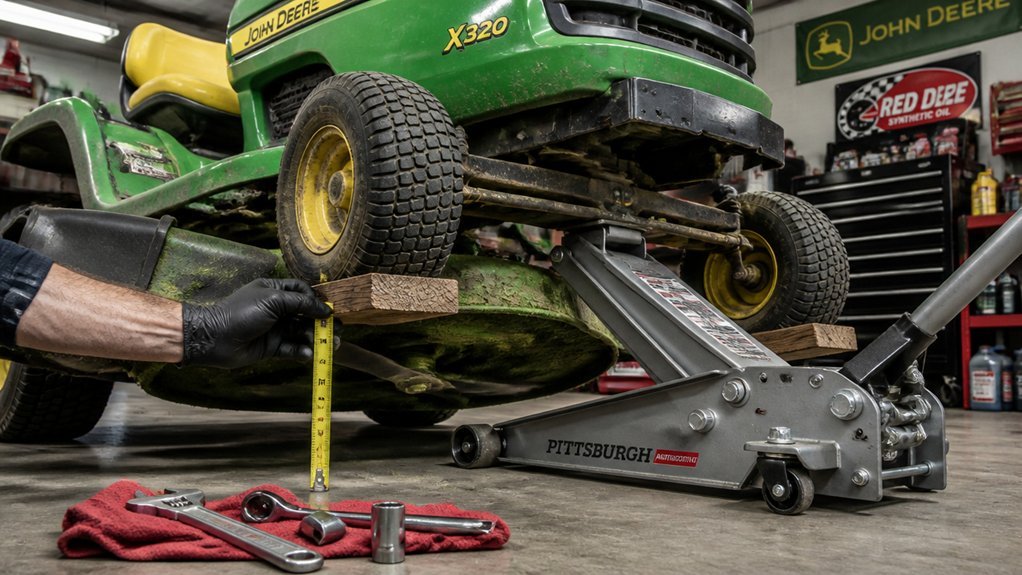

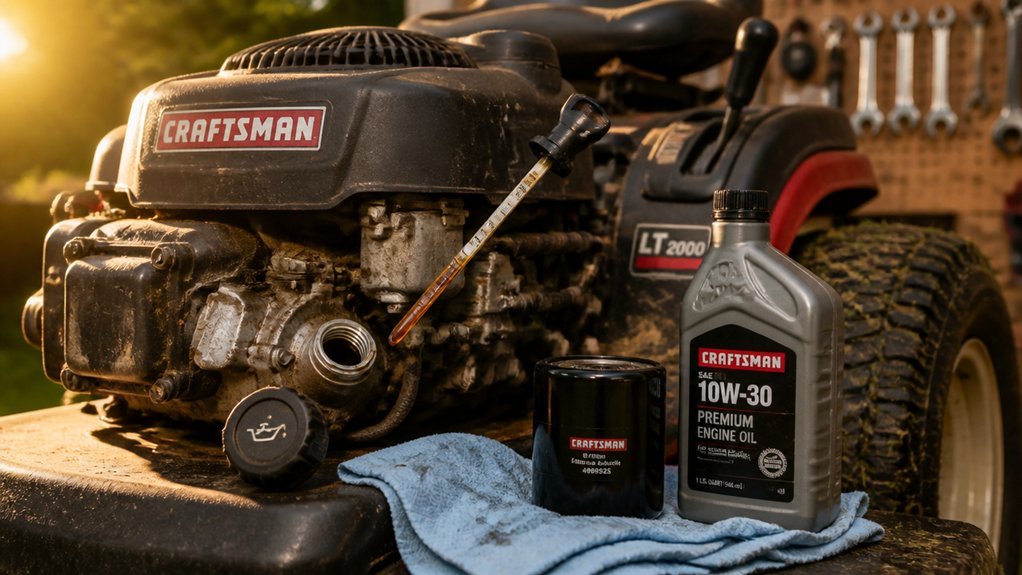
You’re about to change the oil in your Craftsman riding mower, and you face a shelf full of options that all look similar. Choose wrong, and you’ll damage the engine or void your warranty. The stakes are higher than most owners realize, and the specific details you’ll need aren’t always printed on the dipstick.
What Type of Oil Does a Craftsman Riding Mower Need?
When you’re topping off your Craftsman riding mower, you’ll need the right oil to keep that engine running strong. You’re selecting Craftsman riding mower oil based on your engine’s specifications and operating conditions. Your oil type determines protection across temperature ranges.
You’ll use synthetic oil 5W-30 for year-round operation; 15W-50 provides enhanced protection in extreme heat. Briggs & Stratton warranties require synthetic or high-quality detergent oils meeting SF–SJ classification or higher. You’re avoiding oil additives and sticking to manufacturer specifications.
You’ll perform your oil change every 100 hours maintenance interval or annually. Check your dipstick on level ground—you’re adding oil when readings fall between full and add marks. Add small quantities, typically a few ounces, until you reach proper oil capacity. Don’t overfill; you’re maintaining precise levels for optimal engine longevity.
Recommended Products

100% Synthetic Formula: Provides superior performance and protection for air-cooled 4-cycle engines

Phosphorus Replacement Technology helps extend emission system life

Advanced protection against the four main causes of engine breakdown: wear friction heat and deposits
How Much Oil Does Your Craftsman Riding Mower Hold?
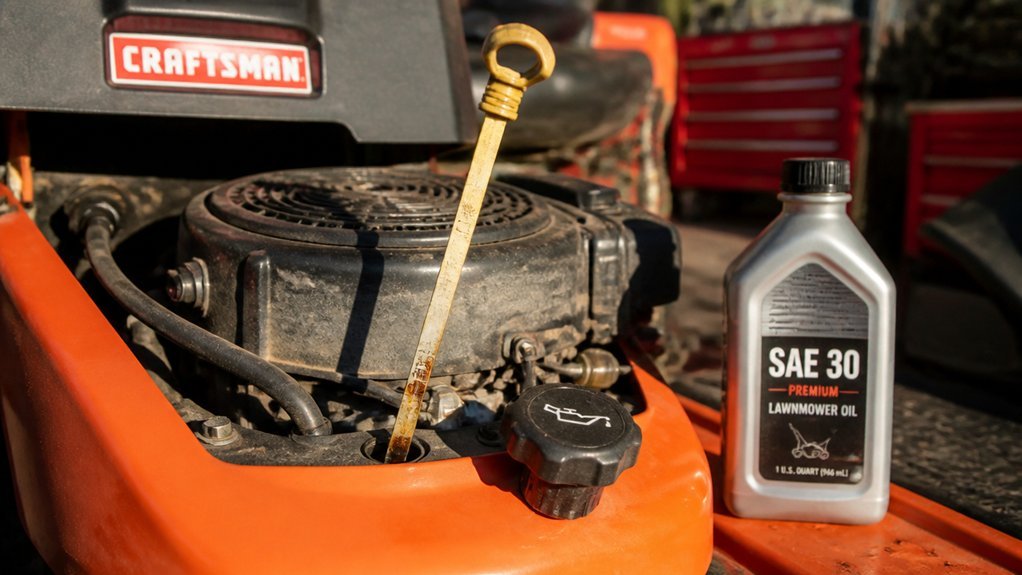
You’ll find your Craftsman riding mower holds either 48 or 64 ounces of oil, depending on the engine model underneath the hood. Your oil capacity directly correlates with whether you’ve got a smaller single-cylinder or larger twin-cylinder Briggs & Stratton powerplant. Since capacity varies, you must verify specifications in your engine manual before adding oil. Whether you’re running conventional SAE 10W-30 or synthetic oil, overfilling damages seals and underfilling causes premature wear. Set your oil change interval at every 100 hours or annually, whichever comes first. When checking, park your riding mower on level ground, remove the dipstick, wipe it clean, reinsert fully, then withdraw to confirm level sits between marks. If uncertain, cross-reference your engine model number with Briggs & Stratton documentation or contact an authorized dealer for exact capacity.
Recommended Products


15W-50 Full Synthetic Oil
How to Check Your Oil Level in 4 Steps
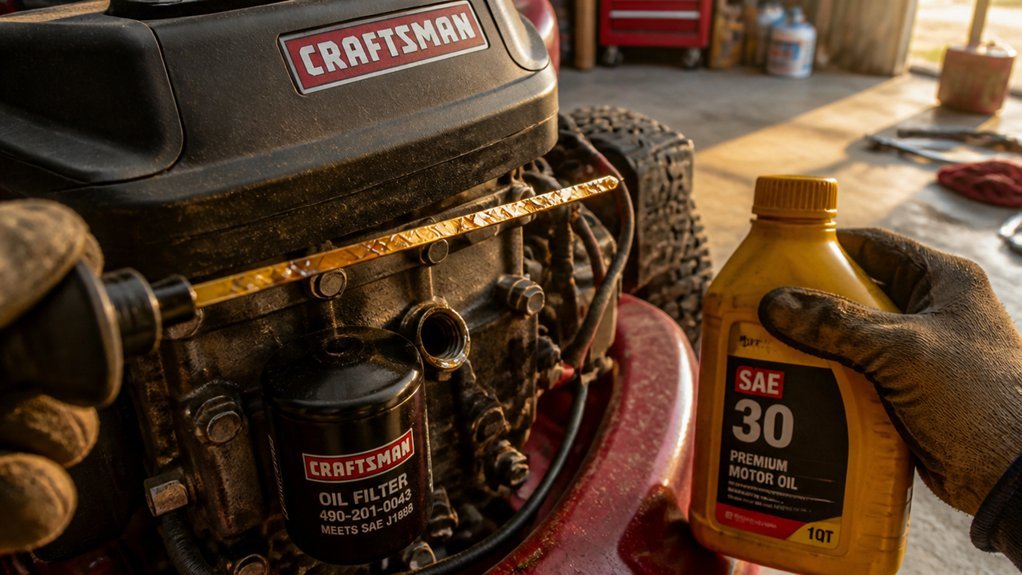
Where exactly should you check your oil to get a reliable reading?
Park your Craftsman riding mower on a level surface, let the engine cool, then locate the dipstick. Remove it, wipe it clean, reinsert fully, and withdraw to check oil level between the full and add marks.
To add oil, pour a few ounces at a time to prevent overfilling. Wait briefly for oil settlement, then recheck using the dipstick. This avoids inaccurate readings from un-settled oil.
If you’re uncertain about oil specifications, consult Briggs & Stratton documentation for your specific engine. Use SF/SG/SJ detergent oil or higher classification. Synthetic oil is allowed without modifying your change interval, provided it meets these API ratings. Proper technique ensures adequate lubrication and prevents engine damage.
Recommended Products

SAE 10W-30 MOTOR OIL FOR SMALL ENGINES: One 32 fl oz bottle of STP Premium Synthetic Blend 4 Cycle Small Engine Oil SAE 10W-30, formulated for small engines in lawnmowers, generators, tractors, snow blowers, and other outdoor power equipment

Advanced protection against the four main causes of engine breakdown: wear friction heat and deposits

10W-30 motor oil formulated to keep engines clean and responsive
When to Change Oil and Why It Matters
Now that you’ve got your oil level dialed in, you’re ready to nail down the timing. Your maintenance schedule should follow an oil change interval of every 100 hours or annually, whichever hits first. Your riding mower’s oil capacity—typically 48 oz or 64 oz—determines how much you’ll purchase. You can’t stretch synthetic oil beyond this interval; it’ll degrade and compromise engine protection. Match viscosity to your specs; oil type compatibility directly affects Briggs/Stratton warranty coverage. Skipping changes accelerates wear under high-load mowing cycles. Watch temperature effects on viscosity, too. You’re protecting cylinder walls, pistons, and bearings with every drain-and-fill cycle. Stick to your maintenance schedule, verify oil capacity before buying supplies, and you’ll maximize your riding mower’s service life without question.
Recommended Products

SAE 30 4-Stroke Mower Engine Oil
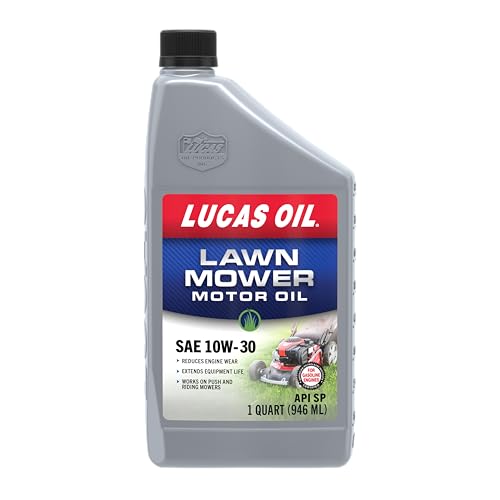
Reduces Engine Wear and extends equipment life
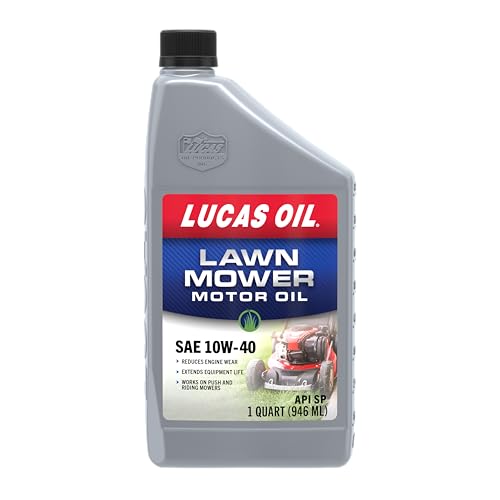
Reduces Engine Wear and extends equipment life
Does Weather Affect Your Oil Choice?
How considerably does ambient temperature shape your oil selection? Weather impact dictates viscosity choices for optimal engine protection. You select 5W-30 synthetic oil when temperature drops below 40°F, since SAE 30 thickens excessively and strains starting performance.
Conversely, you’ll watch oil consumption closely with 10W-30 above 80°F, as thermal thinning accelerates burn-off in sustained operation.
For hot-weather continuous use, you deploy heavier synthetic formulations like Vanguard 15W-50.
You must match viscosity grade to anticipated operating conditions—colder climates demand lower cold-crank numbers, while hotter environments require robust high-temperature stability.
Always prioritize Briggs & Stratton warranty-certified oils; these specifications ensure validated additive packages and thermal performance across seasonal extremes.
You consult your manual first, but understand that temperature fluctuations directly determine lubricant efficacy and long-term engine durability.
Recommended Products

2-18oz Briggs and Stratton 30W Oil

2 Pack Genuine Briggs & Stratton 492932s Oil Filter 492932 Vanguard Small OEM
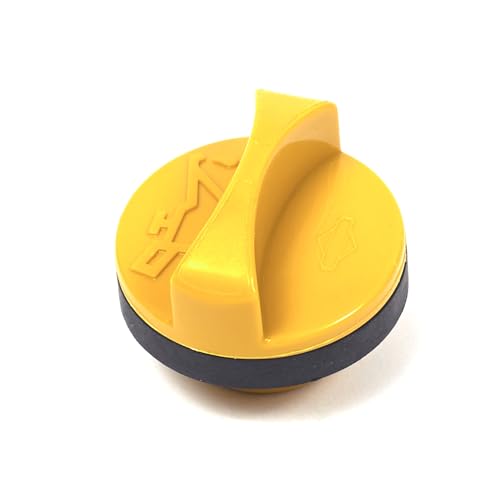
Briggs & Stratton 809500
Should You Use Synthetic Oil in Your Craftsman Mower?
Temperature-based viscosity decisions lead naturally into the broader question of base oil composition. You can use synthetic oil in your Craftsman mower across all temperature ranges without altering the oil change interval. Synthetic 5W-30 or Vanguard 15W-50 improves cold-weather starting and high-temperature protection, with Vanguard 15W-50 specifically recommended for continuous-use conditions.
For warranty compliance, you must select Briggs & Stratton Synthetic Oil when choosing this oil type for your Craftsman mower. Break-in procedures remain unchanged, and you still perform regular maintenance regardless of oil capacity specifications.
Synthetic oil may reduce oil consumption under certain operating conditions, but you continue monitoring levels per manufacturer guidelines. Your maintenance discipline determines engine longevity more than base oil selection alone.
Recommended Products

The information below is per-pack only

Genuine Briggs & Stratton replacement part.

Quart Full Synthetic 5W-30 4-cycle Engine Oil
Can Synthetic Oil Extend Your Change Interval?
Why switch to synthetic oil if you’re hoping to stretch your change interval? You can’t. Synthetic oil doesn’t extend your oil change interval on your riding mower. You must follow the same maintenance schedule regardless of oil type compatibility. Briggs & Stratton warranty requires adherence to specified intervals, even with synthetic oil handling extreme temperature ranges.
You still perform every oil check and change exactly as timed by hours or calendar dates. Synthetic oil may improve starting performance and reduce oil consumption in certain conditions, but these benefits don’t modify your official obligations. You gain no exemption from routine maintenance.
Whether conventional or synthetic, you inspect levels, monitor condition, and complete changes identically. Base decisions on operational needs, not interval extension.
Recommended Products

5-Quart Full Synthetic 15W-50 4-cycle Engine Oil

Genuine Vanguard 15W-50 5-Quart Synthetic Oil

High-Quality 2-Cycle Oil: Specially formulated for higher operating temperatures of air-cooled engines
How to Find the Exact Oil for Your Engine Model
Where exactly do you look when your engine needs the right oil? Start with your engine model. Locate it on the engine cover or frame, then enter it into the Briggs & Stratton Oil Finder tool online. Input your equipment type as riding mower and your operating temperature to receive the precise oil type, viscosity, and oil capacity specifications. Most riding mowers require 48–64 oz, but you’ll confirm exact quantities through this search. Select Briggs & Stratton Warranty Certified oils to meet warranty requirements; synthetic oil remains acceptable without extending change intervals. When verifying levels, park your riding mower on a level surface, perform the level surface Weight/dipstick procedure: wipe clean, reinstall, then read between the full and add marks after settling time.
Recommended Products

Kubota SAE 10W-30 Engine Oil Part # 70000-10201 (1 ) Gallon


OEM John Deere Part Number: TY22029
Conclusion
You will maintain optimal engine performance by selecting the correct viscosity grade—5W-30 for year-round operation or 15W-50 for extreme heat—and verifying exact capacity against your specific Briggs & Stratton model. Check levels on level ground, adhere to 100-hour or annual change intervals, and prioritize API SF-SJ or higher rated oils. Synthetic formulations offer superior protection but do not override manufacturer-specified drain intervals. Preserve warranty coverage by consulting your operator’s manual before every service.
Recommended Products

Reduces Engine Wear and extends equipment life

25 357 64-S has replaced 25 357 06 S

High quality base oil cushion parts to protect against friction and helps control engine oil viscosity over the oil drain period