

Your Husqvarna riding mower’s engine needs the right oil type and capacity to perform reliably, but you’ll find conflicting advice online. SAE 30 works for moderate climates, yet synthetic multi-grades often suit your conditions better. The real question: how do you match your specific model to the correct viscosity, API rating, and fill volume without voiding your warranty?
What Oil Type Does Your Husqvarna Riding Mower Need?
How do you determine the right oil for your Husqvarna riding mower? You identify the correct Husqvarna riding mower oil by consulting your owner’s manual for the exact viscosity and capacity specific to your model.
You typically select SAE 30 for standard operating conditions, though you’ll adjust to 5W-30 or synthetic 5W-30/15W-50 in colder climates.
You must choose high-quality detergent oil classified SF, SG, SH, SJ, or higher.
You’re permitted to use synthetic oil across all temperature ranges for enhanced protection.
When your mower runs a Briggs engine, you’ll use Briggs & Stratton-branded synthetic oil to maintain warranty coverage and ensure compatibility.
You verify viscosity ratings against anticipated ambient temperatures, and you cross-reference capacity specifications, though you’ll determine exact fill volumes through your manual’s engine-specific guidance.
Recommended Products

SAE 10W-30 MOTOR OIL FOR SMALL ENGINES: One 32 fl oz bottle of STP Premium Synthetic Blend 4 Cycle Small Engine Oil SAE 10W-30, formulated for small engines in lawnmowers, generators, tractors, snow blowers, and other outdoor power equipment


SAE 30 4-Stroke Mower Engine Oil
How Much Oil Does Your Riding Mower Hold?

Your Husqvarna riding mower’s oil capacity depends on its specific engine model, with most units holding either 48 or 64 ounces of oil. Check your owner’s manual to confirm the exact oil capacity for your riding mower before performing maintenance.
Position your Husqvarna on a level surface when checking oil levels. Remove the dipstick, wipe it clean, reinsert fully, then remove again to read accurately. Allow several minutes for oil to settle for precise measurement.
Select the proper oil type matching your engine specifications—typically Briggs & Stratton or compatible formulations in recommended viscosity grades. Always use a funnel when refilling to prevent spills and contamination. Avoid overfilling; excess oil damages seals and reduces engine performance. Maintain correct oil capacity to ensure proper lubrication and extend your riding mower’s operational lifespan.
Recommended Products

100% Synthetic Formula: Provides superior performance and protection for air-cooled 4-cycle engines

Semi-Synthetic 5W-30 4-Stroke Oil

Phosphorus Replacement Technology to help extend the life of the emission system
When Should You Change Your Husqvarna Riding Mower’s Oil?

Why does oil change timing matter for your Husqvarna riding mower? Engine wear accelerates when degraded oil fails to lubricate properly, so you’ll want to establish a consistent oil change interval. Change oil at least once per season, though your actual schedule depends on workload, dust exposure, and operating conditions.
Monitor your oil level every five hours of continuous use to gauge contamination and depletion. Your Husqvarna riding mower’s larger oil capacity—typically 48 to 64 ounces versus 15 to 18 ounces for push mowers—supports extended operation but demands proportionate attention.
Select your oil type based on ambient temperature: SAE 30 for warm conditions, 5W-30 or synthetic for cold starts. Always consult manual recommendations for exact specifications, as adherence protects warranty coverage and maximizes engine longevity.
Recommended Products

2-18oz Briggs and Stratton 30W Oil

Genuine Briggs & Stratton replacement part.

The information below is per-pack only
Which Oil Works Better: SAE 30 or 10W-30?
When you’re weighing SAE 30 against 10W-30 for your Husqvarna riding mower, base the decision on your typical operating temperatures and starting conditions.
SAE 30 delivers reliable viscosity protection in warmer climates, but you’ll encounter hard starting below 4°C (40°F). For cold-weather start reliability, you’ll want 10W-30’s broader temperature range. However, you’ll notice 10W-30 may increase oil consumption during sustained high-temperature operation compared to SAE 30’s stable single-grade performance. You’ll find 10W-30 maintains better flow at startup, reducing engine wear in cooler months.
Before selecting, you’ll check your manual for warranty considerations, as Husqvarna specifies approved viscosities for coverage validity. You’ll match your oil choice to your climate: SAE 30 for consistent warmth, 10W-30 for variable or cooler conditions.
Recommended Products
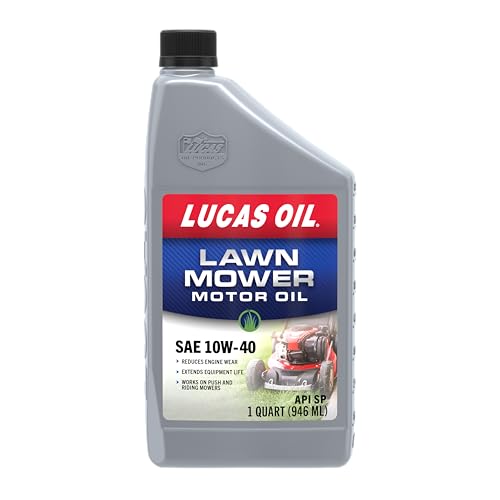
Reduces Engine Wear and extends equipment life
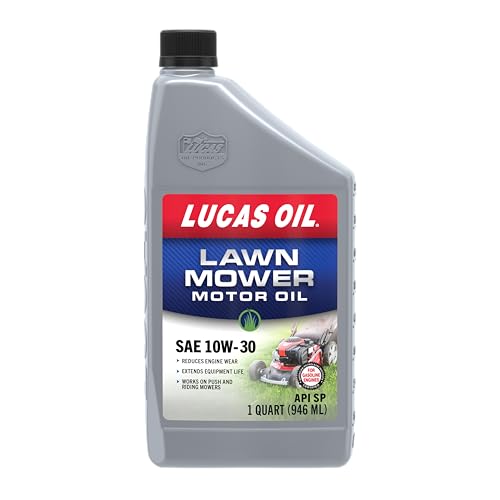
Reduces Engine Wear and extends equipment life

Reduces Engine Wear and extends equipment life
Can You Use Synthetic Oil in Your Husqvarna Riding Mower?
Synthetic oil offers a viable alternative to conventional grades for Husqvarna riding mowers, delivering consistent performance across all temperature ranges without requiring adjustments to oil change intervals. You can select synthetic 5W-30 or 15W-50 as your oil type for most Husqvarna riding mower models, ensuring adequate viscosity protection across varying climates.
Warranty compatibility depends strictly on adherence to engine specifications outlined in your owner’s manual. You must verify that your selected synthetic oil meets API service classifications and viscosity requirements.
Using synthetic oil doesn’t extend oil change intervals; you’ll continue following standard maintenance schedules regardless of formulation. Always confirm model-specific oil type recommendations before filling, as engine designs dictate suitable lubricant properties.
You maintain warranty coverage by using quality synthetic products that meet or exceed manufacturer specifications.
Recommended Products

High-Quality 2-Cycle Oil: Specially formulated for higher operating temperatures of air-cooled engines


How Do You Check Oil on a Husqvarna Riding Mower?
Where exactly do you start when checking oil on your Husqvarna riding mower? Park your riding mower on a level surface and let the oil settle.
Remove the dipstick, wipe it clean, re-insert it fully, then withdraw it to read the oil level. The mark should fall between the full and add lines.
If you’ve added oil, wait several minutes before rechecking the dipstick; rushing yields inaccurate measurements.
Use quality oil—SAE 30 or your manual’s specified grade—and avoid overfilling, which strains your Husqvarna’s engine.
Check oil level before each mowing session and periodically throughout the season.
Consult your operator manual for model-specific dipstick locations and capacity. Consistent monitoring prevents premature wear and keeps your riding mower operating at peak performance.
Recommended Products

HIGH-ZINC FORMULA: Contains 2X the zinc of OEM and competitor oils, delivering unmatched wear protection for small engines

Please check Service Manual for Fitment Information

HIGH-ZINC FORMULA: Contains 2X the zinc of OEM and competitor oils, delivering unmatched wear protection for small engines
How Do You Change Oil on a Husqvarna Riding Mower?
How exactly do you swap out that old oil? You perform an oil change on your Husqvarna riding mower by draining the old oil from the filler spout. Tilt the mower to ensure complete drainage into a clean pan or bucket. Your riding mower’s oil capacity typically ranges from 48 oz to 64 oz, though you’ll confirm exact amounts in your model’s manual. After draining, refill with manufacturer-recommended oil. Check the dipstick level carefully, adding oil gradually to reach the proper mark without overfilling. Reconnect the oil cap and dipstick securely. Dispose of used oil per local regulations—never pour it down drains. Restart the engine in an open area to verify proper circulation. You’ve now completed the oil change.
Recommended Products

Phosphorus Replacement Technology helps extend emission system life

Ariens/Gravely OEM Part Number 00091000

Mobil 1 advanced full-synthetic motor oil 5W-30 utilizes Mobil 1’s signature Triple Action Formula to deliver outstanding engine performance, protection, and cleanliness.
What Happens If You Use the Wrong Oil?
Once you’ve finished changing your oil, you’ll want to verify you’re running the correct type—using the wrong oil in your Husqvarna riding mower creates immediate and cumulative problems for your engine. Improper lubrication fails to establish adequate oil films between moving parts, directly accelerating engine wear. Suboptimal oil viscosity disrupts proper film formation; you’ll risk increased friction and component damage over time. Incompatible oils won’t meet your engine’s temperature requirements, causing hard starts in cold conditions or excessive consumption in heat. Deviating from specified grades—such as skipping SAE 30 when required—brings serious warranty impact. Using non-approved synthetics or incorrect viscosities voids coverage and complicates maintenance. Always match your manual’s specifications exactly to protect performance and longevity.
Recommended Products

Help keep your outdoor power equipment running at peak performance by using Briggs and Stratton replacement and maintenance parts.Only Briggs and Stratton genuine parts are specially designed to exact OEM standards, manufactured and tested to help deliver optimum performance in Briggs and Stratton engines.Not only are Briggs and Stratton genuine parts guaranteed to fit, but using them ensures that the Briggs and Stratton engine they are installed on complies with applicable (EPA) emission regula

Kit includes: (1) 100028 48 oz bottle, (1) 100005 18 oz bottle, (1) 696854, (1) Oil absorbent pad

Briggs & Stratton 100074 Synthetic SAE 5W-30 Engine Oil (2 Quarts)
Where Can You Find Your Mower’s Official Oil Requirements?
Your mower’s official oil specifications reside in several authoritative sources, each offering distinct advantages depending on your needs. You should consult your owner’s manual first, as it contains the exact oil specification and viscosity for your specific Husqvarna riding mower engine. You’ll find temperature-based alternatives there when SAE 30 isn’t suitable. You can also access the Husqvarna Help Center and Support pages for model-specific compatibility guidance. You should use the Oil Finder tool to pinpoint precise oil type by engine, equipment, and operating temperature. Additionally, you’ll find that Husqvarna Oil Change Kits and Briggs & Stratton products align with factory recommendations, simplifying your selection process. Cross-reference these resources to confirm you’ve identified the correct requirements before performing maintenance.
What Oil Do Professionals Recommend for Husqvarna Mowers?
When selecting oil for your Husqvarna riding mower, you’ll want to follow professional recommendations that balance engine protection, operating conditions, and manufacturer specifications.
Professionals commonly recommend SAE 30 engine oil for many Husqvarna mowers operating in moderate temperatures. For all-temperature performance, you’ll select synthetic oil with multi-grade oil viscosity ratings like 5W-30 or 15W-50. You must use high-quality detergent oils rated SF, SG, SH, SJ or higher. Synthetic oils are acceptable and don’t alter your change intervals.
Consider Husqvarna’s Verified Engine Formula for professional-grade protection. If your mower runs a Briggs & Stratton engine, you’ll use their synthetic oil to maintain warranty coverage. Always consult your manual and utilize the Oil Finder tool for precise, engine-specific guidance.
Conclusion
Select your Husqvarna riding mower’s oil by matching viscosity to your climate: SAE 30 for moderate temperatures, or multi‑grade synthetics like 5W‑30 and 15W‑50 for broader protection. You’ll typically add 48–64 oz, but verify exact capacity in your manual. Use high‑quality detergent oil rated SF–SJ or higher, and stick to Briggs & Stratton‑branded synthetic if warranty coverage applies. Check your dipstick regularly, adhere to recommended change intervals, and consult Husqvarna’s Oil Finder for engine‑specific guidance.