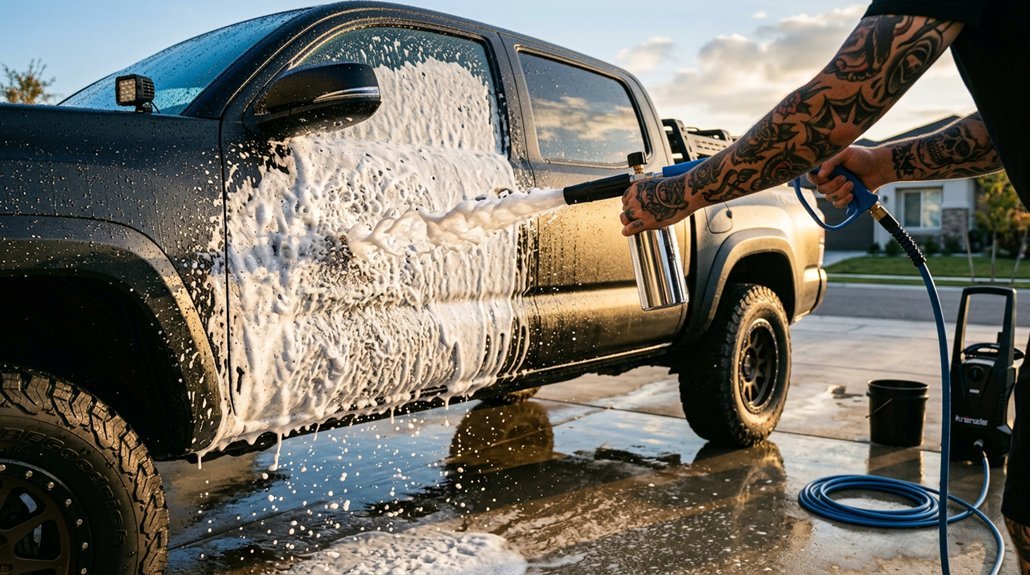

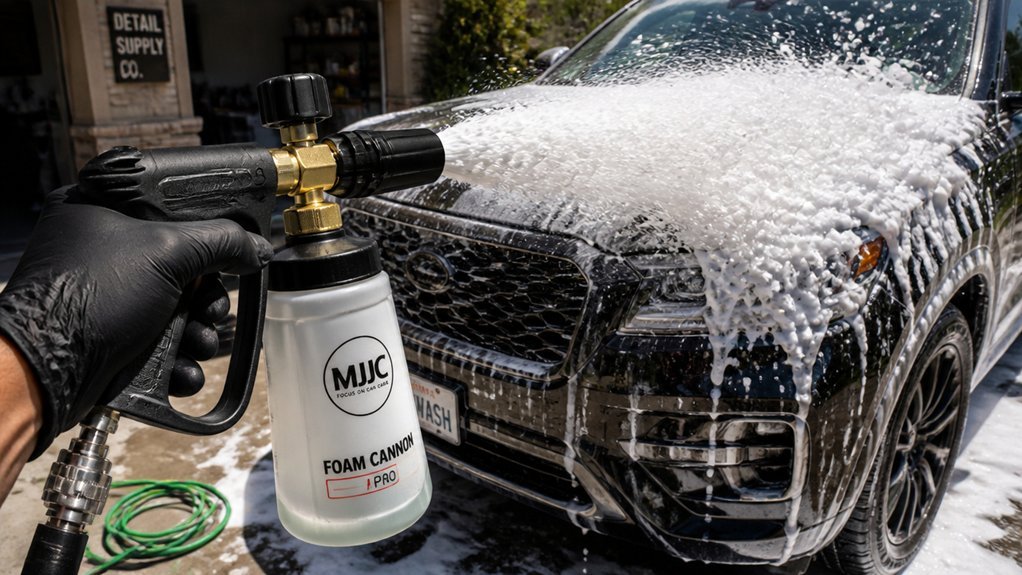
You attach a foam cannon to your pressure washer wand, and pressurized water creates suction that draws soap into a mixing chamber for air-blended foam. You’ll need high-foaming, pH-balanced soap mixed at the right ratio—typically one to two ounces per quart of water. But getting thick, clingy foam instead of runny suds depends on factors you might not expect, and the difference between a surface wash and actual deep cleaning comes down to technique you’ll want to understand before you start.
How Does a Foam Cannon Work?
Understanding the mechanics of your foam cannon guarantees you maximize its cleaning potential. You attach the foam cannon to your pressure washer via a secure connection, typically using a fully seated slide lock. Once engaged, pressurized water flows through the device and into the reservoir, where it induces suction that draws your foam solution into the mixing chamber. Here, air and soap blend into aerated foam.
You control foam thickness and spray pattern through nozzle adjustment. Rotating the nozzle widens or narrows distribution; you’ll switch between vertical and horizontal patterns based on your vehicle’s contours. Higher pressure washers yield denser foam with superior adherence. Pre-mixing your solution in the reservoir ensures consistent results, and you’ll keep the unit attached during operation to prevent component ejection under pressure.
Recommended Products

Adjustable Snow Foam Lance with 1/4" quick connect fitting. 𝐍𝐨𝐭 𝐅𝐢𝐭 𝐆𝐚𝐫𝐝𝐞𝐧 𝐇𝐨𝐬𝐞, 𝐖𝐚𝐭𝐞𝐫 𝐇𝐨𝐬𝐞 𝐨𝐫 𝐘𝐨𝐮𝐫 𝐅𝐚𝐮𝐜𝐞𝐭 𝐃𝐢𝐫𝐞𝐜𝐭𝐥𝐲! This foam cannon must connect to a standard 1/4 inch quick connect pressure washer gun or wand to use. Must use with a pressure washer! Container Capacity: 1 Liter / 0.22 Gallon. Working Pressure: 1000 PSI to 3000 PSI

NOTE: 𝐍𝐨𝐭 𝐅𝐢𝐭 𝐆𝐚𝐫𝐝𝐞𝐧 𝐇𝐨𝐬𝐞, 𝐖𝐚𝐭𝐞𝐫 𝐇𝐨𝐬𝐞 𝐨𝐫 𝐘𝐨𝐮𝐫 𝐅𝐚𝐮𝐜𝐞𝐭 𝐃𝐢𝐫𝐞𝐜𝐭𝐥𝐲! The pressure washer gun has M22 fittings, compatible with both M22 14mm and M22 15mm fitting. M22-14mm fitting is compatible with Generac, Simpson, Briggs Stratton, craftsman, karcher, Ryobi pressure washers. M22-15mm fitting is compatible with Sun Joe, Campbell, MI-T-M, AR Blue, Stanley, Cleanforce, Simoniz, Excell power washers
What Soap Should You Use in Your Foam Cannon?
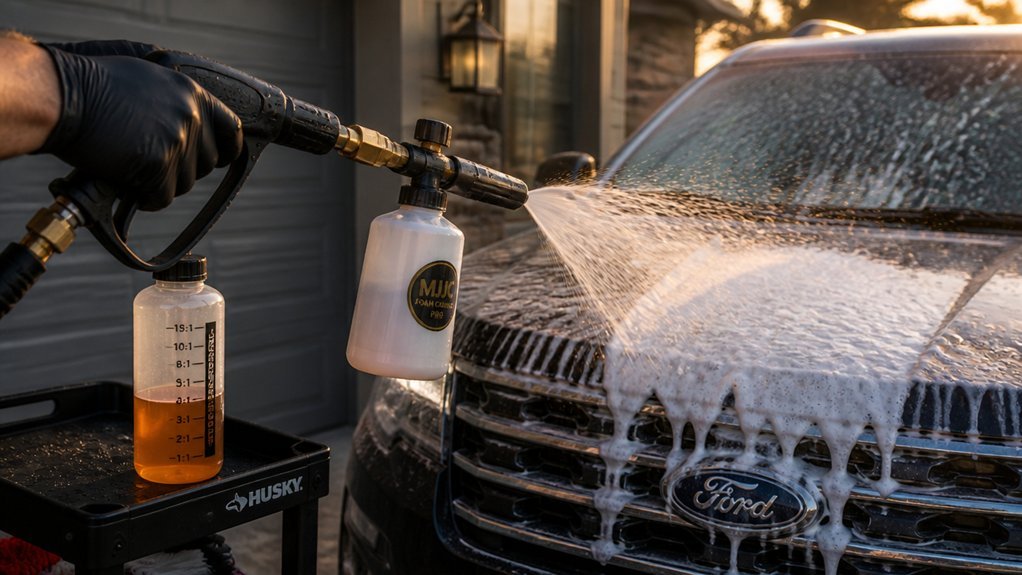
Which soap you select directly determines your foam cannon’s performance and your vehicle’s finish. You must choose a high-foaming, pH-balanced car wash soap specifically formulated for foam cannon applications. Ethos Foam Party exemplifies this category, delivering dense cling without stripping protective coatings. You must avoid dish soaps entirely, as they’ll degrade sealants and waxes.
Your dilution ratio governs soap solution efficacy. You must adhere to manufacturer specifications—typically incorporating 1–2 ounces of concentrated product into warm water for optimal results. You mustn’t guess; improper concentration yields runny foam or wasted product.
You control foam thickness through mechanical adjustments. You manipulate the top dial and nozzle settings on your foam cannon to modulate output. A wider pattern paired with maximum draw generates thicker, longer-clinging foam that suspends contaminants effectively before contact washing.
Recommended Products

Snow foam lance for cleaning cars, trucks, and more; snow foaming lifts dirt and grime from a vehicle’s exterior for safer, scratch-resistant cleaning

Built for Pressure Washers, Not Garden Hoses: This foam cannon is designed for pressure washer systems rated 1000–3000 PSI and features a 1/4" quick connect fitting for fast setup with most compatible wands. An easy upgrade for car wash sprayer accessories. Please check your connector size before purchase; NOT compatible with any garden hoses, faucets.
How to Mix Foam Cannon Soap (Without the Mess)
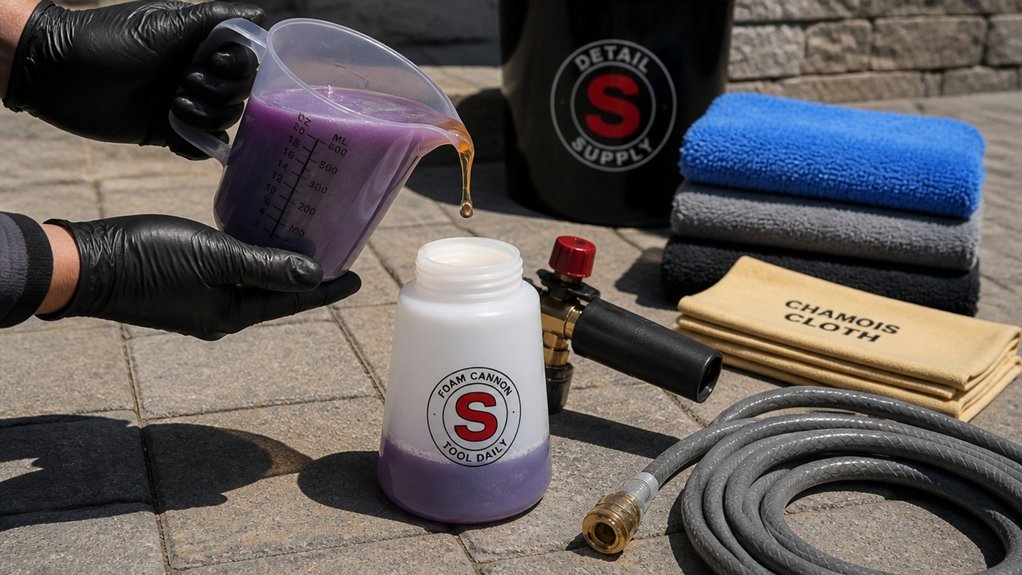
Where should you begin when mixing foam cannon soap to avoid spills and waste? Start with a clean, empty bottle. Pour warm water to 75% capacity first—this prevents excessive sudsing. Add 1–2 ounces of concentrated car shampoo per 28–32 ounces of water. Check your product label; foam cannon dilution varies by formula, so adjust your mixing ratio accordingly. Secure the lid for a leak-free connection, then shake to dissolve the soap mixture completely. Clumps disrupt foam consistency and nozzle spray performance.
For efficiency, prepare a pre-mix solution in a separate gallon container. Store it sealed. When you’re ready, fill your cannon directly from this reserve. You’ll minimize mess, ensure uniform dilution, and maintain optimal cleaning chemistry every time.
Recommended Products

Maxi-Suds II Soap (CWS_101_64SW) - High foaming car wash soap for foam cannons produces thick suds that safely lift dirt and grime; perfect for use with foam cannons, foam guns, or traditional bucket washes

HERO CAR WASH SOAP FOR FOAM CANNONS (CWS_402_16SW) - Top-selling Chemical Guys soap formula delivers thick suds for safe cleaning, reducing swirl marks while leaving paint, glass, wheels, and trim spotless and glossy
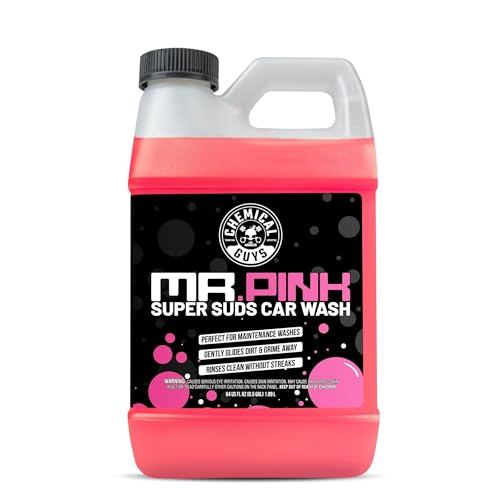
HERO CAR WASH SOAP FOR FOAM CANNONS (CWS_402_64SW) - Top-selling Chemical Guys soap formula delivers thick suds for safe cleaning, reducing swirl marks while leaving paint, glass, wheels, and trim spotless and glossy
Foam Cannon Technique for Regular Washes
Once you’ve mixed your solution properly, you’re ready to execute a regular wash with your foam cannon. Attach your foam cannon to the pressure washer wand, secure the fitting with the slide lock, and verify the bottle contains your pre-mixed soap solution. Select the largest nozzle hole and adjust the top mixture knob to maximize foam production.
Begin your wash method with a thorough pre-wash rinse using the pressure washer to eliminate loose debris. Apply thick foam from top-to-bottom, ensuring complete coverage. Allow a dwell time of 1–2 minutes without permitting the foam to dry.
Following dwell time, swap to a 40-degree nozzle setting. Rinse the foam from top-to-bottom. Complete the process by drying with microfiber towels or a blower. This standardized technique yields consistent, professional results for routine maintenance washes.
Recommended Products

THE BIGGEST AND BEST FOAM: This professional grade foam cannon turns cleaning concentrate into thick snow foam lather, providing total, even coverage of your car, home, or outdoor surface
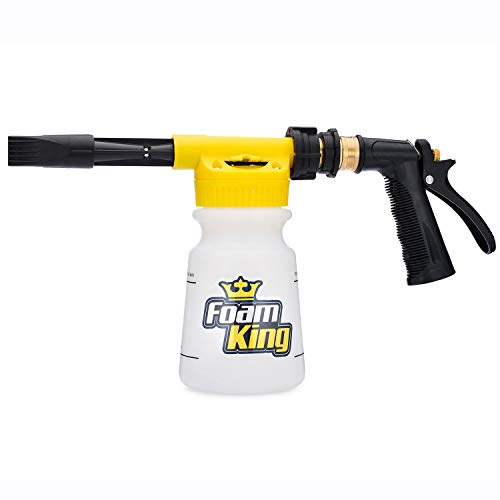
THE DETAILER’S CHOICE: The Foam King car wash foam gun for garden hose creates thick suds for a scratch free wash at home. Lift dirt safely while saving time and avoiding costly commercial washes.

High-Foaming, Ultra-Slick Formula: Get the thick, luxurious suds you need for a safe and effective wash! This advanced formula creates rich foam that clings to your vehicle’s surface, providing superior lubrication to lift dirt and grime without scratching. Whether you’re using a hand mitt, foam cannon, or pressure washer, Pearl ensures a smooth, swirl-free clean every time
Foam Cannon Technique for Deep Cleaning
Deep cleaning with a foam cannon demands a more aggressive approach than routine maintenance. You’ll increase the soap-to-water ratio beyond standard mixes, using approximately 6-8 oz of concentrated soap per 32 oz water. Perform nozzle adjustment to the largest orifice setting to generate thick foam with maximum cling.
Secure connections first, then pre-rinse the entire vehicle to dislodge loose contaminants. Apply thick foam from bottom to top, ensuring complete coverage. Extend dwell time to 5-7 minutes for stubborn soil penetration, monitoring to prevent premature drying.
For enhanced surface grime removal, agitate heavily soiled areas with a dedicated wash mitt while foam remains active. You’ll then rinse with low-pressure water using a 40-degree nozzle, flushing dissolved debris before it re-adheres. Finally, purge your foam cannon with clean water to prevent residue buildup in lines.
Recommended Products

Convenience From Start to Finish - Deep Cleaning Foam Car Wash Cuts Through Dirt and Debris; Saving Time and Promoting Convenience - Just Wash, Rinse, Air Dry, and Go - No Towel Drying Needed

WORKS WITH FOAM CANNONS OR GUNS - This Chemical Guys soap creates thick, clinging foam using a pressure washer cannon or garden hose suds gun; also ideal for traditional two-bucket washing

LONG-LASTING RADIANT LOOK: Say goodbye to dull and faded paint and hello to the ultra-rich paint conditioners; Meguiar's Gold Class foam car wash leaves the surface looking radiant, renewed, so it's ready for your car wash kit before car show season
How to Rinse and Dry After Foam Cannon Washing
Why let your careful foam wash go to waste with sloppy finishing? After your foam cannon rinse, you’ll want to remove rinse water immediately to prevent water spots and maintain that pristine finish you’ve worked to achieve.
Select your drying method strategically. You can blow-dry using a leaf blower to force water from panel gaps, mirrors, and grilles without touching paint. Alternatively, employ drying towels—plush microfiber types—to absorb remaining moisture. Work from top to bottom, flipping towels frequently to prevent streaks.
Never let your microfiber wash mitt touch drying surfaces. Transition quickly between rinsing and car drying stages. Standing water etches clearcoat rapidly. Whether you choose forced air or towel contact, ensure complete moisture removal. This methodical approach preserves your foam application results and eliminates contamination risks.
Recommended Products

ADJUSTABLE FOAMING CAR WASH SETTINGS - Features a foam ratio dial for customizable sud levels, ideal for any car wash kit; choose from light rinse to thick to suit your cleaning needs for cars, wheels, glass, and trim
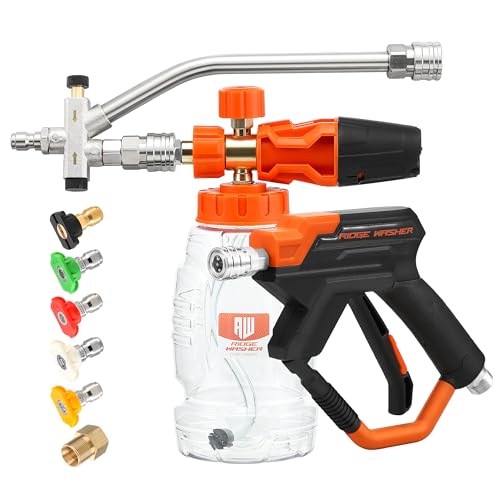
DUAL CONNECTOR SWITCHING: Two-way shuttle valve lets you switch between foam spraying and water rinsing without repeatedly changing nozzles, helping streamline pressure washer car washing and outdoor cleaning tasks

𝐃𝐔𝐀𝐋-𝐄𝐍𝐃𝐄𝐃 𝐂𝐎𝐍𝐍𝐄𝐂𝐓𝐎𝐑: This foam cannon dual connector features two connector ends - one longer end for the pressure wash nozzle and one shorter end for the snow foam lance. It enables uninterrupted water flow while using the nozzle, even when the foam dispenser is attached
Why Your Foam Cannon Produces Thin Foam (And How to Fix It)
When your foam cannon ejects a runny, watery stream instead of thick, clingy suds, you’ve lost the primary advantage of pre-wash lubrication and dwell time. Check your soap concentration first—an improper dilution ratio undermines foam thickness. You’re likely skimping on high-foaming soap or overdiluting the mixture. Fill your reservoir about 75% with warm water; cold water temperature weakens foam structure. Adjust your nozzle settings—verify you’re using the correct 40-degree tip and twist the top knob toward maximum foam density if your unit allows adjustment. Dish soap destroys cling foam; you’re sabotaging car washing results. Finally, monitor dwell time—letting foam dry creates a thin, filmy residue rather than dense, lubricating suds.
Recommended Products

Please Note:Foam cannon is Compatibility with M22 14mm or 1/4 inch quick connect plug.Please check your pressure washer connector before buying as some connectors are not suitable.The foam cannon conects to the pressure washer gun/wand only, it is NOT fit any garden hose.

MULTIPLE CONNECTION METHODS: Snow foam cannon has a detachable 1/4 Inch quick connector. If your fitting of the pressure washer gun is a 1/4'' quick socket, you could connect 1/4 Inch quick connector of pressure washer foam cannon directly; if your fitting of the pressure washer gun is M22 14mm female, you should unscrew the 1/4" quick connector of the power washer foam cannon and connect the M22 14mm male fitting. Unique and convenient connection methods to meet the different needs of your life

MULTI-PURPOSE CONNECTION: Multi-purpose connections fulfill different needs in your life. Snow foam cannon has a detachable 1/4 Inch quick connector. If your fitting of the power washer gun is M22 14mm female, you should unscrew the 1/4 Inch quick connector of the power washer foam cannon and connect the M22 14mm male fitting. If your fitting of the pressure washer gun is a 1/4” quick socket, you could connect the 1/4" quick connector of the foam blaster directly
Conclusion
You now understand foam cannon operation, from the venturi-driven suction mechanism through proper soap selection, dilution ratios, and application techniques. Maintain your equipment by flushing the chamber after each use, inspecting O-rings quarterly, and storing the bottle detached. Adjust your dilution and pressure settings based on observed foam density, and you’ll achieve consistent, effective results across both routine maintenance and intensive cleaning protocols.
Recommended Products

GENTLE CLEANING: pH neutral foaming car wash safe for use on all exterior car surfaces breaking down tough dirt, soils and road grime without stripping car wax, sealants or protective ceramic coatings

HONEYDEW SNOW FOAM CAR WASH (CWS_110SW) - High-foaming Chemical Guys soap delivers thick, clinging suds that lift dirt and grime for a scratch-free on all vehicle types