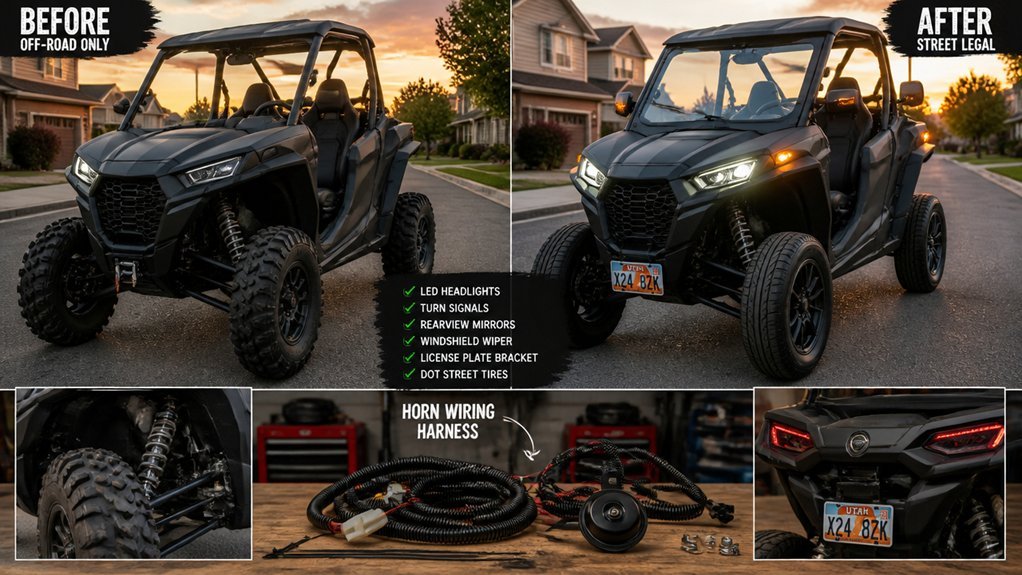

You’re weighing engine displacement against purchase price, but the real calculation hides in projected maintenance costs and depreciation curves. A 500cc utility rig with a proven CVT costs less per mile than a discounted 1000cc machine with proprietary electronics. Your total ownership math shifts dramatically when you factor in parts availability and hourly shop rates. The spreadsheet isn’t complete until you compare resale percentages at year five.
What “Best UTV for the Money” Means in 2025
How do you measure value when every manufacturer claims their UTV delivers “more for less”? You dissect specifications that translate to real-world durability and capability without inflating costs.
In 2025, “UTV for the Money” means prioritizing proven drivetrain durability, adequate payload capacity, and meaningful ground clearance over premium trim packages. You’re analyzing budget picks like the Polaris Ranger SP 570, Can-Am Defender HD7, Honda Pioneer 520, CFMOTO UForce 600, and Yamaha Viking EPS through a lens of maintenance simplicity—you’ll service these machines affordably over years of ownership.
You recognize that value-based features aren’t merely accessories; functional additions like protective panels extend utility without depreciating returns. Model differentiation becomes critical: compact dimensions improve agility and resale, while feature-rich base configurations balance comfort against capital outlay. You distinguish genuine capability from marketing inflation.
Recommended Products

PRIMARY DRIVE CVT CLUTCH FOR ATV UTV 450 500 550 700 HISUN MASSIMO BENNCHE

Type:Primary Clutch

[Exact Oem Replacement] 19G3982 Drive belt is built to OEM specs and compatible with X2 series; 500 EFI (2007); 800 EFI (2007); Sportsman 500 series; 500 EFI (2008–2009); 500 EFI Touring (2008–2009); Sportsman 570 series; 570 (2014–2016); Size: 1.188" x 41.0".
5 Best UTVs for the Money: Specs, Prices, and Value Ranked
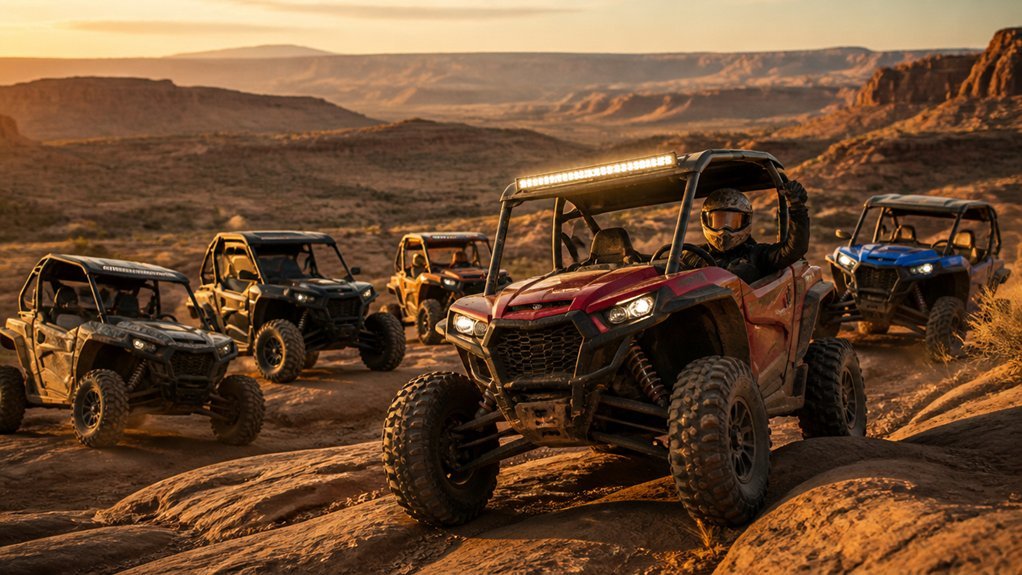
Value in 2025 hinges on specification-to-dollar ratios that hold up under real workload cycles, not showroom appeal. You evaluate UTV value by measuring work-ready features against acquisition cost and longevity.
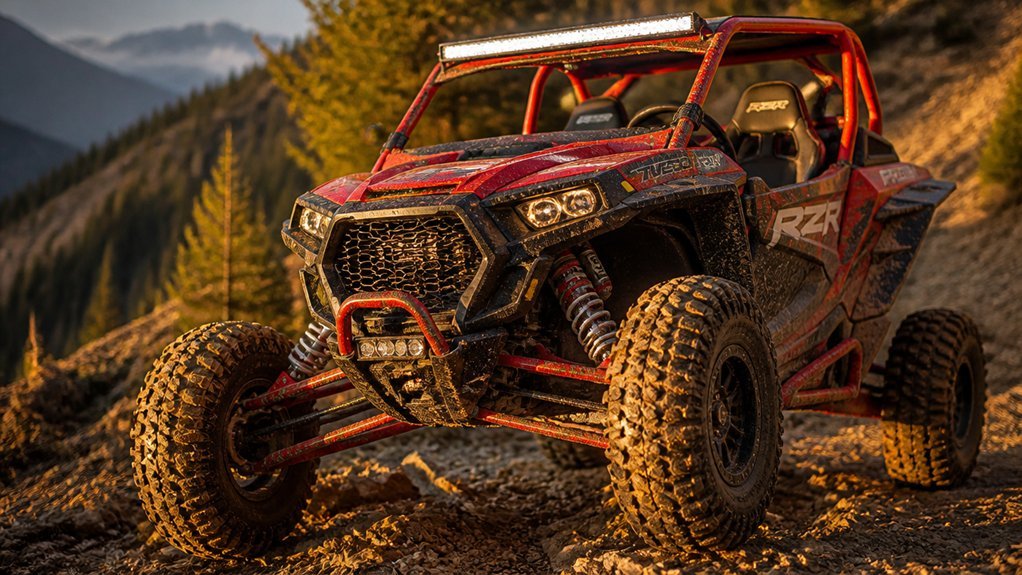
You find the Polaris Ranger SP 570 delivers strong resale value through its compact full-size platform, maximizing utility in constrained spaces. The Can-Am Defender HD7 offers superior all-day comfort and torque-rich output for demanding tasks. You recognize the CFMOTO UForce 600 as the price-to-value leader, bundling EPS, winch, roof, and hitch below competitors. The Honda Pioneer 520 provides the narrowest footprint at 50 inches, granting trail access others forfeit. The Yamaha Viking EPS rounds out your options with proven reliability. You prioritize specification density per dollar when selecting from these five.
Recommended Products
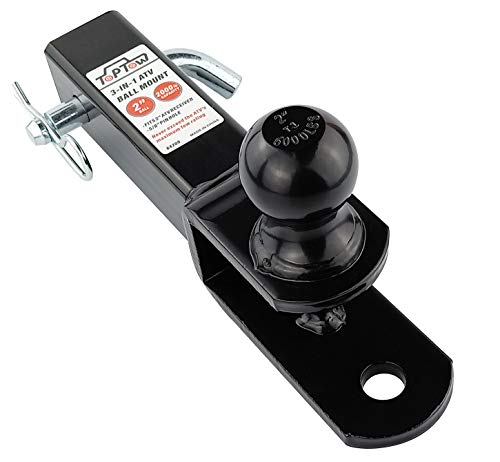
★ OPTIMALLY VERSATILE ATV/UTV ACCESSORIES: This tow hitch adapter offers three different coupling styles. The riser hitch easily mounts to your ATV /UTV hitch for yard work equipments, dog hitches, utility trailers and other towable tractor accessories in the fields. It provides a 2" weld-on trailer ball for standard couplers, a 1/2" clevis pin for latching on clevis hook or winch strap loop, a 3/4-inch pin hole for clevis mount.

Item Details: 2 Pack, 2" x 36" Yellow Axle Tie Downs with Black Sleeve Protectors. The bright color makes these straps highly visible for added safety during loading and unloading.
Best UTV for the Money by Job: Farm, Trail, or Mixed Use
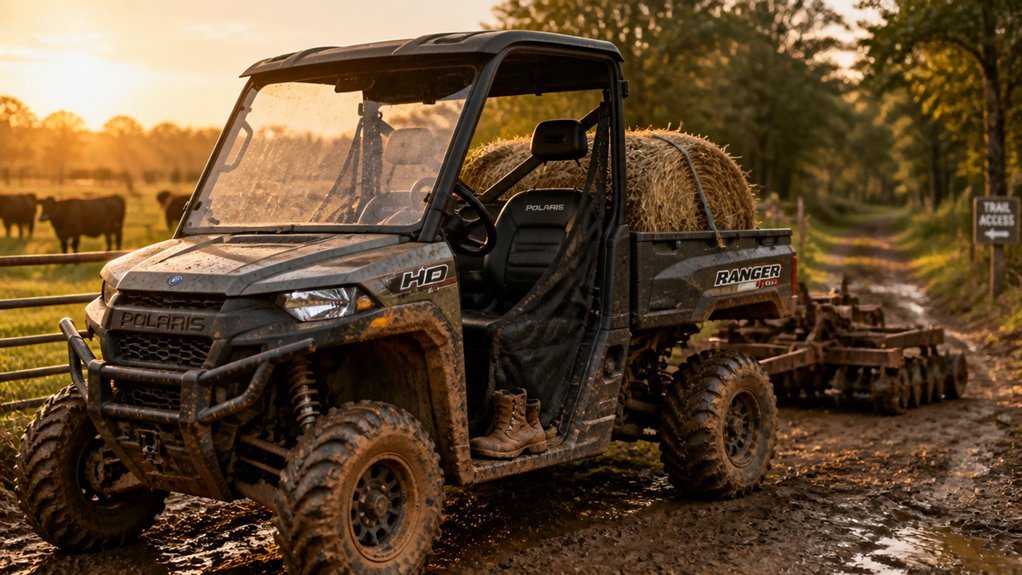
Your money works hardest when you match a UTV’s core competencies to your dominant workload rather than chasing specification sheets.
For farm duty, you prioritize payload and durability. The Honda Pioneer 1000/520 and Kawasaki Mule Pro-FXT deliver robust towing capacity, low-maintenance drivetrains, and proven reliability under heavy cycles—critical for budget-friendly agricultural operations.
You navigate trail terrain differently. Compact footprints and all-day ergonomics dominate your calculus. The Polaris Ranger SP 570 and Can-Am Defender HD7 optimize ground clearance and resale value without overspending on excess capacity.
Mixed-use demands compromise. You evaluate the CFMOTO UForce 600 and Yamaha Viking EPS for versatile suspension travel, standard EPS, and bundled accessories that stretch your dollar across disparate environments. Aftermarket accessories—windshields, door panels—further extend utility without factory premiums.
Recommended Products


【Versatile Use】Universal Trailer Winch Plate Hitch Mount Winch Cradle Mounting Plate with 2" Receiver Fit For ATV UTV.

【VERSATILE FIT】 - Universal winch mount is designed to provide a stable and secure mounting position for your winch. Whether it's for ATVs, UTVs, or lawn and garden equipment, this versatile winch mount is perfect for various applications. It can be mounted on the front or rear of the vehicle.
Hidden Costs: What to Budget After Your UTV Purchase
Matching a UTV to your workload sharpens upfront value, yet sticker price tells only part of the ownership equation. You must project annual ownership costs beyond the dealer lot.
UTV maintenance costs accumulate through oil and filter intervals every 50–100 hours, while CVT belt replacement demands attention every 200–300 hours under heavy load.
Tires and wear items degrade faster on abrasive terrain, requiring periodic budgeting for replacements.
Insurance and registration fees recur annually, varying by jurisdiction and coverage depth.
Accessories and safety gear—winches, windshields, cab enclosures—compound initial outlay by $300–$1,500 per component.
Warranties mitigate risk, but unexpected repairs on transmissions, cooling systems, or electrical harnesses can escalate past warranty periods.
You balance these variables against projected utilization to determine true lifetime cost.
Recommended Products

USA TRADEMARK: The Impact Implements 1500lb trailer is designed by engineers in USA's Heartland. Impact Implements trailers are USTPO trademarked for authenticity so you can be assured you are not getting a copycat. This is the original with a steel floor, rugged tires and the durability and quality expected of a USA offroad company.

High Brightness: 3/4 inch LED side marker light built in 4 SMD LED beads, outputting super bright and stable light source, which can meet the needs of driving lighting. Each light has two colors, suitable for multiple functions such as parking lights and marker lights

High Brightness: 3/4 inch LED side marker light built in 4 SMD LED beads, outputting super bright and stable light source, which can meet the needs of driving lighting. Each light has two colors, suitable for multiple functions such as parking lights and marker lights
Cut Ownership Costs: Maintenance and Resale Tactics
Because smart ownership tactics compound over a machine’s lifespan, you’ll cut total cost of ownership most effectively by targeting the maintenance items that erode reliability and resale value fastest.
Prioritize UTV maintenance around oil changes, air filter service, and brake inspections—these daily costs disproportionately impact longevity. When comparing platforms, evaluate CVT durability; simpler transmissions reduce belts and driveline failures and lower parts expense. Inspect these components proactively before peak seasons to prevent catastrophic damage.
You’ll protect resale value by selecting models with robust warranties, comprehensive aftersales support, and strong replacement parts availability—factors that minimize downtime and repair costs. Maintain meticulous maintenance records documenting all service and upgrades; this evidence of care commands premium pricing at resale versus comparable, undocumented units.
Conclusion
You prioritize drivetrain resilience, service accessibility, and depreciation curves when extracting maximum value from a 2025 UTV purchase. Compact footprint models with protective skid packages and transferable warranties outperform loaded trims on total cost of ownership. Your optimal choice balances payload ratings against trail maneuverability, then locks in resale through documented maintenance intervals. Spec sheets mislead; cross-reference dealer parts availability and warranty claim rates before committing capital.