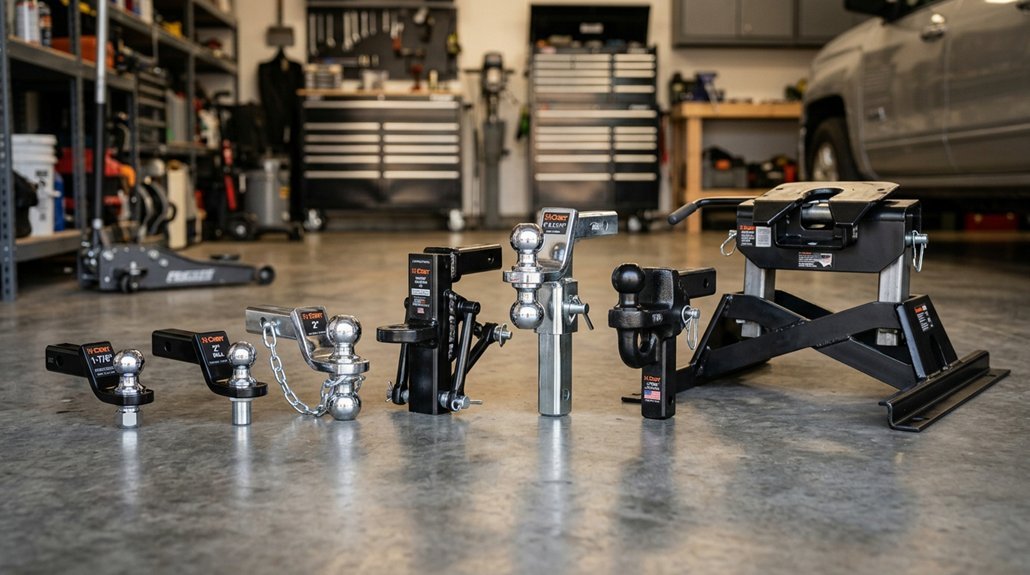


You need to know your trailer’s GVWR before you hitch up. This rating isn’t just a number—it’s the structural limit of your frame, axles, and tires combined. Exceed it, and you’re risking brake failure, tire blowouts, and liability issues most owners never consider until it’s too late. The real problem isn’t knowing the definition; it’s applying it correctly when you’re loading cargo at dawn without a scale in sight.
What GVWR Means on a Trailer (And Why It Matters)
Why does GVWR matter before you load a trailer?
GVWR, or Gross Vehicle Weight Rating, represents the maximum combined weight your trailer can safely carry, including its own weight plus cargo and equipment. The manufacturer determines this absolute limit based on frame strength, axles, suspension, and tires. Exceeding this threshold compromises safety and risks brake failure, tire blowouts, and structural damage.
You must verify your trailer’s GVWR by locating the data plate or safety compliance label—typically mounted on the frame near the tongue or inside a door frame. This critical weight rating serves as your non-negotiable ceiling for any loaded trailer.
GVWR vs. GAWR: Know the Difference Before You Load

You have already identified your trailer’s GVWR on the data plate, but you shouldn’t stop there. You must also locate your GAWR, as this specification governs individual axle limits.
Your GVWR caps total trailer weight, including payload, accessories, and the trailer itself. It safeguards frame integrity, suspension performance, and tire durability. Your GAWR restricts load per axle, preventing structural failure where concentrated weight bears down.
On tandem-axle configurations, you’ll see two GAWR values—one per axle. This demands careful load distribution. You can’t simply balance total cargo against GVWR; you must verify each axle carries acceptable weight. Shift cargo forward or rearward as needed.
Before hauling, confirm combined cargo and trailer weight stays under GVWR while individual axle loads respect their GAWR limits. Neglect either rating, and you’re risking component failure, instability, or roadside catastrophe.
Recommended Products

Progressive Load Isolation: Specifically engineered for overslung trailer configurations with a 5,000 to 8,500-pound Gross Axle Weight Rating (GAWR), 1800 Lbs capacity...
Calculate Your GVWR Payload Capacity

How do you determine what your trailer can actually haul? You calculate payload capacity by subtracting curb weight from GVWR. Check your GVWR label, then weigh your trailer empty to establish accurate curb weight. The resulting figure represents your usable cargo capacity—equipment, materials, and supplies only, not the trailer weight itself.
For example, with a 7,000-pound GVWR and 2,000-pound curb weight, you’ve got 5,000 pounds of payload capacity available. You must verify this before each haul, as added aftermarket components reduce your available margin. Never exceed GAWR per axle when distributing load, and confirm your calculations against both individual axle ratings and overall GVWR. Precision here prevents structural failure, tire blowouts, and roadside violations. Weigh periodically; your trailer’s empty weight shifts with modifications and accumulated debris.
How to Weigh Your Trailer (And Read the Scale)
Where exactly do you weigh a trailer without guesswork? You’ll use a certified drive-on or axle scale at truck stops, landfills, or weigh stations. Drive your fully loaded trailer onto the scale and record the Gross Vehicle Weight—this represents your trailer’s total loaded mass. Subtract your trailer’s curb weight from this figure to calculate your actual payload, which must equal GVWR minus curb weight. Read the scale’s per-axle breakdown carefully to verify no single axle exceeds its GAWR. Cross-reference these numbers against your safety data plate’s GVWR and GAWR limits. If your scale reading approaches or surpasses these ratings, redistribute cargo or shed weight immediately. Never exceed your vehicle’s towing capacity or your trailer’s GVWR during operation.
What Happens When You Overload Your Trailer
Why risk catastrophic failure when loading your trailer? When you overload your trailer beyond its GVWR, you compromise critical safety systems and structural integrity. The frame, suspension, and tires endure stresses exceeding engineered safety margins, accelerating fatigue and potential collapse.
Excess weight concentrates asymmetrically, pushing individual axles past their GAWR and triggering tire blowouts or axle fractures. Your braking system strains against momentum it wasn’t designed to stop, extending stopping distances and degrading steering response—you’ll feel the trailer push back, unstable and unresponsive.
Beyond mechanical failure, you’re inviting legal liability. Authorities can cite you for GVWR violations, manufacturers void warranties, and insurers deny claims when investigations reveal overloaded conditions. You’re not just risking equipment; you’re gambling with control, coverage, and compliance. Respect the ratings, distribute weight properly, and verify loaded weights against both GVWR and GAWR before every haul.
Is Your Truck Rated to Tow This Trailer?
Before you hitch up, do you know what your truck can actually handle? You must verify trailer compatibility by comparing the trailer’s GVWR and GAWR against your tow vehicle’s GCWR and towing capacity. The GVWR represents the maximum loaded weight the trailer can safely carry, while GAWR specifies per-axle limits. Your tow vehicle’s GCWR defines the combined maximum for truck, trailer, and cargo. Check your owner’s manual or data plate for exact ratings.
Ensure your hitch, ball mount, and weight distribution components match or exceed the trailer’s loaded weight. Exceeding these ratings risks brake failure, tire blowouts, overheating, and mechanical damage. You can’t rely on estimates—precise numbers determine safe towing capacity.
Recommended Products
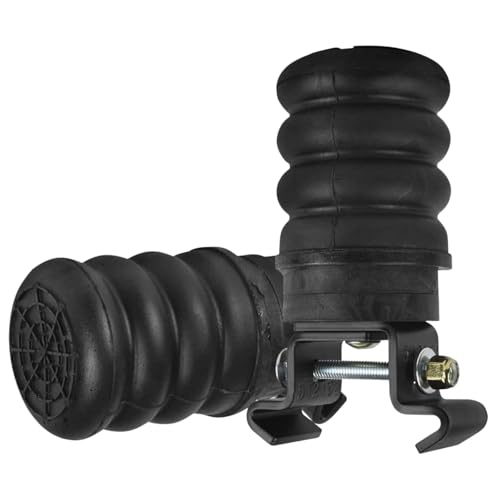
Vehicle Compatibility: 2000-2025 Spring-Over Axle Trailers (This product is designed to work on most trailers with the springs mounted above the axle.) Trailer Compatibility:...
GVWR Violations: Fines and Insurance Risks
How much are you risking when you overload your trailer? You’re risking far more than you might realize.
When you exceed your trailer’s GVWR, you’re violating federal and state regulations that carry substantial fines and penalties. Law enforcement and safety inspectors actively check for overload conditions, and they’ll cite or tow your trailer on the spot.
Your insurance coverage becomes worthless in this scenario. If an accident occurs while you’re operating beyond GVWR limits, your insurer will likely deny or void your claim entirely. You’re then personally liable for all damages and injuries.
The safety risks compound rapidly. Overload conditions trigger brake failure, tire blowouts, and complete loss of vehicle control. You’re endangering yourself, your passengers, and every motorist sharing the road. Stay within GVWR to protect your finances, your coverage, and public safety.
GVWR Misconceptions That Damage Trailers
Where do most trailer owners go wrong with GVWR? You confuse it with empty weight or assume it’s your trailer load capacity. You can’t subtract curb weight from GVWR and call that your safe cargo limit—you’ve ignored how accessories and modifications reduce effective capacity without changing the label.
You create overloading risks when you treat GVWR as a suggestion rather than a hard limit. You dramatically extend braking distance and invite tire failure by exceeding it. You also miss that GVWR doesn’t govern axle weight rating; you can stay under total GVWR while overloading one axle, causing suspension or frame damage. You must verify per-axle loads separately. These misconceptions destroy equipment, void warranties, and put you at legal risk.
Load Your Trailer Safely: Weight Distribution Rules
Why do trailers sway, brakes lock up, or tires fail on an otherwise routine haul? You’ve violated basic weight distribution principles. Load heavier cargo over your trailer’s center first, then adjust forward or backward to balance axle load across all axles without exceeding GAWR. You’ll maintain 10–15% tongue weight relative to gross trailer weight for stable handling. Don’t guess—complete a scaled weigh-in to verify each axle’s load against published limits. You’re risking component failure and loss of control when you ignore GVWR and GAWR thresholds. Apply a weight distribution hitch system with proper alignment to shift load appropriately between tow vehicle and trailer axles. You must redistribute cargo immediately if any axle exceeds capacity. Precision matters: balance, measure, then travel.
Conclusion
You can’t afford to ignore your trailer’s GVWR. Exceeding this rating compromises structural integrity, voids warranties, and creates liability exposure. Always verify data plate ratings, weigh loaded configurations, and distribute cargo to maintain 60% tongue weight forward of center. Your compliance protects equipment, guarantees legal operation, and prevents catastrophic roadside failures. Treat GVWR as your absolute ceiling—never test it.
Recommended Products

High Quality:Sturdy rustproof aluminum alloy with diamond tread design and shiny polished surface with anti-scratch protective film Nice design:Standard size for almost...