

You’re standing at the edge of your gravel driveway, snow piling up, and you need to clear it fast. A snow blower seems like the obvious choice, but you’re worried about chewing up rocks or damaging the machine. The good news is you can use one here—you just need to understand the engineering requirements first. Get the configuration wrong, though, and you’ll face costly repairs.
Can You Use a Snow Blower on Gravel?
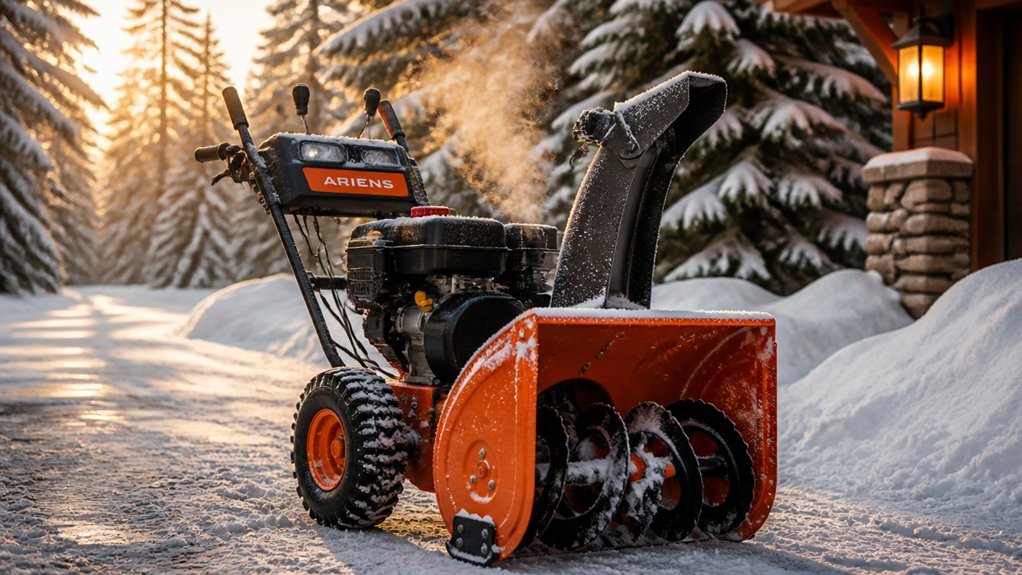
How do you clear snow from a gravel driveway without scattering stones everywhere? You’ll deploy a two-stage snow blower equipped with adjustable skids. These skids let you set precise intake clearance—typically one inch above the base gravel—which prevents gravel ingestion while maintaining snow removal efficiency.
You’ll avoid single-stage units entirely; they lack adjustable skids and scrape directly against the surface, causing excessive gravel pickup and surface damage. On gravel driveways, you’ll configure your two-stage machine’s skid shoes to match your gravel depth, ensuring the auger housing floats without contact. Track-drive or large-wheel models enhance traction and stability.
You’ll gain erosion/abrasion protection for both your equipment and driveway surface. Gas models like the Toro Power Max 824 OE or electric alternatives such as the Toro e24 provide sufficient power and control when you’ve set proper clearance.
Recommended Products

【Rolling Skid Shoes Replace Part Number】 490-241-0038, 4902410038

Fits machines with 2-3/4" and 3" bolt centers.Fits many brands of two-stage and three-stage snow throwers
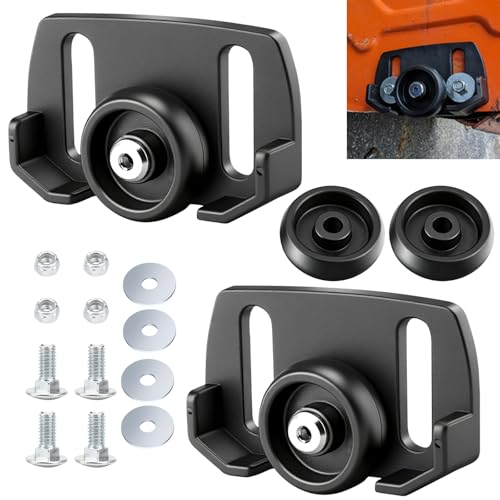
Fits many brands of two-stage and three-stage snow throwers, Fits machines with 2-3/4" and 3" bolt centers.Compatible with Craftsman, Troy-Bilt, Cub Cadet, Ariens, MTD, MTD Pro, Yard Machines, and Yard-Man
Why Gravel Driveways Need Two-Stage Snow Blowers

Why exactly does a gravel driveway demand a two-stage snow blower? You need adjustable skid shoes on the auger housing to maintain approximately one inch of ground clearance, preventing gravel ingestion and minimizing surface disturbance. On uneven gravel driveways, you’ll appreciate how this setup lifts the intake above irregular surfaces, reducing clogging while enabling deeper snow removal without scraping aggregate.
You’ll also benefit from gear-forward propulsion and multiple speed options that maintain traction on loose, uneven terrain. Two-stage models typically offer higher ground clearance and wider intake dimensions than single-stage units, improving efficiency on loose or packed gravel surfaces.
For gravel durability, you’ll find that robust augers combined with adjustable skids decrease gravel throw and enhance longevity on rough surfaces, making a two-stage snow blower your practical choice.
Recommended Products

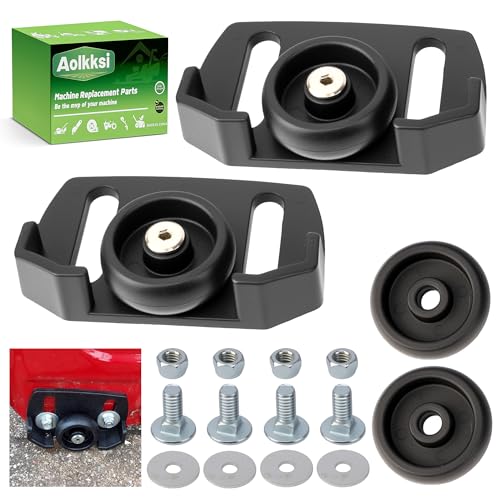
Part Number: 490-241-0010, 780-125, 784-50388-0637, 731-06472

High-Performance for Large Clearing: Equipped with a 15-amp motor that delivers gas-like power and moves up to 840 pounds of snow per minute without the noise, fumes, or maintenance
Which Gravel Types Work With Snow Blowers
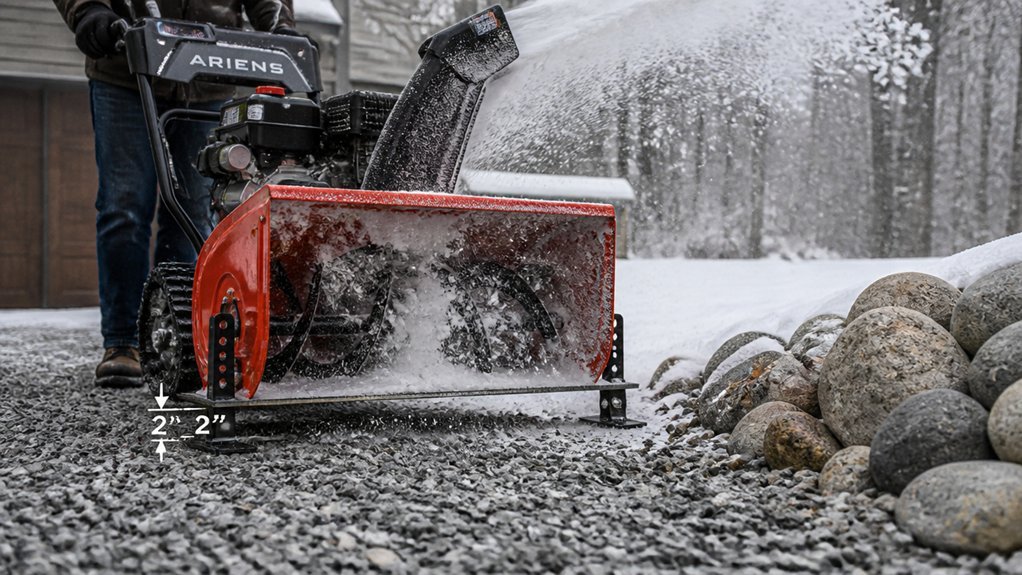
Where exactly should you set your skid shoes when clearing snow from a gravel surface? You’ll raise them to maximize ground clearance, keeping the auger housing elevated above loose stone. Two-stage snow blowers excel here because you’ve got adjustable skid shoes on each side of the auger housing—you’re controlling intake height precisely.
You’ll find compacted crusher run and dense-grade gravel most compatible. These surfaces minimize shifting under your auger housing, letting you maintain consistent ground clearance without picking up stones. You’re avoiding loose pea gravel and river rock entirely—they’re too unstable.
With proper skid shoe adjustment, you’re preventing auger-ground contact across firm, well-settled gravel surfaces. You’ll damage equipment on unpacked base layers, so you’re assessing substrate stability first. Three-stage units handle rougher aggregate, but you’re paying more for power you may not need on residential drives.
Recommended Products

LIGHTWEIGHT & POWERFUL - This compact cordless snow shovel weighs only 9.3 pounds, making it lightweight and comfortable to use. Equipped with a powerful 24-volt motor and a rechargeable 4.0 Ah lithium-ion battery pack, this snow shovel battery powered has enough power to throw snow up to 20 feet, with a maximum runtime of 25 minutes.
Fits Most Brands' Attachment Capable String Trimmers

Powerful 212cc Engine: Equipped with a robust 212cc snow engine, this snow blower ensures efficient and reliable performance. With snow plowing capacity of 2400 lbs/min, it can throw snow up to an 50 feet away, making it perfect for heavy-duty snow removal tasks.
How to Adjust Snow Blower Skids for Gravel Clearance
Getting your skid shoes dialed in correctly matters more on gravel than on any other surface—you’re balancing snow removal against protecting both your machine and your driveway. Loosen both nuts on each skid, raise the snow blower housing, then tighten the nuts while the unit stays lifted to set your clearance. You’ll want roughly one inch of space between ground and intake height to stop gravel from entering the auger; adjust higher for deeper snow, lower once a packed base forms. Use adjustable skids on two-stage or three-stage blowers to maintain consistent clearance. Re-check on uneven surfaces and re-tighten as needed—hanging housings snag stones and scratch driveways. For gravel protection, fit rubber or polymer skid shoes and verify your intake height stays at that one-inch mark across varied gravel substrates.
Recommended Products

Long-Lasting Beauty: Come with 3 pounds of decorative rocks for indoor plants, each rocks measuring around 3/8-5/8 Inch. Dye and oil-free, they resist fading when washed or use in water. Eco-friendly and recyclable, maintaining enduring beauty and lovely at home.

Long-Lasting Beauty: Come with 3 pounds of decorative pebbles, each pebble measuring around 3/8” (6-9mm). Dye and oil-free, they resist fading when washed or use in water. Eco-friendly and recyclable, maintaining enduring beauty at home.

Natural Aquarium Gravel:LOOIOOJ natural river pebbles are non-fading, non-toxic, and free of fillers, dyes, or oils. These premium decorative stones are perfect for fish tanks, turtle tanks, aquariums, gardens, and various landscaping projects
Best Snow Blowers for Gravel Driveways in 2026
Selecting a snow blower for gravel demands attention to clearance mechanics and auger design—not all machines handle loose stone well. You’ll want a two-stage model with adjustable skid shoes that raise the auger above the surface, preventing stone ingestion while maintaining wide clearance paths.
For 2026, consider the Toro Power Max 824 OE. You get a 24-inch clearing width, electric start, and joystick chute control—ideal for long gravel driveway runs. The Toro e24 offers battery-powered quiet operation with no shear pins to replace. Budget-conscious? The PowerSmart two-stage delivers six forward speeds, 13-inch inflatable tires, and self-propelling traction. The Husqvarna 24-inch two-stage provides balanced durability for heavy accumulation. The Storm Tracker 2890 excels with wide clearance and multiple speeds, letting you customize approach on loose gravel surfaces.
Recommended Products

Snowblower Composite Skid Shoes: Reversible 2-pack kit designed for homeowners to control scraper bar clearance, protecting driveways and sensitive walkway surfaces from deep gouges and rust streaks

✔️Replaces MTD 490-241-0010 Skid Shoes Direct OEM-style replacement for MTD 490-241-0010; fits most 2-stage/3-stage snow throwers (including MTD, Troy-Bilt, Yard Machines models).

【Snowblower Skid Shoes Replace Part Number】 490-241-0010
Gravel Driveway Snow Blower Setup Checklist
How precisely should you configure your snow blower before tackling a gravel driveway? You’ll need a two-stage snow blower with adequate ground clearance. Set your skid shoes to maintain 1-inch auger height above the surface, preventing gravel ingestion while preserving clearing efficiency. You’ll adjust the adjustable height mechanism carefully—lower configurations scrape gravel, higher ones leave snow residue. Install polymer or rubber skid shoes to minimize surface disruption and housing abrasion. Verify your model offers invertible or variable skid positioning for seasonal adaptability. You’ll position the intake housing parallel to the gravel plane, checking clearance across the full width. Electric alternatives with adjustable height systems can operate effectively, though you’ll monitor battery levels during extended runs. Test auger engagement slowly, confirming no gravel contact before accelerating.
Recommended Products

Package included: 2 pieces Skid Shoe

IMPORTANT NOTE: Please kindly confirm your engine's model and part numbers before purchasing to guarantee that you receive the correct part. Width: 3 5/8", Length: 5 3/4", Height: 1 1/16", Two 7/16" W x 1 3/4" L Slots, Bolt slot 3" center to center

For use only with POWER+ 21” Single-Stage Snow Blower with Peak Power (SNT2130, SNT2134)
Maintenance Routines for Snow Blowers on Gravel
Why does gravel demand more from your snow blower? Gravel use accelerates component wear, requiring diligent maintenance to sustain gravel road performance. You must lubricate axles, augers, belts and shear pins regularly to prevent friction damage on rough surfaces. Adjust your skid shoes to maintain one-inch ground clearance; this prevents gravel pickup and protects the auger housing. After each session, execute immediate debris removal—clear accumulated stones and inspect for loose hardware. Test chute rotation and drive controls before storage. Electric models need battery monitoring every 3–5 years; gas units demand consistent oil changes and engine upkeep. Inspect sheaves, seals, and belts and shear pins frequently, replacing worn parts promptly. Neglect shortens machine lifespan and compromises clearing efficiency.
Recommended Products
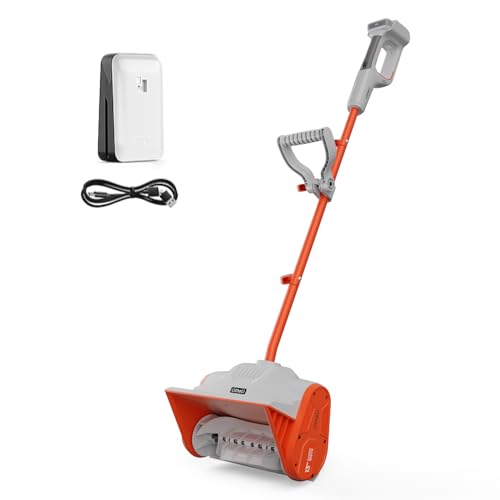
Strong Snow-Clearing Power: Litheli 13-inch cordless snow shovel removes up to 6" deep and throws snow up to 20 ft. The powerful motor delivers strong torque, high efficiency, and long lifespan—ideal for driveways, sidewalks, patios, and light-to-medium snowfall.
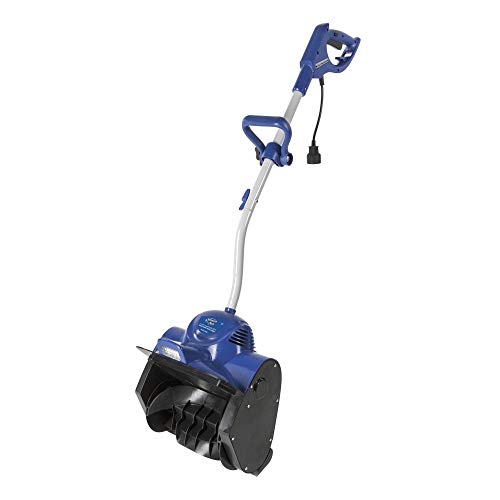
ELECTRIC SHOVEL FOR EASY SNOW REMOVAL: Make snow removal quick, easy, and effortless with this electric snow shovel powered by a 10A motor that helps it remove up to 300 lbs. of snow in just 1 minute. It comes with a 2-blade paddle auger, an adjustable handle, a 2W LED light, and a safety lock button.
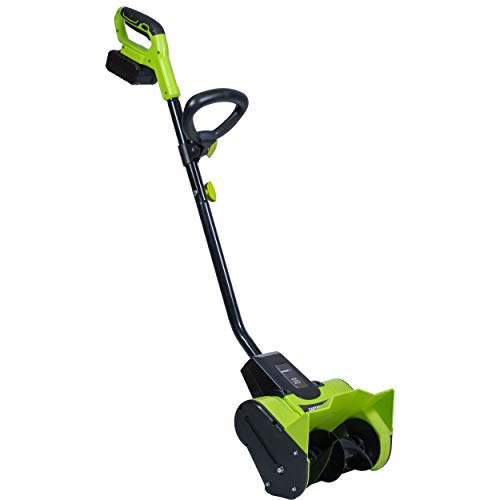
Earthwise snow blower with 12" clearing width, 3.5" clearing depth, 25' snow throwing distance
Conclusion
You can operate a snow blower on gravel when you’ve selected appropriate equipment and configured it correctly. Install adjustable skid shoes, maintain one-inch auger clearance, and verify substrate stability before each session. Your two-stage machine with polymer shoes and multiple speeds will clear snow without ingesting loose material. Perform post-use inspections, clean the auger housing, and adjust skid height seasonally to preserve both your driveway and equipment.
Recommended Products

This gravel has a variety of uses including landscape and garden decoration, drainage, and building walkways.

Long-Lasting Beauty: Come with 3 pounds of decorative pebbles, each pebble measuring around 1/5” (3-6mm). Dye and oil-free, they resist fading when washed or use in water. Eco-friendly and recyclable, maintaining enduring beauty at home.

Long-Lasting Beauty: Come with 3 pounds of decorative rocks for indoor plants, each rocks measuring around 1/5 Inch. Dye and oil-free, they resist fading when washed or use in water. Eco-friendly and recyclable, maintaining enduring beauty and lovely at home.