
You’ll find snow blower prices span from roughly $145 for basic corded electrics to $2,720 or more for powerful three-stage gas models. Your actual cost depends on power source, clearing width, drive system, and features you actually need. Before you decide what fits your driveway and budget, consider how battery replacements, maintenance, and seasonal timing quietly reshape the true price of ownership.
Snow Blower Cost: What to Expect in 2026
How much you’ll spend on a snow blower in 2026 depends squarely on the type of machine you need. You’ll find corded electric models cheapest at $145–$235, while a cordless battery snow blower runs $280–$1,400.
For snow removal, gas-powered units dominate premium tiers, with single-stage snow blowers averaging $525 and two-stage models commanding $1,400.
Your snow blower cost scales sharply with clearing width: you’ll pay roughly $185 for 13–15 inch units versus $2,300-plus for 28+ inch machines.
Self-propelled drive systems push your investment highest, averaging $1,200 compared to $310 for push models.
Factor these variables together—power source, clearing width, and drive type—and you’ll accurately budget for your specific snow removal demands.
Recommended Products
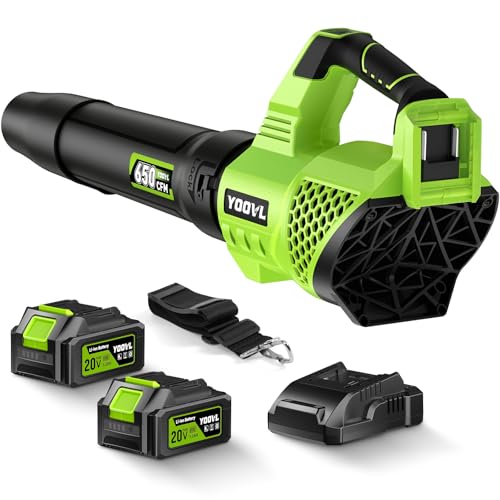
Upgraded Leaf Blower:More than just a leaf blower—YOOVL leaf blower cordless efficiently handles light snow, dust, grass clippings, and other debris from surfaces like lawns, sidewalks and garages. A must-have for year-round yard maintenance and thorough cleanups.

【Powerful Cordless Blower】The leaf blower cordless is equipped with high-efficiency turbo motor, delivering 60 m/s hurricane-force winds,far stronger than traditional leaf blowers.The snow blower instantly penetrates damp debris and stubborn dust, forcefully blasting away leaves, snow, and other debris efficiently, keeping yards, lawns, driveways clean and tidy.

Cordless Power for Quick Snow Cleanup: The 40V brushless motor delivers consistent clearing power without gas, fumes or extension cords—ideal for everyday cleanup around entrances, walkways and other frequently used areas.
Snow Blower Stages and Prices: Single, Two, and Three

Understanding what drives snow blower cost means looking at machine design itself. You’ll find single-stage models at the entry point, with a price range of $280–$770 and an average price near $525. These units handle light to medium-duty snow removal using an auger that scoops and throws in one motion.
You’ll step up appreciably with two-stage options, where the price range expands to $785–$2,015 and the average price hits about $1,400. Here, an auger feeds snow to an impeller for stronger discharge and faster clearing.
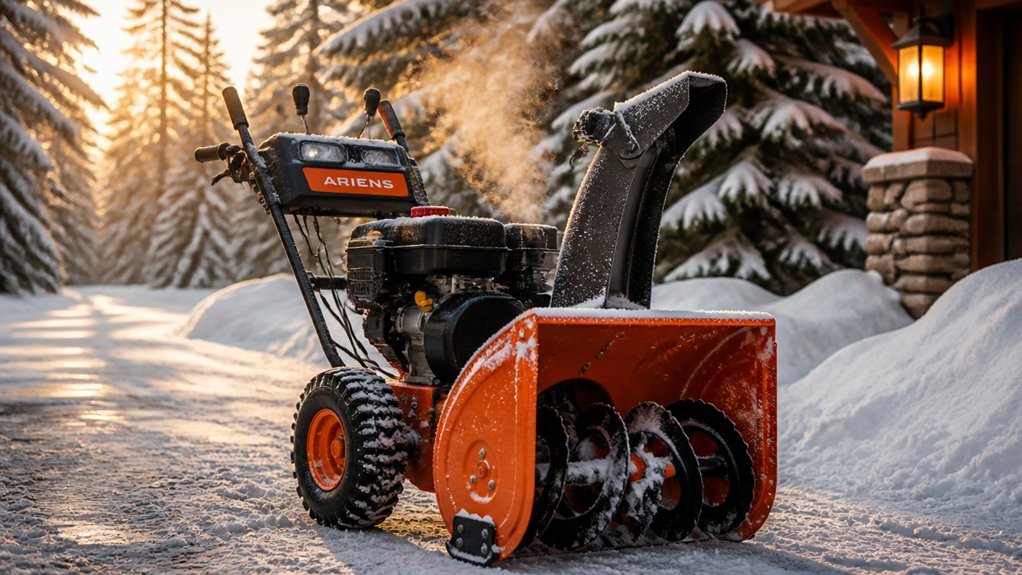
For demanding conditions, you’ll invest in three-stage machines—these gas-powered units command a price range of $1,800–$3,640, with an average price around $2,720. Wider clearing widths of 26–30 inches justify premium snow blower cost in any market comparison.
Recommended Products
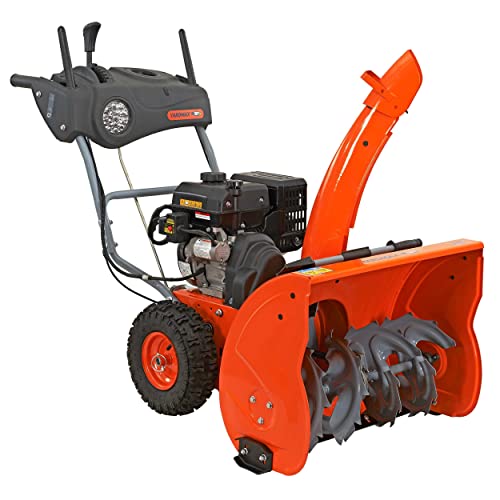
Electric start, high performance snow engine

24-Inch Clearing Width: The 24-inch wide auger allows you to clear a large path in a single pass, making it ideal for medium to large driveways and walkways.
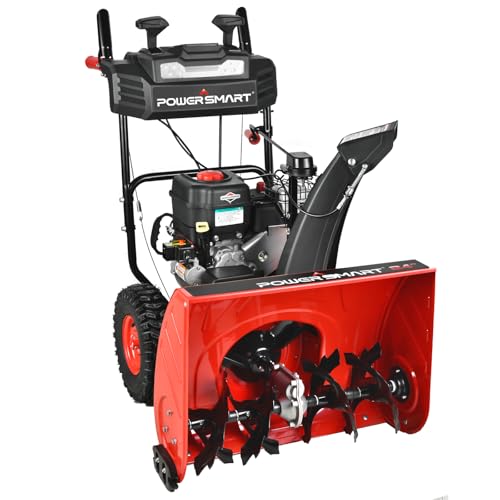
Tackle Heavy Snow: This PowerSmart gas snow blower adds handle warmer that keeps your hands warm in the coldest, snowiest winter.
Gas vs. Battery vs. Corded Electric: Cost and Power

Where you draw power from reshapes both your upfront spend and daily capability. You’ll find gas-powered models command the highest average cost across all power sources, typically falling within a $450–$2,100 price range and reaching approximately $2,720 for three-stage configurations.
Battery-powered alternatives offer cordless operation at $280–$1,400, though you’ll pay around $1,440 for two-stage capability while sacrificing deep-snow performance.
Corded electric represents your most economical entry point at $145–$235, delivering lighter power with simpler maintenance requirements.
When you choose cordless battery systems, remember lithium-ion replacements range from $40–$600, substantially affecting long-term ownership economics.
Your selection between these three power sources ultimately determines whether you access three-stage capability, manage fuel and engine upkeep, or trade runtime flexibility for budget efficiency.
Recommended Products
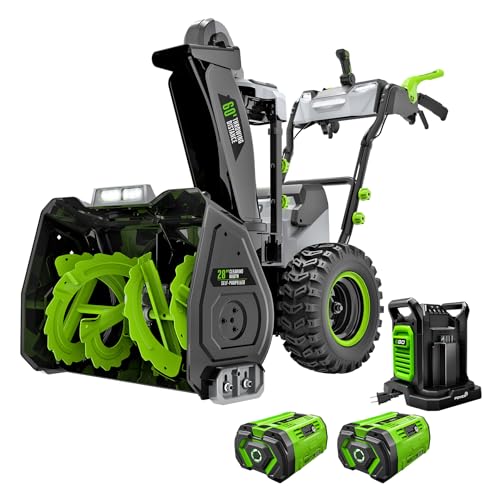
THROWS SNOW UP TO 60 FEET – Peak Power technology combines the power of any two EGO ARC Lithium batteries to clear heavy, wet snow and throws it up to 60 feet away without the noise, mess, or fumes of a gas snow blower
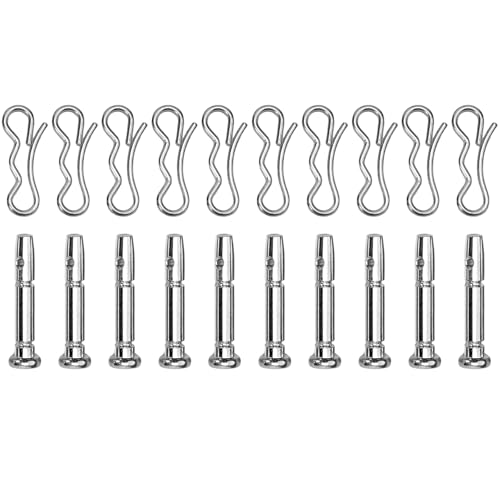
【Rust-proof】Adopting rust-proof materials, these pins protect the auger from being damaged when encountering branches, thick ice, rocks, etc., making them suitable for any harsh environment.
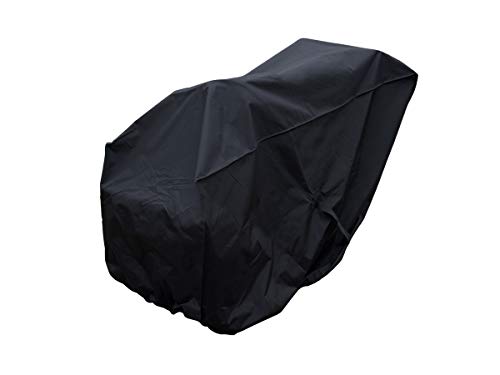
Comp Bind Technology, manufactures all types of covers with resistant materials to protect your unit from dust, rain, snow and many more elements
How Clearing Width Affects Snow Blower Price
Clearing width acts as a direct price dial, and you’ll feel its impact from the moment you compare models side by side. You’ll notice five distinct cost ranges emerge across common clearing width categories. At 13–15 in, you’ll find the most affordable snow blower options, typically one-stage units averaging near $185.
As you move wider, prices climb steadily: 18–20 in spans $155–$435, while 21–23 in jumps to $335–$880.
The 24–26 in bracket reaches $750–$1,740, reflecting larger gas-powered and two-stage designs.
At 28+ in, you’re entering $1,320–$2,925 territory, where commercial model specifications dominate. You’ll pay that premium because these machines handle heavier snowfall and expansive driveways.
Your choice of clearing width ultimately shapes both capability and price more directly than any single feature.
Recommended Products

20-Inch Clearing Capacity: Clears a 20-inch-wide path with an intake height up to 10 inches and throws snow up to 26 feet; results vary by snow conditions.

THROWS SNOW UP TO 45 FEET – Peak Power technology combines the power of any two EGO ARC Lithium batteries to clear heavy, wet snow and throws it up to 45 feet away without the noise, mess, or fumes of a gas snow blower

THROWS SNOW UP TO 45 FEET – Peak Power technology combines the power of any two EGO ARC Lithium batteries to clear heavy, wet snow and throws it up to 45 feet away without the noise, mess, or fumes of a gas snow blower
Push, Auger-Assisted, or Self-Propelled: Drive System Costs
How much effort are you willing to trade for dollars? Your drive system choice defines this balance.
Push snow blowers demand full physical exertion, averaging $310 within a $130–$500 price range. These units suit small, level areas where maneuverability depends entirely on your strength.
Auger-assisted models reduce strain by powering the auger while you push, averaging $600 and spanning $200–$1,300. This middle ground splits the difference between cost and performance.
Self-propelled snow blowers command $1,200 on average, ranging $600–$2,300. These drive the wheels forward, letting you guide rather than muscle through snow. You gain superior maneuverability on slopes and heavy conditions, but pay significantly higher costs upfront.
Your snow blower selection shapes long-term satisfaction. While maintenance demands vary modestly across types, your physical needs and terrain should ultimately guide this investment.
Recommended Products

IMPORTANT NOTE: Package Includes: 1x 954-04260 Drive Belt. Please check the measures and your engine's model carefully before purchasing to ensure that you receive the correct parts. Belt Application: Auger Drive, Belt Type: Standard V-Belt, Length: 36", Top Width: 3/8", Bottom Width: 0.222", Height: 0.22".

Powerful, Electric Start Honda GX Engine: This Honda snow blower uses a commercial grade GX390 OHV engine for plenty of power to churn through snow; Starting is easy, even in cold weather, with automotive-style DC electric key start
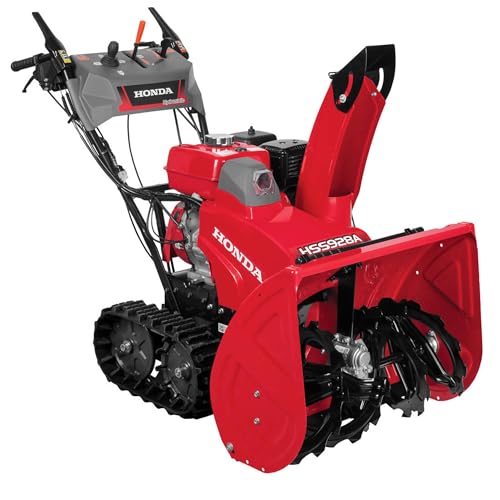
Powerful, Electric Start Honda GX Engine: This Honda snow blower uses a commercial grade GX270 OHV engine for plenty of power to churn through snow; Starting is easy, even in cold weather, with automotive-style DC electric key start
Extra Snow Blower Costs: Batteries, Maintenance, and Repairs
What hidden costs await after you’ve wheeled your new snow blower home? If you’ve chosen a cordless electric snow blower, you’ll face substantial battery costs—typically $85 to $600 per unit. Battery degradation hits hard; expect replacement every 2–5 years. Two-stage snow blowers demand even heftier battery investments for adequate power and runtime.
You’ll shoulder maintenance costs regardless of power type. Gas snow blowers require oil changes, spark plug replacement, and filter swaps. Corded electric models need extension cords—another expense.
Over years, these factors compound. Repairs emerge unpredictably. Factor them into your true ownership cost before buying.
Recommended Products

Kit includes the cordless snow shovel, 2.5Ah battery, and 210W charger

LIGHTWEIGHT & POWERFUL - This compact cordless snow shovel weighs only 9.3 pounds, making it lightweight and comfortable to use. Equipped with a powerful 24-volt motor and a rechargeable 4.0 Ah lithium-ion battery pack, this snow shovel battery powered has enough power to throw snow up to 20 feet, with a maximum runtime of 25 minutes.

Powerful Snow Clearing to Save Your Back: This cordless snow blower cuts through snow up to 8" deep and 13.5" wide each pass, tossing snow up to 30FT with ±30° adjustable discharge direction. Delivering a 350lb/min clearing capacity, this electric snow shovel swiftly removes fresh snow on driveways, patios, steps and walkways. Built-in 40V high-performance motor eliminates tiresome manual shoveling all winter long.
Best Time to Buy a Snow Blower for Less
When precisely should you time your snow blower purchase to maximize savings? You’ll find the best time to buy falls between May and June, as manufacturers release new inventory and retailers slash snow blower cost on previous-year models. During this window, clearance stock moves quickly, so you’ll want to act decisively.
You should monitor price cycles closely. Late winter and early spring offer secondary opportunities when demand plummets. However, May–June discounts typically yield deeper reductions.
Capitalize on Memorial Day sales and Father’s Day promotions—two seasonal promotions that compound savings. You’ll secure previous-year models at substantial markdowns while avoiding premium pricing.
If uncertainty persists, compare your anticipated purchase against professional snow removal pricing. You’ll determine whether ownership aligns with your budget or if alternatives serve you better.
Recommended Products

212cc OHV Engine: Delivers reliable, consistent performance even in heavy snow and cold weather, with strong cold-start capability, clearing up to 2500 lbs/min for efficient, hassle-free snow removal.

Unstoppable Power: The Snow Blower harnesses a 99cc 4-stroke engine with an optimized throttle curve and cold start technology, igniting dependable strength even at -22°F.

IDEAL FOR ANY AREA: Our WSnow22 electric snow thrower has a rubber-tipped steel auger that’s perfect for safe, easy and quick snow removal from driveways, sidewalks, walkways, porches and decks
Best Snow Blowers Under $500 and $1,000
Match your selection to actual conditions: you’ll waste money buying a two-stage unit for powder dustings, but a corded electric snow thrower collapses against heavy, wet accumulation. The under $1,000 threshold marks where durable two-stage engineering becomes accessible without premium pricing.
Recommended Products

【Universal Size Compatibility】The cover fits most two-stage snow throwers, including models for brand Snow Joe, Honda, Craftsman, Ariens, Cub Cadet, Husqvarna, Ego, Ryobi, Snow Joe, Toro, and more
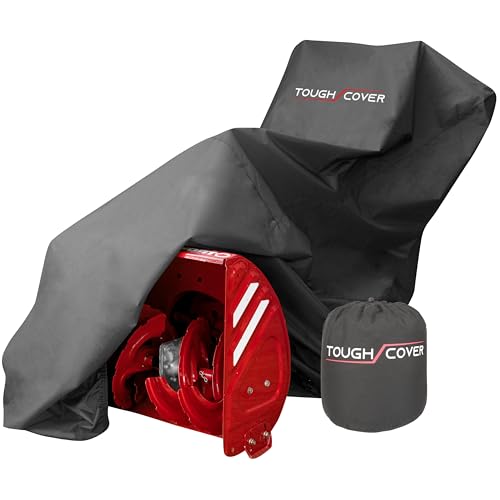
Comprehensive Protection: The Tough Cover Snow Blower Cover provides thorough defense against the elements, ensuring your equipment remains unscathed by snow, rain, and wind. Compatible with various models, this heavy duty snow blower cover waterproof outdoor solution is vital for safeguarding your outdoor machinery

【long-lasting】Made of practical and reliable materials, a solid construction and a dependable service life.
Snow Blower or Snow Removal Service: Cost Comparison
Why shoulder the cost of a snow blower when you can simply hire out the job? Your cost comparison demands scrutiny. You’d spend roughly $525 on a single-stage unit, $1,400 on two-stage, or $2,720 on three-stage gas-powered models. Battery-powered alternatives run $580–$1,440, while corded electric tops at $235. Factor in features: clearing width expanses and drive system upgrades—self-propelled averages $1,200—push totals higher. Contrast this against snow removal service contracts, which you pay seasonally or per visit. You recover equipment investment across multiple winters, yet servicing spares you maintenance, storage, and unpredictable repairs. Your choice hinges on property size, regional snowfall, and tenure. Analyze your usage frequency; ownership rewards persistent heavy accumulation, while hiring suits minimal or sporadic needs.
Recommended Products

Quick & Effortless Mid-Sized Area Clearing:Specifically designed for efficiency, this corded snowblower quickly clears mid-sized driveways and walkways without the hassle of gas or manual shoveling. Get the job done in minutes and get back to enjoying your day, even after heavy snowfall.
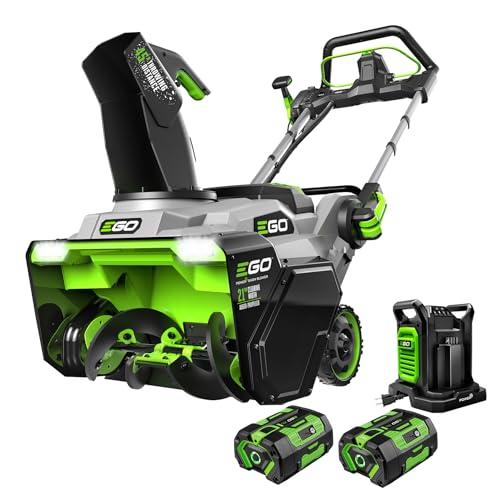
Peak Power technology combines the power of any two EGO POWER+ 56V ARC Lithium batteries
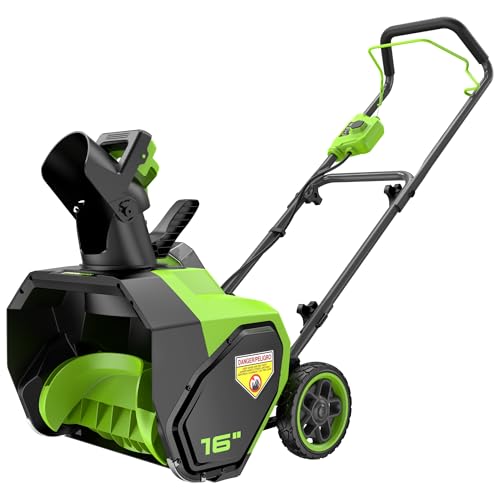
EFFORTLESS SNOW REMOVAL: Powered by Greenworks 40V li-ion technology , lightweight and powerful design can effortlessly move snow out of your way, making winter maintenance a breeze
Conclusion
Your snow blower investment hinges on power source, stage, and features you’ll actually need. You’ll save upfront with corded electric, but you’ll sacrifice mobility; you’ll pay premium for three-stage gas, yet you’ll conquer heavy drifts effortlessly. You must weigh clearing width against storage space, and you’ll reduce long-term costs by timing purchases during May–June lulls. Ultimately, you’re balancing immediate expense against durability, runtime, and the annual snowfall your property demands.
Recommended Products

GardenP+ 935-0243B Rubber Friction Wheel/Disk Fits MTD Craftsman Cub-Cadet Troy-Bilt Snow blower, Snow Thrower
Powerful, Easy-to-Start Honda GX Engine: This Honda snow blower uses a commercial grade GX270 OHV engine for plenty of power to churn through snow; Starting is easy, even in cold weather, with a standard recoil pull-start
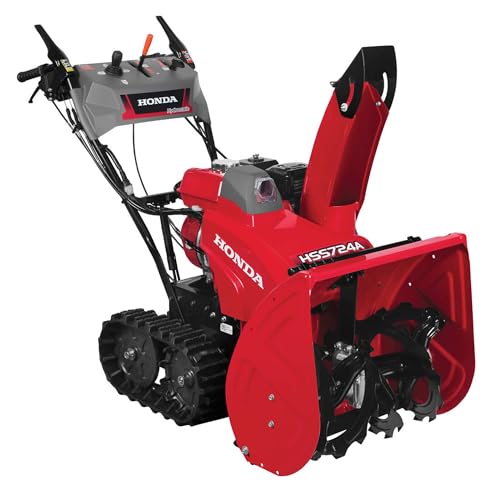
Powerful, Easy-to-Start Honda GX Engine: This Honda snow blower uses a commercial grade GX200 OHV engine for plenty of power to churn through snow; Starting is easy, even in cold weather, with a standard recoil pull-start