
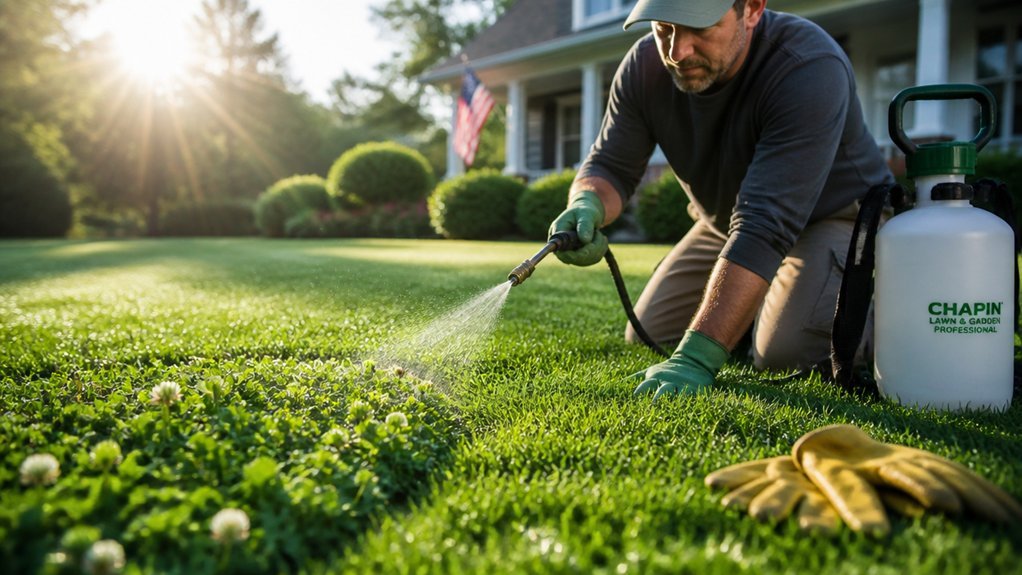
You’ve noticed clover spreading across your turf, and you’re weighing your options. The approach you choose depends on your timeline, your lawn’s condition, and how much effort you’re willing to invest. Some methods yield fast results but carry trade-offs; others build lasting resistance but require patience. Before you act, you’ll need to understand why clover thrives in your specific conditions—and which strategy aligns with your goals for the season ahead.
Why Is Clover Taking Over Your Lawn?
Why does clover dominate your lawn while grass falters? You likely face low lawn density and nutrient-deficient soil, conditions where clover exploits your turf’s weakness. This perennial legume produces white flowers and spreads aggressively from dormant seeds that persist in soil for years, returning each season without intervention. You’re observing clover’s nitrogen-fixing advantage—it tolerates dry, poor-quality soil where grasses starve, converting atmospheric nitrogen into self-sustaining nutrition.
Your weed control strategy must prioritize cultural correction. Raising your mowing height shades low-growing clover while overseeding thickens turf, mechanically suppressing establishment. Without improved lawn density, you’ll face recurring infestations regardless of herbicide application. Integrate Roundup for Lawns or comparable selective herbicides only after addressing underlying turf health; chemical control alone fails when environmental conditions continue favoring clover persistence over grass competition.
Recommended Products
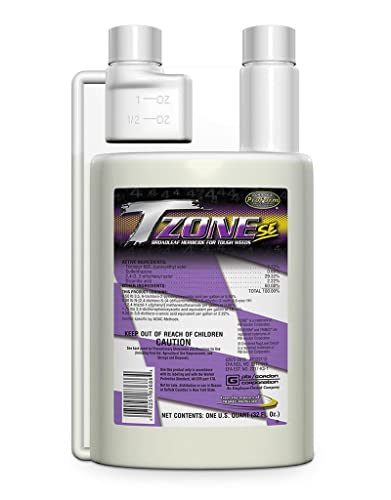
Active ingredient: Triclopyr, 2,4-D, Dicamba, & Sulfentrazone

EFFECTIVE BROADLEAF WEED CONTROL - Effective broadleaf weed control for hard to control weeds.

SELECTIVE WEED KILLER. Our formula targets broadleaf weeds, not grass. You can easily take care of weeds without worrying about damaging your lawn.
Pull Small Clover Patches by Hand

Before applying chemical treatments or broad cultural changes, you’ll address isolated clover infestations through targeted manual removal. For optimal clover removal, you’ll identify small, discrete patches and execute manual pulling when soil moisture permits root extraction. You’ll grasp the plant crown firmly and angle the pull to extract clover’s extensive taproot system intact; fragmented roots regenerate vegetatively. You’ll discard removed material off-site—never redistribute onto the lawn, as buried stem fragments re-sprout in bare patches.
Post-removal, you’ll resume lawn maintenance immediately. You’ll set mower deck height to species-specific recommendations, typically 2.5–3.5 inches for cool-season turfgrasses. This elevated cutting promotes tillering and lateral shoot development, accelerating turf density. Dense grass cover physically suppresses clover re-establishment by limiting light penetration to soil level and outcompeting seedlings for mineral nutrients.
Recommended Products
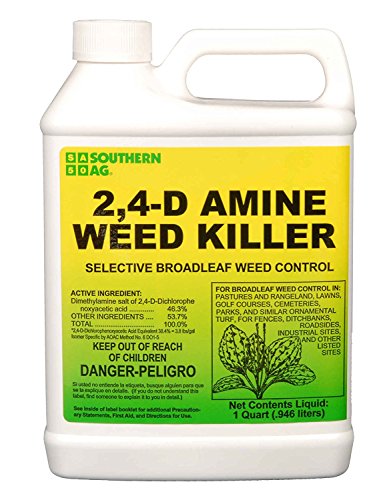
Low, economical use rate of 1 to 4 pints per acre

Water-Based Formulation: Experience the power of our unique water-based formulation that ensures superior control and faster plant uptake, delivering results you can see quickly

TRUSTED PERFORMER: Torocity contains 40.0% mesotrione; the same active ingredient as the leading brand, Tenacity Herbicide. For more than 20 years, mesotrione has been the trusted choice for effective pre emergent and post emergent weed control for lawns in both newly seeded areas as well as established turf.
Kill Clover Fast With Lawn-Safe Herbicides
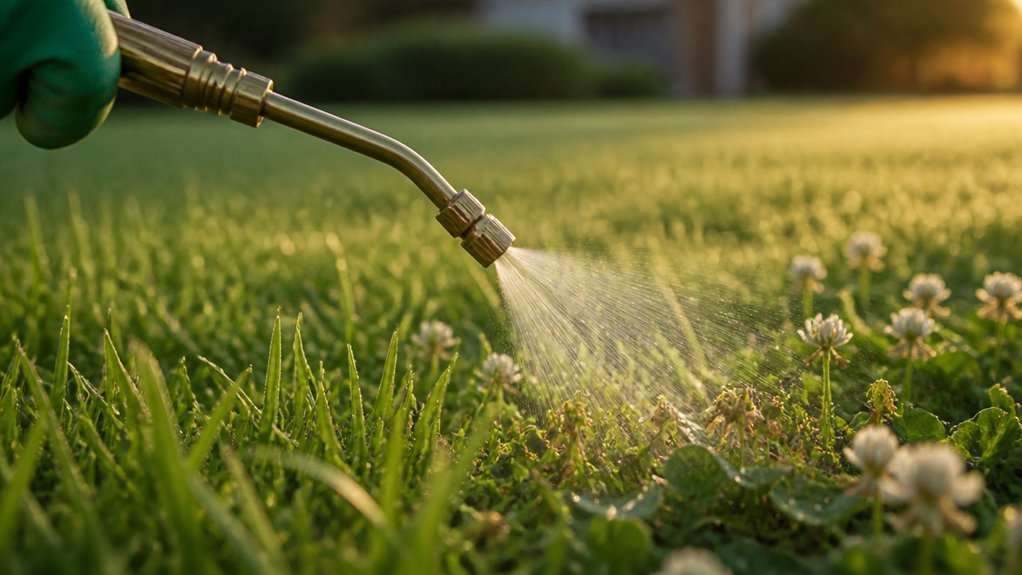
When rapid clover suppression becomes necessary, you’ll deploy selective post-emergent herbicides engineered for broadleaf weed control without turfgrass injury. Roundup for Lawns exemplifies this technology, targeting clover through foliar absorption while preserving existing lawngrass. You’ll apply lawn-safe herbicides when clover exhibits active growth and moderate temperatures prevail, maximizing systemic uptake and translocation efficiency.
Clover seeds persist in soil seedbanks, germinating post-treatment to necessitate annual monitoring and reapplication protocols. You’ll adhere precisely to label specifications regarding mixing ratios, spray coverage, and irrigation restrictions to prevent phytotoxicity in desirable turf.
Strategic reapplication addresses emergent clover from dormant seed reserves, maintaining suppression through successive growing cycles. This chemical approach delivers rapid, measurable results when manual removal proves impractical for extensive infestations.
Recommended Products
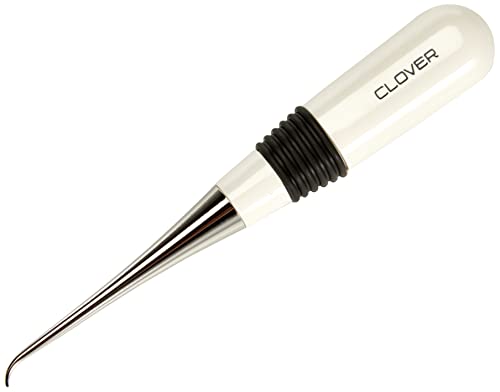
Ergonomic handle
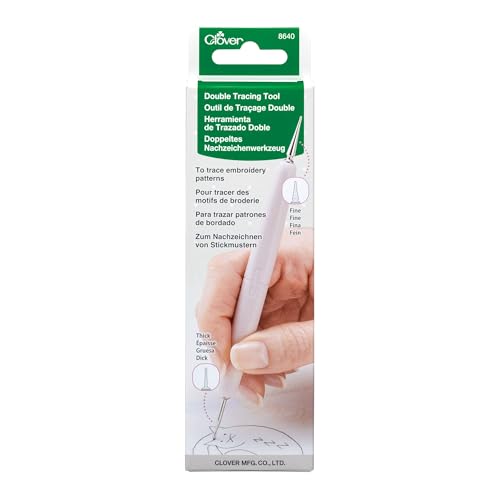
Great for tracing embroidery patterns

PULL WEEDS FROM THE ROOT - The patented Shark Tooth design grips deep into dandelions, crabgrass, clover, thistle, and other stubborn weeds to help remove roots instead of just breaking stems. Keep your lawn, flower beds, and garden looking their best all summer long.
Feed and Mow to Crowd Out Clover Naturally
A dense, nutrient-optimized turf canopy serves as your primary biological defense against clover encroachment, outcompeting the weed through resource preemption. You’ll achieve effective lawn crowding by implementing strategic nutrient management and precise mowing height adjustments.
Apply fertilizer four times annually to maintain essential nutrient density. This promotes vigorous turf growth that occupies soil space and suppresses clover establishment through preemptive resource consumption. Elevate your mowing height to shade clover runners directly, limiting photosynthetic efficiency while your grass dominates light interception. The combined effects of optimized nutrient management and elevated mowing height reduce bare spot formation—critical colonization points for clover proliferation.
You’ll minimize re-infestation risk as improved shading and nutrient density work synergistically. Consistent maintenance thickening your turf remains your foundational natural strategy for long-term clover prevention.
Recommended Products

LAWN WEED KILLER: Use Ortho WeedClear Weed Killer for Lawns Concentrate weed killer spray to kill over 250 listed weeds including dandelion and clover down to the root, without harming your lawn (when used as directed)
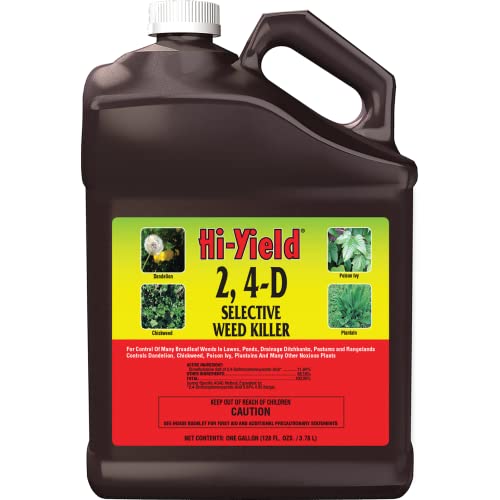
This selective weed killer kills or controls many Broadleaf Weeds and plants susceptible to 2, 4-D.
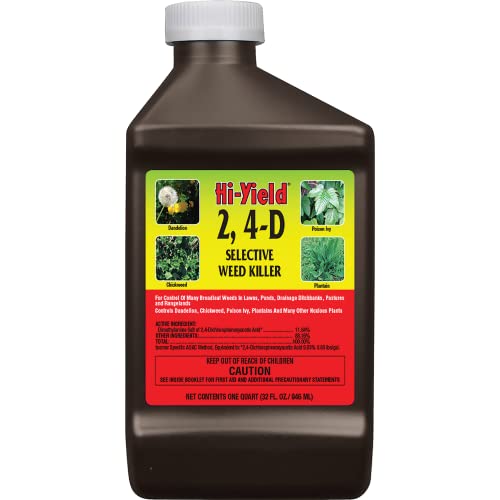
This selective weed killer kills or controls many Broadleaf Weeds and plants susceptible to 2, 4-D.
Aerate and Overseed for Long-Term Clover Control
Suppress clover’s competitive edge by relieving soil compaction and fortifying your turf’s structural density.
You’ll execute core aeration to fracture compacted soil, creating vertical channels that enhance oxygen, water, and nutrient infiltration to root zones while establishing pockets for seed deposition.
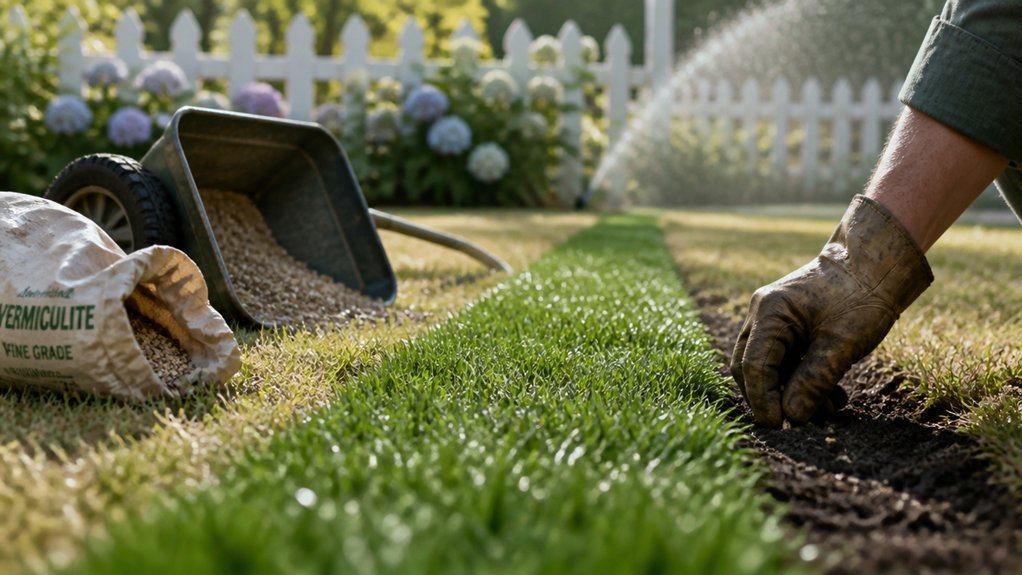
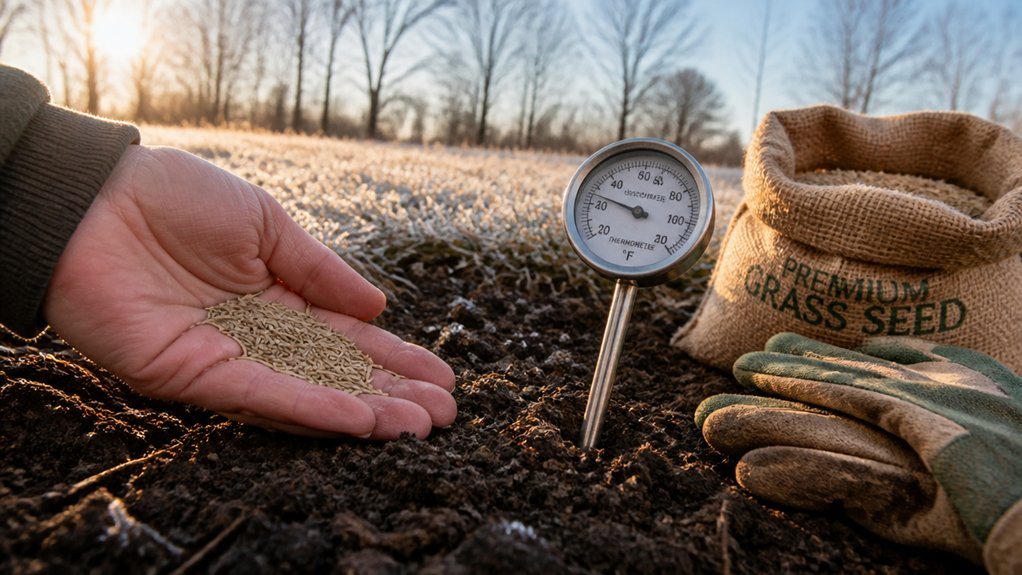
You’ll then introduce compatible grass cultivars through overseeding, directly implanting viable seed into aeration holes where soil-seed contact maximizes germination rates.
This synergistic protocol accelerates turf thickening, generating sufficient canopy density to mechanically exclude clover through resource interception.
Your denser sward restricts photosynthetically active radiation and monopolizes soil moisture and mineral nutrients, constraining clover’s ecological niche.
Integrated aeration and overseeding produce resilient, deeply rooted turf architecture that sustains clover control through competitive exclusion rather than chemical intervention.
Recommended Products

CONTROLS OVER 200 BROADLEAF WEEDS - Lawn Weed Control is designed to control over 200 broadleaf weeds including dandelions, chickweed, oxalis, poison ivy, thistle, and more. This product will not kill crabgrass, which is a grassy, not broadleaf weed.

WEED KILLER FOR LAWNS: Ortho WeedClear Lawn Weed Killer Concentrate weed killer spray kills crabgrass, dandelions, clover, and other listed common weeds in your lawn

WEED CONTROL FOR YOUR ENTIRE YARD: One kit, two formulas. Weed & Green covers up to 2,500 sq ft of lawn (post-emergent) or 1,250 sq ft (pre-emergent). Weed Warrior treats up to 224 sq ft of weeds in driveways, walkways, and garden beds.
Prevent Clover From Returning Next Spring
How will you ensure clover doesn’t exploit your turf’s vulnerabilities once winter dormancy breaks? You’ll execute a systematic clover prevention protocol centered on aggressive cultural management. First, you’ll elevate your mowing height to 3–4 inches, casting shade that starves clover of requisite photosynthetic irradiance while bolstering turf vigor. You’ll fertilize quarterly with nitrogen-rich formulations to eliminate nutrient deficits that invite clover colonization in thin turf zones. You’ll prioritize aeration and overseeding each fall, penetrating compacted soil and introducing improved cultivars that expand root architecture and amplify lawn density. This integrated approach physically suppresses clover establishment through spatial occupation. If residual populations persist, you’ll deploy Roundup for Lawns precisely per label specifications, recognizing you’ll likely reapply annually to neutralize dormant seed banks.
Recommended Products

4-𝐓𝐄𝐄𝐓𝐇 𝐃𝐄𝐒𝐈𝐆𝐍 𝐓𝐇𝐀𝐓 𝐆𝐑𝐈𝐏𝐒 𝐓𝐇𝐄 𝐅𝐔𝐋𝐋 𝐑𝐎𝐎𝐓 — 𝐍𝐎𝐓 𝐉𝐔𝐒𝐓 𝐓𝐇𝐄 𝐋𝐄𝐀𝐕𝐄𝐒: Featuring a 4-tine claw with sharp, deeply-set prongs, this weeding tool and hand weeder tool reaches deep enough to penetrate compact soil and lock onto stubborn taproots from every angle — solving the common frustration of cheap pullers that only tear off surface leaves and leave the root behind

New Weed puller, unlike any brand on the market. Redesign and optimize various break and crack issues of former weed pullers.

Simply "punch" the yarn threaded needle into your fabric and follow your pattern.
Conclusion
You’ll eradicate clover through integrated turf management. Combine mechanical removal, targeted herbicide application, and cultural practices—elevated mowing, proper fertilization, core aeration, and overseeding—to outcompete this nitrogen-fixing weed. Maintain dense turfgrass coverage; you’ll suppress clover’s photosynthetic capacity and exploit its competitive disadvantage against healthy lawn species. Consistent monitoring ensures you’ll intercept reestablishment from soil seed banks before reinfestation occurs.
Recommended Products

BROAD SPECTRUM DEFENSE: Effectively combats persistent weeds like spurge, yellow woodsorrel, wild violet and many more, maintaining your turf's beauty
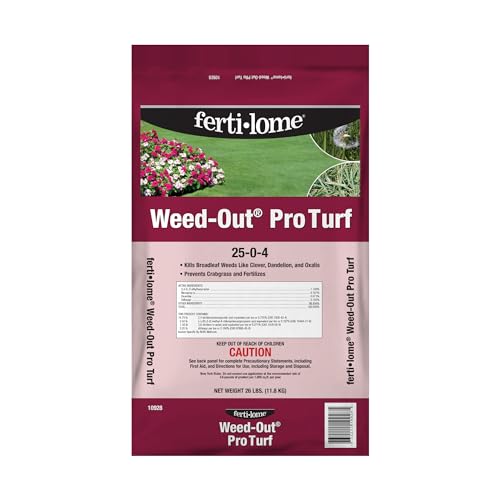
This selective weed killer controls over 250 broadleaf weeds including Clover, Dandelion and Oxalis.
Protect gardens, lawns and landscaping with quality herbicides