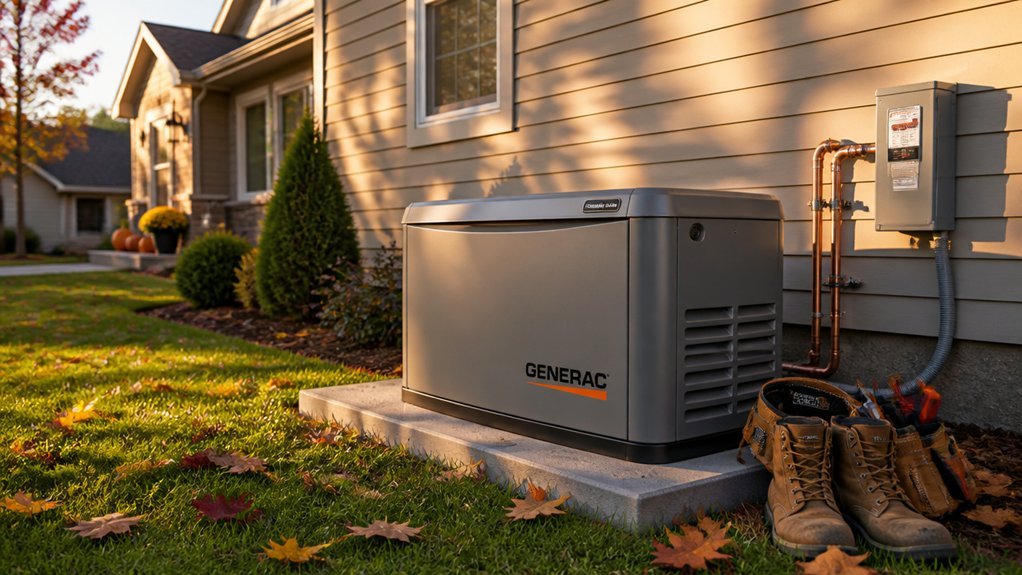

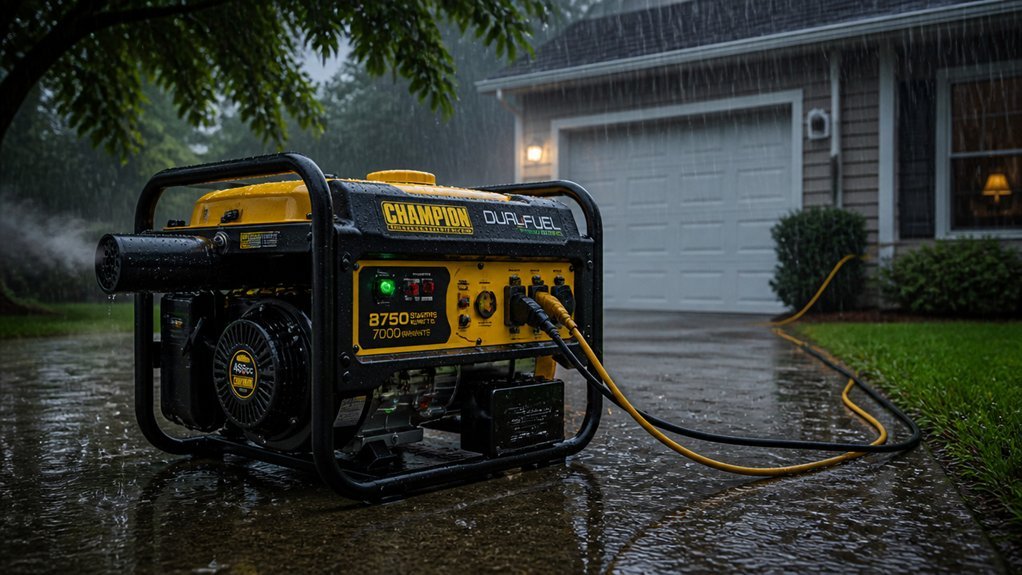
You’re standing in the dark, storm raging, and you need power—now. But plugging in that portable generator risks electrocution, equipment failure, or worse. Weather-rated standby models exist for this exact scenario, yet most portables demand protection you probably don’t have. Before you make a costly, dangerous mistake, you’ll need to understand which configurations actually keep you safe.
Can You Run a Generator in the Rain?
Why risk electrocution or equipment damage when a simple precaution prevents it? You’ve got to understand that generator safety demands you never operate a portable generator in rain without engineered protection. Rain infiltrates non-weatherproof housings, creating shock hazards through short circuits and accelerating corrosion that degrades electrical components. You’re exposing yourself to potential electrocution when moisture bridges energized terminals or contaminated fuel systems fail catastrophically.
You must deploy your portable generator exclusively outdoors on level, elevated surfaces, eliminating puddles that conduct electricity. Without a Storm Shield, GenTent, or equivalent canopy rated for precipitation loads, you’re violating manufacturer guidance and inviting regulatory non-compliance. You need weather-resistant outdoor-rated extension cords and verified airflow clearance to prevent thermal runaway. Methodical pre-operation inspection isn’t optional—it’s your primary defense against rain-induced failures.
Recommended Products

Fast 3-Step Installation: Clamp it. Frame it. Cover it. Weatherproof your power in minutes with a secure mounting system – no drilling or tools required.

Heavy-Duty Protection: Crafted from 420D Oxford/polyester fabric with a waterproof laminated undercoating, it delivers all-around defense against rain, sun, wind, snow, dust, and dirt, extending your generator's lifespan—ideal for 3000w-15000w gas/inverter generators with multiple size options

【Premium Material】: The generator cover is made of heavy duty material 600D oxford fabric with PVC coating, protect your generator from rain, snow, dust, wind and UV rays, give your generator all weather protection.
Why Portable Generators Can’t Handle Wet Weather

Portable generators and inverters lack engineered weatherproofing, exposing you to multiple failure modes when moisture intrudes.
During wet weather, you’re confronting immediate electrocution hazards through electrical shocks from energized outlets, frame conduction, and ground fault paths.
Water ingress penetrates unsealed housings, flooding receptacles, windings, and control modules.
You’ll witness accelerated corrosion mechanisms attacking cylinder walls, bearings, and ignition systems—degrading reliability and shortening operational life.
Fuel contamination occurs when precipitation breaches tank caps and lines, introducing hydrolock risks and combustion instability.
Manufacturer warnings obligate you to recognize that running these units unprotected violates safety protocols.
You’re operating outside design specifications when exposing portable equipment to precipitation or saturated surfaces.
Without factory-installed environmental sealing, you can’t guarantee dielectric integrity or prevent conductive bridging across energized circuits.
Recommended Products

Designed for Running Generators in Wet Weather Safely operate larger open frame portable generators outdoors in rain, snow, ice, sleet, and wind while maintaining proper airflow and exhaust clearance.

Designed for Running Generators in Wet Weather Safely operate open frame portable generators outdoors in rain, snow, ice, sleet, and wind while maintaining proper airflow and exhaust clearance.
What Makes Standby Generators Rain-Ready
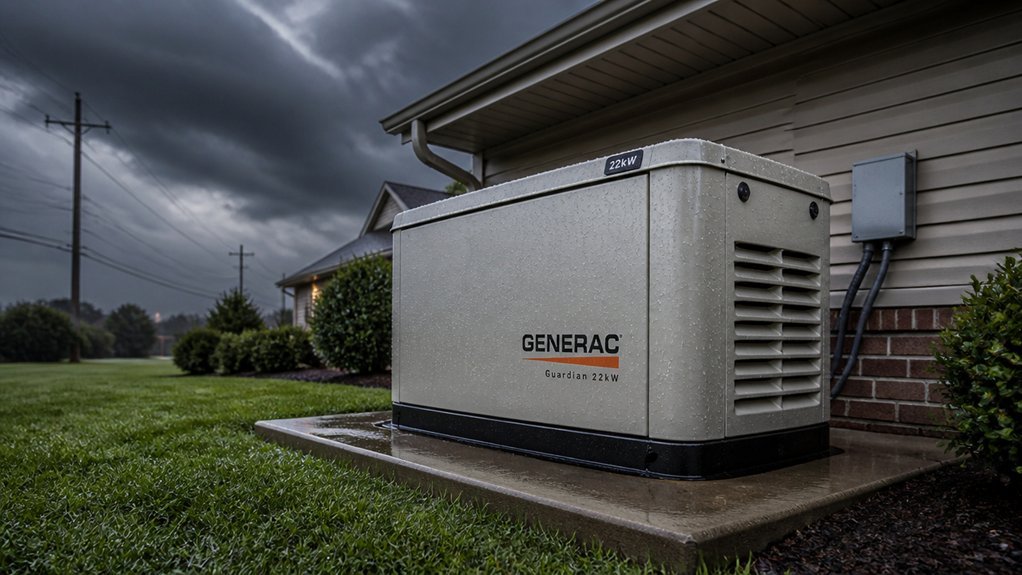
How precisely do standby generators differ when you’re counting on them in a downpour? You’ll find they’re engineered with weather-resistant housings that shield critical components from rain, snow, and sleet. These enclosures meet outdoor-use ratings, ensuring you don’t sacrifice operation during severe weather.
Your standby unit incorporates sealed electrical connections and corrosion-resistant finishes, reducing water-related damage and extending service life. Rain-ready design includes protective canopies that maintain proper ventilation and exhaust clearance—you must verify these pathways remain unobstructed to prevent hazardous buildup.
However, you can’t ignore installation requirements. You’ll need level placement, manufacturer-specified clearances, and adequately drained surroundings to prevent water intrusion. Fail to meet these conditions, and you’re risking equipment failure and warranty invalidation. Methodical adherence to these specifications ensures your generator performs reliably when storms strike.
Recommended Products

High quality: 10 Gauge extension cord 50 foot, 15 amp, 125 volt, 1875 watt, NEMA 5-15P to NEMA 5-15R; ETL/cETL listed; The 3 outlet extension cord outdoor has 3 way plug outdoor; Heavy duty extension cord with multiple outlets can power multiple appliances at the same time; Making maximum use of existing resources

Features & Benefits: 25 foot 4 prong generator extension cord 30amp; STW 125/250v; 3750w/7500w; NEMA L14-30P to L14-30R; avoid overheating due to long-time use; more durable and safe

Up to 1875W Applications: Outdoor extension cord waterproof 12 gauge, 15 amp, 125 volts, 1875 watts, NEMA 5-15P to NEMA 5-15R, SJTW power cord, ETL/cETL listed, heavy duty extension cord 50 ft is perfect for heavy duty use or powering major appliances
How Rain Covers Make Portable Generators Safe
Where can you safely operate portable generators when storm clouds open? You must deploy purpose-built rain covers engineered for weather protection.
You install a GenTent Storm Shield canopy, which self-attaches directly to your portable generator. This creates a sealed barrier against precipitation while maintaining critical ventilation. Open-frame models withstand 12 inches of rain per hour; inverter models handle 18 inches. Wind ratings reach 70 mph for open-frame units and 110 mph for inverter configurations.
You eliminate electrocution hazards without relocating equipment indoors. The canopy channels water away from sensitive components, preventing ground fault conditions. You maintain airflow through engineered vents, avoiding carbon monoxide accumulation.
You operate legally and safely in exposed conditions. This methodical approach replaces dangerous improvised shelters. You achieve compliance with manufacturer specifications and electrical safety codes while sustaining power output during severe weather events.
Recommended Products

This is the original, authentic, and patented EZ Generator Switch

【100 Amp Generator Transfer Switch】This transfer switch is perfect for shifting power from the utility grid to an auxiliary source (e.g., a gas generator or solar setup). Just a quick flick of its lever guarantees seamless power management. With a max capacity of 100 amps and a 24,000 - watt power rating, it can effortlessly power your whole home, even high - demand appliances like dryers and stoves
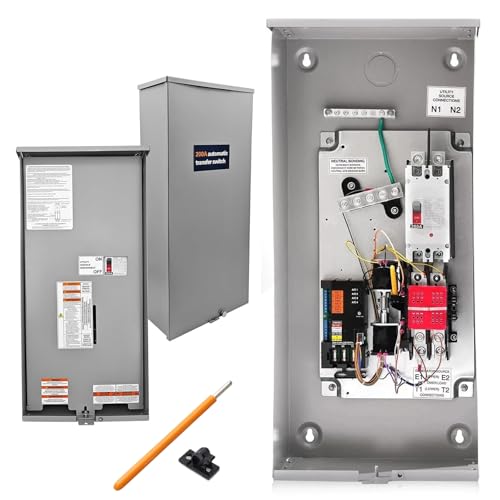
Seamless Power Transitions : This 200 Amp Automatic Transfer Switch is designed to seamlessly transfer the electrical load between a utility (primary) power source and a generator (backup) power source, it powers your entire household, including high-demand appliances, during outages.
Where to Place Your Portable Generator in Storms
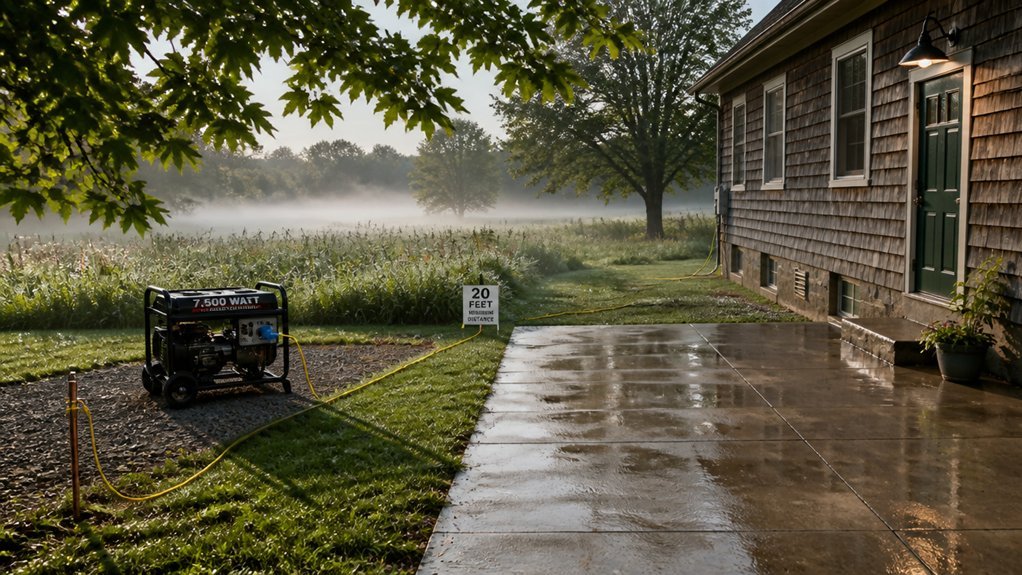
When storms hit, you’ve got to position your generator with exacting care to keep operational risks contained. Install your portable generator outdoors on a level, dry surface—elevated above puddles to mitigate water intrusion and electrocution hazards under adverse weather conditions.
You’ll situate the unit minimum 20 feet from doors, windows, and vents, preventing carbon monoxide infiltration into occupied structures. Ensure stable, non-slip placement with unobstructed airflow to preclude overheating and water accumulation beneath.
Deploy only weather-resistant, outdoor-rated extension cords, inspecting for insulation damage before energizing. You’ll employ a ventilated storm shield or canopy—such as GenTent—to deflect precipitation while preserving critical airflow. These placement protocols satisfy regulatory safety standards, reducing combustion, asphyxiation, and electrical risks during storm operation.
Recommended Products

Industrial Grade Machinery Design: Specifically engineered for integration into portable generators, construction equipment, and industrial machinery. Unlike standard household GFCIs, this unit features a specialized internal layout without downstream output terminals, making it the ideal dedicated safety solution for high-vibration power equipment.

Industrial Grade Machinery Design: Specifically engineered for direct integration into portable generators, heavy-duty machinery panels, and industrial control boxes. This specialized GFCI features a dedicated standalone design with no output terminals, ensuring focused protection for the connected equipment without the complexity of daisy-chaining.

RELIABLE PROTECTION - Protect users, tools, and equipment from electric shock with this durable GFCI adapter.
What to Do If Your Generator Gets Wet
Although rain exposure doesn’t automatically condemn your generator to failure, you must execute a systematic drying protocol before attempting restart to mitigate electrical shorting and corrosion risks.
First, you’re powering down immediately and disconnecting all loads. You’re wiping external surfaces thoroughly and ensuring all moisture evaporates completely before operation resumes.
You’re inspecting outlets, power cords, and plugs for water intrusion, cracks, or damage—never reconnecting compromised components. You’re verifying that generators operate only after you’ve confirmed internal dryness; moisture trapped inside poses severe electrical hazards.
You’re elevating the unit on a level, dry surface, positioning it away from puddles to minimize electrical shock risk in wet conditions. You’re deploying weather-resistant outdoor-rated extension cords exclusively and maintaining clear ventilation paths to prevent thermal runaway.
You’re storing the generator inside a dry location post-exposure and installing protective canopies or storm shields for future outdoor deployment.
Recommended Products

For both Generator Running & Storage Protection - It is both a running generator cover and generator box for storage at the same outdoor location. Convert between running and storage condition with a simple flip of side covers

THE IGAN ADVANTAGE – RELIABLE PROTECTION IN ANY WEATHER: Run your generator safely in rain, snow, high winds, or wet conditions. Designed for maximum durability, so your generator stays protected no matter the weather.

High-Quality Material: The generator cover is made of high-quality Oxford cloth, which is easy to wash, durable, and not easy to damage and tear.
When to Skip Generator Use Entirely
Recovery procedures address situations where water contact has already occurred, yet certain conditions demand complete abstention from generator operation. You must recognize when rain exposure renders operation non-negotiable. If standing water surrounds the unit, you can’t establish dry footing; cease operation immediately. When severe weather prevents safe canopy deployment or proper ventilation clearance, you forego power generation rather than compromise generator safety. You can’t operate on saturated surfaces where moisture migration threatens electrical components. If you’ve identified water intrusion in outlets or housing, you disconnect and don’t restart until complete inspection. Always prioritize dry storage protocols when precipitation exceeds protective capacity. You assess environmental conditions methodically: excessive wind, flooding, or lightning accompany rain exposure synergistically, amplifying electrocution and equipment damage risks. Regulatory-compliant operation requires you to evaluate rain intensity, surface conditions, and shelter availability before every session.
The Real Risk of Running Generators Indoors
You must prioritize outdoor placement. You’re positioning the unit at least 20 feet from your home’s openings, ensuring exhaust dissipates. You’re never operating in garages, basements, or crawl spaces. You’re recognizing that wet conditions demand weather-resistant enclosures—not interior relocation. You’re understanding that electric shock risks from rain don’t outweigh CO mortality rates, which constitute the leading cause of generator-related deaths. You’re following regulatory guidance absolutely: outdoors exclusively, far from air intakes, with CO detectors operational indoors.
Recommended Products

Extra Size for Safety: Extra size Male NEMA 5-15P power plug and Female NEMA 5-15R power socket for safety; 50 ft extension cord has high insulation safety performance to prevent electric shock; ETL/cETL Listed for safe approval

💡【Specification】 Outdoor extension cord 25ft, 16 gauge with 3 pure copper wire conductors 125V, 13Amp, 1625watts, male plug NEMA5-15P, female plug NEMA5-15R, SJTW cord, ETL listed. (The cross-sectional area of a 16 AWG cord is approximately 1.31 mm²)
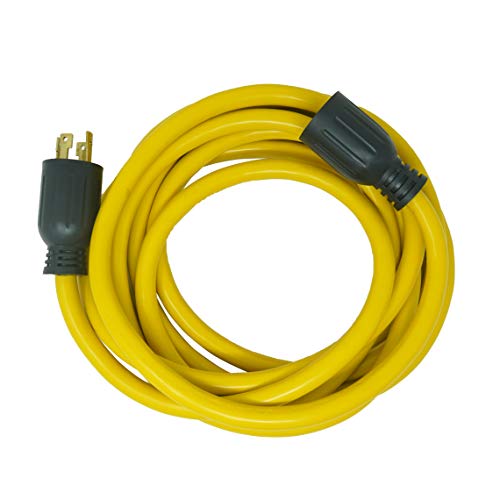
Secure Power for Outdoor Generators: The Southwire Generator Cord delivers 20 feet of rugged 10-gauge reach with twist locking power cord ends and a weather-resistant cord durability
Conclusion
You shouldn’t run a portable generator in unprotected rain—electrocution and equipment damage are real hazards. If you must operate during storms, you’ll need a manufacturer-approved rain cover, weather-rated cords, and placement on dry, level ground with proper ventilation clearance. Standby generators offer approved weather enclosures, but portable units demand vigilance. Never compromise on CO detectors or indoor operation prohibitions. After any moisture exposure, power down, dry components thoroughly, inspect for damage, and verify grounding before restart. Your safety compliance isn’t negotiable.
Recommended Products

This 100 amp generator transfer switch perfect to switch the power from the electric company to an auxiliary power (gas generator, solar). A simple movement of the transfer switch lever ensures seamless power management. With a maximum handling capacity of 100amps and a power capability of 24000W, it effortlessly powers your entire household, including high-demand appliances like dryers and stoves.

Easy&Efficient Transfer Switch: The 100A manual transfer switch allowing seamlessly transfers power from the electric company to auxiliary power(gas generator, solar) with a simple movement of transfer switch lever; With a maximum handling capacity of 100A, a power capability of 24,000W, a commonly used voltage of 120/240V AC, the manual generator transfer switch effortlessly powers entire household and circuits like dryers, stoves and HAVC equipment during an emergency

SIMPLE - Use on any 15 Amp 120-volt circuit, natural/propane gas furnace, boiler, freezer. Works with all Generators, Inverter Battery Backup or Solar Power Systems that have a standard 15A Nema 5-15 Outlet. (1875 Watts Max)