
You’ll overseed a lawn by cutting it short, exposing soil, and embedding seed for direct contact—but timing, seed selection, and irrigation intervals determine whether you get patchy seedlings or a dense stand. Most homeowners skip critical prep steps or drown the seed, yet the real risk lies in what happens after germination. Finish this, and you’ll know exactly when to mow, fertilize, and troubleshoot before you commit.
Overseeding vs. Interseeding: Does the Difference Matter?
Why distinguish between overseeding and interseeding when you’re standing in the lawn care aisle? You’re choosing between two approaches that share mechanical similarities but differ in seed type and intent. Overseeding introduces a different species to your turf for temporary improvement, while interseeding sows the same species or compatible mix to increase density within existing stands. In practice, you’ve likely noticed both methods employ comparable sowing techniques and follow-up care.
True overseeding with novel species proves less common in regions like Iowa, where practical outcomes hinge more on seed selection and soil contact than taxonomic distinction. Both practices target thinning or bare areas, aiming to achieve thicker, greener turf and enhanced weed suppression through improved density. Your underlying goal remains consistent: elevate turf quality without complete lawn removal, though overseeding offers potential performance gains through species diversification.
Recommended Products

SUN AND SHADE GRASS SEED: This combination lawn seed, grass fertilizer, and soil improver thrives in a variety of conditions
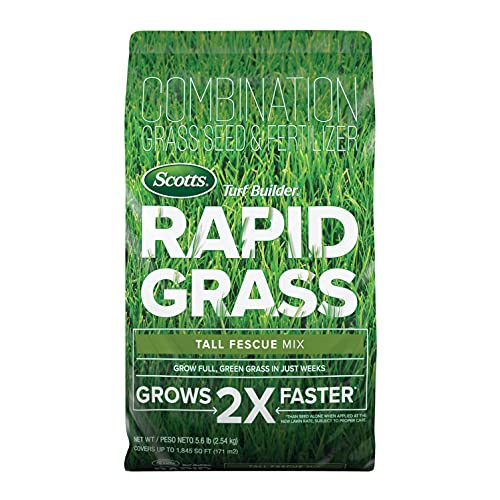
FAST GROWING GRASS SEED MIX: Scotts Turf Builder Rapid Grass Tall Fescue grass seeds for lawns grows grass 2X faster than seed alone (when applied at the new lawn rate, subject to proper care)

These fast growing grass seeds are suitable for areas that receive 4 to 6 hours of daily sunlight
When to Overseed for Fastest Germination and Growth
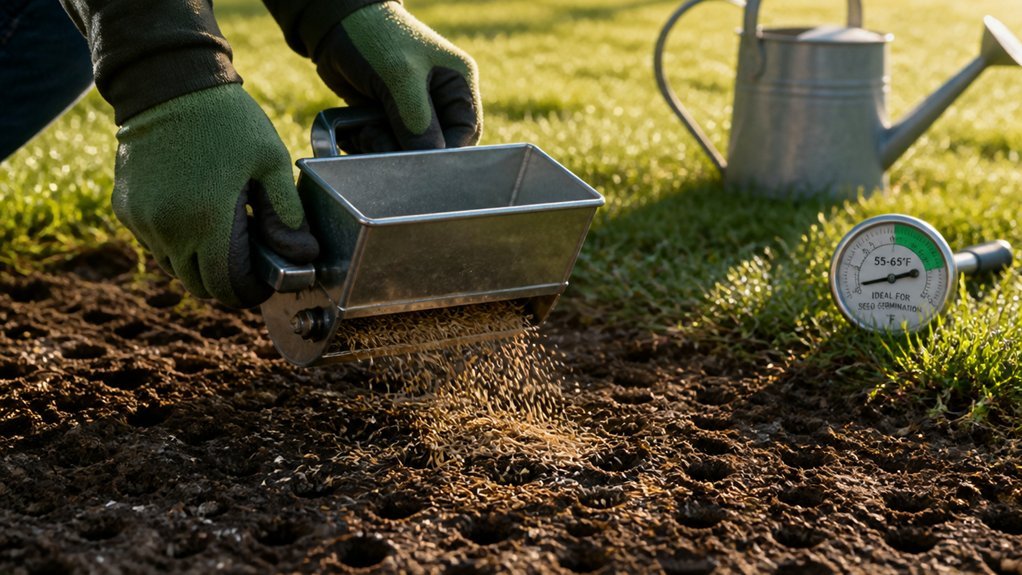
Now that you’ve settled on an approach—whether you’re adding new species for temporary gains or thickening your existing stand—you’ll need to lock in your timing. Target mid-August through mid-September for optimal results. Warm soils accelerate germination, while cool nights paired with warm days drive rapid growth without summer stress. Late-summer overseeding beats spring alternatives: you’ll face fewer weed seeds competing for resources, letting your new seedlings establish dominance.
Success demands seed-to-soil contact. Mow your existing turf to 1½–2 inches, then core aerate or slit seed to create entry points. Rake or drag afterward to work seed into soil gaps. Maintain consistent moisture through frequent, light watering—typically daily—for four to six weeks until seedlings mature. This timing and preparation combination maximizes establishment speed.
Recommended Products
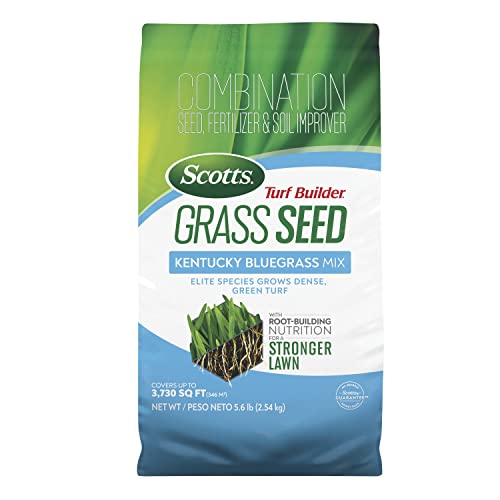
STRONGER LAWN FROM THE ROOTS UP: Kentucky Bluegrass seed with our Root-Building Nutrition, a combination of expertly crafted ingredients, helps establish deep roots to grow a thick, green lawn
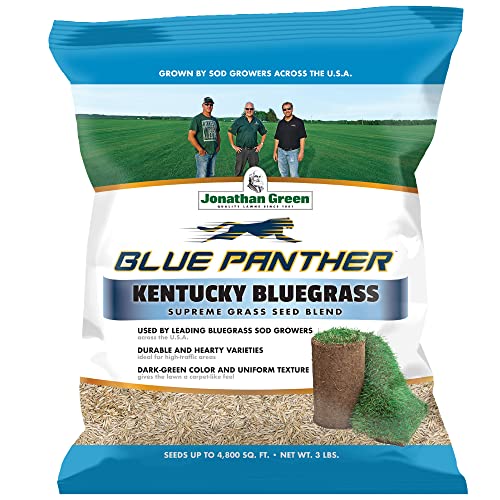
100% KENTUCKY BLUEGRASS GRASS SEED - Use our Blue Panther Kentucky Bluegrass Grass Seed when you want to keep a 100% KBG lawn or introduce KBG into an existing lawn. These bluegrasses are grown by leading sod growers across the USA.

Pennington Smart Seed contains just the right amount of fertilizer to help your lawn succeed
Pick the Right Seed for Sun, Shade, or Mixed Conditions

What seed mix you select determines how well your lawn establishes under varying light conditions, so match your choice precisely to each area’s sun exposure.
For full-sun locations, you’ll select Kentucky bluegrass as your primary species, blending at least two to three bluegrass cultivars to maximize turf density and improve stress resilience.
In partially shaded areas, you’ll combine Kentucky bluegrass, perennial ryegrass, and fine-leaf fescues—fine-leaf fescues dominate shade performance while companion grasses maintain structural integrity.
You’ll evaluate seed mixes for proven site adaptation and alignment with your maintenance capacity.
You’ll enhance sowing uniformity by blending seed with lawn topsoil, which improves soil-seed contact.
You’ll apply seed in even, consistent coverage patterns to ensure synchronized germination and complete infill of thin or bare patches throughout each distinct sun exposure zone.
Recommended Products

This grass seed and fertilizer all in one pack is for areas getting 4 to 6 hours of sunlight

Adaptable Turf: Has excellent drought and wear tolerance, and will perform nicely in a variety of soil conditions; Drought tolerance is recognized through the approval of the Turfgrass Water Conservation Alliance

Prep Your Lawn: Mow Short, Dethatch, and Clear Debris
Once you’ve selected your seed mix, you’ll move directly into site preparation to create ideal conditions for germination.
You’ll mow the lawn to approximately one inch, which exposes sufficient soil and improves seed contact; avoid mowing on dry days, as you’ll risk soil compaction and clumping.
You’ll attach a grass-collecting bag to capture clippings, preventing material from blocking soil contact and hindering germination.
You’ll scarify or dethatch to eliminate dead grass, moss, and weeds. For small areas, you’ll employ a lawn rake; for large lawns, you’ll operate a scarifying machine.
You’ll extract perennial weeds with a weed puller, removing complete root systems and leaving bare patches ready for reseeding.
Finally, you’ll clear all loose leaves and sticks, ensuring debris-free conditions critical for successful overseeding.
Recommended Products

SUPERIOR HOOK-AND-LOOP FASTENERS - Our versatile lawn aerator tool feature durable, strong fasteners for a secure fit, ensuring stability during use on any surface, from lawns to epoxy floors.

Metal Base, Built to Last: Reinforced with a 3MM thickened metal sole that helps reduce breaking and bending issues often found in plastic alternatives. Our aerator shoes for grass maximize body weight transfer for deeper soil penetration while providing excellent stability and durability for lawn care and yard maintenance. Built as dependable yard aerator shoes, they help make regular lawn maintenance easier

🌱 HEALTHIER GRASS – Just Walk Walk across compacted lawn and let 26 1-3/4" steel spikes do the work. Deep holes let air, water, and nutrients reach roots. No rental fees.
Aerate or Slit-Seed for Direct Soil Contact
Why risk poor germination when you can guarantee seed-to-soil contact? You need to choose between core aeration or slit-seeding. Core aeration extracts soil plugs through hollow tubes, creating 20–40 holes per square foot after 3–4 passes. You’ll relieve compaction and boost air, water, and nutrient penetration to roots. Target heavily trafficked or waterlogged areas where compaction’s worst. After aerating and seeding, drag a chain-link fence or drag mat across the area to work seed into the holes.
Alternatively, use slit-seeding, which opens shallow slits directly into soil without removing cores. Vertical mowing also slices through thatch into the upper 1/4–1/2 inch of soil through 1–2 passes. Both methods ensure seed embeds properly for optimal germination rates.
Recommended Products

Broadcast Spreader: Experience precise and even distribution with the EarthWay 2750 25lb Nylon Bag Seeder and Spreader. This durable and water-resistant broadcast spreader is...
Spread Seed Evenly by Hand or With a Spreader
With your soil prepared through aeration or slit-seeding, you’re ready to distribute seed. Apply your chosen seed at the supplier-recommended rate, ensuring uniform coverage for even germination and complete fill-in of bare or thin areas.
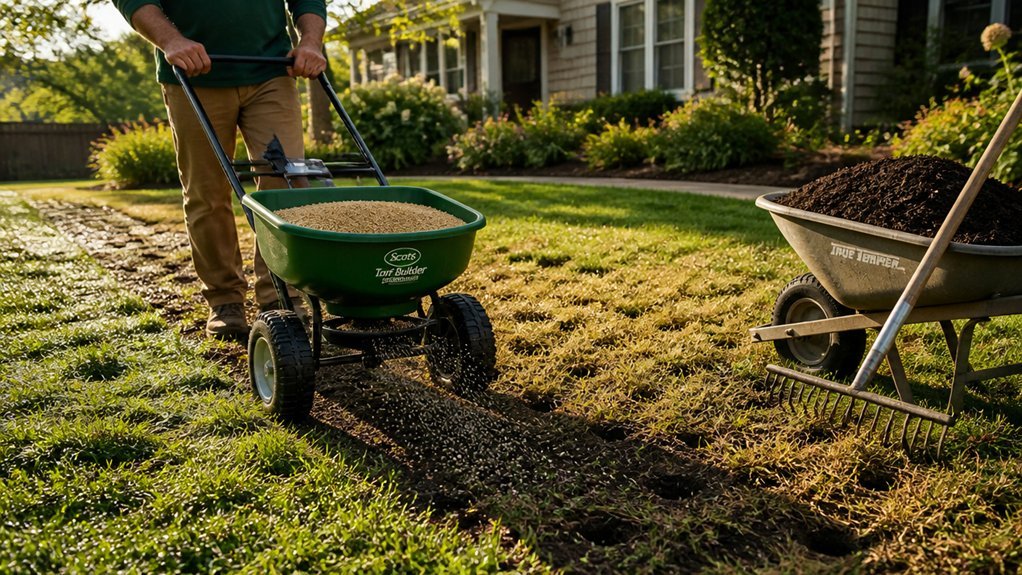
For larger lawns, you’ll operate a wheel-driven spreader to maintain consistent application; for small patches, you’ll use a hand-held spreader.
You’ll divide your seed supply in half and apply it in perpendicular passes to eliminate gaps and overlaps. Optionally, you’ll mix seed with topsoil to improve soil contact and ensure uniform germination across patchy sections. You’ll avoid summer overseeding due to heat and dryness, timing your application instead for mid-August through mid-September when soil warmth and fall conditions support rapid germination.
After sowing, you’ll drag a chain link fence or drag mat across the surface to lightly incorporate seed into soil and enhance contact.
Recommended Products
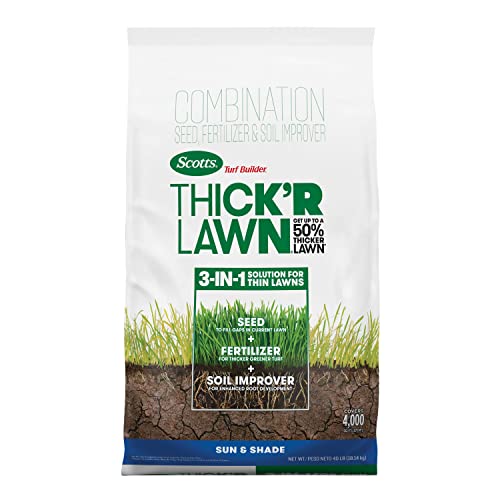
3-in-1 solution for thin lawns, including seed, fertilizer and soil improver

This pack of lawn seeds is ideal for new lawns, overseeding and lawn repair
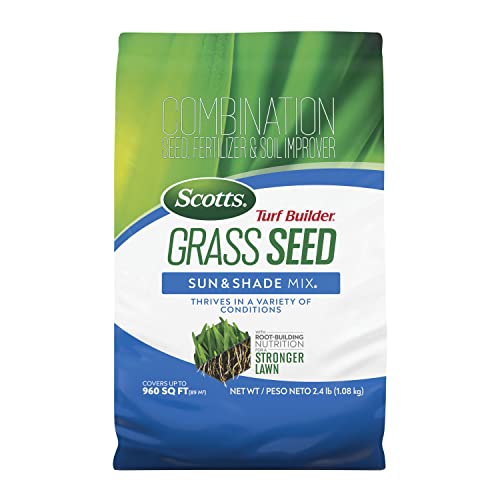
SUN AND SHADE GRASS SEED: This combination lawn seed, grass fertilizer, and soil improver thrives in a variety of conditions
Water Your Newly Overseeded Lawn: Daily Mist to Deep Soak
Begin watering your overseeded lawn immediately after sowing to activate germination and secure seed-to-soil contact, using a hose, watering can, or sprinkler to deliver an initial soaking. You’ll need to maintain consistent moisture throughout the germination period, which means watering at least once daily with frequent, light applications. If rain isn’t forecast, continue watering every two to three days to prevent the seedbed from drying. Consider laying hessian, horticultural fleece, or fine mesh over seeded areas; these coverings help retain moisture and protect emerging seedlings. Remove them only once you’ve observed strong, established growth. As seedlings develop, shift your watering strategy: gradually reduce frequency while increasing depth per session. This transition from daily mist to deep soak encourages robust root penetration and long-term drought tolerance.
Recommended Products
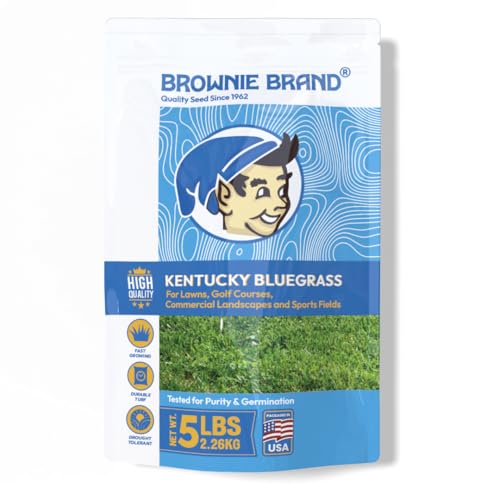
Brownie Brand Blue Devil Kentucky Bluegrass Seed produces a dense, lush, and vibrant green lawn with a fine leaf texture. This premium cool-season lawn seed delivers long-lasting beauty and performance, making it the perfect choice for new lawns, overseeding, or repairing bare spots

Soil Adaptability: This Kentucky Blue grass seeds for lawns grows in all common soil types, making it a versatile choice for different landscapes and conditions

Soil Adaptability: This Kentucky Blue grass seeds for lawns grows in all common soil types, making it a versatile choice for different landscapes and conditions
Mow New Grass Low, Then Raise Blades Gradually
How should you prepare your existing turf before overseeding? You’ll mow the lawn short on its lower safe setting. This exposes soil and improves seed contact for overseeding.
After seeding, maintain a mowing height of 1½–2 inches on newly established grass. This reduces competition from established turf and lets seedlings receive adequate light. You’ll mow frequently at first to prevent tall clumps from shading young seedlings and to promote even density. Monitor growth closely and adjust your mowing intervals so newly germinated turf doesn’t experience stress from excessive periods between cuts.
As seedlings mature, you’ll gradually raise the mowing height to about 3 inches. This encourages deeper rooting and sturdier growth throughout your lawn’s development.
Recommended Products

The perfect mix of Perennial Ryegrass, Kentucky Bluegrass and Tall Fescue grass seeds for lawn to survive sun and moderate shade

Drought tolerance: Quality turf stand that ensures rapid germination and a dense, normal to low maintenance turf; Drought tolerance is recognized through the approval of the Turfgrass Water Conservation Alliance

A premium mix of Perennial Ryegrass, Kentucky Bluegrass and Tall Fescue grass seeds for planting
Fertilize 6 Weeks After Germination for Thick Growth
When exactly should you feed your new turf? You apply starter fertilizer approximately six weeks after germination, delivering one pound of actual nitrogen per 1,000 square feet to drive thick, dense growth.
Select a starter fertilizer formulated specifically for overseeding or new sod establishment, ensuring it supports continued root development without overwhelming young plants. You must verify application rates on product packaging, as formulations vary significantly. Apply only after seedlings have established sufficient root systems, then water thoroughly to move nutrients into the root zone.
Monitor turf response closely. You’ll avoid over-fertilizing, as excess nitrogen promotes disease susceptibility and physiological stress in immature grass. If growth appears overly rapid or tissue shows burning, you reduce subsequent application rates. This measured approach ensures your overseeding investment develops into resilient, competitive turf.
Recommended Products

Adjustable Size: The 11.5* 5 inch Aerator Shoes fit for women's shoe size 6-10, men's shoe size 6-9, with 3 adjustable Velcro straps wrapped around your heel and attach with hook-and-loop fasteners, no slipping and loosing.
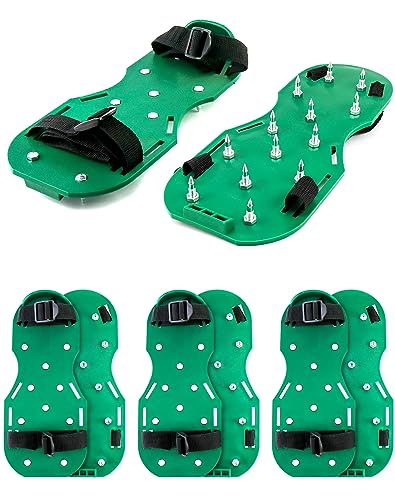
Standard: Unisex size, flexible use, easy to wear for men and women. length: 12"; width: 5".

Adjustable Size: The 11.5* 5 inch Aerator Shoes fit for women's shoe size 6-10, men's shoe size 6-9, with 3 adjustable Velcro straps wrapped around your heel and attach with hook-and-loop fasteners, no slipping and loosing.
Timeline and Troubleshooting: From Sprouts to Full Lawn
Your fertilization schedule sets the foundation, but success hinges on managing the full developmental arc from first sprouts to mature turf. You must maintain consistent moisture for 7–14 days after overseeding to sustain germination and secure seedling establishment. Once germination initiates, you’ll gradually reduce watering frequency and transition toward normal irrigation protocols as maturation progresses.
Overseeding operates as a cumulative layering process; each application incrementally introduces low-grow species and clover, systematically enhancing the eco-friendly composition. You’ll observe progressive transformation: year one delivers increased clover presence and improved color density, year two reduces mowing and irrigation demands, and year three achieves a dense, low-growing Earthwise lawn.
Monitor germination progress and identify bare patches throughout establishment. You’ll reseed deficient areas in 6–12 weeks if gaps persist, ensuring complete coverage.
Conclusion
You’ve prepped, seeded, and watered methodically. Now you maintain: daily moisture until germination, gradual irrigation increases, and initial low mowing before raising blades. Apply fertilizer six weeks post-germination. Monitor density, address bare patches promptly, and adjust practices for seasonal stress. Your overseeded lawn’s success depends on consistent execution through establishment.