
You need firewood that performs, and not all species deliver. BTU density, moisture content, and combustion residue vary dramatically between oak, black locust, and hickory—yet your stove or fireplace demands specific traits. Seasoning timelines, ecological sourcing, and whether you choose kiln-dried or air-dried rounds will determine your heat output and particulate emissions. The optimal choice isn’t universal; it depends on your heating setup, burn duration needs, and local woodland ecology. You’ll want to examine how these variables intersect before stacking your next cord.
Best Firewood for Heat: Ranked by BTU and Burn Time
How do you measure a fire’s true worth? You evaluate BTUs per cord and Burn Time—metrics that determine thermal efficiency and fuel sustainability.
Black Locust ranks highest among common hardwoods, delivering exceptional heat density with coals that rival anthracite; you’ll season it rapidly and sustain radiant output for hours.
Oak remains your ecological gold-standard, yielding very high BTUs with extended Burn Time and reliable coal beds; you burn it efficiently across diverse conditions without excessive smoke.
Hickory matches Oak’s thermal profile, providing robust overnight performance through dense carbon structures.
You select Black Locust when maximizing caloric output per unit volume.
You choose Oak for balanced longevity and adaptability.
Both species represent carbon-sequestered solar energy; you’re harvesting stored photosynthetic product, not depleting fossil reserves, when you source them from managed, regenerative harvests.
Recommended Products

Great for Any Occasion: Whether you're having a party, enjoying a quiet night in, or cooking up a storm for your family and friends, our cooking wood is sure to make your event memorable

Premium Kiln-Dried Oak Firewood: Crafted from meticulously kiln-dried oak, our mini pizza oven wood guarantees superior quality and unrivaled burning efficiency, ensuring an authentic wood-fired taste with every dish.

KILN-DRIED KINDLING WOOD BURNS HOTTER: Our premium wood has been dried in a heated, controlled hardwood lumber kiln rather than air-dried or time dried to minimum standards, producing wood kindling with 6%-8% moisture content. Lower moisture content means it will burn hotter.
Match Your Firewood to Your Setup: Fireplaces, Stoves, and Cooking
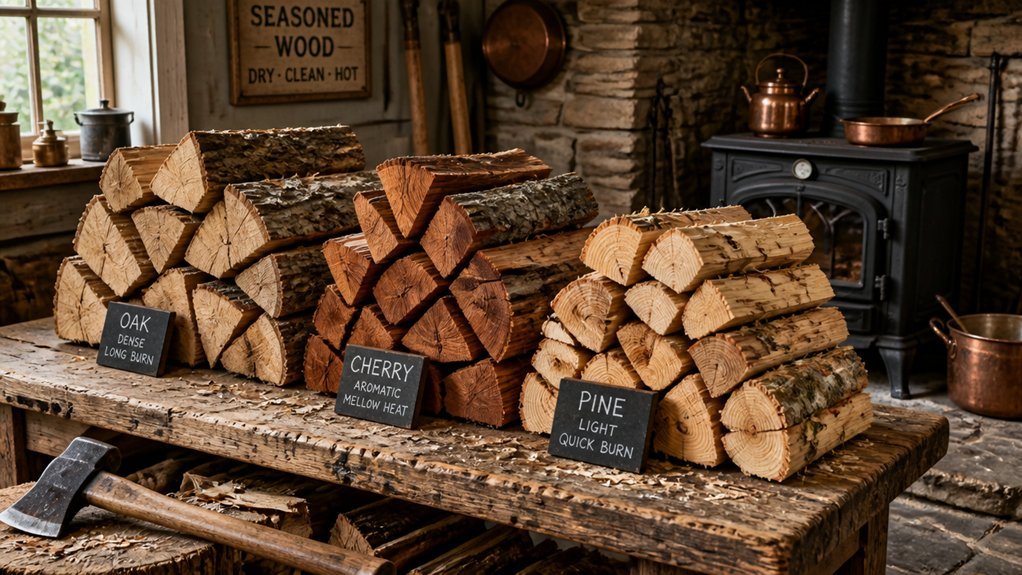
Thermal metrics only determine potential; your heating apparatus determines realized efficiency. You match hardwood BTU characteristics to specific combustion systems for optimal ecological performance.
In open fireplaces, you select Oak, Ash, or Maple. These hardwoods deliver medium-high heat with minimal smoke, creating clean burns and pleasant ambient conditions without overwhelming the space.
When operating wood stoves, you prioritize high-density hardwoods: Oak, Hickory, and Black Locust. You maximize BTU output and minimize refueling frequency through extended burn cycles and sustained coal beds.
For cooking applications, you adjust fuel selection to flavor profiles. Hickory generates bold smoke, Cherry imparts subtle sweetness, and Oak provides stable, even heat as base firewood. You utilize kiln-dried hardwood when possible to reduce particulate emissions and improve combustion efficiency across all setups.
Recommended Products

Durable Construction: Crafted from high-quality black steel metal pipes, this firewood rack is built to withstand heavy loads and resist rust and corrosion, ensuring long-lasting durability for both indoor and outdoor use.
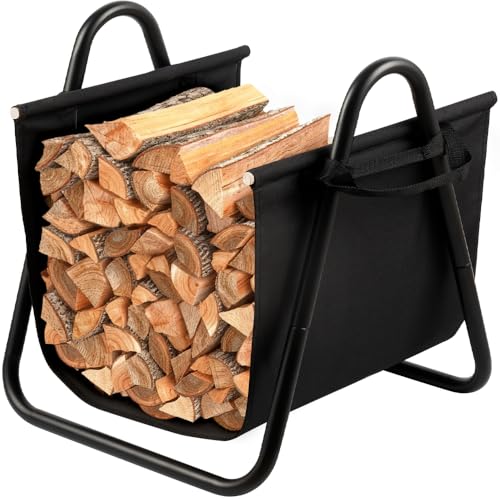
Overall Size: Fireplace indoor firewood rack overall open 18.11 inch long by 16.93 inch wide, 20.47 inch high, a perfect portable firewood log carrier measures 40.16in by 15.55 in when flattened, this firewood log carrier allows a large wood tote capacity, to hold 5-10 logs wood for a long winter night.

Pennsylvania Mixed Blend – Expertly selected mix of oak, maple, hickory, cherry, walnut, and ash—each chosen for its unique burning qualities. Delivers balanced heat, an efficient burn, and a pleasant aroma.
Seasoning Timelines by Firewood Type: From Split to Burn-Ready

Why does seasoned wood outperform green alternatives so dramatically? You’ll achieve complete combustion only after seasoning timelines reduce internal moisture to below 20 percent, maximizing thermal efficiency and minimizing creosote accumulation.
You’ll wait up to two years for oak, as its dense structure retards evaporation. Black locust rewards your patience sooner, delivering high-BTU, burn-ready fuel faster than comparable density species. Birch accelerates your preparation with quicker drying characteristics. Sycamore reaches usable status in approximately twelve months, suiting your shoulder-season demands. Elm resists splitting but seasons reliably when you’ve allocated sufficient drying duration.
For accelerated procurement, kiln-dried firewood eliminates your waiting entirely through controlled thermal dehydration. However, you’ll find sustainable practice favors air-dried seasoned hardwoods, reducing embodied energy while meeting ecological objectives. You’re balancing temporal constraints against carbon footprint in selecting your fuel source.
Recommended Products

Great for Any Occasion: Whether you're having a party, enjoying a quiet night in, or cooking up a storm for your family and friends, our cooking wood is sure to make your event memorable
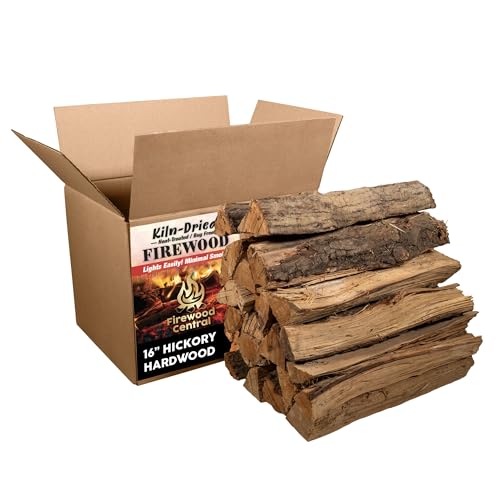
Signature Bold & Hearty Smoke – Delivers rich, robust flavor for ribs, brisket, red meat, and game, perfect alone or blended for a custom flavor.

PERFECT TINY SPLITS measure approximately 5 inches long and .5-2 inches wide. Ideal for cooking in ooni pizza oven, gozney roccbox, solo stove pizza oven, and heating with mini solo stove.
Softwood Exceptions: When Pine or Cedar Make Sense
While seasoned hardwoods dominate thermal performance metrics, you’ll encounter scenarios where softwoods offer functional advantages despite their inferior energy density. You’ll find pine excels as kindling; its high resin content ignites rapidly from cold starts, though you’ll accept accelerated creosote accumulation in flue systems. Cedar leverages natural aromatic oils for near-instant ignition, delivering olfactory benefits but minimal thermal output.
You’ll optimize these species ecologically by deploying them as fire-starting substrates rather than primary fuel sources. When arranging your fuel load, you’ll position pine or cedar at combustion initiation points, then transition to long-burning hardwoods for sustained thermal release. In campfire contexts, you’ll exploit both species for rapid flame establishment and fragrance diffusion, though you’ll interlayer denser hardwoods to maintain heat output. You’ll leverage their abbreviated seasoning requirements when supplemental quick-burn material proves necessary.
Recommended Products

The Wilson firewood box is made with convenience and ease of use in mind. Shipped right to your doorstep, making obtaining firewood a breeze. Packed and easy to handle, this...
Why Moisture Content Matters More Than Wood Species
How profoundly does moisture content govern your fire’s performance? You’ll find it outweighs species selection entirely. When you burn seasoned wood below 30% moisture, you maximize heat output and minimize creosote, particulate emissions, and flue fouling. Green wood forces you to sacrifice thermal efficiency for steam generation, polluting your burn.
You can’t bypass seasoning regardless of species. Wood density dictates your drying timeline: dense oak demands nearly two years, while lighter woods season faster. Yet even premium hardwoods fail you when wet. Your BTU delivery depends less on cellular lignin structure and more on water evaporation energy loss.
You must prioritize proper curing over species claims. Moisture content serves as your primary ecological and technical variable—predicting actual thermal yield where taxonomy cannot.
Recommended Products

ULTIMATE CONVENIENCE AND EASE: Enjoy A Traditional Wood-Burning Campfire Without Smelling Like One. Eco-Friendly Solo Stove Premium Wood Fuel Pellets Produce Low Smoke And Very Little Ash For A More Enjoyable High-Heat Burn.

Premium Mini Firewood: Elevate your outdoor experience with our meticulously designed mini firewood made from natural premium pine. Each box, weighing 2 pounds, ensures convenience for indoor storage and outdoor adventures. Our kiln-dried process maintains a moisture content of less than 6%, guaranteeing bark-free, clean-burning, and longer-lasting fires.

100% NATURALLY SCENTED: The smell of our naturally scented fire wood is the perfect fit for the perfect flame
Buying Kiln-Dried Firewood in Southeast Wisconsin
Where can you obtain thermally optimized firewood without the two-year seasoning burden? You purchase kiln-dried stock in Southeast Wisconsin, where providers thermally reduce moisture to sub-twenty percent levels through controlled dehydration cycles. This process eliminates fungal colonization and volatile organic compound accumulation while maximizing heat output per cord.
You select from ecologically managed species: oak and hickory deliver sustained BTU density for extended burns, while birch and ash offer rapid ignition with moderate thermal yield. Local sourcing within Wisconsin minimizes transportation emissions and preserves regional forest carbon stocks.
You evaluate burn characteristics through technical guides comparing ignition temperature, coalescence rates, and particulate emission profiles. Whether you require fuel for catalytic stoves, masonry fireplaces, or cooking applications, kiln-dried inventory ensures immediate combustion efficiency without atmospheric moisture interference.
Recommended Products

Perfect: Tiny splits measure approximately 5 inches long and .5-2 inches wide. Ideal for cooking in ooni pizza oven, gozney roccbox, solo stove pizza oven, and heating with mini solo stove.

Premium Kiln-Dried Oak Firewood: Crafted from meticulously kiln-dried oak, our mini pizza oven wood guarantees superior quality and unrivaled burning efficiency, ensuring an authentic wood-fired taste with every dish.

✔ 【PERFECT DESIGN】--We have been carefully designed to expertly split natural premium pine fire sticks wood into 4-inch lengths of small firewood. Each box weighs 4 pounds and 300 cubic inches, making it very convenient for indoor storage and outdoor carry.
Conclusion
Your firewood selection directly impacts thermal efficiency, combustion emissions, and ecosystem impact. Prioritize high-density hardwoods—oak, hickory, or black locust—seasoned below 20% moisture for optimal BTU output and minimal particulate matter. Match species to your specific heating apparatus, and source locally to reduce carbon transport costs. Sustainable harvesting practices ensure forest regeneration while meeting your caloric requirements through responsible woodland stewardship.
Recommended Products
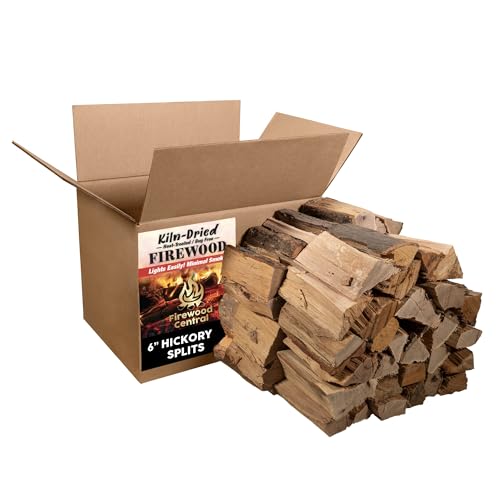
Signature Bold & Hearty Smoke – Delivers rich, robust flavor for wood-fired pizzas, ribs, brisket, red meat, and game—perfect alone or blended for a custom taste.
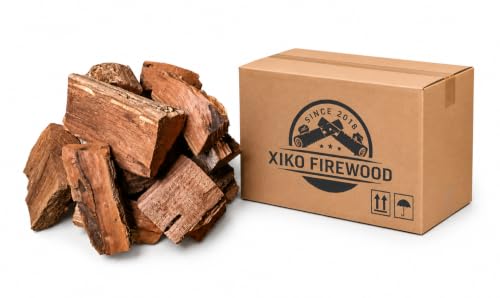
PREMIUM MESQUITE HARDWOOD: High-BTU hardwood logs sourced from North Central Texas deliver intense heat with long-burning performance for superior grilling and smoking results

Premium Ultra Kiln-Dried Oak: Experience unparalleled quality with our meticulously crafted 16-inch oak logs, ensuring a superior burn for indoor and outdoor fires.