
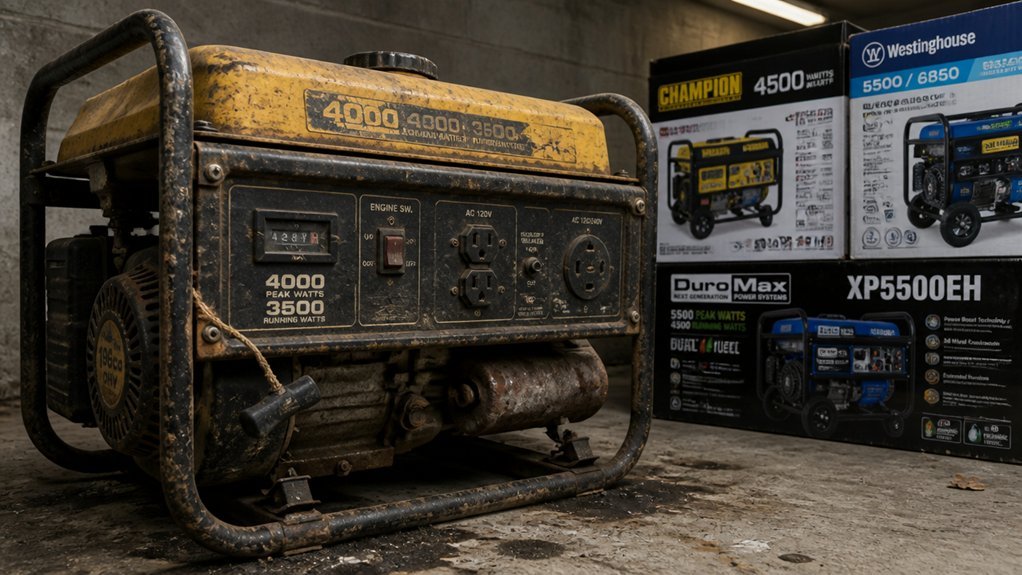
You’re standing in the hardware aisle, staring at price tags and wondering if that generator will outlast your mortgage—or die before the first blizzard. The answer hinges on variables you haven’t weighed yet: runtime hours, fuel chemistry, thermal cycling stress, and load factor margins. Misjudge any one, and you’ll replace the unit a decade early. We’ll dissect each factor so you can calculate your actual cost per kilowatt-hour.
How Long Do Generators Last? Runtime vs. Equipment Lifespan
When you’re evaluating generator longevity, you’ll need to distinguish clearly between runtime hours and total equipment lifespan—two metrics that often confuse buyers.
Runtime hours measure actual engine operation, typically ranging 10,000–30,000 hours before overhaul.
Standby lifespan measures calendar years in reserve service, often reaching 20–30 years with minimal annual runtime.
Your fuel type selection directly impacts wear patterns. Natural gas burns cleaner, reducing internal carbon deposits and extending component life. Diesel engines tolerate sustained loads better but accumulate contaminants faster without rigorous maintenance.
You’ll maximize longevity through disciplined maintenance protocols: scheduled oil changes, filter replacements, and monthly exercise cycles that prevent seal degradation and moisture accumulation. Neglect accelerates deterioration regardless of fuel type.
Conversely, primary power applications and chronic overload operation compress both runtime and calendar lifespan significantly below manufacturer specifications.
Recommended Products
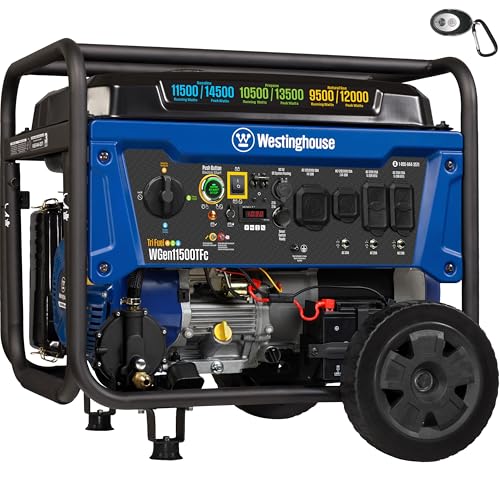
Perfect as a backup power source for larger homes or a dependable source of portable power

PrecisionPower Technology delivers best-in-class power quality with less than 5 percent total harmonic distortion for clean, smooth operation of sensitive electronics and appliances

[High Gas Flow] High Gas Flow up to 350000 BTU. Max work pressure: 1/2 PSI. 15 FT 3/4" ID Natural Gas Hose with a 3/4" Male Pipe Swivel Fitting and 3/4" Male QD Plug , with Quick-connect Adapter. Solid brass stronger connectors. The hose wall is upgraded with metal material, thickness is thickened more Safety. Long 3/4 Gas Flex Line Hose for NG/LP Propane Appliances Construction Heaters.
Standby or Portable: Which Generator Type Lasts Longer?
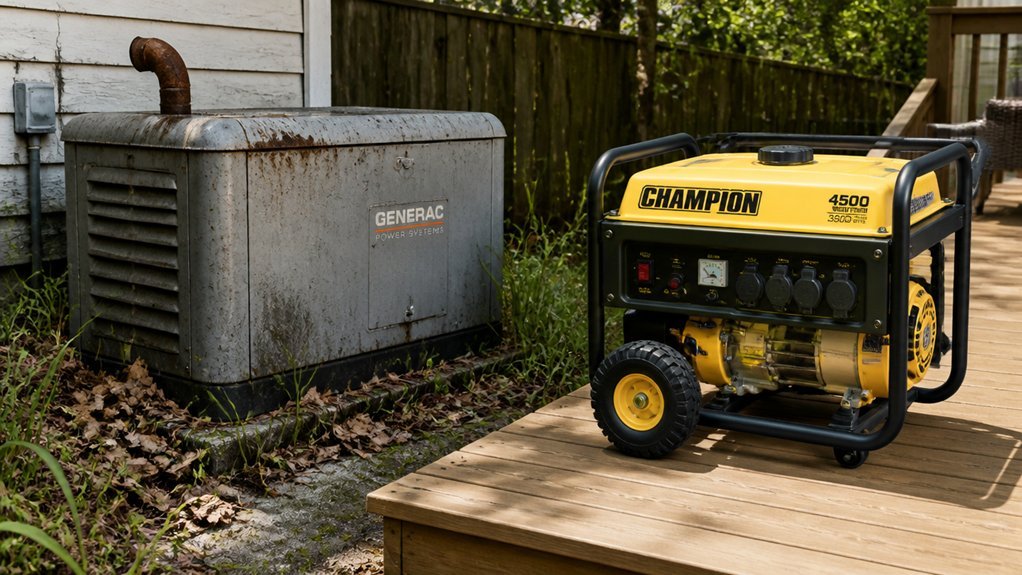
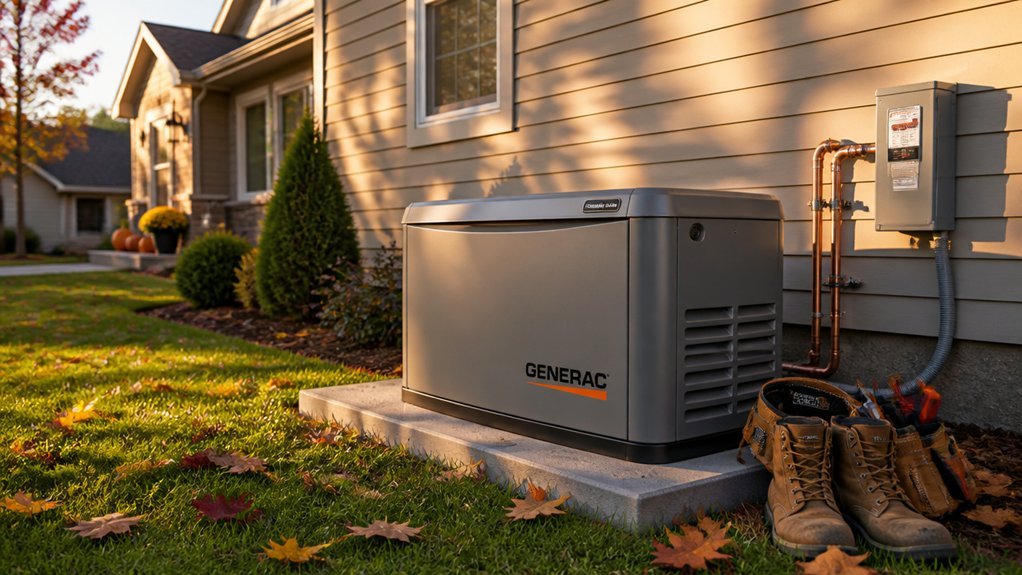
Which generator investment delivers superior longevity depends entirely on your application dynamics and duty cycle demands. You’ll find that standby lifespan significantly exceeds portable units because you operate them during brief annual outages rather than sustained duty cycles. Standby units deliver 10,000–30,000 runtime hours across 20–30 years, while portable generators accumulate wear faster despite shorter individual run periods. You’re managing a critical trade-off: portable equipment tolerates 6–48 hours per fill but deteriorates with frequent cycling. Maintenance impact proves more pronounced on standby systems; your adherence to oil changes and professional servicing preserves their extended-duty engineering. You’ll degrade either type through overloading or underuse, though standby configurations resist constant-use wear more effectively. You’re selecting between intermittent high-capacity reserve versus flexible mobile power—neither outlasts the other without your disciplined operational protocols.
Recommended Products
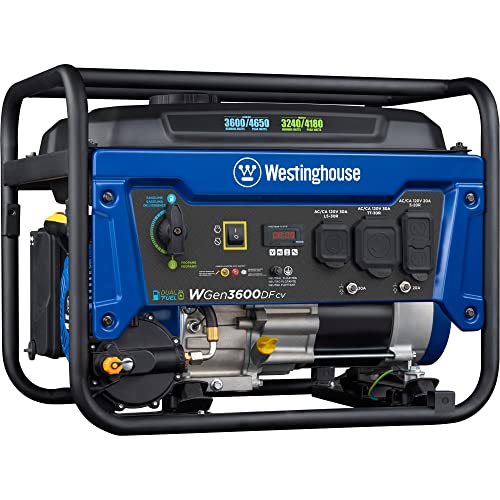
4650 Peak Watts & 3600 Rated Watts (Gasoline); 4650 Peak Watts & 3240 Rated Watts (Propane); 4 Gallon Fuel Tank (with Fuel Gauge); Up To 14 Hours of Run Time Per Tank
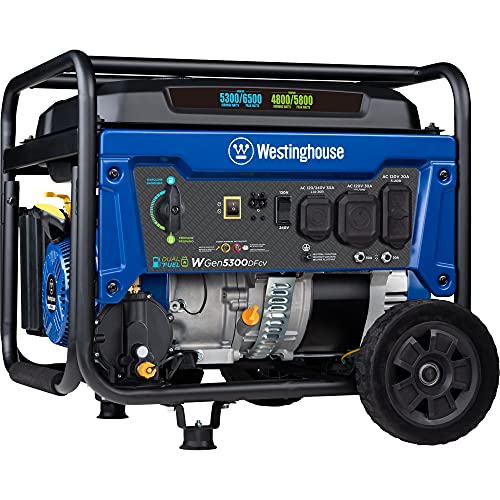
Gasoline: 5300 Running Watts & 6500 Peak Watts; Propane: 4800 Running Watts & 5800 Peak Watts; 4.7 Gallon Fuel Tank with Fuel Gauge; Up to 14.5 Hours of Run Time with 120/240V Volt Selector Switch
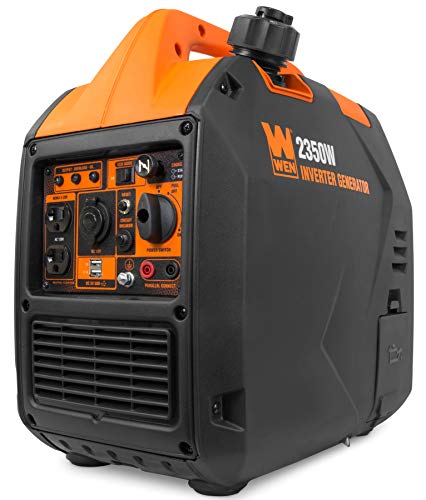
Ultralight body weighs in at a mere 39 pounds for easy transport and storage
How Fuel Type Determines Generator Runtime and Longevity

All four fuel types impose distinct operational ceilings on your generator’s runtime and mechanical lifespan. gasoline delivers 6–18 hours before you must refuel, but fuel degradation forces you into rigorous maintenance cycles for long-term readiness.
propane binds your runtime directly to tank capacity: a 20-pound tank yields 5–8 hours, though larger vessels extend operation substantially.
diesel pushes your refueling interval to 24–48 hours, rewarding you with durable thermal efficiency and reduced mechanical wear.
natural gas eliminates fuel depletion entirely—your runtime extends indefinitely with uninterrupted supply—yet maintenance intervals remain non-negotiable for preserving gasket integrity and combustion chamber condition. standby units fueled by propane or natural gas typically outlast alternatives because lower annual testing hours reduce cumulative thermal stress on bearings, piston rings, and valve trains.
Recommended Products

Auto Op & Overload Prot— This 50 Amp Load Manager operates autonomously (no complex wiring). Its self-aware module auto - sheds non - essential loads when sensing frequency drops, protecting the generator from overloads to help it recover.

UNIVERSAL STANDBY GENERATOR COMPATIBILITY: Works with any single-phase 240V home standby generator or PWRcell energy storage system — not limited to Generac brands — managing loads up to 50 resistive amps or 40 inductive amps

OPTIMIZED POWER MANAGEMENT: When your home's electrical demand exceeds your generator's capacity, our 50A smart management modules allow you to efficiently manage large appliances and sub-panels without upgrading to a larger generator. This reduces both the size and cost of your generator while maintaining full backup coverage
Daily Use or Emergency-Only: How Usage Patterns Affect Lifespan
Usage frequency fundamentally determines how quickly your generator consumes its mechanical lifespan, with emergency-only operation preserving components far longer than daily cycling. Your standby lifespan extends to 20–30 years or 10,000–30,000 hours when you limit activation to outages and adhere to proper maintenance intervals.
Conversely, daily usage patterns dramatically accelerate wear, reducing service life to 10–15 years with fewer hours before major overhauls. You must adjust your maintenance interval accordingly—servicing oil and filters every 50–200 hours and scheduling yearly professional inspections.
Standby units outlast prime-duty engines because infrequent runtime minimizes annual stress. You maximize durability across all usage patterns through moderate loading and eliminating prolonged idle periods, which mitigates carbon buildup, oil contamination, and cylinder glazing.
Recommended Products

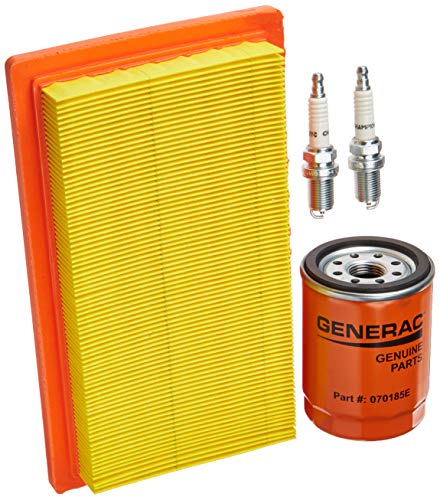
FITS 20KW, 22KW, 24KW, AND 26KW GENERAC STANDBY GENERATORS: Designed for air-cooled Generac, Honeywell by Generac, and Centurion by Generac standby generators with a 999cc V-Twin engine manufactured in 2013 or later

EM FIT FOR 12–18 KW GENERAC AIR-COOLED STANDBY GENERATORS: Engineered specifically for 760cc–990cc Generac engines (2013 and later), including models 6240–6249, 6254–6257, 6281, and 6459–6721 series
Right-Sizing Your Generator to Prevent Premature Wear
Why does an oversized generator cost you just as dearly as an undersized one? Under-loading causes carbon buildup, wet stacking, and accelerated degradation of engine components.
Right-sizing your generator to your actual home energy demands prevents consistent overloading and eliminates chronic under-loading. You reduce thermal stress on windings, bearings, and pistons when you operate within the manufacturer’s specified load window—typically 60-80% capacity.
Load testing confirms your unit handles full emergency demand without exceeding limits. This diagnostic procedure guides adjustments to achieve healthy load levels rather than maxing out capacity.
Effective load management, combined with regular maintenance, ensures optimal combustion temperatures and oil integrity. You’re protecting injectors, rings, and cylinder walls from premature failure. Correct sizing directly correlates with extended operational life—you’re not repairing components that failed from preventable stress.
Recommended Products

Gas Type & Pressure - For both NG & LP Gas, 2 Positions, LPG=10" W. C & NG=4" W. C, Max inlet pressure PSI: 1/2 (3.5KPa), Outlet pressure 4" or 10" Water Column

Whole House Protection: Keep your family comfortable and connected during power outages. Avoid the disruption of losing refrigeration, heating/cooling, lights and connectivity of your devices with a Home Standby Generator that automatically detects an outage and delivers backup power to your home.
[High Gas Flow] High Gas Flow up to 275,000 BTU. Max work pressure: 1/2 PSI. 50 FT 3/4" ID Natural Gas Hose with a 3/4" Male Pipe Swivel Fitting and 3/4" Male QD Plug , with Quick-connect Adapter. Solid brass stronger connectors. The hose wall is upgraded with metal material, thickness is thickened more Safety. Long 3/4 Gas Flex Line Hose for NG/LP Propane Appliances Construction Heaters.
Maintenance Routines That Extend Generator Life by Years
How precisely can you engineer longevity into a generator? You achieve this through rigorous maintenance routines that address mechanical stress before failure manifests.
You perform regular oil changes every 50–200 operating hours, eliminating abrasive particulates that degrade cylinder walls and bearing surfaces. You schedule annual professional inspections to identify degraded components, voltage irregularities, and coolant system inefficiencies.
For standby units, you execute bi-weekly or monthly exercise runs. These cycles prevent fuel degradation, lubricate dry seals, and mitigate corrosion from prolonged inactivity. You maintain 30–75% load capacity during operation, avoiding thermal shock from overload conditions and carbon fouling from underloading.
You monitor fuel quality—stabilizing diesel or ensuring natural gas purity—and verify unobstructed air intake and exhaust pathways. These protocols reduce oxidation, prevent overheating, and extend operational lifespan by years.
Recommended Products

9500 Running Watts and 12500 Peak Watts (Gasoline); 8500 Running Watts, 11200 Peak Watts (Propane); Remote Start with Included Key Fob, Electric and Recoil Start; Up to 12 Hours of Run Time on a 6. 6 Gallon Fuel Tank with Fuel Gauge

3600 Rated Watts and 4650 Peak Watts (Gasoline); 3240 Rated Watts and 4650 Peak Watts (Propane); 4 Gallon Fuel Tank (with Fuel Gauge); Electric Push Button and Remote Start

Switch between gasoline (4750 surge watts, 3800 running watt) and propane (4350 surge, 3500 running) with the simple turn of the selection dial
Repair, Overhaul, or Replace: Making the Call
Maintenance delays the inevitable, but you can’t outrun mechanical entropy indefinitely. You’ll face the overhaul decision after 10,000–30,000 operating hours, though standby units stretch toward 30 years while prime power generators accumulate wear faster. Monitor thermal degradation, compression loss, and bearing clearances to time your intervention.
Diesel engines tolerate longer intervals between overhauls but demand stricter maintenance protocols—oil analysis, coolant testing, and load banking—to prevent catastrophic failure.
Natural gas units run cleaner yet reach overhaul thresholds sooner under continuous duty.
Replace rather than rebuild when you encounter recurrent electrical faults, obsolete control architecture, or capacity shortfalls from facility expansion. Excessive fuel system or cooling loop failures signal systemic wear beyond economical repair. Calculate lifecycle cost per kilowatt-hour: overhaul wins below 60% of replacement cost; otherwise, you retire the asset.
Recommended Products

Various Monitoring Parameters: The power energy meter can monitor the power (W), energy (kWh), volts, amps, hertz, power factor, cost, minimum and maximum power (W), cumulative days and time of your appliances. By switching 7 display modes, you can easily know the various parameters while the appliance is working. The home energy monitor can also calculate and display how much power your appliance uses and how much electricity bill it cost in cumulative time

This 100 Amp Load Manager Operates Autonomously With No Complex Wiring—Automatically Sheds Non-Essential Loads (E.G., Pool Pumps) When Detecting Frequency Drops, Protecting Your Generator From Overloads.

HOW DOES THIS BENEFIT YOU: When the electrical demand of the house starts to exceed that of the generator, by using our 100A smart management modules to manage large electrical appliances and sub-panels, no need to change to a larger generator, this can reduce the size and cost of your generator without sacrificing backup coverage
Conclusion
Your generator’s longevity hinges on disciplined maintenance, proper sizing, and realistic usage expectations. You’ll maximize 20–30 years from a standby unit through adherence to exercise cycles, oil analysis, and load banking—while neglect accelerates wear regardless of fuel type. Monitor runtime hours, compression, and alternator insulation resistance; plan overhaul at 10,000–15,000 hours for diesels, earlier for gaseous units. Ultimately, you replace when repair costs exceed 50% of replacement value or reliability becomes unacceptable.
Recommended Products

Genuine OEM Generac parts

This oil change kit includes 4 items: 2 quarts Generac 5W-20 full synthetic oil, 070185E oil filter, oil funnel, and oil absorbent pad

This kit includes all Onan OEM required hard parts to perform generator maintenance including oil.