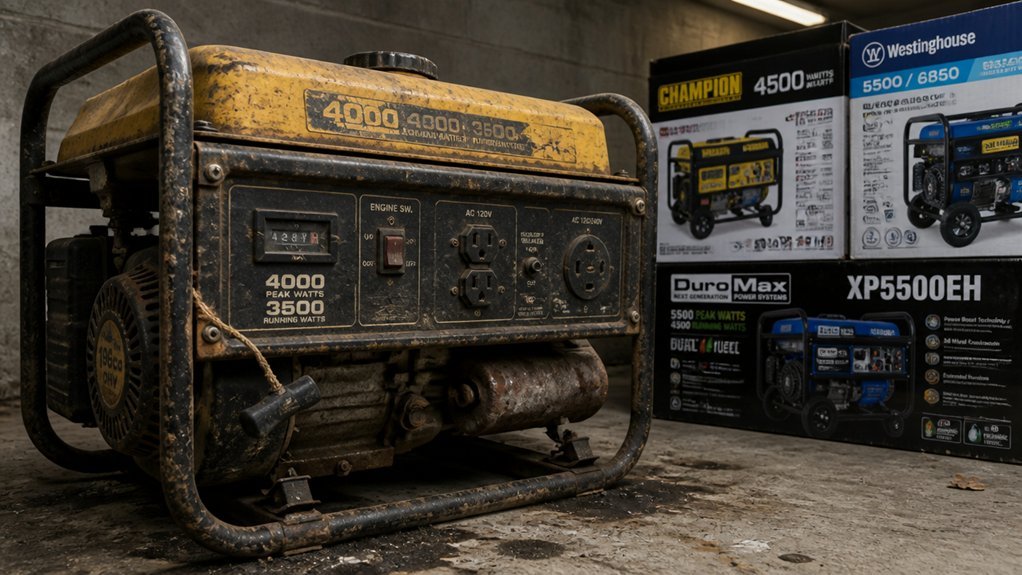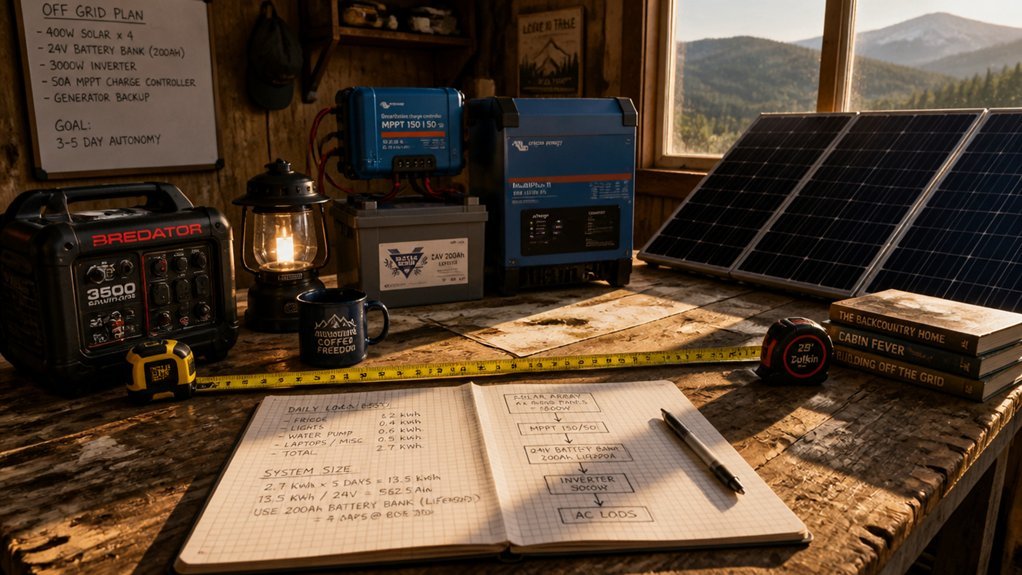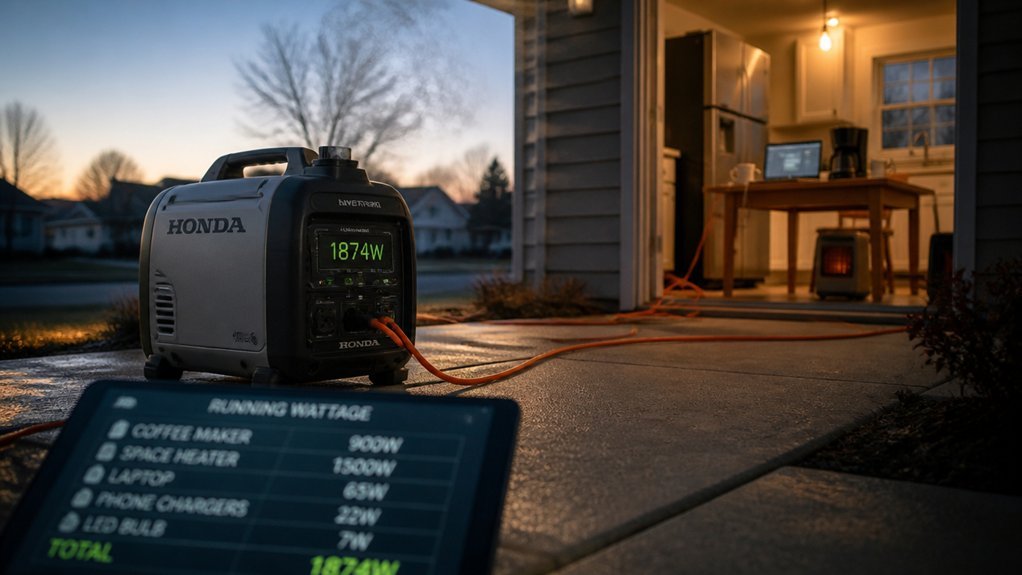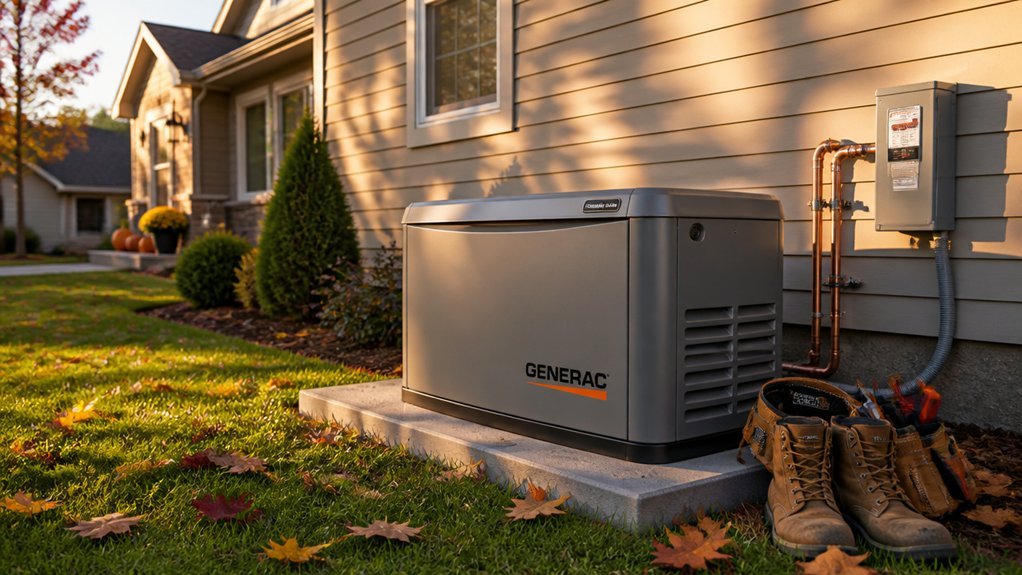

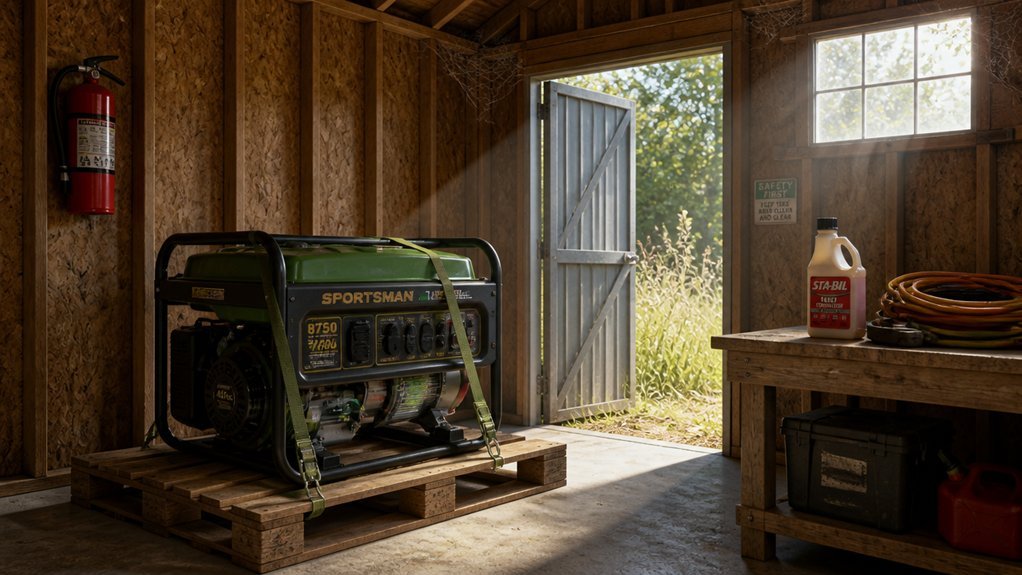
You need to store your generator properly, or you’ll face corrosion, fuel system damage, and starting failures when you need it most. Whether you’re putting it away for the season or an extended period, the steps you take now determine its reliability later. The difference between a quick startup and a costly repair often comes down to a few critical decisions you’ll need to make.
How to Prepare Your Generator for Storage
Power down your generator and let it cool completely before beginning any preparatory work. Run the unit for 15–20 minutes to burn off remaining fuel in the carburetor. For 12,000-watt units and above, you’ll need to perform an oil change and replace the oil filter to eliminate particulates that accelerate engine wear during long-term storage. Clean or replace the air filter to maintain proper airflow. Drain the gas tank if possible; otherwise, add fuel stabilizer and run the engine to distribute it. Check oil levels and inspect the spark arrestor to reduce fire hazards. Complete these engine maintenance steps to preserve performance throughout storage. Schedule regular checks even during inactive periods.
Recommended Products

New Standard of Antioxidants and Anticorrosives


FUEL STABILIZATION: Maintains gasoline freshness and prevents harmful deposits for reliable starts after long storage. Ideal as a fuel stabilizer for cars, motorcycles, and boats.
How to Clean and Inspect Your Generator Before Storage
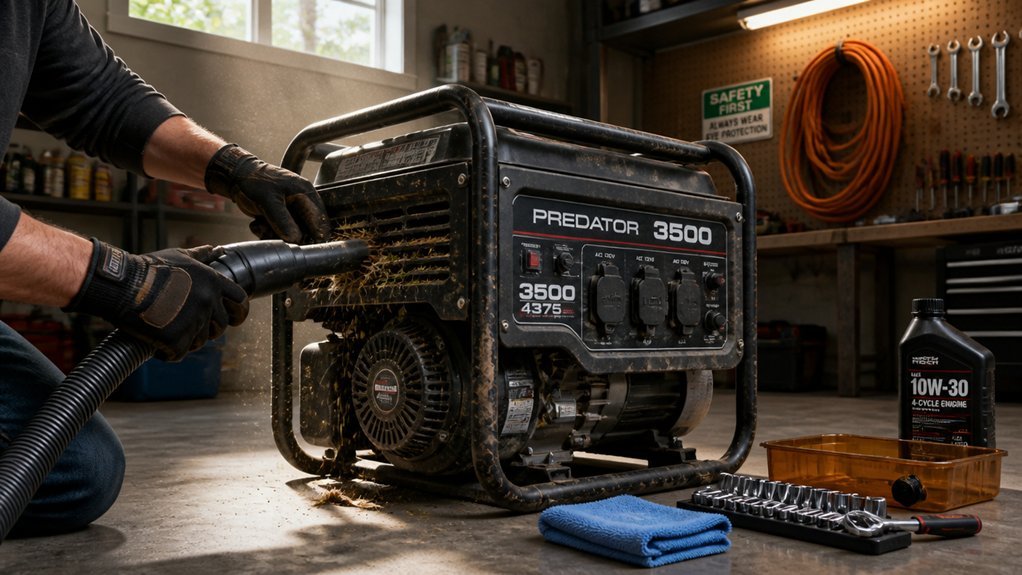
Before you tuck your generator away, you’ll need to give it a thorough cleaning and inspection to prevent corrosion, assure safe operation, and maintain warranty compliance. Start your pre-storage inspection by wiping the exterior surfaces, air intake, and exhaust areas with a soft cloth to remove accumulated dirt and debris. Inspect the casing, fuel lines, and electrical connections for wear, cracks, or fraying; address deficiencies immediately per manufacturer specifications. You’ll also clean or replace the air filter and spark arrestor to maintain proper airflow and mitigate fire hazards. After cleaning, apply a protective spray to metal surfaces to inhibit rust formation. Consult your generator maintenance checklist to verify you’ve completed all baseline pre-storage inspection protocols and documented findings appropriately.
Recommended Products

Carburetor for Predator 420cc engine 9000W 8750W 7000W 6500W 5500W generator [Please Note: this is a manual style carburetor, please confirm your original carburetor is the same with this before buying.]
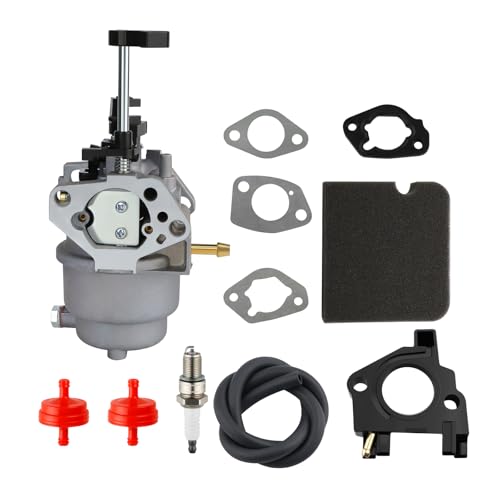
Replacement parts for Ryobi 420cc generator 6500 8125 watts 5500 6875 watts 6300 7875 watts 8000 10000 watts carburetor [Please check the detail model before buying]

Fits replacement for Honda GX120 GX160 GX200 carburetor. Fits for Champion Power Equipment generator 3500 4500 4650, model 46493, 46595, 46597,46598,46558, 46561, 46596, 46533, 46534, 46535, 46539, 46540, 46551, 46553, 46554 & 46555, 40026, 40008, 40012, 46514, 46515, 46516, 46517 & 45633 100423 27.131000.01, for Dewalt Dg2900 Dg3000 2900 3000W 6.5HP 5.5HP 163CC 196CC Generator.
Should You Drain the Fuel Tank or Use a Generator Storage Stabilizer?
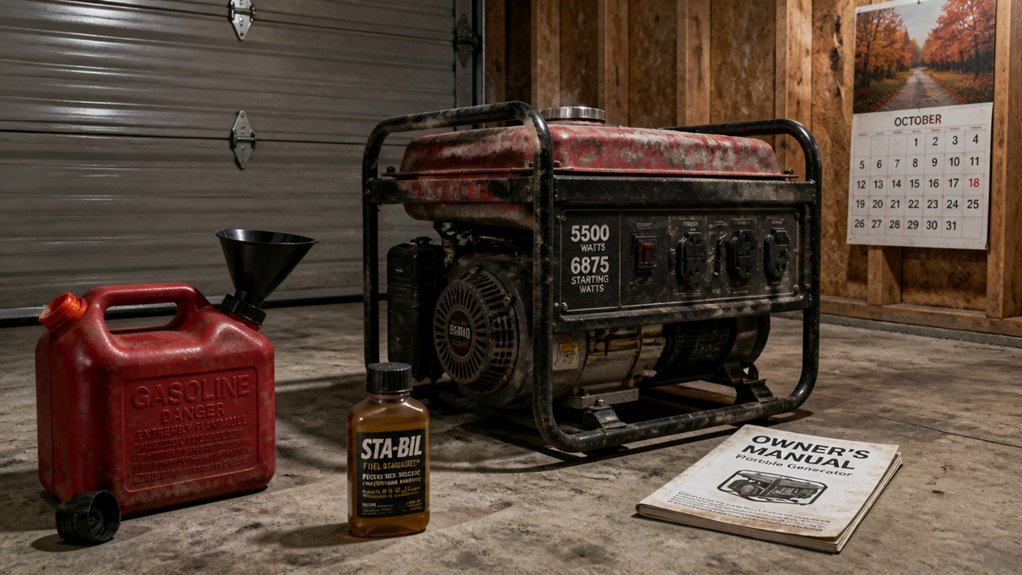
How should you prepare your generator’s fuel system for storage? For long-term storage, complete a full fuel drain. Gasoline degrades within weeks, forming varnish and gum that clog carburetors and fuel lines—a condition FEMA identifies as a leading cause of generator failure. You remove all gasoline, then run the engine until it stalls to clear remaining fuel from the system. For shorter idle periods, you’ll add a quality stabilizer to the tank and run the engine briefly to circulate treated fuel throughout. Stabilizers prevent ethanol separation and moisture absorption, supporting varnish prevention in carburetors and lines. When storing with stabilized fuel, you must ensure proper venting and sealing to contain spills, control odors, and minimize evaporation losses. Your choice between drain and stabilizer directly determines startup reliability.
Recommended Products

Genuine, OEM Honda Replacement Part

Size: spark arrestor filter diameter 6.1cm/2.4", height 18cm/7.1", hole diameter 0.3cm/0.12". (Only the external filter, the stove pipe spark arrester is an additional purchase.)

Accessories: 1 x spark arrestor chimney cap; 3 x wind rope (5m/16.4 feet); 3 x ground nails (18cm/7.1inch); 3 x carabiner.
Where to Store Your Generator: Garage, Shed, or Enclosure?
With your fuel system now secured, you’ll select a storage location that protects both the unit and your household.
For generator storage, you must weigh garage vs shed vs enclosure options against your specific constraints. A well-ventilated garage or dedicated outdoor shed that stays dry and shielded from direct sunlight provides an optimal sheltered location. Outdoor sheds must elevate the unit above damp ground and block rain and dust infiltration. An enclosure offers moisture protection while preserving access for maintenance tasks. You’ll prioritize safety and accessibility by choosing a spot that minimizes moisture and debris exposure yet permits rapid emergency deployment. Never store generators inside living spaces—gasoline fumes create serious fire and fuel-hazard risks. Position your unit where you can perform pre-use checks and reach starting controls without obstruction.
Recommended Products

Coats metal parts to lubricate and protect against rust and corrosion by blocking out air and moisture. Protects for up to 2 years when used indoors and for up to 1 year when used outdoors
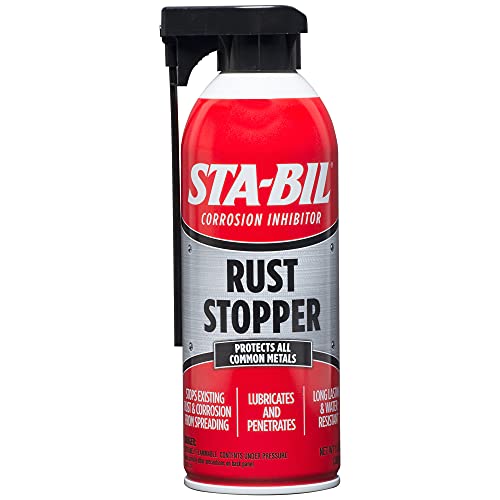
Corrosion Inhibitor - Fights the formation of rust and corrosion on exposed or painted metal surfaces while leaving behind a powerful and long-lasting protective layer

Protect Your Generator From Moisture and Salt During Storage
Although you’ve selected a secure location, moisture and salt remain persistent threats that’ll degrade your generator’s metal surfaces, electrical connections, and internal components during storage. You’ll establish a dry environment by elevating the unit off damp surfaces, minimizing ground moisture exposure to critical systems.
Prioritize humidity control when evaluating your storage location. You’ll select a space with stable temperatures and adequate ventilation to prevent condensation formation. In coastal regions, you’ll protect against salt-laden air that accelerates corrosion on metal surfaces and electrical terminals.
You’ll deploy a breathable cover that blocks particulates while permitting moisture escape, reducing humidity buildup inside the housing. You’ll institute regular inspection protocols, checking for dampness, rust, or corrosion indicators. You’ll address any moisture-related degradation before reactivating the generator, ensuring operational safety and component longevity.
Recommended Products

Replace for 192980GS 80270GS 78299GS 80270 78299, 25 462 03-S 25-462-03-S, G080270 080270 80270
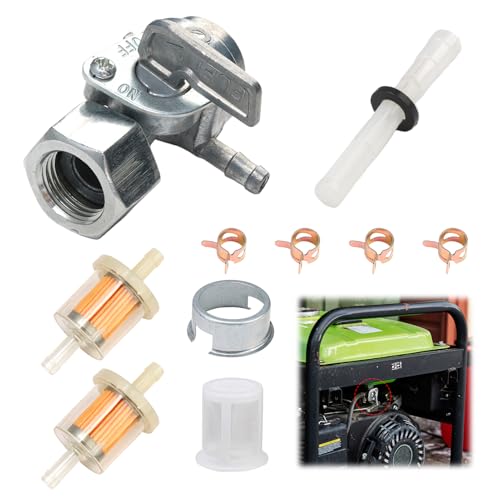
[Check The Size]Nut internal thread 16mm x 1.5mm, 22mm hexagonal nut, opening/closing angle is 90 degrees, please confirm the size carefully before purchasing

Efficient Manual Siphon Pump: Hand siphon hose pump for gasoline, oil, water, diesel and other common liquids, ideal for emergency transfer. Also suits for fish tank, aquarium tank, small fountain and small air cushion swim pool water transfer. NOT for edible oil, drink water, salt water and any chemical liquids
How to Maintain Your Generator Battery During Storage
Your generator’s electrical system deserves the same protective attention you’ve given its mechanical components, particularly the battery that powers the electric start function. For proper maintenance during storage, you’ll disconnect the battery entirely or employ a trickle charge regimen to prevent sulfation and capacity loss.
If you leave the battery connected, you’ll install a compatible maintainer set to a low trickle charge rate to avoid overcharging damage. You’ll inspect terminals regularly for corrosion, cleaning any buildup immediately to preserve conductivity. Monitor voltage throughout storage to ensure levels remain above operational thresholds.
For extended storage, you’ll remove the battery and place it in a cool, dry location away from direct sunlight and temperature extremes. You’ll reconnect it afterward and verify the electrical system’s readiness.
Recommended Products

Made in United States

FUEL SYSTEM CLEANER: Cleanses the entire fuel system using PEA additives, including fuel injectors, lines, & fuel pumps. This advanced formula removes water, gum, and varnish, ensuring optimal performance & longevity of your fuel system while preventing corrosion.
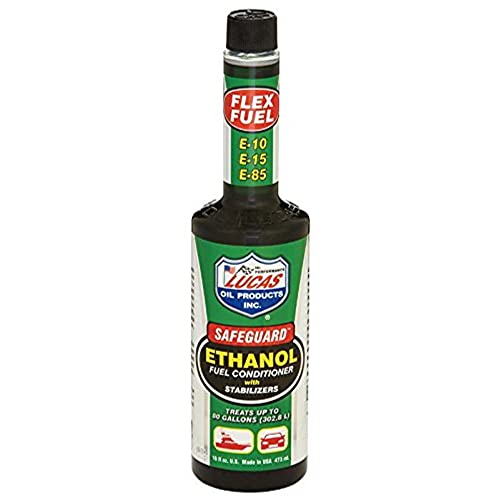
Cleans Injectors, Valve Seats, Combustion Chambers And Other Critical Fuel Components.
How to Start Your Generator After Storage
The stored generator demands methodical reactivation before it’ll deliver power again. Retrieve your unit from the outdoor shed and conduct a comprehensive safety check. Inspect the fuel system and carburetor for contamination, corrosion, or blockages that developed during dormancy.
Perform a battery check on electric-start models; verify voltage exceeds 12.4 volts and terminals are corrosion-free. Reconnect or install only a fully charged battery.
If you used fuel stabilizer, start the engine and run briefly to circulate treated fuel through the carburetor and lines. Allow complete cooling, then restart while monitoring for abnormal sounds, vibrations, or fuel leaks—shut down immediately if detected.
Schedule post-storage maintenance: check oil levels, inspect seals and gaskets, and replace worn components. Document all findings to ensure reliable operation.
Recommended Products

0C1535ASRV carburetor fits generac 4000EXL 4000XL generators. Also compatible with generac carburetor Nikki 97747 W436BRE T44 GN220 35PDS396829 C1535 0C1535AESV Troy Built Sears portable 7.8 HP generators

【GENERATOR MODEL COMPATIBILITY】Compatible with Honda EB2000I, EB2000IT1, EU2000I, EU2000IK1 and EU2000IT1 portable inverter generators using the matching carburetor configuration. Serial prefixes may include EAAJ, EBCJ, EAET and EACT. Not designed for EU2200I generators. Verify the complete model, serial prefix and original carburetor before ordering.

Conclusion
You’ve prepared, cleaned, and secured your generator for storage. You’ll reduce fire hazards by draining fuel or adding stabilizer, and you’ll prevent corrosion by storing it elevated with a breathable cover. You’ll maintain battery charge and monitor moisture throughout the storage period. Before restarting, you’ll inspect all connections, verify fluid levels, and test in a ventilated area. Proper storage practices ensure your generator operates reliably when you need emergency power.
Recommended Products

The exhaust stub will need to be bolted onto the generator's stock muffler.

{ "language_tag": "en_US", "value": "Limit The Chance Of Fires", "marketplace_id": "ATVPDKIKX0DER" }