
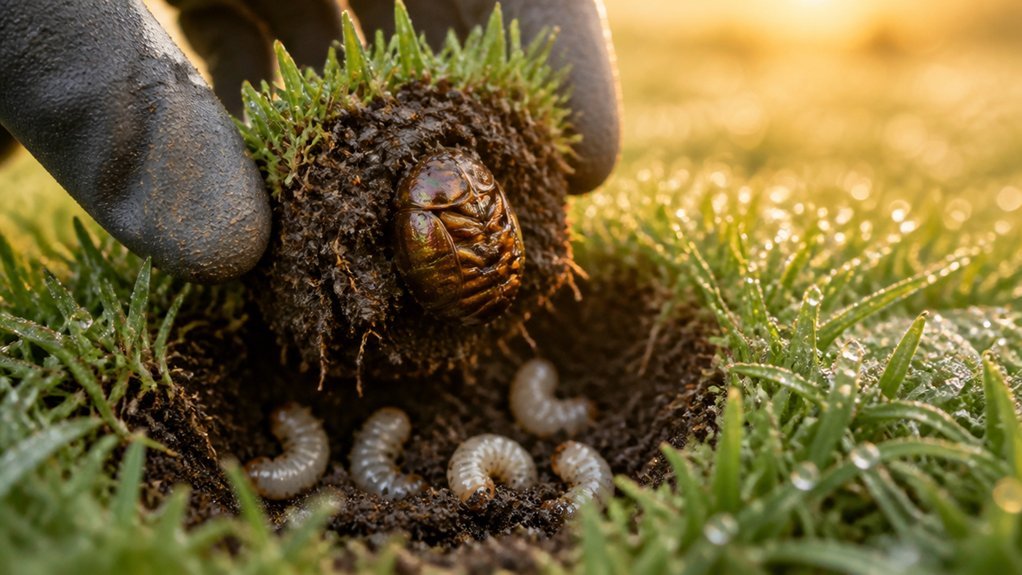
You’ve noticed patches of your lawn lifting like loose carpet, and you’re wondering what’s eating the roots from below. Grubs—specifically the larvae of scarab beetles—can destroy turf before you see the damage. The solution depends on timing, product selection, and application technique. You’ll need to know which approach fits your situation.
How Grubs Wreck Your Lawn From Underground
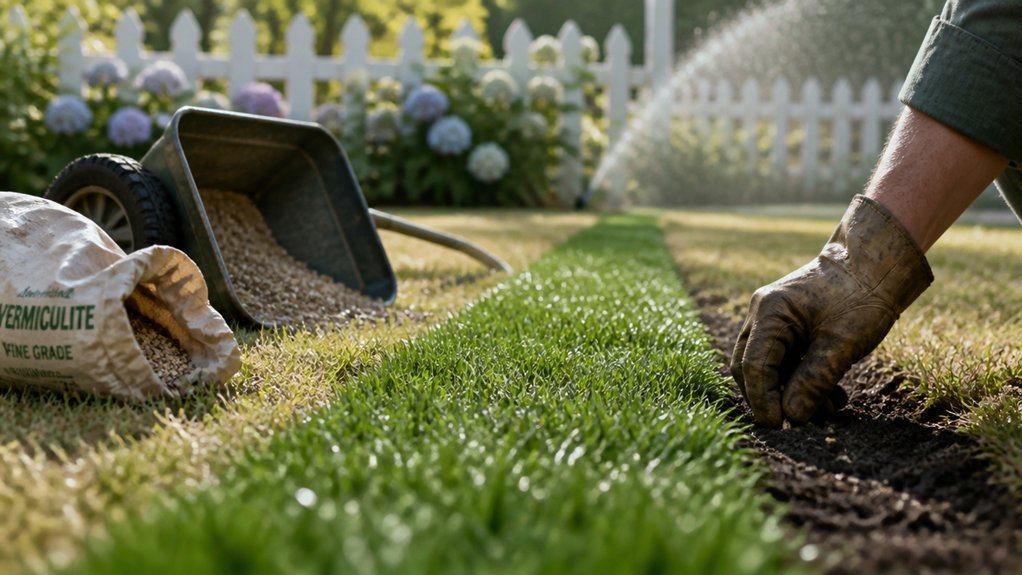
The grub problem you’re facing starts where you can’t see it. You’re dealing with beetle larvae—specifically white grubs—that conduct soil feeding within your root zone. These C-shaped pests target lawn roots directly, severing the essential connection between your turf and its water supply.
You’ll notice grub damage manifests through distinct mechanisms. As grubs consume root tissue, you’re observing turf thinning across affected areas. Your grass becomes spongy turf underfoot, detaching from underlying soil with minimal resistance. You’re essentially walking on a carpet floating above empty space.
The damage cycle intensifies when you’re facing fall-hatched populations. They’ll descend deeper during cold months, then resurface to resume feeding. You’re managing a timeline where unchecked soil feeding compounds seasonally. Recognizing these signs of grub damage early positions you to intervene before structural root destruction becomes irreversible.
Recommended Products

GRUB KILLER: Season-Long Grub Control kills grubs and listed lawn damaging insects above and below the surface

LONG-LASTING PROTECTION: This lawn insect and ant killer provides up to 6 months of ant control (excludes pharaoh, carpenter and harvester ants) and 3 months residual protection against other listed pests

Scotts GrubEx1 Season Long Grub Killer can help prevent turf damage by killing grubs when they are young
Spot the 5 Signs of a Grub Infestation
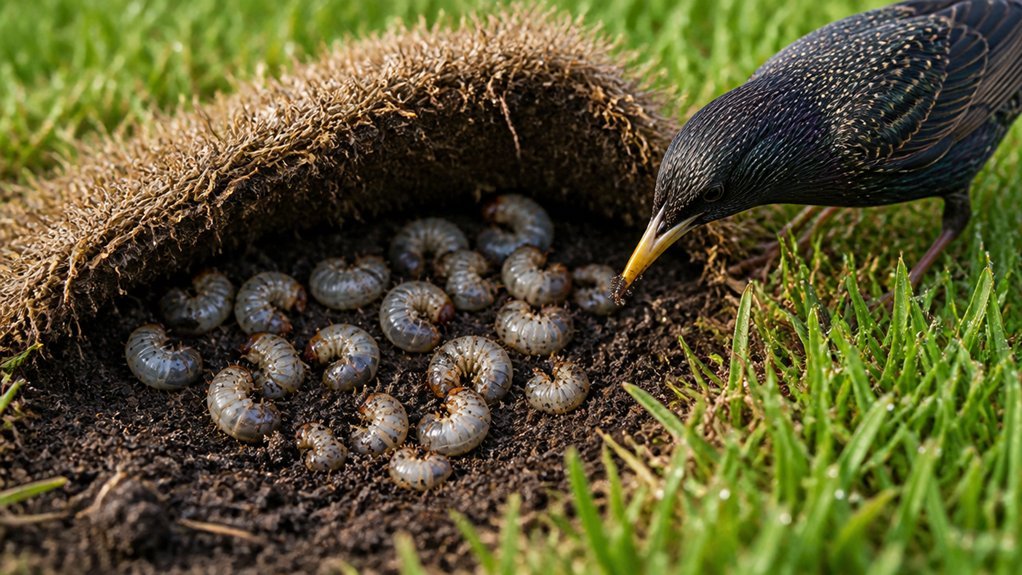
Where exactly should you focus your inspection efforts to detect grub activity before irreversible damage sets in? Target irregular brown patches that expand progressively—these signal root feeding by grubs beneath the surface.
You’ll notice spongy turf underfoot where roots lose anchoring strength. Lift turf in suspicious areas; healthy sod resists, but infested sections detach easily.
Count grubs in a one-foot square sample: 10+ per square foot confirms a serious grub infestation requiring immediate treatment, while 6–10 indicates close monitoring.
Watch for increased birds digging alongside raised tunnels from moles, skunks, or raccoons—these predators hunt grubs aggressively.
Finally, observe adult beetles hovering in mid-summer; their egg-laying predicts imminent lawn damage.
Early identification lets you intervene before extensive root feeding destroys your turf.
Recommended Products

2-in-1 FORMULA: The 2-in-1 formula kills grubs and promotes strong roots and thicker turf. For insecticidal use, apply at the first sign of grubs to stop further lawn damage

FAST-ACTING FORMULA: Protects lawns, vegetables, fruit and nut trees, roses, flowers, trees and shrubs

GRUB CONTROL: Scotts GrubEx1 Season Long Grub Killer can help prevent turf damage by killing grubs when they are young
Fall Application: The Best Timing for Grub Control
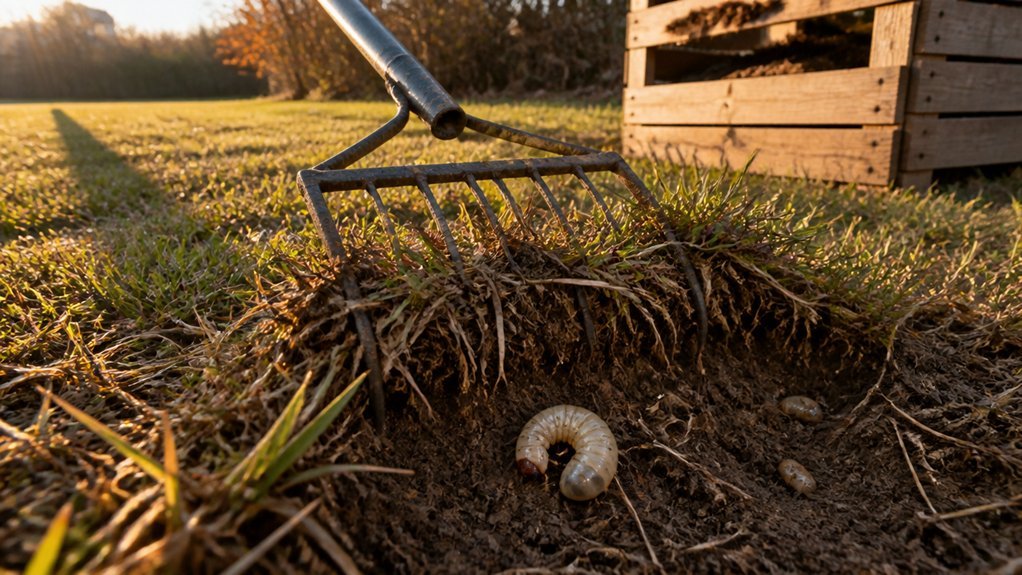
Once you’ve confirmed grubs are present, you’ll need to act fast—fall delivers your best shot at knocking down active populations before they burrow out of reach.
Your fall grub control timing hinges on catching grubs during active grub feeding, typically late summer into early fall, while they’re still near the soil surface and vulnerable.
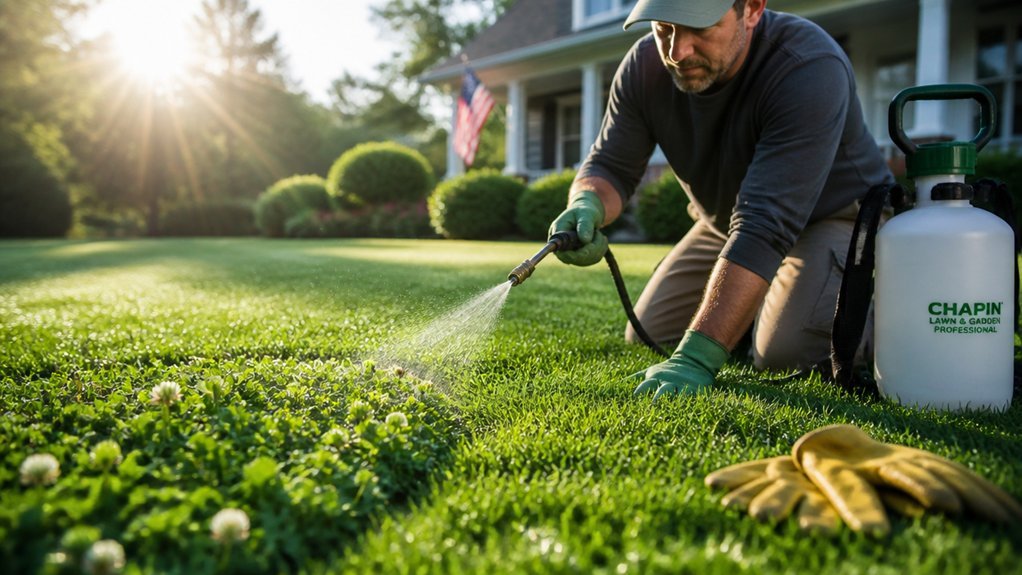
You’ll deploy curative treatment options: carbaryl Sevin or trichlorfon Dylox penetrate effectively against actively feeding grubs. Apply these chemicals with thorough watering within 24 hours to drive product into the root zone.
You can also apply beneficial nematodes in fall when soil temperatures remain favorable—wet the soil beforehand and apply in evening hours to maximize survival.
Pair your fall application with aeration and deep, infrequent watering to strengthen turf resilience against future grub pressure.
Recommended Products

If grubs and moles have damaged your lawn, take back your yard with the Scotts and Tomcat Repair the Lawn bundle

Scotts GrubEx1 Season Long Grub Killer can help prevent turf damage by killing grubs when they are young

Controls White Grubs, Mole Crickets, Aphids, Adelgids and more. See label for full list of insects.
Apply Beneficial Nematodes Step by Step
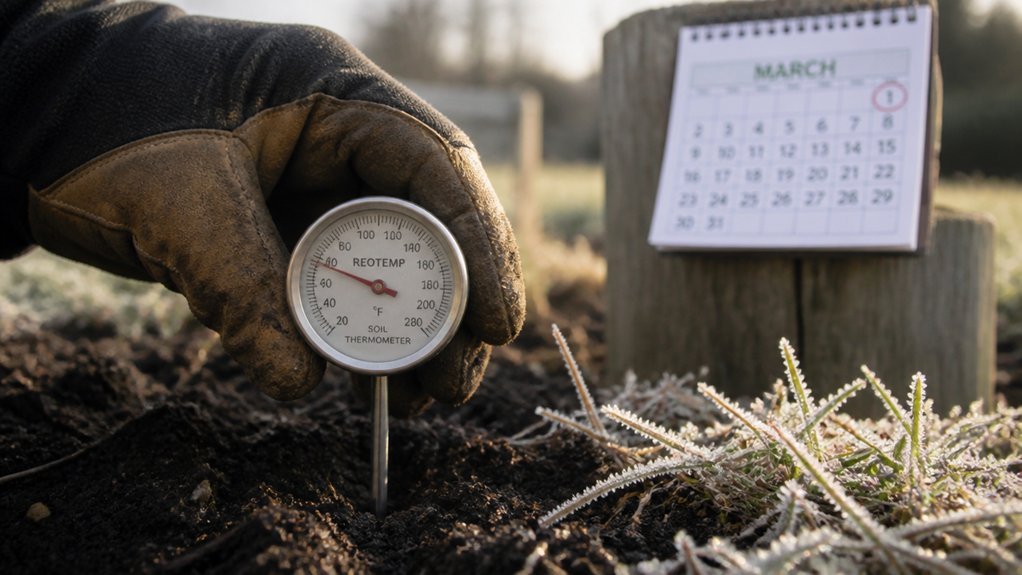
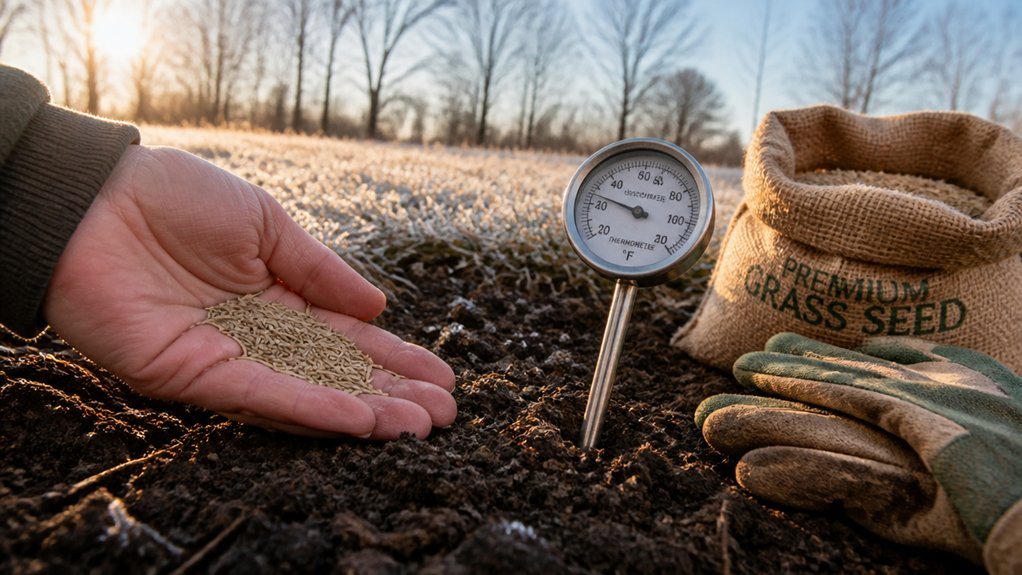
How exactly do you deploy microscopic predators without wasting your investment? First, verify soil temperatures sit in the 40s–70s Fahrenheit range. Water your lawn beforehand to boost soil moisture for nematode entry and survival. Mix your beneficial nematodes into a water mix following package ratios, then load either a pump sprayer or hose-end sprayer. Target late afternoon/evening application—UV exposure kills nematodes rapidly. Agitate the solution continuously to prevent settling. Apply evenly across your lawn, tracking square feet coverage: a 50-million-count pack treats roughly 2,500–5,000 square feet depending on whether you’re targeting heavy infestations or prevention. Focus soil application directly onto grub larvae zones. Keep soil damp for two weeks post-application. Schedule a second treatment within seven days to intercept multiple grub life stages. Avoid flowering plants during application.
Recommended Products

Can be used indoors and outdoors
Check the "Guide" under images to determine which nematodes you need

Can be stored unactivated for up to 30 days in the refrigerator (do not freeze).
How to Tell If Your Grub Treatment Worked
Why apply treatments without confirming they eliminated the threat? You measure efficacy through precise monitoring: dig test squares and count grubs per square foot. A drop from 6–10+ to fewer confirms reduction in grub activity.
After applying beneficial nematodes, you’ll observe results within two months as populations establish and infect hosts. For curative insecticides like carbaryl or trichlorfon, expect visible damage reduction within one to four weeks, particularly when applied mid-August through September.
Recognize signs of successful control: spongy patches firm up, tougher-to-pull turf resists lifting, and bird/animal digging diminishes. Persistent damage or counts returning to 6–10 grubs per square foot indicate incomplete suppression. You then schedule follow-up treatment to ensure complete infestation elimination. Verification prevents recurring damage and protects your turf investment.
Recommended Products

LONG-LASTING PROTECTION: This lawn insect and ant killer provides up to 6 months of ant control (excludes pharaoh, carpenter and harvester ants) and 3 months residual protection against other listed pests

OUTDOOR USE: Protects lawns, vegetables, fruit and nut trees, roses, flowers, trees and shrubs.

5% Carbaryl Insecticide on an attratant feed base
Water Smarter to Prevent Future Grub Problems
Where does your watering routine stand in the fight against grubs? You need to rethink moisture management if you’re watering daily—excess soil moisture helps grub eggs hatch and boosts survival rates. For natural grub control, you’ll want to adjust irrigation timing, especially during late summer treatment windows when eggs develop.
You can leverage drought impact strategically; allowing grass dormancy without watering reduces root activity and limits grub feeding opportunities. When you apply beneficial nematodes, you’ll need watering to carry them into the soil where grubs reside.
Shift to deep watering instead of frequent shallow sessions. This practice strengthens root systems and creates less favorable conditions for grub development. You’re building resilience through precise moisture management while disrupting the life cycle that depends on consistent surface wetness.
Recommended Products

USE: Insecticde that helps keep your trees, shrubs and landscape ornamentals free of insects.

CONTROLS OVER 10 INSECTS + GRUBS - Insect pests can be troublesome if left unchecked. Our insect control kills and repels over 10 insects including grubs, ants, chinch bugs, ticks, and fleas. It won't harm bees, ladybugs, butterflies, or earthworms.

6 lb., Annual Grub Killer
Conclusion
You have caught grubs early, chosen your treatment window, and executed with precision. Fall carbaryl or trichlorfon applications knock down active infestations when timed before dormancy; nematodes exploit soil temperatures between 40–70°F for biological control. You will verify efficacy through post-treatment dig tests, maintaining thresholds below six to ten grubs per square foot. Integrate irrigation discipline and monitoring into your seasonal protocol, and you will sustain turf resilience against cyclical grub pressure.