
You’re facing a trailer wiring project, and you need to know what you’re getting into before you start splicing. The stakes are straightforward: improper connections mean failed brake lights, shorts, or roadside citations. You’ve got plugs that don’t match, color codes that shift between manufacturers, and grounding points that make or break the circuit. The good news is that most failures trace back to three fixable errors.
Identify Your Vehicle and Trailer Plug Compatibility
Before you splice a single wire or crimp any connector, you’ll need to verify that your vehicle’s tow package and your trailer’s plug are actually compatible. Identify your tow package plug type—4-pin, 5-pin, 7-pin blade, or round 6/7-pin—and confirm it matches the trailer’s connector. Determine if your vehicle uses traditional or SAE 7-way configurations, as trailer connector compatibility depends on this distinction for gooseneck and utility applications. You’ll likely need adapters when mating mismatched plug types. Verify ground integrity by checking that your vehicle’s tow harness provides solid ground return and that the trailer ground bonds cleanly to its frame. Consult your vehicle manual for wiring color mapping to ensure accurate function alignment during vehicle-to-trailer wiring installation.
Recommended Products

RELIABLE AND SAFE: The 4-Pin Flat 5-Wire trailer wiring harness kit is made of thick PVC-coated wire material that resists corrosion, and the plug cover keeps dirt and water out when not in use. The 18AWG pure copper wire has excellent conductivity and is protected by black nylon mesh tubing. You can rest easy in all weather, in all environments.

4 Way Flat Plug End: - This Trailer side 4 pin trailer wiring male plug fits wide variety of trailers with industry-standard 4-way flat sockets; Ideal for marine boat trailer, horse trailer, motorcycle trailer, ATV trailer, and other cargo utility

EASY GRIP. Plugging in your trailer wiring and trailer lights is easy with the ergonomic design of this trailer plug. It features tabs on the top and bottom for a better grip when plugging into your vehicle or unplugging
Read Trailer Wiring Color Codes by Pin Configuration

How do you know which wire controls what function when every pin configuration follows its own color standard?
You’ll match trailer wiring colors to their pin configuration using manufacturer wiring diagrams before connecting any trailer lights.
In 4-pin setups, you’ll identify Green for right turn/brakes, Yellow for left, Brown for taillights, and White for ground.
When you’re working with 4-pin 5-pin 6-pin systems, you’ll expand this baseline: a 5-pin adds Blue for reverse lights, while a 6-pin introduces Blue for electric brakes and Black for 12V auxiliary power.
For 7-way round or RV blade connectors, you’ll reference diagrams carefully—traditional and SAE formats differ, with Red carrying auxiliary power in some variants, or Black handling reverse lights depending on standard.
You’ll verify every assignment against your specific connector’s documentation to prevent cross-circuit failures.
Recommended Products

NO TOOLS NEEDED - Easily adapt your 7-WAY RV BLADE vehicle socket to 5-WAY FLAT connector used on lightweight trailers.

7 Pin to 4 and 5 Pin Trailer Adapter: Oyviny trailer plug adapter adopts the 2 in 1 design, converts a 7 way RV-style connector to a standard 4-pin or 5-pin flat trailer connector, suitable for Chevrolet, Ford, Dodge, RAM, Toyota or GMC, Boat, Trailer, RV, ATV etc.

CONVENIENT 2-IN-1 DESIGN - Converts 7 pin blade RV-style connectors into standard 4 pin and 5 pin flat trailer wiring adapter, suitable for boat, RV, Ford, Dodge, ATV, Chevrolet, GMC, RAM, Toyota and more. No need to purchase additional adapters, easy to switch between usage scenarios
Install, Route, and Ground Your Trailer Wiring Harness
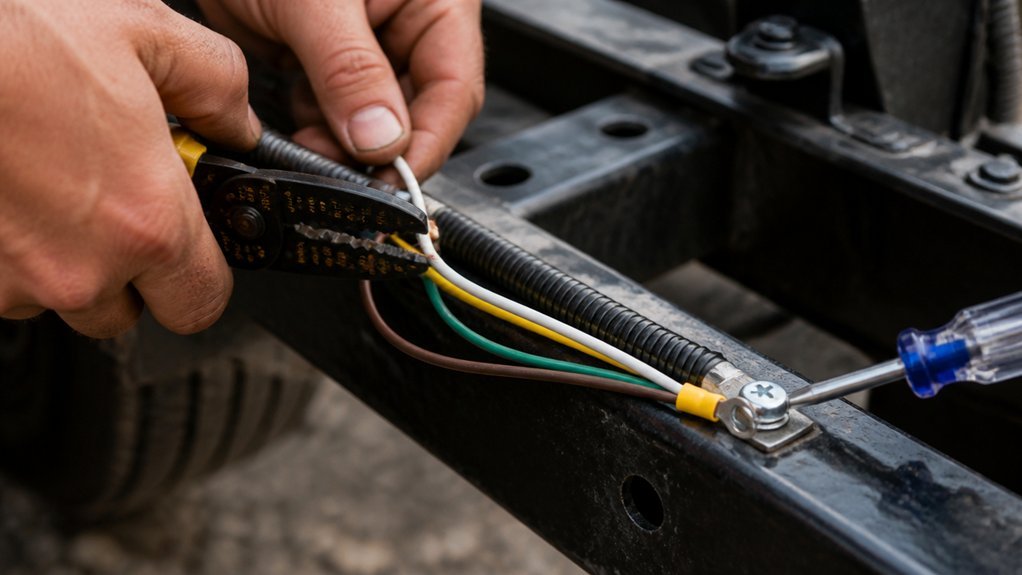
The wiring harness serves as the central nervous system of your trailer’s electrical system, demanding methodical installation to ensure reliable performance and safety.
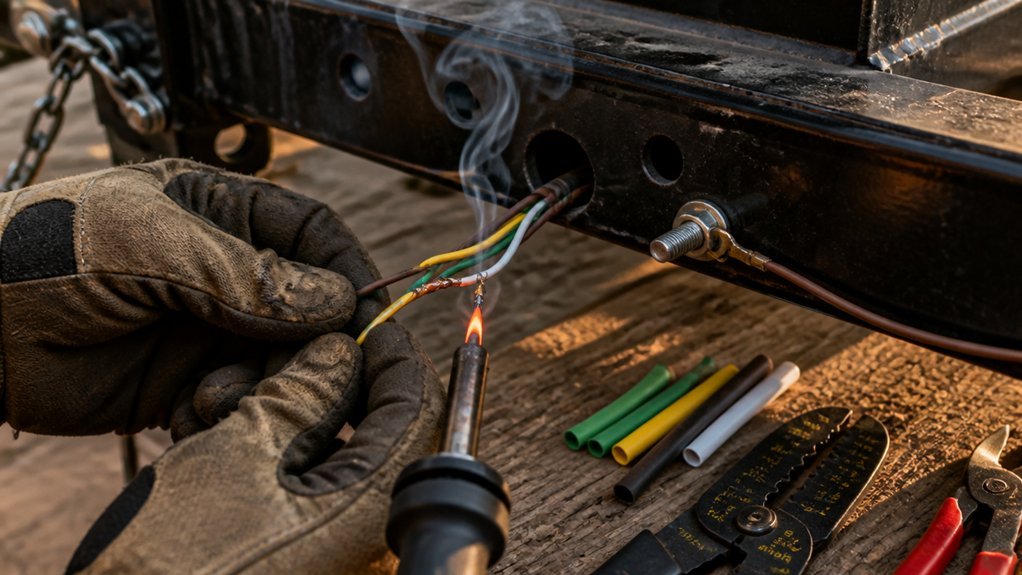
You’ll mount the trailer wiring harness along the frame, using zip ties to secure it. Route wires away from sharp edges and moving parts. Match the wire colors to their functions: white for ground, brown for taillights, green for right turn/brakes, yellow for left turn/brakes, and blue for electric brakes if equipped. You’ll ground the system by attaching the white wire to clean, bare metal on the frame with a solid connection. Protect routed wires with jacket or split loom, provide strain relief at connections, and seal exterior points against moisture. Conduct a complete lights test—tail, brake, turn, and reverse—before finalizing.
Recommended Products

Trailer Side RV 7 Pin: - Trailer plug 7-way blade-style trailer connector is a male-end trailer tow plug, specifically designed for the trailer side of the connectivity; Standard, 7 prong trailer plug connects trailer to socket on tow vehicle
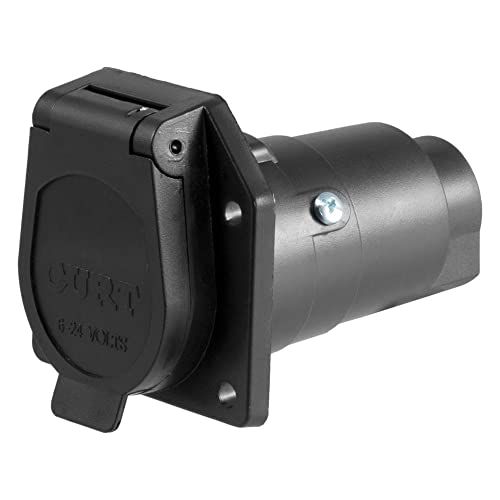
PROTECTED. This 7-way RV blade socket is equipped with a spring-loaded dust cover that keeps the connection points dry and protected when not in use, ensuring strong, consistent power for miles to come

IP68 Waterproof Sealed: Different from normal 7 way plug, Oyviny upgraded 7 pole trailer plug equips with detachable compression nut and rubber grommet on the end to keep out moisture, protects the terminals from water and dust; Size of the wire inlet is 3/4'' NPT
Fix Mismatched Plugs: Adapters and Wiring Solutions
Vehicle and trailer connectors rarely match straight from the factory, so you’ll need to bridge incompatible plug configurations before your lights will function. Select a trailer plug adapter that matches your vehicle’s 7-pin round or blade connector to your trailer’s 4- or 5-pin plug, ensuring correct function mapping per the wiring diagram: ground, taillights, brake/turn signals, and auxiliary circuits if equipped.
Choose adapters rated for SAE J2863 or traditional 7-way compatibility for your trailer type—gooseneck, fifth-wheel, or RV. Avoid generic, non-rated units; instead, select weatherproof adapters with amperage ratings sufficient for your lighting load. After splicing, verify brake and turn signals remain isolated without cross-wiring. Secure all connections, then re-check ground continuity and voltage across each circuit with a multimeter before finalizing installation.
Recommended Products
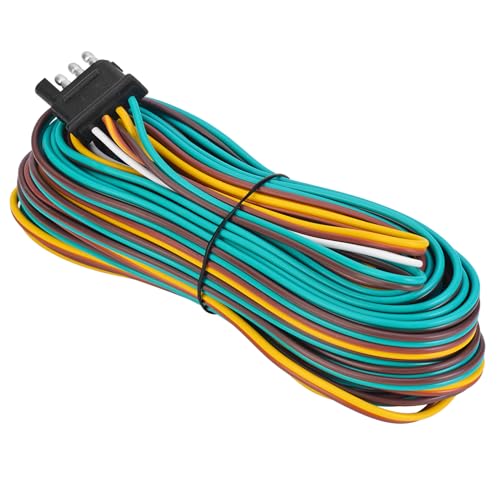
18 Gauge Color Coded Wires Wishbone Trailer Wiring: SAE J1128 RATED. Wishbone design makes it quickly, safety and easy to connect to the trailer. The 4 wire trailer wire is color-coded to clearly identify each wire's function, easily splice into your trailer's wiring system

Y-Harness Connector: 4 pin trailer wiring harness adapter features wishbone design, widely fits for rewiring trailer that allows 2 brown wires running left and right taillights simultaneously; No need for splicing other wires
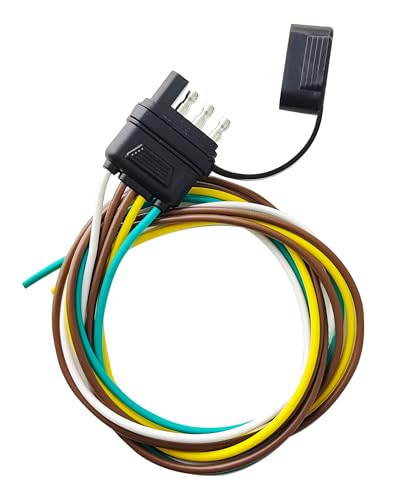
4-Pin 5-Wire Trailer Wiring Harness: This 4-pin 5-wire trailer wiring kit works perfectly for replacing worn-out wiring harnesses or rewiring the two-side taillights on your trailer. This Trailer side 4 pin trailer wiring male plug fits wide variety of trailers with industry-standard 4-way flat sockets.
Test Your Trailer Lights and Troubleshoot Common Problems
Why risk discovering a wiring failure when you’re already on the road? Test all functions immediately after completing your trailer wiring. Activate headlights, tail lights, brake lights, left/right turn signals, and reverse. Use a helper or reflective surface to verify each function matches the correct light array and color code at your trailer plug.
If a function fails, begin troubleshooting by checking fuses in your tow vehicle first. Inspect for broken or loose wires, then verify ground integrity. Secure the white ground wire to clean bare metal on both the trailer frame and connector mounting point. Confirm your trailer plug matches the vehicle’s output—4-, 5-, 6-, or 7-pin—and that any converter or adapter is properly installed. Complete your diagnostic with a multimeter to check continuity and ensure connector pins are corrosion-free.
Recommended Products

DOUBLE PRONG TRAILER PLUG: Cheemuii 7 pin trailer plug uses the premium double prong to replace the poor single prong, and the outer wrap is made of weatherproof and durable material to ensure a longer service life

For use on trailers with an existing electric brake system

JUNCTION BOX: The junction box is equipped with 7 color-coded terminals and wires, which can easily identify the corresponding functions of the wires and facilitate wiring. Strong junction boxes are waterproof and dust resistant to increase the service life of trailer cords
Conclusion
You’ve matched your plugs, routed your harness along the frame, secured your white ground to clean bare metal, and sealed every connection against moisture. You’ve tested brake, turn, tail, and running lights with a helper, verified your vehicle’s fuses, and confirmed continuity with a multimeter. Keep spare fuses, dielectric grease, and an adapter in your tow kit. Recheck connections before each haul—corrosion and vibration cause failures you can’t afford at highway speeds.
Recommended Products

Material: 4-wire trailer harness is made of brass, which has good electrical conductivity and is covered with a layer of insulating rubber, which is durable and corrosion-resistant.
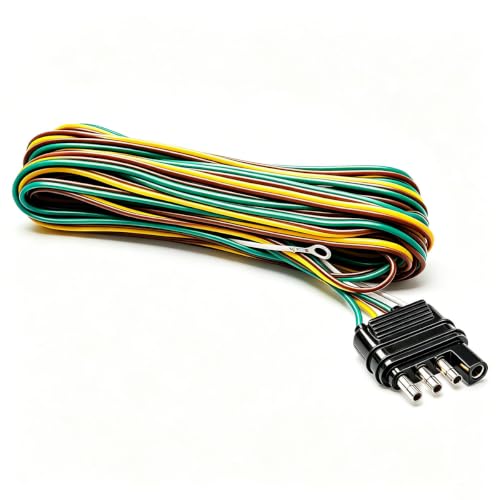
Product Size: This is a 25-foot 4-way boat trailer extension wire

21FT Male & 4-Flat Female Trailer Wiring Harness Extension Kit: Fits Trailers under & over 80" wide. Wire length (21' & 4') makes this trailer harness kit perfect for trailers measuring under or over 80" wide.