


You’ve likely marked your calendar for spring seeding, but your fertilizer timing might still be off. Research shows that matching nitrogen applications to grass phenology—not soil temperature myths—drives root density and carbohydrate reserves. The consequences of misalignment? Excess growth, drought susceptibility, or winterkill. What you need is a region-specific protocol grounded in actual plant physiology.
When to Fertilize Cool-Season and Warm-Season Lawns
How do you time fertilizer applications for maximum turf response? You match fertilization timing to your turf’s active growth cycle and regional climate.
For cool-season lawns, you’ll apply nitrogen four times yearly: near Memorial Day, around July 4th, Labor Day, and Thanksgiving. Research from Northern Illinois shows you’ll prioritize late summer through mid-fall—specifically August 15 to September 15 in Central Illinois—when root systems absorb nutrients most efficiently before winter dormancy.
For warm-season turf, you’ll also schedule four applications: after Easter dormancy break, Memorial Day, Labor Day, and early October if overseeding. You’ll avoid feeding too late; your final fall application must occur approximately one month before the first killing frost, preventing vulnerable tender growth.
Climatic adaptation drives optimal fertilization timing for both grass types.
Recommended Products
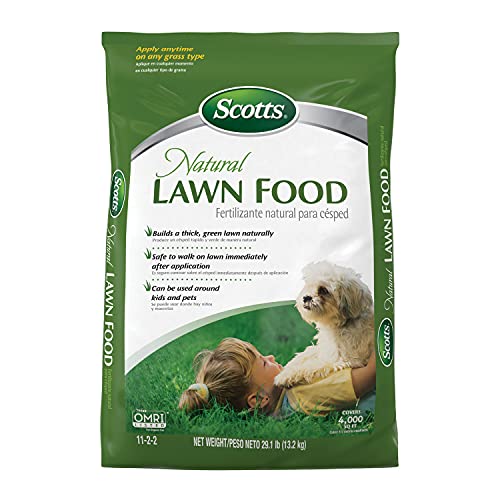
Scotts Natural Lawn Food builds a thick, green lawn - naturally

Feeds and strengthens your lawn against heat and drought
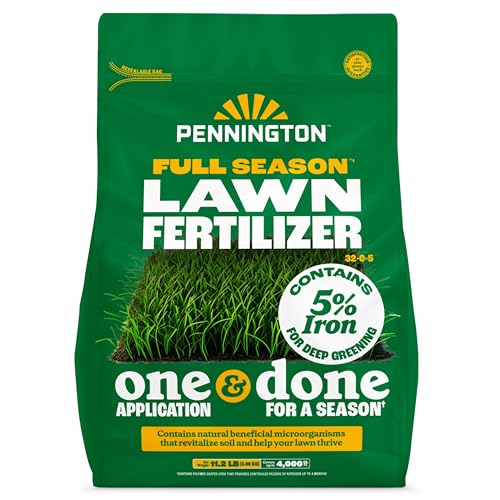
This spring lawn fertilizer is one application and done for a season
Month-by-Month Fertilizing Schedule for Your Region
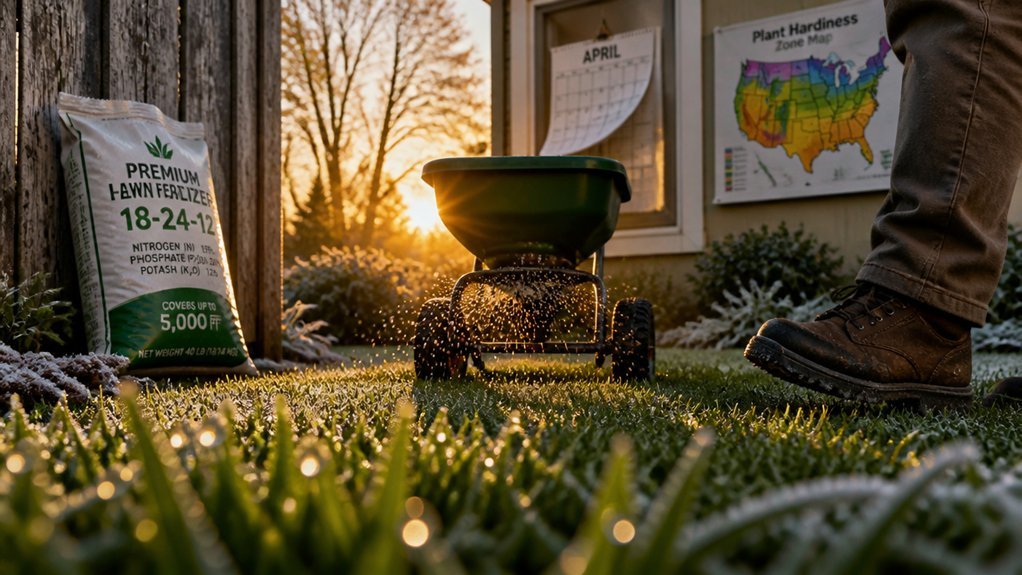
What specific schedule should you follow for your region? Your fertilizing schedule depends on grass type and geography. For northern cool-season grasses, you apply four times: late May, early July, early September, and mid-November, distributing 32 lbs per 2,500 sq ft each timing. Southern warm-season lawns receive identical rates after Easter dormancy break, late May, early September, and early October. In Illinois, refine your timing further: Central Illinois targets August 15–September 15 for fall feeding during active cool-season growth, while Northern Illinois applies in August to maximize pre-dormancy nutrient uptake. Your final winterizer varies by latitude—Northern Illinois applies late October–early November, Central Illinois in November, and Southern Illinois in late November. You optimize cool-season grasses by aligning applications with regional phenological cues and thermal thresholds.
Recommended Products

Complete NPK Lawn Food: 16-4-8 is the perfect blend of key macronutrients. This lawn liquid food turf fertilizer also contains Seaweed & Fish.
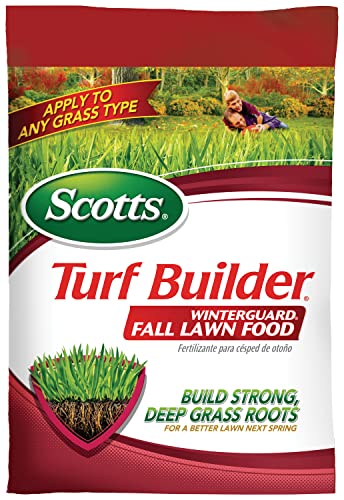
FALL LAWN FERTILIZER: Scotts Turf Builder WinterGuard Fall Lawn Food is a fertilizer that builds strong, deep grass roots for a better lawn next spring

WHERE TO USE: Lawn fertilizer for grass can be used on any grass type
How Much Fertilizer Your Lawn Needs Per Season
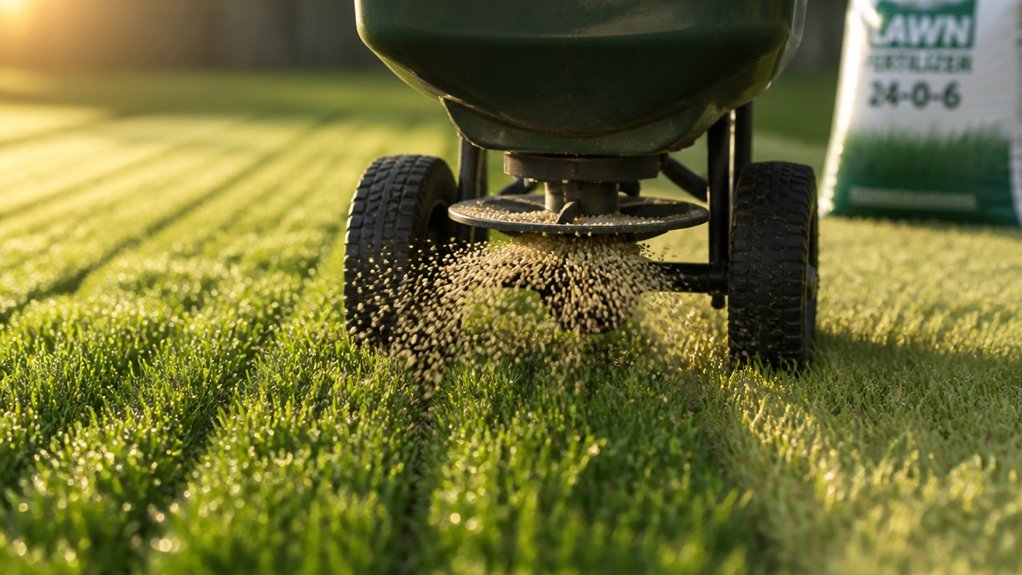
Why guess at your lawn’s appetite when research-backed guidelines exist? You’ll apply approximately 3 pounds of nitrogen per 1,000 square feet per growing season, split across multiple events. When using quick-release fertilizer, you’ll never exceed 1 pound nitrogen per 1,000 square feet in a single application.
For established lawns, your application rate typically runs 32 pounds per 2,500 square feet per application window. In cool-season regions, you’ll follow a seasonal schedule totaling four applications annually—Memorial Day, Labor Day, and Thanksgiving windows included—each delivering that calibrated 32-pound rate per 2,500 square feet. You’ll adjust Milorganite to 64 pounds per 2,500 square feet for new lawns.
You’ll account for weed-n-feed and winterizer products’ varying nitrogen content, timing each application to avoid herbicide conflicts and support root carbohydrate storage.
Recommended Products

Made for Nitrogen Support – Formulated to supply nitrogen for essential plant nutrition.

Liquid Lawn Fertilizer Booster: Iron and Nitrogen Blend. Lawn Energizer booster provides essential nutrients needed to darken the green of your lawn

Feeds for deep greening in just 3 days
Is It Too Late or Too Early to Fertilize?
Timing your fertilizer application demands precision—you’ll waste product and risk environmental runoff if you apply before active growth begins or after soil temperatures drop too low. Research shows optimal fertilize timing correlates directly with soil temperature thresholds rather than calendar dates. You’ll identify active growth when your lawn greens up consistently after the last frost—applying earlier starves roots of uptake capacity.
Seasonal fertilization protocols differ by grass type. You’ll schedule four annual applications for northern cool-season turf, emphasizing late summer through early fall to bolster winter hardiness. You’re aligning with peak root growth phases, not leaf flushes. For southern warm-season varieties, you’ll initiate feeding after spring dormancy breaks, then maintain through early fall.
Your final fall application must precede deep freeze, timed regionally before killing frost. You’ll verify soil conditions aren’t saturated, preventing nutrient runoff and protecting watershed integrity.
Recommended Products
FALL LAWN FERTILIZER: Scotts Turf Builder WinterGuard Fall Lawn Food is a fertilizer that builds strong, deep grass roots for a better lawn next spring
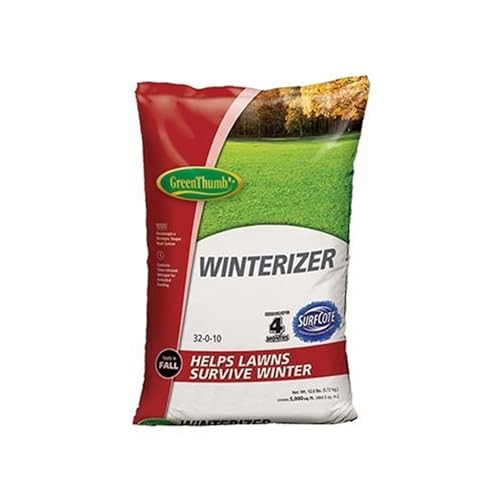
Helps your lawns to survive the winter stress

FALL LAWN WEED & FEED: Scotts Turf Builder WinterGuard Fall Weed & Feed3 is a lawn weed killer and lawn fertilizer that controls weeds and feeds grass in the fall for a better lawn next spring
Timing Mistakes That Wreck Your Lawn
How severely can a single misjudgment compromise your turf’s health? Research demonstrates that timing mistakes inflict measurable, cumulative damage you can’t easily reverse.
When you fertilize too early, you waste product and trigger uneven application. If you rely on calendar dates rather than actual soil conditions, you mistime feedings and reduce effectiveness. You must assess current weather and soil saturation before applying nutrients.
Dumping excessive nitrogen at once forces rapid top growth, weakening your lawn’s structural integrity and amplifying disease and insect susceptibility. Applying fertilizer onto saturated soil causes runoff and nutrient loss instead of root absorption. Finally, missing that final feeding before deep dormancy depletes root reserves and compromises spring green-up. Precision matters: your lawn’s long-term resilience depends on it.
Recommended Products

LIQUID PLANT FOOD WITH LESS PLASTIC WASTE: The reusable spray applicator is designed to be used again with our convenient refill bottles (sold separately)
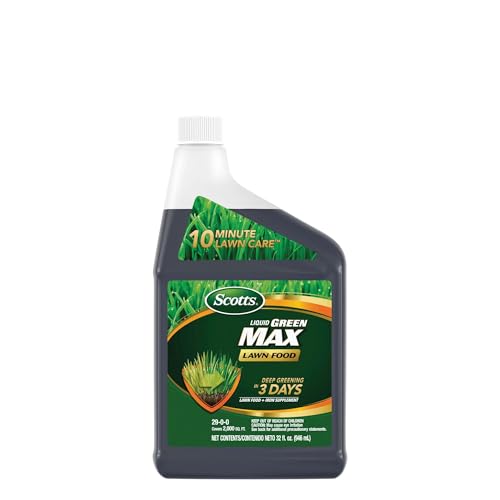
LIQUID PLANT FOOD WITH LESS PLASTIC WASTE: The reusable spray applicator is designed to be used again with our convenient refill bottles
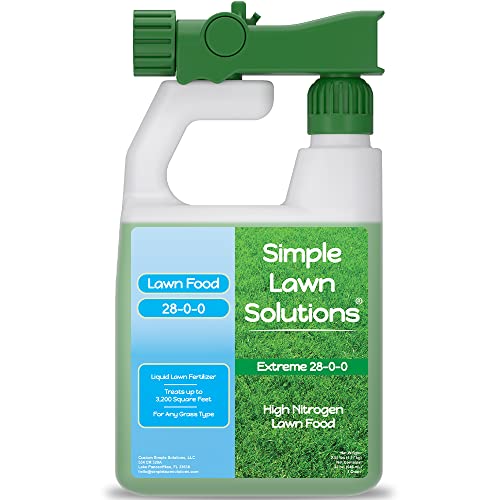
Easy to Use: Our 28-0-0 Lawn Fertilizer Food comes with an attached sprayer that applies the perfect ratio of product for lawn applications. Covers up to 3,200 square feet, when using the attached sprayer
Conclusion
You must synchronize fertilization with your lawn’s phenological growth stages, not arbitrary calendar dates. Cool-season grasses demand four strategically timed nitrogen applications—late spring through late fall—with your region’s winterizer window proving critical for carbohydrate storage and cold hardiness. Warm-season species require post-dormancy feeding, avoiding late-season nitrogen that predisposes tissues to winter injury. Monitor soil moisture, respect application rate thresholds, and you’ll optimize nutrient use efficiency while minimizing environmental losses.
Recommended Products

SOUTHERN GRASS FERTILIZER: Scotts Turf Builder Southern Lawn Food is a pesticide-free lawn fertilizer specially formulated for Southern lawns

3-IN-1 FORMULA: Scotts Turf Builder Triple Action1 is a three-in-one lawn fertilizer and weed control formula that kills listed lawn weeds, prevents crabgrass, and feeds grass to build thick, green lawns
WHERE TO USE: Lawn fertilizer for grass can be used on any grass type