
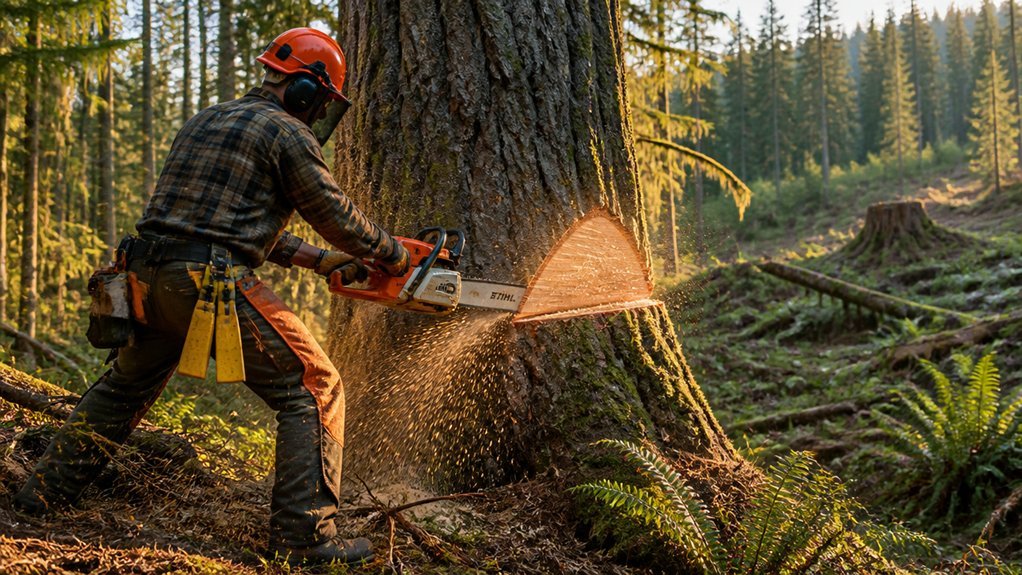
Before you make your first cut, you’ll inspect the tree’s lean, decay, and surrounding obstacles—you can’t afford to miss what’s hiding in the trunk or overhead. You’ll mark your felling zone and two escape routes at 45 degrees, then suit up in proper PPE. But your notch choice determines whether you maintain control or lose it entirely, and the difference between a conventional and open-face cut isn’t something you’ll want to guess at when the saw’s already running.
Assess the Tree and Know When to Partner With Another Arborist
Before you’ve made your first cut, you’ll assess the tree’s size, lean, and branch structure to determine whether you can safely fell it alone or need another arborist on-site. You’ll examine the trunk for decay, cracks, or cavities that compromise felling direction and may require rigging expertise beyond solo capability.
You’ll evaluate root zone stability, soil moisture, and wind conditions—dynamic forces that demand a partner’s control during the fall. Multi-stemmed specimens, significant basal decay, or proximity to structures and utilities mandate two-person operations for safety.
You’ll coordinate pre-briefing with your partner on cut plans, role assignments, and contingency protocols. Clear communication prevents catastrophic misalignment. Recognize your operational limits: when risk escalates, you’ll deploy additional personnel rather than compromise felling integrity.
Recommended Products

Husqvarna Classic Personal Protective Power Safety Kit includes: one pair of Husqvarna classic chaps (homeowner) (36 to 38 inches, 32-inch inseam), one Husqvarna functional forest helmet, and one pair of Husqvarna classic work gloves (large)

Note: Please check the size before purchase to see if it fits your size. Premium Material:The outer fabric of the chainsaw chaps is composed of durable oxford polyester.The durable chainsaw protective chaps perfectly suitable for forestry work
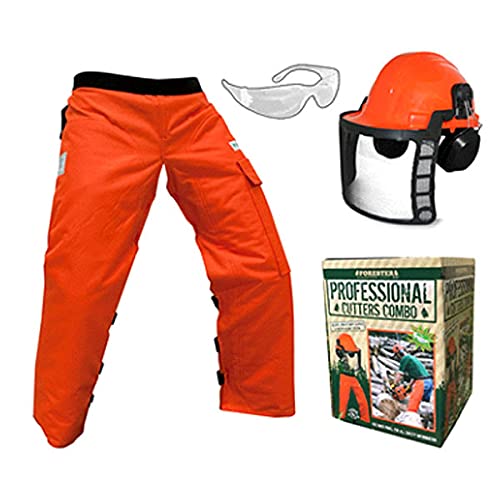
Chainsaw Chaps - Provides protection while working with a chain saw and other equipment. These ASTM189-14 & F3325-19 SA32851 Class B chaps are water and oil resistant. These chaps include a pocket, adjustable belt and are designed like aprons for easy on/easy off use.
Mark Your Felling Zone and Plan Your Escape Route

Once you’ve determined whether you’re working solo or with a partner, you’ll shift focus to controlling the physical space around the tree. Mark your felling zone with visible boundaries—tape, cones, or verbal commands—to establish where you’ll work and where bystanders must remain. This buffer prevents incursion into the danger area.
You’ll plan an escape route that angles 45 degrees away from the falling tree’s retreat path, selecting a direction with stable footing and zero obstacles. Identify two exits minimum; your primary path may block if the tree splits or redirects. Clear both routes of trip hazards, debris, and overhanging limbs, then verify they stay open throughout the operation.
Rehearse your escape route before cutting. Walk it briskly. Confirm you’ve got unobstructed distance to retreat. Never start the saw until you’ve mentally mapped and physically tested your exit.
Recommended Products

Ideal for logging, forest, metal working, hand tools, power tools and DIY works

Protects left hand while handling chainsaw
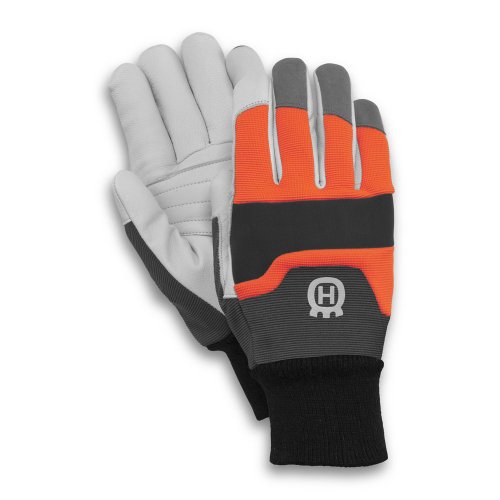
Cut resistant in left hand
Wear Essential Safety Gear for Every Felling Job

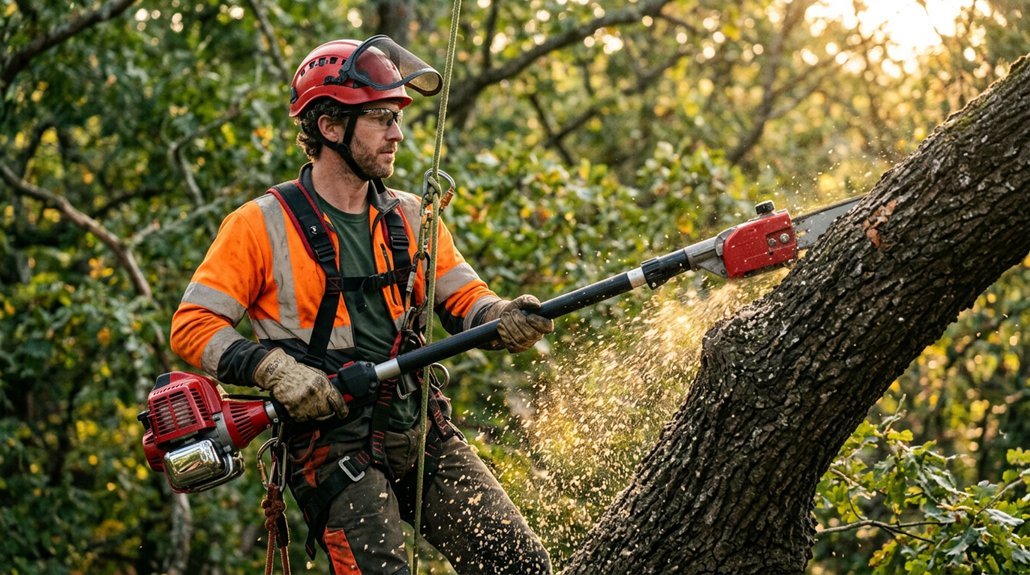
What separates a controlled felling operation from a catastrophic injury? Your safety gear. You start with a hard hat—chin strap fastened—to deflect falling branches and overhead debris. You wear ANSI Z87.1+ eye protection and 90 dB OSHA-rated hearing protection; chainsaw noise damages hearing permanently without it. You pull on cut-resistant gloves and sturdy, high-traction boots; compromised grip or footing invites blade contact or falls. You don a high-visibility, snug long-sleeve shirt and pants, adding chaps or forestry-rated leg protection to block debris and chainsaw teeth. At the work zone, you establish full PPE protocol; if kickback risk spikes or wood density varies, you add a face shield. You don’t negotiate this layer. You wear it completely, every time.
Recommended Products

SUPERIOR PROTECTION — Experience all-around face protection thanks to the curved design of this faceshield. The visor of this face guard is ANSI Z87+ certified, and up to 2x thicker for increased durability. Plus, you can comfortably wear your grinding face shield over prescription glasses.

Debris Blocking Design: Foam lining around the lenses prevents debris from getting into the eyes while wearing; Blocks air particles, dust, debris and other eye irritants.

PREMIUM SHOOTING EYE PROTECTION — Gear up for the range with the anti fog shooting glasses men trust. These ANSI Z87.1 safety glasses clear are built to protect your eyes from impacts. The tough, wraparound design ensures full coverage, shielding you from the sun, wind, and debris.
Choose Your Felling Cut: Conventional or Open-Face
How do you control which way a tree falls? You select between two felling methods. With the conventional cut, you’ll place the notch on the fall side and leave the hinge opposite; you’ll complete a backcut before tipping occurs.
The open-face cut features a larger notch from the underside, creating a longer hinge on the stump to guide descent and reduce bar-pinching risk.
You must evaluate tree lean, wind, and trunk diameter before choosing. The notch shape varies significantly between methods—conventional forms a tighter angle while open-face spreads wider. Video guides let you compare each notch shape, backcut angle, and hinge width in real-time.
In high-risk or uncertain conditions, you’re obligated to call a professional rather than attempt either cut alone.
Recommended Products
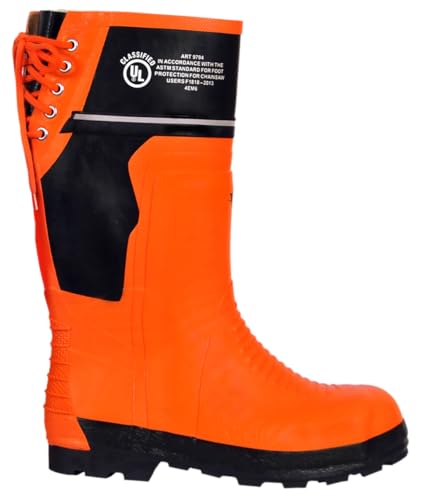
CHAINSAW PROTECTIVE WORK BOOTS FOR MEN certified chainsaw protection ASTM F1818 Mid Class rating at 24m/sec, EN ISO 17249:2013

EUROPEAN CLASS 2 CHAINSAW PROTECTION IN SIGNAL RED — certified to 24 m/s; ASTM F2413; CAN/CSA Z195; GORE-TEX waterproof; signal red upper for high-visibility compliance in forestry and arborist operations

Safety First: Insulated with European standard ASTM F2413-18 steel toe cap, our work boots aim to provide first class standard protection for customers
Make a Conventional Felling Cut With Plastic Wedges
After choosing the conventional method over the open-face alternative, you’ll form the notch by making a top cut from above and a bottom cut level with it, establishing continuous wood fibers that function as a hinge for controlled descent.
Wearing your PPE—helmet, eye and hearing protection, gloves, and chainsaw chaps—you’ll complete the back cut slightly above the notch. Insert plastic wedges into the kerf immediately to prevent premature closure, protect your chainsaw chain from dulling, and guide the tree’s trajectory. Maintain a 6–12 inch hinge on the leaning side to control fall direction and eliminate bar pinching or kickback hazards. Monitor movement continuously; don’t retreat until you’ve confirmed the tree’s committing to fall. Keep your escape path clear throughout execution.
Recommended Products
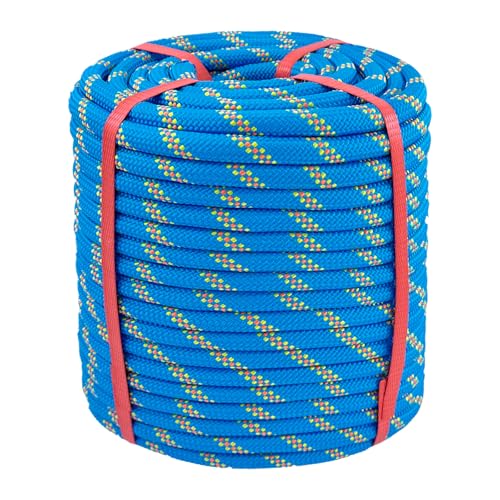
[Engineered for Heavy Loads] 5,200 lbs Breaking Strength: Built with a rugged 48-strand double-braid structure, this 1/2 inch rope delivers high strength performance. It serves as a reliable arborist bull rope for heavy rigging and load-bearing tasks where failure is not an option.

High Strength Rope: VEVOR 3/4 inch diameter double braided polyester rope comes with a breaking strength of 20000 LBS/88.96kN and 220 ft/67.06 m in length. The quality is tough and reliable to handle various professional tasks as per what you need.

PROFESSIONAL GRADE 9,000 LBS BREAKING STRENGTH — Engineered for demanding tasks, this 1/2 inch static line delivers exceptional power with a Minimum Breaking Strength (MBS) of 9,000 lbs. Specifically designed as a heavy-duty bull rope for rigging and tree felling, its high-tenacity polyester construction withstands abrasion and harsh weather, making it a reliable choice for professional arborists.
Make an Open-Face Felling Cut for Greater Control
Why settle for the conventional method when you need maximum precision? The open-face cut delivers superior control when you’re managing complex felling scenarios.
You’ll create a larger, unobstructed hinge by starting the top cut on the trunk’s opposite side from the desired lean. This entry notch actively guides the tree’s fall direction with greater reliability than standard configurations. Execute the open-face cut using a bore-cut approach: position your chain saw at a shallow angle to form the notch, then complete it from the opposite side while continuously monitoring hinge integrity. Pre-plan your escape path and maintain a clear work zone throughout the process. Wear appropriate protective equipment. If the tree’s large, leaning, or in a restricted area, you’re relying on a professional to reduce your risk during this demanding procedure.
Recommended Products

MAXIMUM SAFETY THAT MEETS PROFESSIONAL STANDARDS - Forester Chainsaw Chaps meet OSHA 1910.266 standards for chainsaw operators, ASTM F1897 specifications for leg protection, and CAN/BNQ 1923-450 M91 39JY CLASS B safety standards - giving you the same level of protection trusted by professional loggers and arborists.

8-layers Protection: Technical 8-layer protective material of the chainsaw chaps can effectively protect the legs of chainsaw operators, reducing the risk and severity of injury by providing cut resistance to slow and stop the running chainsaw.

𝐒𝐭𝐚𝐧𝐝𝐚𝐫𝐝𝐬 𝐂𝐞𝐫𝐭𝐢𝐟𝐢𝐜𝐚𝐭𝐢𝐨𝐧: PACIFIC PPE hard hats comply with ANSI Z89.1-2014 standards, Type 1, Class E, G & C. The superior helmet quality ensures optimal head protection for workers, enhancing workplace safety.
Execute the Back Cut and Guide the Fall to the Ground
Where exactly should you position yourself to maintain control during the final, decisive phase of felling? Stand to the side of the planned fall direction, never directly behind the tree, during the back cut.
Execute the back cut from a position slightly above the stump, ensuring the relief cut angle allows the tree to pivot toward the planned direction. Stop short of the hinge wood, leaving an intact section 1/10 to 1/6 the tree’s diameter in depth. Saw with a controlled, steady rhythm; don’t twist the bar. When the tree begins moving, finish with a quick, clean completion.
Before cutting, establish a clear exit path at 45 degrees from the fall line. Alert others. Verify the swing radius contains no obstacles. Maintain a firm stance, wear PPE, and keep the chainsaw in a safe posture to prevent kickback or binding. Retreat immediately along your escape route once the tree commits to falling.
Recommended Products
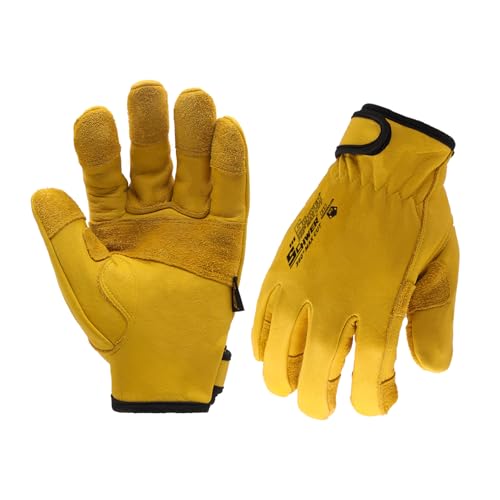
ANSI A9 Cut Resistant Liner - These PM3401 leather cut resistant work gloves feature a cut-resistant knit lining. Certified to ANSI/ISEA 105 Cut Level A9. Effectively guards against sharp edges, blades, metal, and glass—an ideal choice for high-risk job requiring safety. Note: The outer leather layer is not cut-resistant; the inner liner provides A9 cut resistance.

Ideal for chainsaw working, logging, forest working, metalworking, power tools operating, DIY, and multi-purpose works.
Ideal for chainsaw working, logging, forest working, metalworking, power tools operating, DIY, and multi-purpose works.
Conclusion
You’ve assessed the tree, marked your zone, and geared up properly. You’ve selected your cut and executed it with precision. Now you’re retreating along your escape route, maintaining visual contact until the fall commits. Every step you’ve taken prioritizes control and safety. Remember: never compromise on PPE, never skip the escape plan, and never turn your back early. Felling demands respect, preparation, and disciplined execution—master these, and you’ll work confidently.
Recommended Products

Anti-Fog Lens: Professional coating keeps these safety glasses clear in humid, hot, and cold conditions, so you see sharp detail without stopping to wipe; Reliable eye protection that stays clear when standard glasses fog up
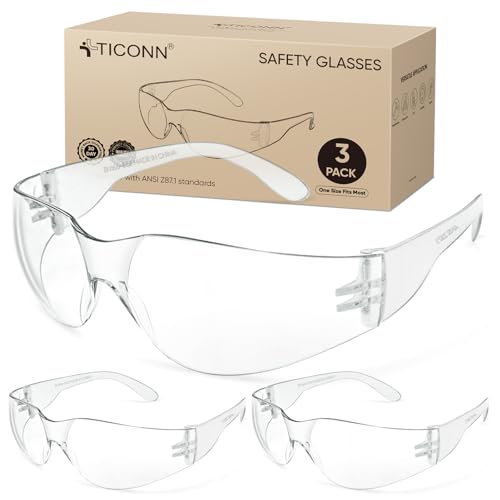
Reliable Eye Protection: These safety glasses feature durable polycarbonate lenses designed to help protect against flying debris, wood chips, metal shavings, and UV rays; Designed to meet ANSI Z87.1 standards, the anti-scratch lenses help maintain clear visibility during daily use, making them dependable protective eyewear for various tasks
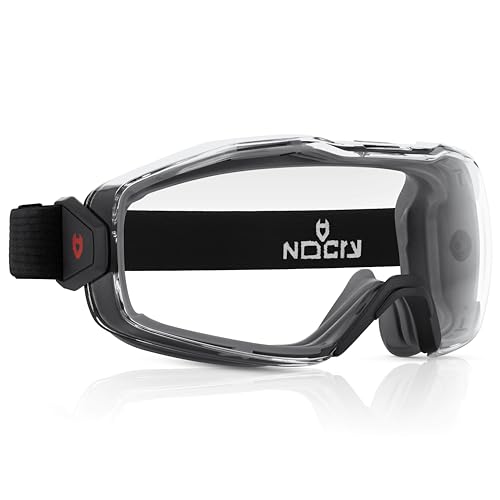
SMOOTH FIT OVER YOUR PRESCRIPTION EYEGLASSES — Want to wear your safety goggles over eyeglasses? These safety goggles fit most prescription eyewear, so you don't have to compromise on your sight. The soft TPR frame gasket with built-in slots creates a secure seal without squeezing your eye goggles or frames.